
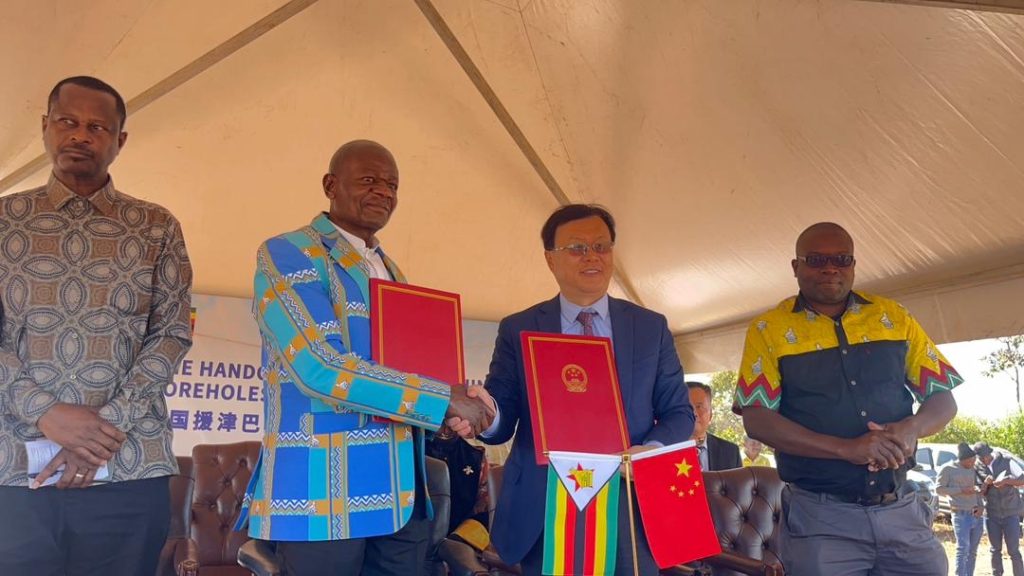
At least 75,000 rural Zimbabweans now have access to safe and clean water following the completion of a China-funded borehole drilling project that has delivered 300 boreholes to communities affected by Tropical Cyclone Idai and recurring droughts.
The Government of Zimbabwe officially received the boreholes on Friday during a handover ceremony at Runyararo in Chimanimani District, marking a significant milestone in the country’s post-disaster recovery and climate resilience efforts.

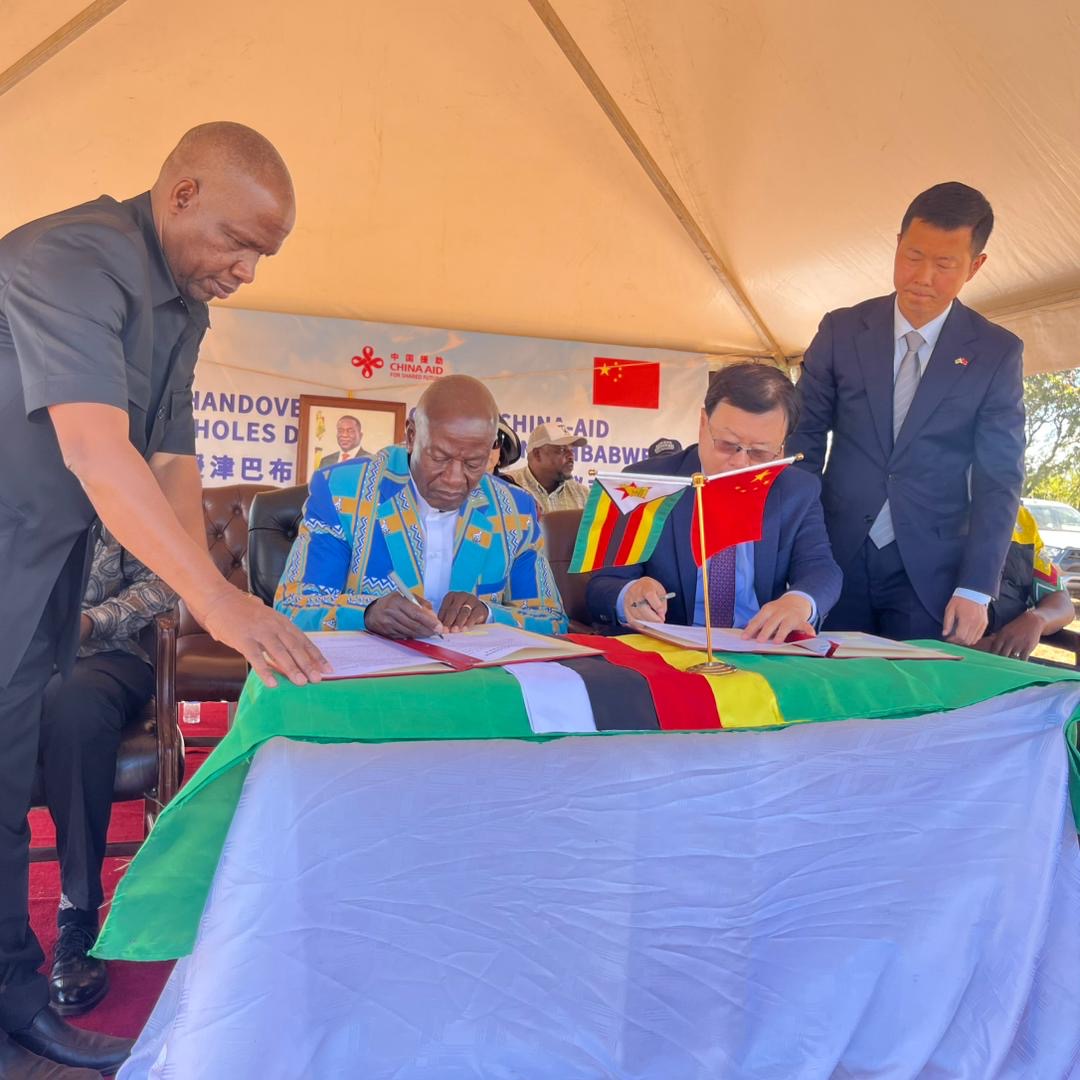
Speaking at the event, Minister of Local Government and Public Works Daniel Garwe described the initiative as a symbol of the enduring partnership between Zimbabwe and China and a practical intervention that is transforming lives in vulnerable communities.
“This occasion is not merely a ceremonial event, but a celebration of partnership, resilience and a shared commitment to improving the livelihoods of our people,” Garwe said.
The boreholes were financed by the Government of China in response to the devastating impact of Tropical Cyclone Idai, which struck eastern Zimbabwe in 2019, destroying infrastructure and leaving thousands without reliable access to clean water.
Although implementation was delayed by the COVID-19 pandemic, the project resumed after the signing of an implementation contract in April 2024 and was officially launched in Mahusekwa, Mashonaland East Province, in July the same year.
ALSO READ : Why African Health Scientists Must Learn From China
Under the programme, Manicaland Province received the largest allocation of 100 boreholes, while Masvingo received 68, Mashonaland East 66 and Midlands Province 66. Six additional boreholes were drilled in Bindura, Tsholotsho, Harare, Mberengwa, Murehwa and Masvingo districts, with three fitted with solar-powered systems to improve sustainability.
Garwe said the project played a critical role in cushioning communities against the effects of the 2024/25 El Niño-induced drought, which placed severe pressure on water supplies across rural Zimbabwe.
He added that the initiative aligns with the country’s National Development Strategy 2 and Vision 2030 objectives by expanding access to essential services while promoting climate-resilient infrastructure.
Describing the boreholes as “a source of life, dignity and hope,” the minister said the intervention had improved sanitation, strengthened public health, enhanced agricultural productivity and helped safeguard livestock in drought-prone areas.
The boreholes have earned the nickname “Wells of Happiness” among beneficiary communities.
Chinese Ambassador to Zimbabwe Zhou Ding said the successful completion of the project reflected the strong and longstanding friendship between the two countries.
He noted that China had responded to Zimbabwe’s request for assistance during the 2024 El Niño-induced drought, leading to the drilling of 300 boreholes across 21 districts in Manicaland, Mashonaland East, Masvingo and Midlands provinces.
Ambassador Zhou praised both Chinese and Zimbabwean workers for overcoming difficult terrain and challenging working conditions to complete the project in less than two years.
According to the ambassador, China has drilled more than 1,300 boreholes across Zimbabwe over the past decade, benefiting approximately half a million people.
He also highlighted ongoing Chinese support in agriculture and food security, including emergency food assistance during the 2024 drought, agricultural training programmes, the Juncao Project and plans to rehabilitate nine irrigation schemes before the end of the year.
On trade and economic cooperation, Zhou welcomed China’s recently introduced zero-tariff policy for imports from Zimbabwe and other African countries, saying the measure would expand export opportunities for Zimbabwean products.
He said China remains the largest importer of Zimbabwean tobacco and macadamia nuts and is continuing to open its market to a wider range of Zimbabwean agricultural exports.
The handover ceremony comes as the Government accelerates efforts to complete housing projects for families affected by Cyclone Idai. Of the 224 disaster recovery houses earmarked for construction, 125 have been completed while 65 are currently under construction.
During the visit, Garwe also toured the Runyararo Housing Scheme, where the Department of Public Works is constructing homes for families displaced by Cyclone Eline.
The event was attended by Deputy Minister of Information, Publicity and Broadcasting Services Dr Omphile Marupi, senior government officials, local leaders and representatives from the Chinese Embassy.