


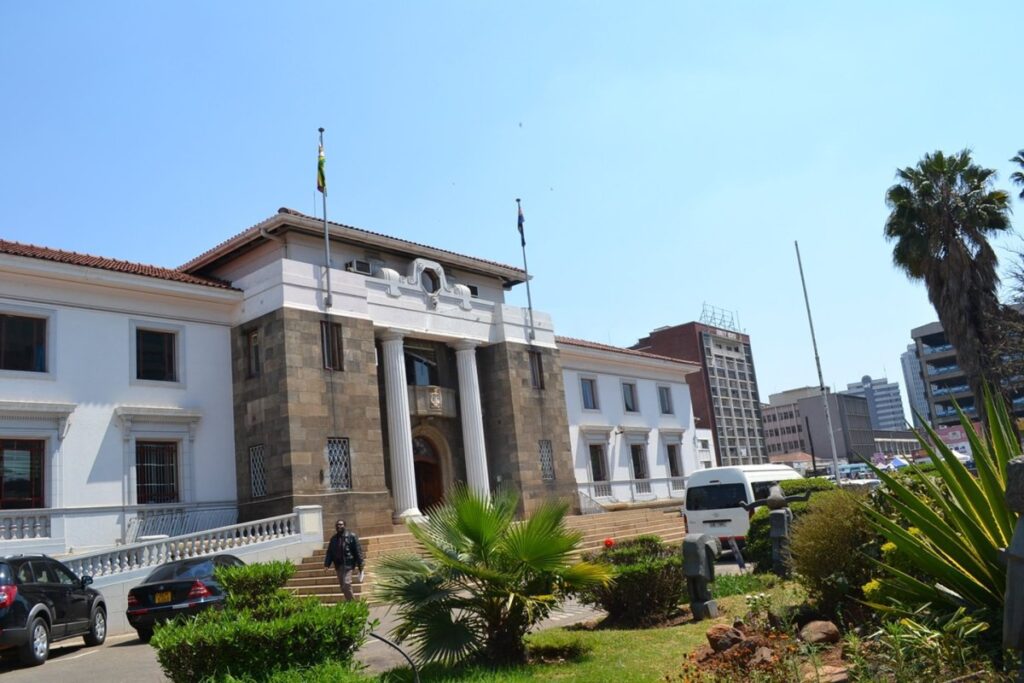
For years, the financial stewardship of the City of Harare has been a subject of public scrutiny and concern. Now, the Auditor General’s Report has laid bare a landscape of profound discrepancies and systemic failures, painting a grim picture of an administration seemingly adrift in a sea of unaccounted billions.
This is not merely an audit; it is an indictment, revealing weaknesses so severe they cast a long shadow over the very reliability of the city’s financial statements.
At the heart of this financial quagmire lies an astonishing, unresolved variance of ZWL242.11 billion between the City of Harare’s creditors control account and the figures actually disclosed in its financial statements. The control account, a supposed bedrock of financial integrity, reflected a staggering ZWL298.69 billion, yet the official statements presented a mere ZWL56.58 billion. Such a colossal disparity is not a clerical error; it is a gaping chasm that swallows public trust and accountability whole.
Adding to this alarming scenario, the Auditor General unearthed a ZWL13.40 billion suspense account balance tucked away under trade and other payables.
Suspense accounts, by their very nature, are temporary placeholders. Their prolonged and substantial presence, as seen here, is a flashing red light, signaling unresolved accounting mysteries that defy proper classification. The Auditor General’s conclusion is stark and unequivocal: these discrepancies rendered it impossible to verify the completeness and validity of the reported trade and other payables.
“The Council had an unresolved variance of ZWL242.11 billion between the creditors control and the balance disclosed in the financial statements. In addition, the Council had a suspense account balance of ZWL13.40 billion included in payables. As a result, I was unable to satisfy myself as to the completeness and validity of trade and other payables disclosed in the financial statements,” the Auditor General stated, underscoring the gravity of the situation.
The report further dissects the council’s deeply flawed Value Added Tax (VAT) accounting processes. It reveals that the City of Harare consistently failed to recognize VAT at the crucial transaction processing stage. This fundamental oversight led to the recognition of a ZWL4.12 billion VAT provision on outstanding gross receivables at year-end. Yet, when pressed for substantiation, the council could not provide the necessary supporting documentation to verify the accuracy and completeness of this significant provision.
“The Council was not recognising VAT at the transaction processing stage. As a result, the Council recognised a VAT provision of ZWL4.12 billion on outstanding gross receivables at year end. I was not availed with supporting documentation to verify the accuracy and completeness of the provision recognised in the financial statements,” the report unequivocally states.
These findings are not isolated incidents; they are symptoms of persistent, deeply entrenched weaknesses within the City of Harare’s financial controls, accounting systems, and record-keeping practices.
They lay bare a critical need for immediate and decisive action: stronger financial governance, robust internal controls, and an unwavering commitment to accountability. Without these, the accurate accounting and transparent management of public funds will remain an elusive ideal, leaving citizens to wonder where their billions truly went.
The time for obfuscation is over; the time for transparency and reform is now.