


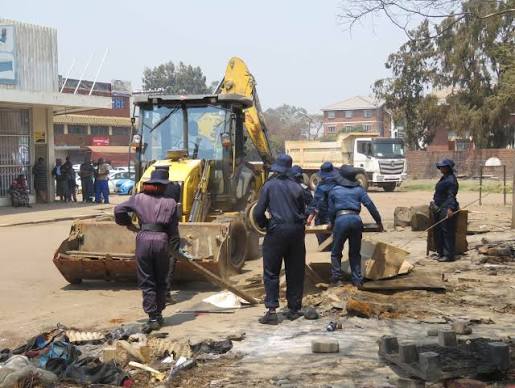
HARARE — Government has endorsed a new 60-day programme to tackle informal vending in Harare’s central business district, combining enforcement with efforts to move traders into legal and regulated spaces.
The programme, known as Operation Chenesa Harare, is being implemented by the Harare City Council following its launch by Local Government Minister Daniel Garwe.
Several northern suburbs, including Newlands, Belvedere and Belgravia, have already been targeted, while informal trading remains widespread across pavements and other public spaces in the CBD.
According to the latest Cabinet brief, the measures were presented by Transport Minister Felix Tapiwa Mhona, who chairs the Cabinet Committee on Utilities and Infrastructural Development.
Cabinet approved the proposals, saying they were intended to restore order, protect public health, create formal trading opportunities and improve the functioning of the capital.
“The measures, which focus on illegal vending, will restore order, safeguard public health, formalise livelihoods and improve the overall functionality of Harare, Zimbabwe’s capital city,” Cabinet said.
The plan includes a 60-day One-Stop Formalisation Drive to be conducted with the city council and other stakeholders.
Government also plans to establish a Harare Vendors Council to assist with the management of trading sites and the resolution of disputes. Vendors who complete the formalisation process are expected to be connected to financial institutions to access working capital.
Cabinet said enforcement would be accompanied by the provision of lawful trading alternatives.
Some vendors have previously rejected designated stalls, arguing that some are either too costly or located away from areas with sufficient customers.
The latest clean-up has also attracted criticism, with questions being raised over the Government’s changing approach to informal trading.
Some vendors have vowed to remain in their current locations, arguing that vending is their main source of income.
The latest intervention comes after previous attempts to remove informal traders from Harare and other urban centres, including campaigns conducted in 2024, 2019, 2016 and 2006.