
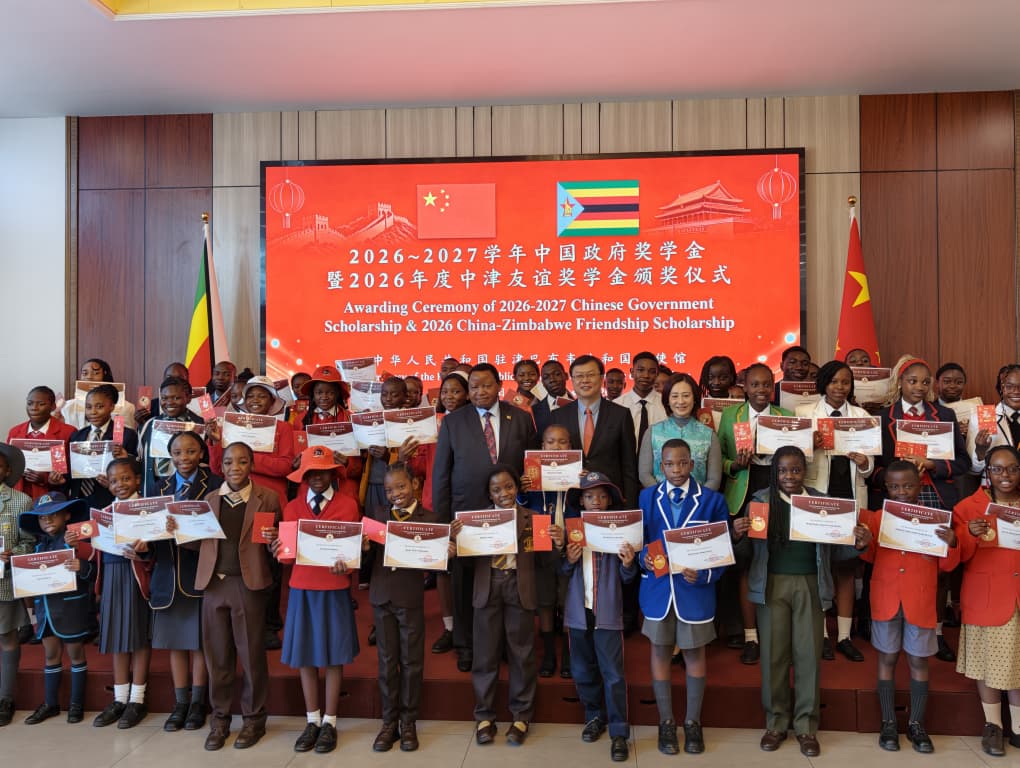
For five young Zimbabweans, the journey to China will be more than a change of country or university. It will be an opportunity to acquire knowledge, experience a different culture and prepare themselves to contribute to Zimbabwe’s development.
The students were honoured during the 2026–2027 Chinese Government Scholarship and 2026 China–Zimbabwe Friendship Scholarship Awarding Ceremony held at the Chinese Embassy in Harare on August 26, 2026.
The ceremony was jointly organised and hosted by Chinese Ambassador to Zimbabwe Zhou Ding and Madame Lyu Renhong, underscoring their shared commitment to supporting education, cultural exchange and stronger people-to-people relations between Zimbabwe and China.
Higher and Tertiary Education, Innovation, Science and Technology Development Minister Ambassador Dr Frederick Shava attended as guest of honour.
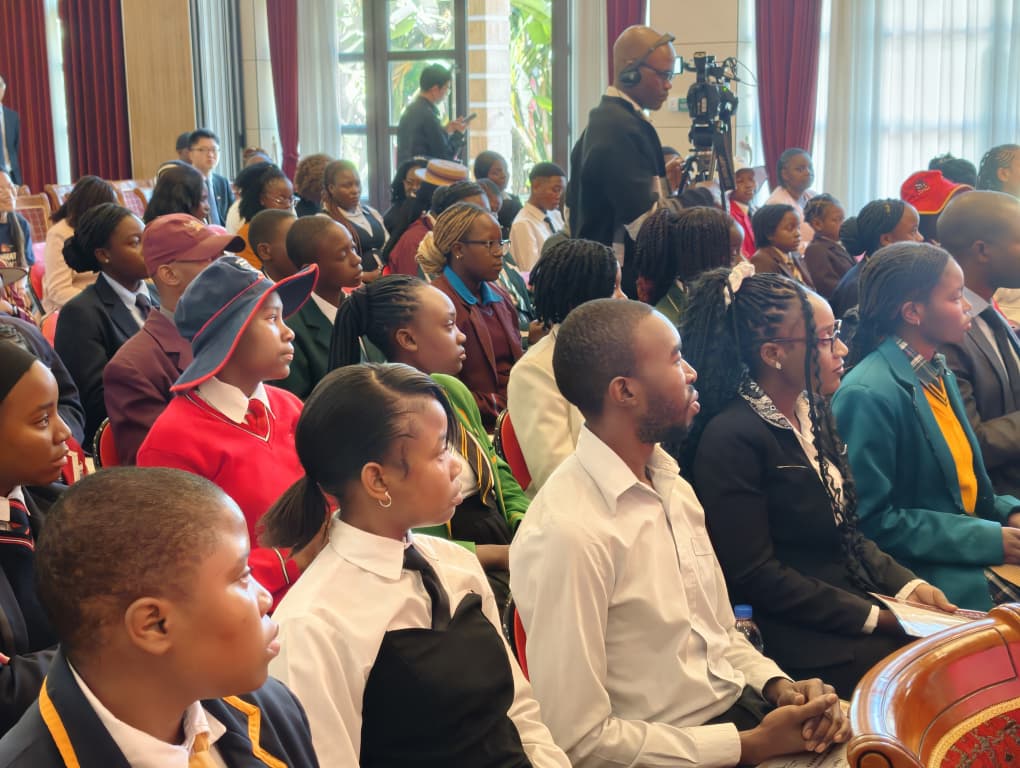
The event also brought together government officials, educators, Chinese language teachers, students, parents and representatives of the Confucius Institute at the University of Zimbabwe.
The five Chinese Government Scholarship beneficiaries are expected to leave Zimbabwe within two weeks to pursue studies in International Relations, Business Administration, and Aeronautical and Astronautical Science and Technology.
These are not merely academic disciplines. They are strategic areas with the potential to strengthen Zimbabwe’s diplomacy, entrepreneurship, management capacity, aviation industry, space science and technological development.
Addressing the recipients, Ambassador Zhou said the scholarships reflected the enduring friendship between China and Zimbabwe and represented an investment in the country’s young people.
“Far more than financial support, this award stands as a testament to the enduring goodwill and friendship between our two nations,” he said.
The Ambassador encouraged the beneficiaries to embrace their studies, build lasting friendships and represent Zimbabwe with distinction during their time in China.
He said their education should ultimately benefit both their personal development and Zimbabwe’s wider socioeconomic transformation.
“Upon completing your studies, I trust that you will return equipped with not only professional expertise, but also an expanded global perspective and enriched cross-cultural insight,” Ambassador Zhou said.
“May what you gain in China serve to advance your personal development and enable you to make meaningful contributions to Zimbabwe’s socioeconomic progress in the years to come.”
Education at the centre of bilateral relations
Educational cooperation has become one of the strongest pillars of Zimbabwe–China relations.
Over the past decade, more than 6,000 Zimbabwean students have studied in China. Between 2024 and 2026, 20 Zimbabweans benefited from the Chinese Government Scholarship Programme, while about 200 students received support through the China–Zimbabwe Friendship Scholarship.

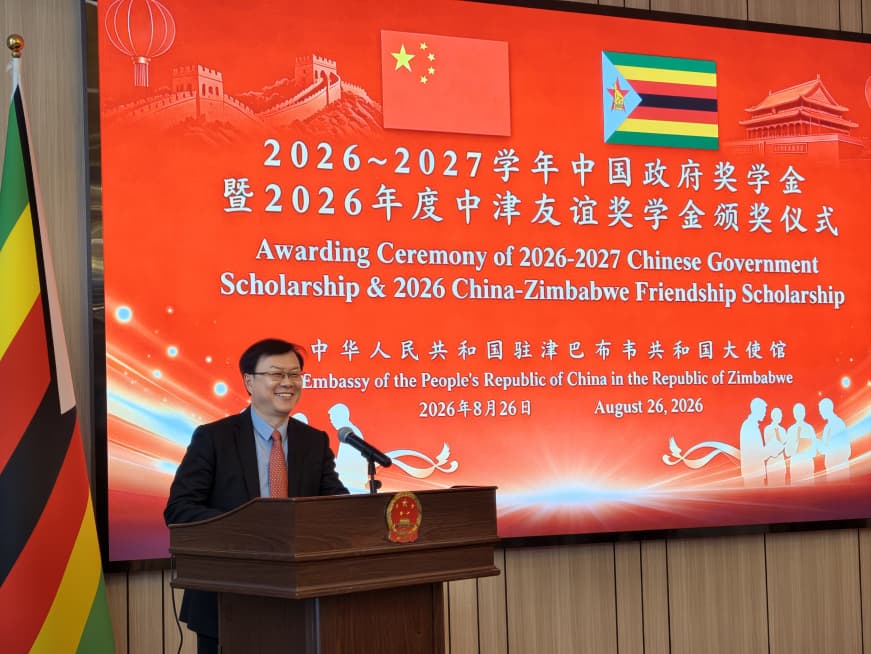
Ambassador Zhou said nearly 200 young Zimbabweans had received the Friendship Scholarship since he assumed his diplomatic posting in the country three years ago.
The programme recognises students who demonstrate strong academic performance and commitment to learning the Chinese language.
Zimbabwe’s partnership with China has also produced major education and research initiatives, including the Confucius Institute, High-Performance Computing Centre and China–Zimbabwe Belt and Road Joint Laboratory on Agriculture at the University of Zimbabwe.
These initiatives are intended to strengthen research, technological advancement and the development of skills required by Zimbabwe’s economy.
Ambassador Zhou said China’s support complemented Zimbabwe’s efforts to modernise its education system, broaden opportunities for young people and develop the expertise needed to build an industrialised and innovation-driven economy.
The partnership is particularly relevant as Zimbabwe implements the National Development Strategy 2 and pursues its Vision 2030 objectives, while China advances its 15th Five-Year Plan covering the period from 2026 to 2030.
The alignment of the two countries’ development programmes is expected to create further opportunities in trade, investment, digital transformation, green development and human-capital development.
Students challenged to return and serve
Minister Shava described the scholarships as tangible evidence of the two countries’ shared commitment to advancing knowledge, promoting innovation and strengthening bilateral friendship.
He said the academic programmes selected by the five students were closely connected to Zimbabwe’s national development priorities.
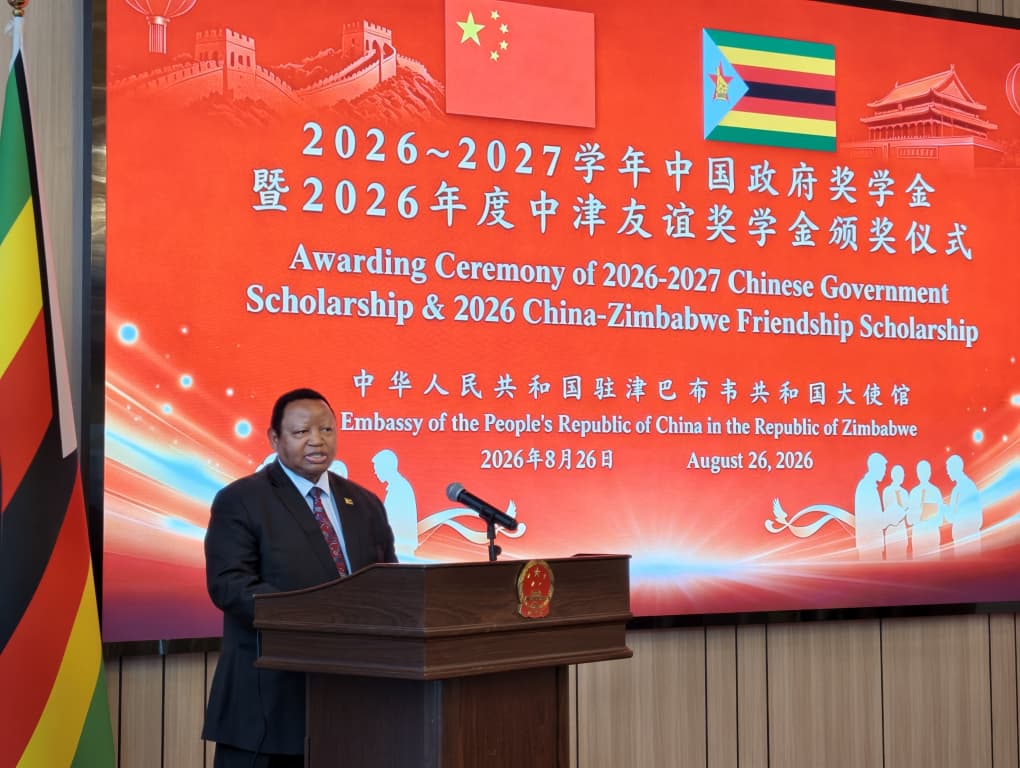
Those studying International Relations could help strengthen Zimbabwe’s participation in global diplomacy, while Business Administration graduates could support entrepreneurship, institutional efficiency and economic innovation.
Students entering Aeronautical and Astronautical Science and Technology could contribute to Zimbabwe’s emerging ambitions in aviation, space science and advanced technology.
“Your success will not only benefit you individually, but will also enhance Zimbabwe’s competitiveness and standing in the global community,” Minister Shava told the beneficiaries.
He urged the students to approach their studies with confidence, humility and determination, while remembering the responsibility that comes with representing their country abroad.
“Be proud ambassadors of Zimbabwe, and let your success abroad become the foundation of progress at home,” he said.
A journey of transformation
The significance of the scholarship was brought to life by former recipient Stellah Muleza, who shared her experience of living and studying in China.
Muleza said receiving the Chinese Government Scholarship had opened a door to a world she had previously only imagined.
“For me, it was much more than financial support to study abroad. It was a door that opened to a world I had only imagined,” she said.
Her journey required adapting to a different education system, unfamiliar customs, new food and the challenge of learning the Chinese language.
However, those difficulties became part of a wider process of personal growth and transformation.
“Learning Chinese was one of my biggest challenges, but it also became one of the most meaningful parts of my journey,” Muleza said.
During her year in China, she interacted with people from different countries, experienced Chinese culture and witnessed advances in education, business, technology and innovation.
Her message to younger Zimbabweans was simple: opportunities favour those who prepare themselves.
Muleza encouraged primary and secondary school pupils to dream beyond their immediate circumstances, study hard, respect their teachers and develop the confidence to pursue international opportunities.
To university students, she stressed that education should extend beyond obtaining a certificate.
“Develop your skills. Build your character. Learn languages. Be willing to listen, to adapt and to learn from others,” she said.
She also reminded the new scholarship recipients that their awards carried responsibilities.
“This scholarship is not simply an award. It is a responsibility. We have been given an opportunity to learn, to grow and to become better versions of ourselves,” Muleza said.
Building bridges between two peoples
The ceremony came during the China–Africa Year of People-to-People Exchanges, giving the occasion wider significance beyond the awarding of scholarships.
Through their joint organisation of the event, Ambassador Zhou and Madame Lyu Renhong helped create a platform that celebrated academic excellence while bringing together students, educators, government officials and families.
The gathering demonstrated how diplomacy can move beyond formal agreements and take shape in the lives of young people who are given opportunities to study, travel and experience another culture.
Ambassador Zhou concluded with a Chinese proverb: “A journey of a thousand miles begins with a single step.”
He paired it with the Shona expression, “Kudzidza hakuperi” — learning never ends.
For the scholarship recipients, the ceremony represented that crucial first step. Their greater challenge will be to turn the knowledge and experience gained in China into lasting progress for themselves, their communities and Zimbabwe.