


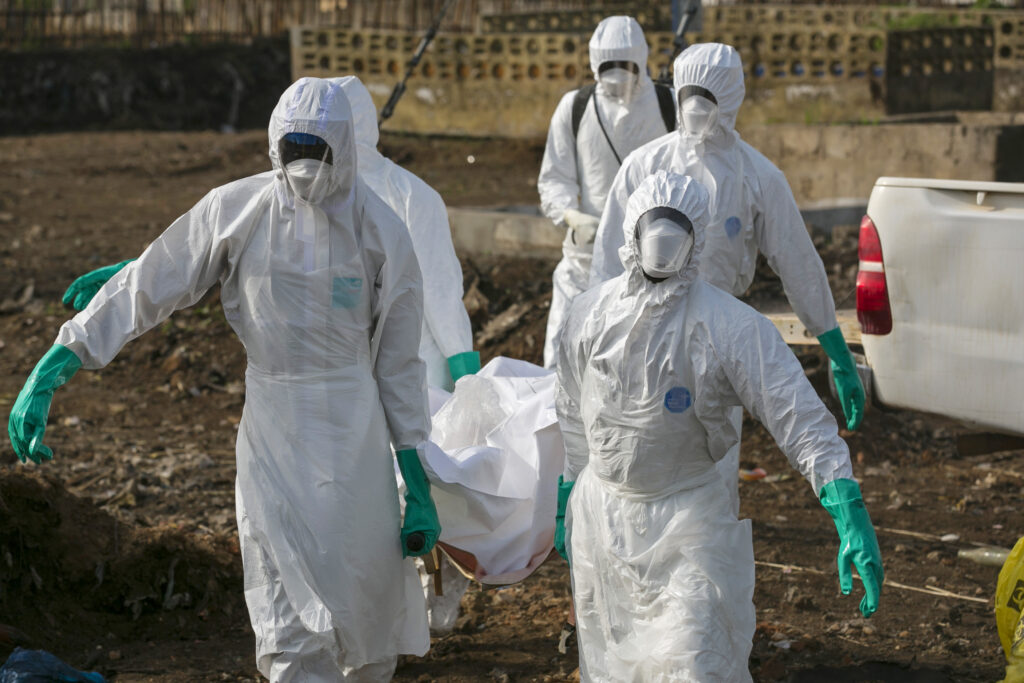
The death toll from the ongoing Ebola outbreak in the Democratic Republic of Congo has exceeded 1,000, making it the fastest-moving outbreak of the disease on record, according to the Africa Centres for Disease Control and Prevention (Africa CDC).
Speaking at a health summit in Ghana, Africa CDC Director-General Dr Jean Kaseya confirmed that 1,031 deaths have been recorded, warning that shortages of vaccines, treatment and funding continue to hamper efforts to contain the disease.
“These are people dying. They are dying because we don’t have vaccines, we don’t have medicine, we don’t have funding,” Dr Kaseya said.
The latest figures released by Congo’s Ministry of Health show that 2,473 Ebola cases had been confirmed by Monday, with at least 737 patients either receiving treatment in isolation or admitted to hospital.
The outbreak was officially declared on May 15 and is being driven by the Bundibugyo strain of the Ebola virus, for which there are currently no approved vaccines or specific treatments.
Health experts say the outbreak is spreading at an unprecedented pace. It has reached more than 1,000 deaths in a significantly shorter period than previous epidemics, including the devastating 2013–2016 West Africa outbreak, which took several months to reach the same milestone.
The World Health Organization (WHO) has warned that the actual number of infections could be two to four times higher than official reports, largely because insecurity and limited access continue to hinder surveillance and case detection in affected areas.
The situation has been further complicated by ongoing conflict in eastern Congo, where armed groups operate in several regions. Fighting has made it difficult for health workers to reach some communities and provide treatment or conduct disease surveillance.
Authorities have also raised concerns that approximately 80 percent of newly reported infections cannot be linked to known transmission chains, suggesting that the virus is spreading faster than health teams can trace it.
Response efforts have also faced resistance from some communities, particularly regarding safe burial procedures. Many families continue to prefer traditional burial practices, increasing the risk of further transmission.
“The biggest challenge remains resistance from or outright refusal by some communities to accept response teams,” said Robert Ndjalonga, head of civil protection in Ituri Province.
“On several occasions, burial teams have had to be escorted by security forces to ensure that safe and dignified burials could be carried out without incident.”
Officials say shortages of burial equipment and the absence of operational burial teams in some affected areas have delayed the safe handling of Ebola-related deaths.
Healthcare workers have also faced security threats. Aid teams and medical facilities have come under attack in some communities, forcing several organisations to suspend operations in high-risk areas.
Some frontline health workers have staged strikes over unpaid salaries since the outbreak began, further affecting response efforts.
Provincial authorities recently reported that a member of an Ebola burial team was injured after attackers stoned their vehicle following a burial in Bunia, underscoring the dangers facing emergency responders.
Local leaders in Ituri Province have urged residents to support health workers, warning that the Ebola outbreak now poses an even greater immediate threat to communities than the armed insurgency operating in parts of the region.