

Government is accelerating efforts to achieve fertilizer self-sufficiency within the next three years as global supply disruptions, driven by ongoing conflicts in the Middle East, continue to affect availability and raise import costs.
This morning, Finance, Economic Development and Investment Promotion Minister Professor Mthuli Ncube visited and toured the Dalian Jinzhou Heavy Machinery Group (JHM) manufacturing plant in Dalian, China, where fertiliser production equipment is being built for Wintrue Holdings in partnership with Sunny Yifeng.
Part of the equipment has already been delivered and the rest is expected to be delivered to Zimbabwe within the next month.
The investor is developing a fertiliser production facility in Norton, expected to play a role in boosting domestic supply.

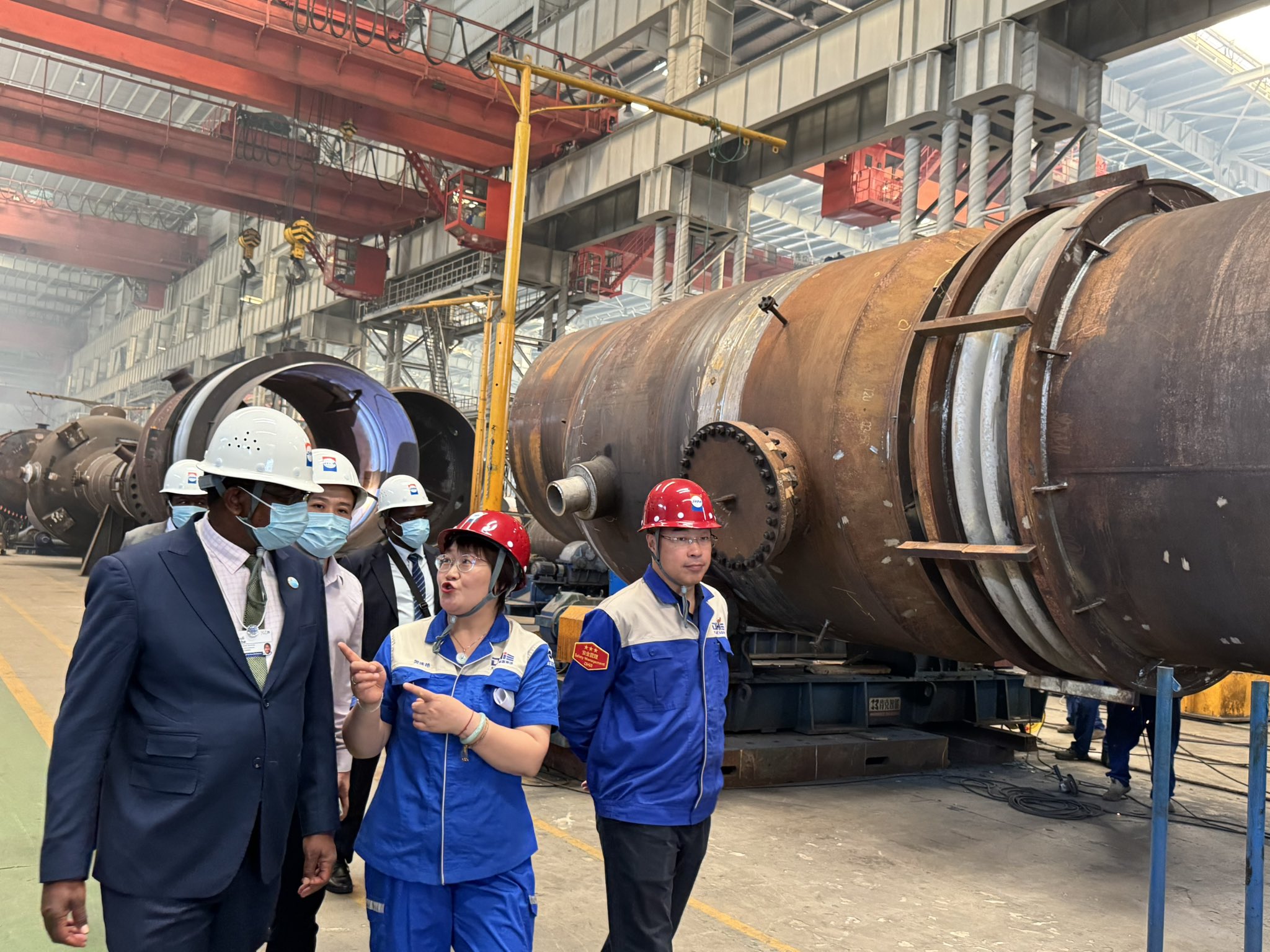
The project is one of three major coal-to-fertiliser initiatives worth more than USD1 billion that the government says could make the country self-sufficient by 2030.
ALSO READ: Zim Scholar Challenges Global ESG Model, Calls for African-Centred Sustainability Framework
“We are moving to cut fertiliser costs by up to 40 percent through coal‑to‑fertiliser projects.”
“This is about food security,” said Prof Ncube.
The Government is promoting investment in domestic fertiliser manufacturing, with a focus on utilising Zimbabwe’s vast coal reserves as a key input for production, thereby integrating domestic resource endowment into value-added industrial processes.
The strategy aims to reduce import dependence while building local industrial capacity in chemical processing and related manufacturing sectors.
The country currently relies heavily on imported fertiliser, exposing vulnerabilities in the agricultural sector and food security system.
Prof. Ncube said the projects are being fast-tracked in response to a sharp 30-40 percent increase in fertiliser prices that has placed pressure on farmers and food production.
The Norton plant, led by Chinese-linked firms Sunny Yi Feng Tiles Zimbabwe and Wintrue Holdings, has an estimated investment of around USD 500 million and is expected to produce over 300 000 tonnes of urea annually, significantly narrowing Zimbabwe’s fertiliser deficit.
Prof. Ncube said Government is supporting the projects through incentives such as Special Economic Zone status, tax benefits and eased regulatory requirements to speed up implementation.
The Government further aims that, once self-sufficiency is achieved, Zimbabwe will scale up production capacity to export surplus fertiliser across the region, positioning the country as a competitive supplier in Southern Africa.