


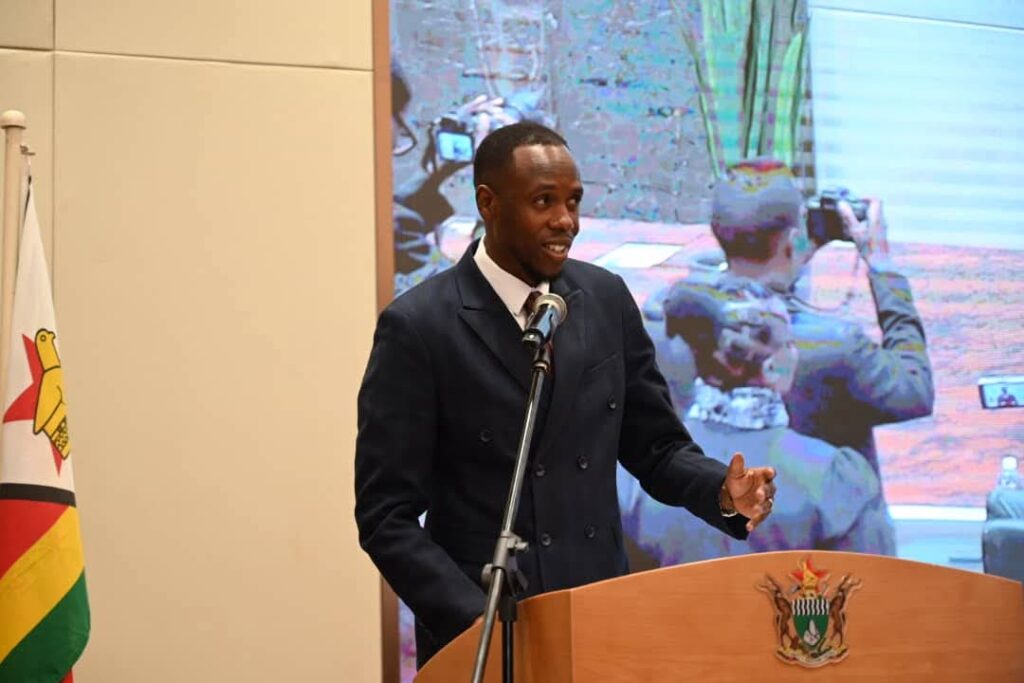
Deputy Minister of Local Government and Public Works Albert Tawanda Mavunga has called on countries in the Global South to strengthen unity, self-reliance and cooperation as they work towards sustainable development.
Speaking at a Global South symposium in Beijing attended by government officials, academics and civil servants from Africa, Asia, Latin America and the Caribbean, Mavunga said developing nations should take greater ownership of their economic and social development.
He drew inspiration from President Emmerson Mnangagwa’s philosophy that nations must be built by their own citizens.
“President Mnangagwa always says, ‘ilizwe lakhiwa ngabanikazi balo’ a nation is built by its own people,” said Mavunga.
“May it be known today that the Global South is built by its own people. We are the inhabitants of the Global South; let us build it together.”
Mavunga said the Global South was no longer simply a geographical term but had evolved into a platform for countries with shared interests to strengthen economic cooperation and increase their influence in international affairs.
He said developing countries had played a major role in the global economy through their natural resources and labour, but often had limited influence over international decision-making.
“The question before us is simple but profound: will the Global South rise divided, or will we rise together as one formidable force?” he said.
He called for increased trade among developing countries, greater technology exchange, knowledge sharing and the development of regional value chains.
Mavunga pointed to initiatives including the Forum on China-Africa Cooperation (FOCAC), the Belt and Road Initiative and BRICS as examples of platforms promoting cooperation between countries in the Global South.
He said economic partnerships should also help countries move away from exporting raw materials by promoting local processing and manufacturing.
“Unity must move beyond speeches. It requires economic solidarity; we must trade more with one another, building regional value chains,” he said.
The Deputy Minister also urged countries to invest in technology and ensure that the digital divide does not create another obstacle to development.
He challenged young leaders participating in the symposium to use innovation and international cooperation to address challenges facing their communities.
“The Global South holds the keys to humanity’s greatest challenges: critical minerals for green energy, arable land for food security and the youngest populations for innovation,” he said.
Mavunga further said Zimbabwe’s philosophy of Ubuntu, which places emphasis on community and shared humanity, was consistent with the broader vision of cooperation among developing nations.
He said Global South countries were seeking mutually beneficial partnerships rather than assistance based on charity.
“We are not asking for charity; we are demanding partnership. We are not seeking to destroy the world order; we are seeking to make it fair, just and inclusive,” he said.
The Beijing symposium brought together representatives from different regions of the Global South to exchange ideas on development, cooperation and common challenges.