



Seed Co has launched a new white-flour wheat variety, SC W9104, as Zimbabwe seeks to consolidate wheat self-sufficiency and improve productivity, quality and resilience across the agricultural value chain.
The variety was unveiled during the inaugural Seed Co Wheat Field Day held at Rattray Arnold Research Station in Shamva on September 22, at which farmers, researchers, agronomists, millers, bakers and senior stakeholders were present.
The field day was held under the theme, “SCW9104: Growing Zimbabwe’s Wheat Future Driving Economic Growth and Food Security.”
Permanent Secretary in the Ministry of Agriculture, Mechanisation and Water Resources Development, Professor Obert Jiri, said, “Zimbabwe’s wheat sector has moved beyond the immediate objective of self-sufficiency, with the focus now shifting towards sustained production, competitiveness and regional market participation.”
“Zimbabwe harvested about 640 000 tonnes of wheat from approximately 122 000 hectares in 2025, against annual national requirements of about 360 000 tonnes,” he commented.
For the 2026 winter wheat season, the Government targeted 125 000 hectares and production of around 660 000 tonnes, while about 128 000 hectares had already been planted by June.
“The country has demonstrated that self-sufficiency is achievable,” said Prof Jiri. “But our ambition must go beyond producing enough. We must produce better, more efficiently, competitively and sustainably.”
He said that research and innovation would remain critical to maintaining the country’s gains, particularly as farmers faced changing weather patterns and emerging crop diseases.
SC W9104 has a yield potential of approximately 10.5 tonnes per hectare and was developed with strong tolerance to rust diseases, including yellow or stripe rust. It also has high protein content of above 13 percent, white flour colour and good milling and baking qualities.
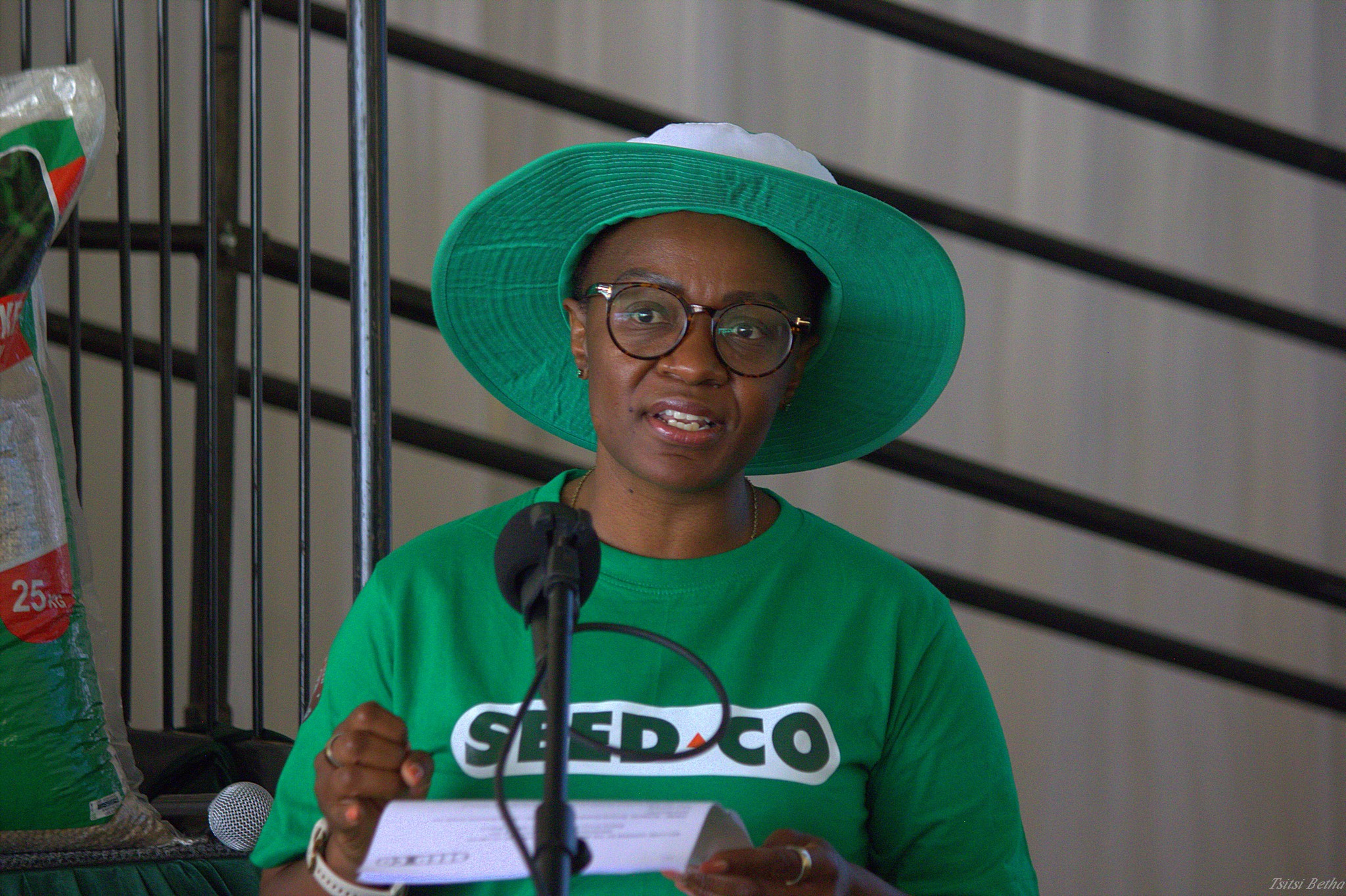

Seed Co Zimbabwe Managing Director, Mrs Felistus Ndawi-Gurajena, said the variety was the latest product of the company’s wheat breeding programme, which has been running since 1981.l0
“Today is more than a field day. It is a meeting point between science and farming, research and enterprise, and between the achievements of yesterday and the possibilities of tomorrow,” Ndawi-Gurajena said.
She stated that Seed Co’s approach was centred on farmers, with variety development informed by production conditions, market requirements and the needs of the wider value chain.
SC W9104 is the latest addition to a succession of Seed Co wheat varieties developed over decades, including SC Scarlet, SC Scholar, SC Scepter, SC Shine, SC Stallion, SC Sekuru, SC Sky, SC Scan, SC Nduna, SC Select and SC Serena.
Ndawi-Gurajena said that the company was focusing not only on yield but also on profitability, resilience and quality, noting that farmers needed varieties that could perform under changing production conditions.
“A variety only creates value when it performs in the hands of farmers. This is why field days such as today’s are so important. They allow us to move beyond brochures and promises and into real fields, real measurements and real conversations,” she said.
The Government has also identified climate preparedness as a priority ahead of the coming agricultural season, with measures including strengthening strategic grain reserves, promoting climate-smart production, improving agricultural financing and strengthening early-warning and farmer-support systems.
Meanwhile, players in the food-processing sector have welcomed the new variety.


Kudzayi Cheuka, Sales and Marketing representative at Yummy Organic Foods, said the company was pleased to engage with Seed Co and showcase its wheat varieties.
“We are delighted to welcome Seed Co’s new wheat variety and we are proud to introduce and showcase their wheat varieties,” Cheuka said.
“At Yummy Organic Foods, we value partnerships that contribute to the growth and development of Zimbabwe’s agricultural and food industry. We look forward to engaging, learning and exploring more opportunities for collaboration.”
The introduction of SC W9104 comes as Zimbabwe seeks to strengthen linkages between farmers, seed producers, researchers, millers, bakers and food processors while using improved genetics and agronomic practices to increase productivity.
Prof Jiri said that continued collaboration between Government, private-sector players, farmers, financial institutions and development partners would be essential for Zimbabwe to move from wheat self-sufficiency towards sustained surplus and greater participation in regional markets.