
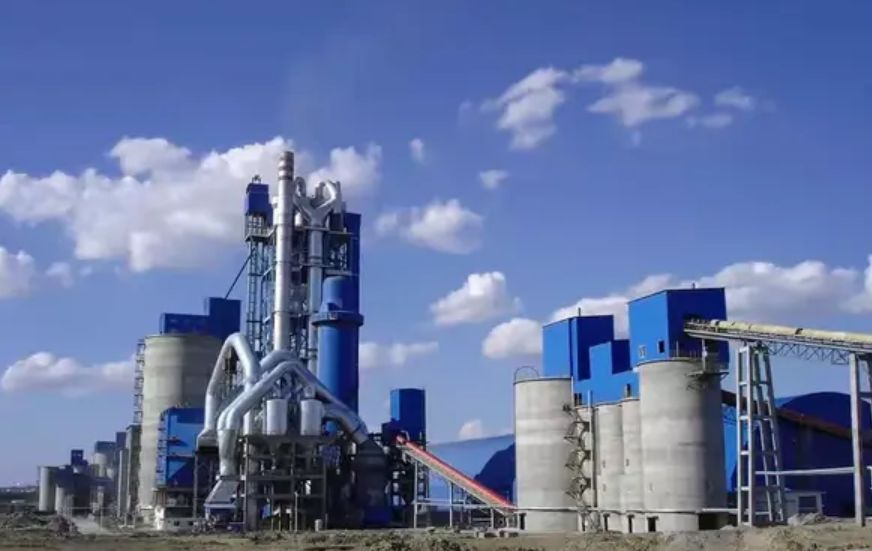
BULAWAYO – The Ministry of Industry and Commerce, in collaboration with the esteemed local economic think-tank, Africa Economic Development Strategies, is poised to host the Zimbabwe Industrialisation Conference and Expo (ZICE) 2026. This pivotal event, scheduled for July 23 to 24 at the Zimbabwe International Trade Fair (ZITF) grounds in Bulawayo, represents a strategic national endeavor to mobilize both domestic and global capital for industrial growth.
ZICE 2026 is envisioned as the Government’s primary market-driven mechanism to accelerate Zimbabwe’s trajectory towards becoming a competitive regional manufacturing economy. Operating under the theme, “Accelerating Industrialisation: Investment, Value Chains and Global Competitiveness,” the conference is designed to foster tangible outcomes.
Organizers have underscored that the platform will decisively move beyond conventional policy discussions, prioritizing concrete deal-making, project financing, and structured public-private partnerships. By strategically staging the expo in Bulawayo, the Government aims to channel significant investments towards revitalizing the city’s historical prominence as the nation’s industrial heartland. Concurrently, this initiative seeks to integrate local production lines into the broader economic networks of the Southern African Development Community (SADC), the Common Market for Eastern and Southern Africa (COMESA), and the African Continental Free Trade Area (AfCFTA).
This initiative is meticulously aligned with the National Development Strategy 2 (NDS2) and the Zimbabwe National Industrial Development Policy 2 (ZNIDP 2), which spans from 2026 to 2030, as well as the Local Content Strategy extending until 2035. To propel this industrial advancement, eight critical economic sectors have been identified for immediate value addition and mineral beneficiation efforts.
The Government is placing a high priority on local processing for key minerals such as lithium, platinum, chrome, and gold. Furthermore, downstream initiatives are being developed to transform the monumental Manhize steel project into a leading regional heavy industry hub. Complementary development pipelines have been established for vital sectors including agro-processing, energy solutions, textiles, chemicals, and construction materials.
To ensure measurable market outcomes, a mandatory, data-driven matchmaking framework will be introduced. This innovative system is designed to directly connect Government agencies, provincial authorities, and large-scale industrial firms with commercial banks, private equity entities, and development finance institutions. Participants will navigate a highly structured, step-by-step engagement process, utilizing an intelligent Business-to-Business (B2B) platform to align asset scale with strategic objectives, culminating in rapid, focused transactional meetings within designated onsite Deal Rooms.
The joint official event circular highlights ZICE 2026 as a “multi-stakeholder, high-impact platform, bringing together decision-makers across the entire industrial ecosystem: Government ministries, agencies, state-owned enterprises and provincial authorities, large manufacturers, mining companies, industrial park developers and export-oriented firms, commercial banks, DFIs, pension funds, private equity and infrastructure financiers, technology partners, engineering suppliers, universities, innovation hubs, training institutions, regional and international partners, including SADC, COMESA, AfCFTA agencies, embassies and development partners.”
High-level deliberations will be guided by a rigorous policy and financing framework structured around 10 core thematic areas. These sessions will intensely focus on the practical implementation of industrial policy, specifically translating the ZNIDP 2 into actionable programs. Discussions will also encompass local content enforcement, public procurement reforms, and initiatives to enhance the ease of doing business.
To unlock the requisite capital for these reforms, a dedicated session on industrial financing and investment mobilization will address the operationalization of the national Industrial Development Fund, the structuring of bankable industrial projects, and the deployment of blended finance and public-private partnerships (PPPs).
Resource-based industrialization has emerged as a paramount priority, with delegates set to deliberate on mineral beneficiation strategies aimed at transitioning the nation from raw mineral exports towards processed goods. This will be bolstered by policy frameworks covering export restrictions and the proactive development of competitive downstream processing industries. In parallel with mineral processing, significant emphasis will be placed on cultivating a robust iron and steel industrial ecosystem. This track is specifically designed to leverage the massive, newly established Manhize steel project for broader industrial expansion, positioning Zimbabwe as a dominant regional steel hub and fostering downstream heavy manufacturing.
Broader value chain development and localization strategies will also be meticulously mapped out during the two-day event. Experts will concentrate on strengthening backward and forward linkages, devising aggressive import substitution strategies, and accelerating industrial cluster development across the country. To support these ambitious production targets, the conference will address critical energy and infrastructure bottlenecks, focusing directly on securing reliable and affordable power for factories, resolving logistics and transport constraints, and optimizing special economic zones (SEZs) and industrial parks.
The technical capacity of the manufacturing sector will be a key focus under a theme dedicated to technology, innovation, and industrial upgrading. This will necessitate discussions on the adoption of Industry 4.0 technologies, such as Artificial Intelligence and automation, alongside the commercialization of research and development and the retooling of factories to boost nationwide productivity. Delegates will also review infrastructural supply lines through a dedicated session on construction materials, evaluating production capabilities for cement, bricks, glass, ceramics, and steel-based housing and infrastructure inputs.
Economic inclusivity remains a cornerstone of the Government’s agenda, with a thematic area dedicated to Small and Medium Enterprise (SME) integration and inclusive industrialization. This session will concentrate on formalizing smaller businesses, expanding access to corporate finance, developing rural industrialization strategies, and directly linking local SMEs into large-scale industrial supply chains.
The final thematic block will address global climate mandates through a focus on sustainability and green industrialization. Industry leaders will be tasked with aligning operations with Environmental, Social, and Governance (ESG) compliance, resource efficiency, circular economy models, and climate-smart manufacturing practices to ensure long-term global competitiveness.