
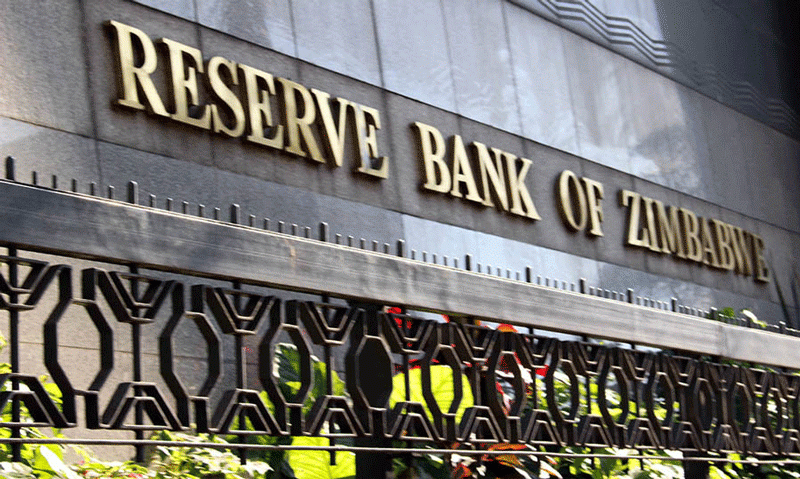
Zimbabwe’s central bank has hailed a “milestone achievement” in its economic stabilization drive, announcing that annual local currency inflation has plunged to a historic low of 2.9% in August 2026.
The Reserve Bank of Zimbabwe (RBZ) revealed that the single-digit inflation rate-attained in January and sustained through August-is the country’s lowest since 1980.
According to the central bank, the figure stands in stark contrast to regional averages, with Zimbabwe recording an average inflation rate of 4.0% over the last eight months.
This comes despite a brief spike to 4.8% in April, which was attributed to global oil price shocks stemming from the conflict in the Middle East.
“Annual ZiG inflation stood at 2.9% in August 2026, the lowest single digit inflation outturn since 1980 – a milestone achievement,” said RBZ Governor Dr. John Mushayavanhu.
While Zimbabwe’s economy has been characterized by a multi-currency system, the Governor emphasized that the ZiG is holding its own against the US dollar.
The 2.9% ZiG rate compares favorably with a 3.1% domestic US dollar inflation rate, a trend that has persisted since August 2025.
Dr. Mushayavanhu stressed that the stable pricing environment is a clear testament to the government’s policy direction, providing much-needed predictability for local and international investors.
“The muted impact of the oil price shock on Zimbabwe’s inflation benefited from well anchored inflation expectations, with other sub-Saharan African countries recording, on average, increases of between 2-4 percentage points in domestic inflation,” the Governor noted.
Crucially, the RBZ says this stability means consumers should no longer panic over currency choices.
The central bank asserted that prices of domestic goods and services have been rising at the same pace in both ZiG and US dollar terms, rendering businesses indifferent to the currency of payment.
“Importantly, the implication is that businesses should be indifferent in terms of pricing and accepting payment in either foreign currency or ZiG.”
Looking ahead, the central bank warns that this economic recovery is not a time for complacency, but rather a moment to double down on prudent fiscal discipline to entrench macroeconomic stability through 2030.
“Going forward, the Reserve Bank remains committed to ‘stay the course and walk the talk’ in ensuring price, currency and exchange rate stability, which is critical for boosting confidence in our domestic currency and entrenching macroeconomic stability,” said Dr. Mushayavanhu.