


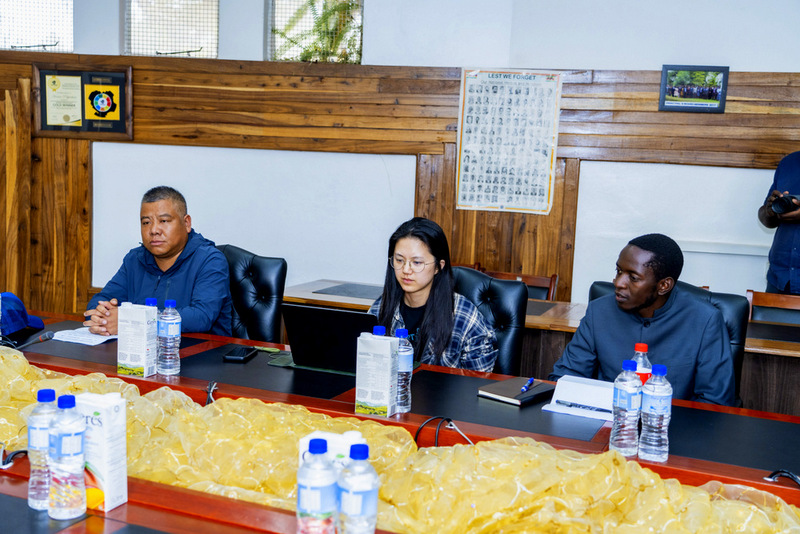
China Railway No. 9 Group has opened a new skills workshop at Harare Polytechnic, aiming to turn its construction and engineering experience into employment pathways for students and graduates.
The Youth Bridge Workshop, unveiled this week, is designed to give students and faculty hands-on exposure to industrial engineering while creating routes into jobs and professional development with the Chinese contractor.
Speaking at the launch, China Railway No. 9 Group deputy general manager Zhao Gangmin said the company wanted to bring its field experience directly onto campus.
“On the one hand, we are willing to bring our practical experience from engineering and construction into the campus, creating more opportunities for students and faculty to engage with the industry and gain practical knowledge,” Gangmin said.
“On the other hand, we also hope to identify and support talented young people from Harare Polytechnic, creating pathways for employment and professional development, while promoting mutual growth between our company and local talent.”
The workshop lands as Harare Polytechnic pushes to make its research and innovation work more commercially relevant. Its 2026 Research and Innovation Symposium is built around industry engagement, venture funding and moving ideas out of laboratories and into the market.
Symposium sessions cover financing for business start-ups, applied research aimed at real-world industrial problems, and building bankable business concepts, alongside exhibition stands connecting students and researchers directly with private companies.
Gangmin said the company had stayed active in Zimbabwean construction while keeping a focus on local development. “Since entering Zimbabwe, China Railway No. 9 Group has been actively engaged in engineering and construction projects across the country, while remaining firmly committed to local development,” he said.
The company said the Harare Polytechnic partnership was meant to outlast any single project, building a longer-term relationship with the institution and its students. Officials expect the workshop to help identify promising talent earlier, before students even graduate.
For Zimbabwean businesses more broadly, tighter links between industry and academia offer a potential answer to persistent skills shortages, while giving companies earlier access to emerging technologies and homegrown solutions. Students, in turn, gain exposure to commercial demands that go beyond standard classroom training.