


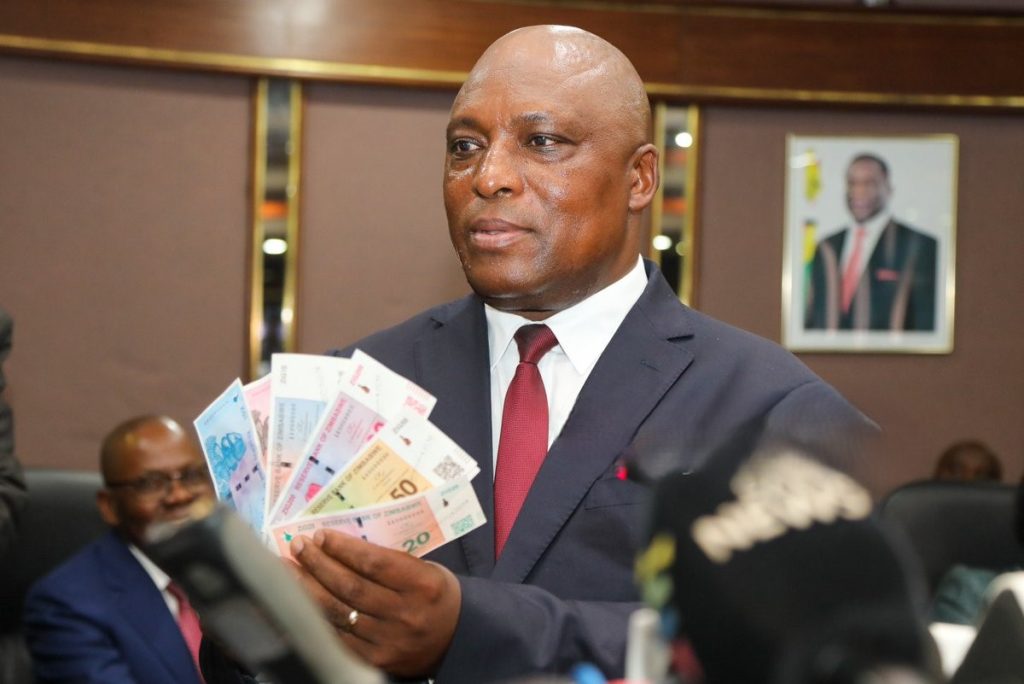
The Reserve Bank of Zimbabwe (RBZ) has introduced significant reforms to banking fees, capping cash withdrawal charges at 2% and eliminating fees for account balance inquiries and cash deposits, as part of the 2026 Monetary Policy Statement presented on 27 February 2026.
RBZ Governor Dr. John Mushayavanhu announced the measures during his presentation, noting that banks had voluntarily approached the central bank with proposals for further reductions.
The changes, effective by 31 March 2026, aim to reduce transaction costs, encourage greater use of formal banking channels, and support the Zimbabwe Gold (ZiG) currency framework amid ongoing efforts to stabilise the financial system.
Key reforms include:
- Cash withdrawal fees at banking halls and automated teller machines (ATMs) are capped at a maximum of 2% of the withdrawn amount for both US dollars and ZiG (previously ranging from 2.5% to 3.75% or higher in some cases).
- Point-of-sale (POS) transaction charges are limited to 1.5% of the transaction value for both local and international cards, with a cap of US$20 or the ZiG equivalent. From 1 April 2026, no minimum POS fee may be charged.
- Charges for account balance inquiries have been removed entirely across all banking and mobile banking platforms for both ZiG and US$ accounts.
- Fees for cash deposits have been eliminated.
Governor Mushayavanhu highlighted the collaborative nature of the reforms, stating:
“Just recently, bankers approached and offered a further reduction of cash withdrawal charges… to a maximum of 2%.”
He further directed: “Reduce cash withdrawal charges for both banking halls and automated teller machines (ATMs) to a maximum of 2% of the withdrawn amount for US$ and ZiG cash withdrawals.”
The RBZ applauded banks for additional concessions, with Mushayavanhu noting:
“The Reserve Bank applauds banks for exempting the banking public from monthly service fees for accounts with a balance of US$100 and below or the ZiG equivalent, and for waiving charges on transactions of US$5 and below or the ZiG equivalent.”
These steps address longstanding public complaints about high transactional costs that discouraged formal savings and lending.
Mushayavanhu framed the package as a response to sector scrutiny, emphasising that the banking sector had “come under heavy scrutiny and criticism for high bank fees,” and that the voluntary reductions would help shift focus toward productive lending.
The central bank has also instructed mobile network operators (including those behind EcoCash, OneMoney, Telecash, and similar platforms) to audit all accounts with assistance from the Registrar General and deactivate any that cannot be validated with a valid ID by the end of June 2026.
This measure targets fraud, money laundering, and illicit flows through anonymous wallets.
The reforms form part of broader measures to deepen ZiG usage, including increased mobile money and ZIPIT transaction limits and the rollout of new ZiG banknotes, with redesigned 10, 20, and 50 ZiG notes entering circulation from 7 April 2026.
Analysts say the changes will improve transactional efficiency, rebuild public confidence in the banking system, and support financial inclusion.
The announcement follows the government’s decision in December 2025 to scrap a proposed 2% tax on certain cash withdrawals from the 2026 national budget, which had faced widespread backlash over fears it would undermine trust in formal banking.
Banks and deposit-taking microfinance institutions must implement the new fee structures by 31 March 2026.