
Policy
Zimbabwe Suspends New Urban Fuel Station Licences


The Zimbabwe Energy Regulatory Authority (ZERA) has temporarily suspended the issuing of new licences for fuel stations in urban areas, citing a need to curb the “mushrooming” of retail filling stations across the country.
The regulator is also considering a new by-law that would enforce a minimum distance of 15 kilometres between two retail service stations while also advocating for a shift towards containerised or portable fuel retail stations in urban centres to reduce land use.
This development follows the Harare City Council’s recent admission of chaos and poor coordination in issuing permits for service stations, resulting in three fuel stations within a 50 km radius, with some located just one metre apart.
Speaking during an Environmental Social Governance (ESG) conference held in Harare last Friday, Zimbabwe Energy Regulatory Authority’s technical services director, Engineer Man’arai Ndovorwi, said they are now working on closing all loopholes to curb the mushrooming of service stations.
“The issue of mushrooming of service stations in the CBD or in urban centres is, of course, of concern for us, and I think one of the challenges or loopholes that we had in our legislation was the licensing of these sites after they had obtained commercial rights in terms of development of these properties in urban centres,” he said.
“However, we are currently in talks with the local authorities to ensure that we revise the by-laws so that the actual permitting and licensing of these service stations is done before the development of these service stations, and so that we also amend our regulations to indicate the minimum distances that should be between service stations.”
Eng Ndovorwi also revealed that new licences will only be issued after the current challenges have been addressed.
“We are happy that the Government, through the Minister of Local Government and Public Works, issued a moratorium in terms of development in urban centres, and this is also not only impacting in terms of housing developments, but it’s also involving the development of these commercial entities or commercial sites in terms of development of service stations.
“So that moratorium is also applying to the development of service stations, and so currently we are not licensing any service stations in urban areas, but at least we are also working around the issue to ensure that we have minimum safe distances between these service stations being established.”
In urban areas, Eng Ndovorwi said, they were pushing for the minimum distance between retail fuel stations to curb further mushrooming of such facilities.
“In other jurisdictions, we find that the minimum distance between these service stations should be around 15 kilometres, so that is what we are also anticipating to happen as we develop our communities and move outside the CBDs to actually also do investment in rural communities.”
In the future, Eng Ndovorwi added that traditional fuel stations in urban areas will be phased out.
“So we are now encouraging them to put containerised fuel stations, which are coming at 20 percent of the cost of putting up a service station. So this is actually a way to help issues of mushrooming of service stations in the epicentres.”
A containerised or portable fuel retail station is a complete, self-contained fuel storage and dispensing unit built inside a standard shipping container.
The storage tanks are above ground, and the shipping container provides secondary containment.
They are also called portable fuel stations because the container installation can be transported on a low-bed trailer as and when necessary.


The Reserve Bank of Zimbabwe (RBZ) has introduced significant reforms to banking fees, capping cash withdrawal charges at 2% and eliminating fees for account balance inquiries and cash deposits, as part of the 2026 Monetary Policy Statement presented on 27 February 2026.
RBZ Governor Dr. John Mushayavanhu announced the measures during his presentation, noting that banks had voluntarily approached the central bank with proposals for further reductions.
The changes, effective by 31 March 2026, aim to reduce transaction costs, encourage greater use of formal banking channels, and support the Zimbabwe Gold (ZiG) currency framework amid ongoing efforts to stabilise the financial system.
Key reforms include:
- Cash withdrawal fees at banking halls and automated teller machines (ATMs) are capped at a maximum of 2% of the withdrawn amount for both US dollars and ZiG (previously ranging from 2.5% to 3.75% or higher in some cases).
- Point-of-sale (POS) transaction charges are limited to 1.5% of the transaction value for both local and international cards, with a cap of US$20 or the ZiG equivalent. From 1 April 2026, no minimum POS fee may be charged.
- Charges for account balance inquiries have been removed entirely across all banking and mobile banking platforms for both ZiG and US$ accounts.
- Fees for cash deposits have been eliminated.
Governor Mushayavanhu highlighted the collaborative nature of the reforms, stating:
“Just recently, bankers approached and offered a further reduction of cash withdrawal charges… to a maximum of 2%.”
He further directed: “Reduce cash withdrawal charges for both banking halls and automated teller machines (ATMs) to a maximum of 2% of the withdrawn amount for US$ and ZiG cash withdrawals.”
The RBZ applauded banks for additional concessions, with Mushayavanhu noting:
“The Reserve Bank applauds banks for exempting the banking public from monthly service fees for accounts with a balance of US$100 and below or the ZiG equivalent, and for waiving charges on transactions of US$5 and below or the ZiG equivalent.”
These steps address longstanding public complaints about high transactional costs that discouraged formal savings and lending.
Mushayavanhu framed the package as a response to sector scrutiny, emphasising that the banking sector had “come under heavy scrutiny and criticism for high bank fees,” and that the voluntary reductions would help shift focus toward productive lending.
The central bank has also instructed mobile network operators (including those behind EcoCash, OneMoney, Telecash, and similar platforms) to audit all accounts with assistance from the Registrar General and deactivate any that cannot be validated with a valid ID by the end of June 2026.
This measure targets fraud, money laundering, and illicit flows through anonymous wallets.
The reforms form part of broader measures to deepen ZiG usage, including increased mobile money and ZIPIT transaction limits and the rollout of new ZiG banknotes, with redesigned 10, 20, and 50 ZiG notes entering circulation from 7 April 2026.
Analysts say the changes will improve transactional efficiency, rebuild public confidence in the banking system, and support financial inclusion.
The announcement follows the government’s decision in December 2025 to scrap a proposed 2% tax on certain cash withdrawals from the 2026 national budget, which had faced widespread backlash over fears it would undermine trust in formal banking.
Banks and deposit-taking microfinance institutions must implement the new fee structures by 31 March 2026.

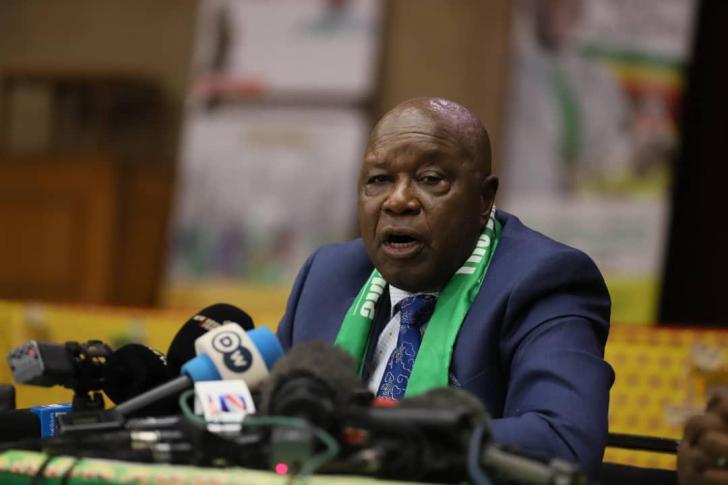
ZANU-PF Secretary for Information and Publicity, Christopher Mutsvangwa, on Thursday said the ruling party’s position on Vision 2030 remains clear, describing President ED as central to the fulfillment of the country’s long-term development agenda.
Speaking during a press conference at the party headquarters in Harare, Mutsvangwa said Vision 2030 is a structured national development programme designed to transform Zimbabwe into an upper-middle-income economy by the end of the decade.
He said the agenda is anchored on economic reforms, infrastructure development, rural industrialisation and youth empowerment initiatives being implemented under the leadership of His Excellency Emmerson Mnangagwa.
“Vision 2030 is a national mission which requires unity, discipline and policy consistency,” Mutsvangwa told journalists.
The press conference comes amid growing national debate over proposals within some party structures to amend the Constitution in a manner that could extend President Mnangagwa’s tenure beyond 2028.
Zimbabwe’s 2013 Constitution limits a President to two five-year terms. President Mnangagwa, who assumed office in November 2017 and was elected in 2018 before winning re-election in 2023, is currently serving his second and final term under the existing constitutional framework.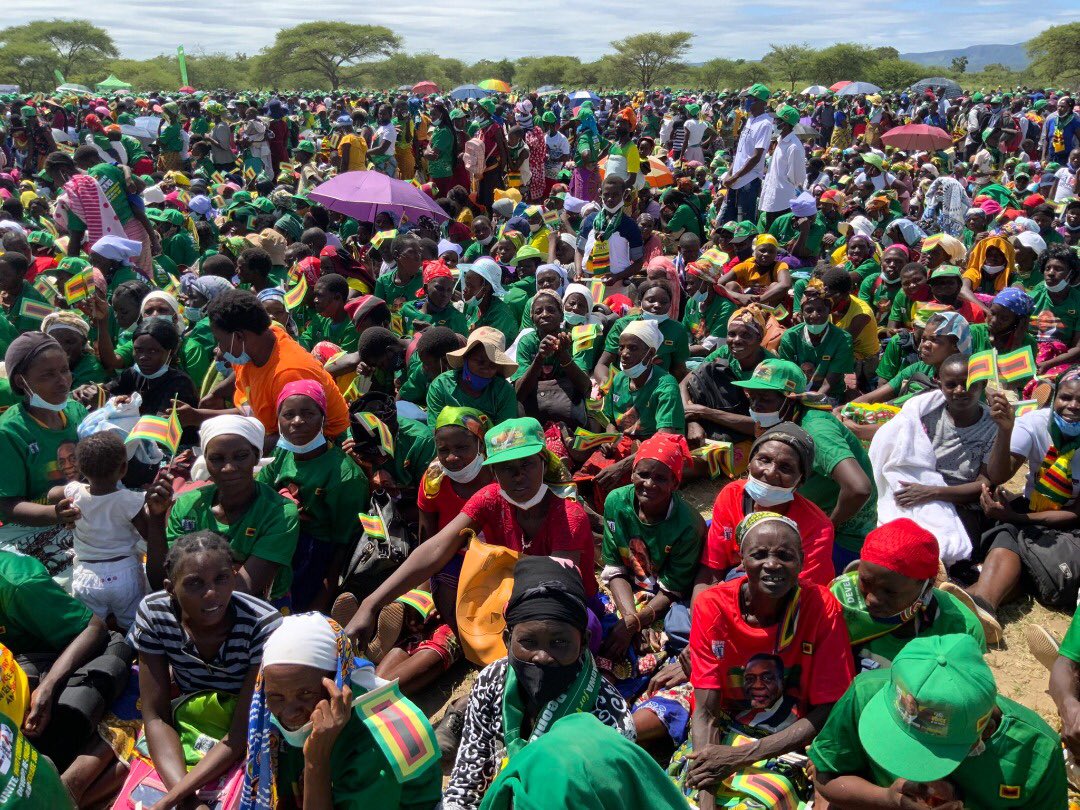
In recent months, some ZANU-PF provincial structures have publicly endorsed continued leadership up to 2030, arguing that stability and continuity are necessary to fully implement Vision 2030.
The discussion has triggered debate in political and legal circles. Constitutional experts note that any amendment to presidential term limits would require a two-thirds majority in Parliament and could necessitate a national referendum, depending on the scope of the proposed changes.
Opposition parties and civil society organisations have raised concerns over the implications for constitutional governance, saying term limits were introduced under the 2013 Constitution to strengthen democratic accountability and prevent prolonged incumbency.
President Mnangagwa has previously stated that he is a constitutionalist and respects the provisions of the Constitution.
Mutsvangwa maintained that the party’s primary focus remains the successful implementation of Vision 2030, describing it as a people-centred development blueprint requiring collective national effort.
As debate continues, ZANU-PF’s message at Thursday’s briefing was that Vision 2030 remains the guiding framework for the country’s socio-economic transformation.
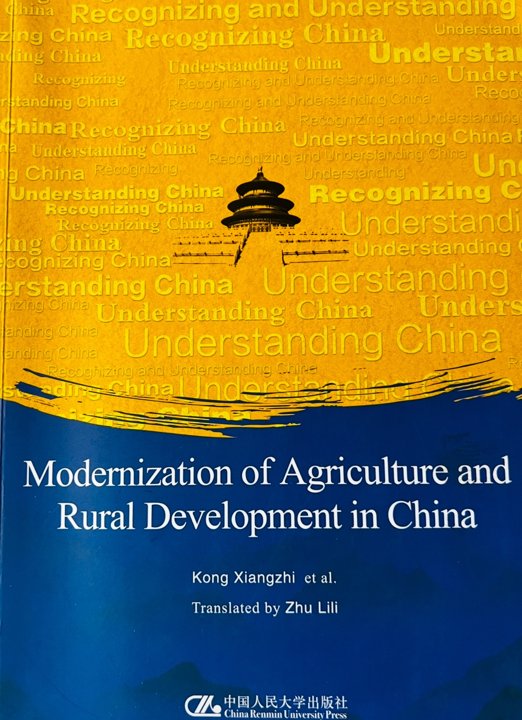
Book Review: Modernization of Agriculture and Rural Development in China by Kong Xiangzhi et al.
Agriculture continues to anchor livelihoods across the Global South, yet it is also the sector most exposed to climate volatility, market instability, and structural inequality. Few countries have confronted these challenges as comprehensively as the People’s Republic of China. The book Modernization of Agriculture and Rural Development in China, authored by Professor Kong Xiangzhi and his colleagues and translated by Zhu Lili, offers one of the most systematic analyses of how China engineered a far-reaching rural transformation.
More than a historical account, the book presents a coherent framework for rural modernization one that integrates agricultural productivity with social protection, governance reform, cultural revitalization, and ecological sustainability. For countries such as Zimbabwe, which possess immense agricultural potential yet continue to face rural poverty and productivity constraints, China’s experience offers critical strategic insights.
Part I: Reviewing Kong Xiangzhi’s Framework
Beyond Yields: Reimagining Rural Development
A central argument of Kong Xiangzhi’s work is that agricultural modernization cannot be reduced to increases in yields or mechanization alone. China’s success, he argues, lies in treating rural development as a whole-system transformation, driven by long-term political commitment and institutional coordination.
This transformation is organized around a five-pillar framework, which serves both as an analytical lens and a policy guide.
The Five Pillars of Rural Modernization
First, the book highlights the importance of new-type agricultural management entities. These include cooperatives, family farms, and agribusiness enterprises that replace isolated smallholder production with organized systems capable of achieving scale, adopting technology, and accessing markets. Kong describes these entities as the “skeleton and bridges” of modern agriculture, enabling farmers to integrate into value chains rather than remain at the margins.
Second, Kong emphasizes rural social security systems as foundational to sustainable development. Pensions, healthcare, and anti-poverty programs act as protective barriers that stabilize rural livelihoods. By reducing vulnerability to economic and climate shocks, these systems allow farmers to invest, innovate, and take calculated risks—an insight strongly supported by World Bank and FAO research on productive social protection.
Third, the book elevates rural culture and education as the “fuel” of modernization. China’s rural revitalization strategy recognizes that infrastructure and technology are ineffective without human capital. By preserving cultural heritage while modernizing education and skills training, China cultivated a rural workforce capable of managing modern farms, cooperatives, and enterprises.
Fourth, Kong identifies effective rural governance as the lifeblood of transformation. Strengthened grassroots institutions, clear lines of authority, and participatory governance mechanisms ensured that national policies were implemented at village level. This focus on governance underscores a critical lesson: policy success depends not only on design, but on local capacity to execute.
Finally, the concept of “beautiful villages” represents the integrated outcome of the framework. Rural modernization in China extends beyond income growth to include environmental restoration, waste management, spatial planning, and livable infrastructure. The goal is to make rural areas attractive places to live and work, reversing rural decline and migration.
Policy Consistency and Strategic Vision
Kong situates this framework within China’s broader policy environment, notably the annual No. 1 Central Document, which has consistently prioritized agriculture, rural areas, and farmers for more than a decade. This sustained political focus ensured continuity, funding, and institutional alignment.
Three policy themes stand out: food security as a national red line, the integration of urban and rural development to reduce inequality, and a transition toward environmentally sustainable and climate-smart agriculture. Together, these pillars demonstrate that China’s rural transformation was neither accidental nor short-term, but the product of deliberate, long-horizon planning.
Conclusion of the Review
Modernization of Agriculture and Rural Development in China succeeds in translating a vast national transformation into a clear analytical structure. Its central contribution is the demonstration that agricultural modernization must occur alongside social, cultural, institutional, and ecological renewal. For Zimbabwe and other developing economies, the book offers a disciplined starting point for rethinking rural development strategy.
Part II: Translating Lessons into Action for Zimbabwe
Zimbabwe’s agricultural sector remains central to employment and food security, yet it continues to struggle with low productivity, climate vulnerability, fragmented landholdings, and weak market integration. The Chinese experience is instructive not because it can be replicated wholesale, but because it offers principles that can be adapted to Zimbabwe’s unique ecological, economic, and institutional context.
A key priority for Zimbabwe is the formation of modern agricultural business structures. Rather than leaving small-scale farmers isolated, policy should encourage the development of farmer-owned cooperatives, contract farming arrangements, and public-private partnerships organized around strategic value chains such as horticulture, livestock, and grains. These structures would facilitate access to machinery, finance, processing facilities, and export markets.
Equally important is the transformation of rural social protection from short-term humanitarian assistance into a resilience-building system. Cash transfers, food aid, and climate support programs should be integrated with asset creation, soil and water conservation, and irrigation development. This approach would mirror China’s use of social policy as a developmental tool rather than a safety net of last resort.
Zimbabwe must also invest in rural skills and cultural capital. Agricultural education and training institutions need to align curricula with modern agri-business, climate-smart technologies, and cooperative management. At the same time, indigenous knowledge—particularly around drought-resistant crops, seed selection, and water harvesting—should be systematically documented and incorporated into national extension services.
Institutional reform at local level is another critical pillar. Strengthening district-level integrated planning, involving local authorities, traditional leaders, and farmer organizations, would improve land-use planning, water management, and coordination of public and private investment. Effective governance, as China’s experience shows, is indispensable for translating policy into results.
Finally, Zimbabwe’s rural future depends on building a climate-smart and livable countryside. Infrastructure investment in roads, renewable energy, irrigation, and digital connectivity must go hand-in-hand with ecological restoration. Solar-powered irrigation, agroforestry, and catchment-based conservation programs can simultaneously boost productivity and climate resilience.
The Central Lesson: Food Sovereignty and Policy Stability
Perhaps the most urgent lesson from China is its unwavering focus on food security as a national priority. Zimbabwe must clearly define its strategic food basket—likely maize, traditional grains, and legumes—and commit to consistent policies that support self-sufficiency through pricing, extension, and strategic reserves.
Equally critical is policy consistency. Agricultural transformation cannot occur under shifting rules and short political cycles. A long-term Rural Revitalization Charter, supported across the political spectrum and backed by transparent financing, would provide the stability required for farmers and investors to plan for the future.
Conclusion
Kong Xiangzhi’s work demonstrates that rural transformation is not a technical fix, but a systemic and generational project. China’s success lies in its ability to align policy, institutions, and society around a shared rural vision.
For Zimbabwe, the challenge is not to copy China, but to learn from its structured and holistic approach. By adapting the five-pillar framework to local realities and committing to long-term policy coherence, Zimbabwe can lay the foundations for a more productive, resilient, and equitable rural economy. The journey begins with seeing rural development not as a sectoral issue, but as a national project.

Ngezi Platinum Stars Hold Defending Champions Scottland at Rufaro

Garwe to Commission Fire Tender, Equipment for Insiza, Umzingwane

State Moves to Compel Walter Magaya to Plead in Court

Operation restore order

Masasi High School Abuse Scandal Sparks Public Outcry

Kuwadzana Man Jailed for Reckless Driving and Driving Without a Licence
-
 Current Affairs4 months ago
Operation restore order
-
 Crime and Courts6 months ago
Masasi High School Abuse Scandal Sparks Public Outcry
-
 Crime and Courts6 months ago
Kuwadzana Man Jailed for Reckless Driving and Driving Without a Licence
-

 Current Affairs8 months ago
Breaking: ZIMSEC June 2025 Exam Results Now Available Online
-

 Current Affairs7 months ago
Munhumutapa Day: Zimbabwe’s Newest Public Holiday Set for Annual Observance
-

 Current Affairs5 months ago
BREAKING NEWS: ZANU PF Director General Ezekiel Zabanyana Fired
-

 Current Affairs7 months ago
No Racism in Our Cricket: Government
-

 World News5 months ago
Burkina Faso Reaps $18 Billion in Gold Revenue Under Ibrahim Traoré’s Leadership