
Current Affairs
Government Drops O-Level Sitting Restriction for Nurse Training Entry


The Government has scrapped the rule that required aspiring nurses to have passed their five O-Level subjects in a single sitting, after realising the condition did not reflect a student’s true academic ability.
Health and Child Care Minister, Dr Douglas Mombeshora, told Parliament on Wednesday that nursing schools will now consider applicants with more than one O-Level sitting, while also ensuring that at least half of their intake comes from the local community where the institution is based.
“In the past, we only admitted candidates who obtained the required subjects in one sitting. We have since removed that restriction after noting that some students were disadvantaged because their parents could not afford to pay for all subjects at once. This does not mean they failed, only that circumstances were difficult,” Dr Mombeshora explained.
The minister was responding to Mkoba legislator John Kuka, who had asked what measures were being taken to assist rural students who have struggled for years to secure places in nurse training schools despite qualifying.
Dr Mombeshora highlighted that the quota system introduced in 2024 was designed to improve fairness by giving districts equal representation in the training of nurses. However, he acknowledged that demand remains far higher than the number of places available due to shortages of tutors, infrastructure, and ICT resources.
To address the gap, the ministry has rolled out e-learning at 23 of the country’s 73 nursing schools, with plans to equip more centres. It is also working on expanding training to private hospitals, alongside government institutions, to absorb more candidates.
“We recognise that many young people apply several times without success, and we are working to increase the number of training institutions. At the same time, we are in discussions with Treasury to ensure that nurses we train can be employed, with the goal of doubling the nursing workforce by 2030,” the minister said.






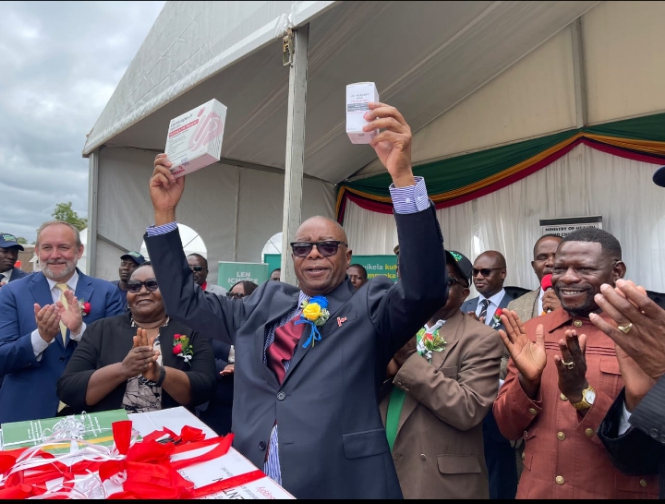
Zimbabwe has officially rolled out its latest HIV prevention tool, with Health and Child Care Minister Dr. Douglas Mombeshora launching the first phase of the national programme for Lenacapavir, a long-acting injectable Pre-Exposure Prophylaxis that provides six months of protection per dose.
Launching the programme, Dr. Mombeshora said that the introduction of the new drug does not replace existing HIV prevention options but rather serves to complement them.
He encouraged the public to seek accurate information from trained health professionals regarding the new method.
The rollout positions Zimbabwe among the first countries globally to introduce the next-generation prevention method, with the initial phase targeting more than 46 000 individuals at high risk.
Priority groups include adolescent girls, young women, sex workers, men who have sex with men, and pregnant or breastfeeding women in areas with elevated infection rates.
Health officials have established 24 sites across priority urban centres including Harare, Bulawayo, Gweru, Masvingo, Mutare and Chitungwiza, with plans to expand to additional districts.
Nearly 400 health workers have already received specialised training to administer the injection and manage recipients.
Lenacapavir is a capsid inhibitor that blocks the protein shell the HIV virus needs to replicate, offering long-lasting protection without the need for daily pills. Clinical trials demonstrated significant efficacy, with zero infections recorded among women who received the drug in the PURPOSE 1 trial, and a 96 percent reduction compared to background incidence among men and transgender people in the PURPOSE 2 trial.
The first consignment of the drug arrived in the country two weeks ago and was cleared by the Medicines Control Authority of Zimbabwe. Zimbabwe was selected in August 2025 as one of ten countries for a global early access programme, reflecting international confidence in the country’s HIV response systems.
The initiation regimen requires two injections and oral tablets on day one, with follow-up injections administered every six months.
Health authorities have stressed that PrEP is strictly for individuals who test HIV negative and is neither a vaccine nor a cure.
Dr. Mombeshora reiterated that the new option does not replace individual responsibility in making informed decisions to protect oneself and others.
THE Ministry of Local Government and Public Works has moved urgently to dismiss what it describes as “false, malicious, and fraudulent” reports circulating that headmen and village heads are being forced to pay money to the Ministry’s Headquarters.
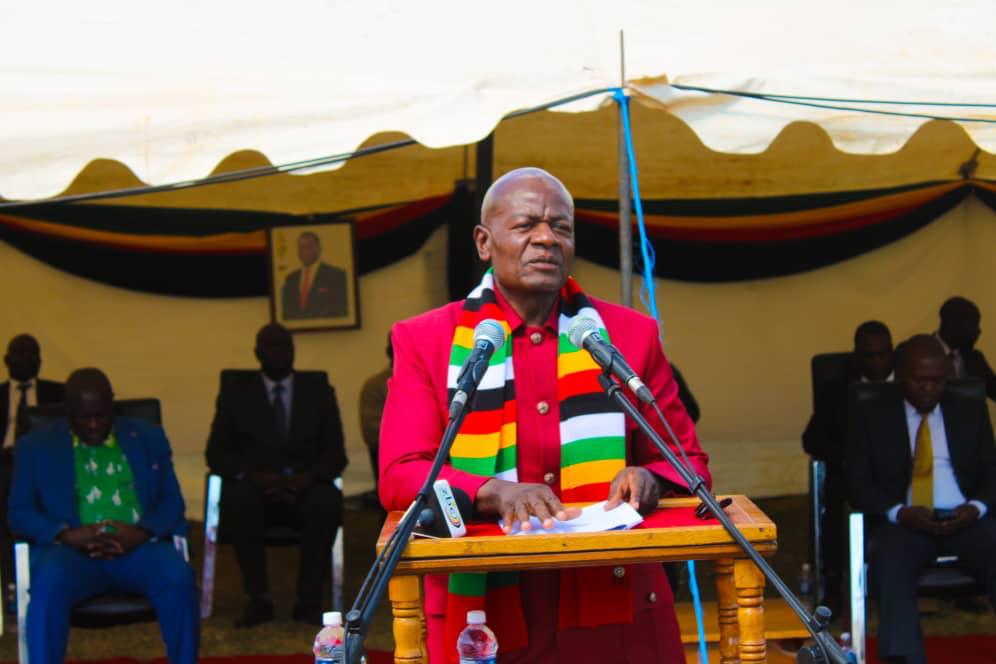
In a strongly worded statement issued today, Minister of Local Government and Public Works, Hon.Daniel Garwe (MP), moved to kill the scam, making it clear that no traditional leader is required to pay a single cent to the government.
“The Ministry wishes to state that no Chief, Headman, or Village Head is required or instructed to make any form of payment to the Ministry.
“The Ministry operates strictly within the provisions of the Constitution of Zimbabwe, the Traditional Leaders Act, and all applicable public finance management laws.
“Any legitimate levies, allowances, or administrative processes involving traditional leaders are processed through lawful and established Government systems, and not through informal or personal channels,” said Hon. Garwe.
The Ministry’s intervention comes amid fears that fraudsters are preying on traditional leaders, who are constitutionally recognised as vital partners in governance and community development.
Members of the public and traditional leaders who encounter such demands have been urged to take immediate action.
“The Ministry advises members of the public and traditional leaders to report any such alleged cases to the Zimbabwe Republic Police or directly to the Ministry.
“The Ministry will not hesitate to act against any individuals or entities who are engaging in such misdemeanours,” he said.
The Government reaffirmed its commitment to respecting the status, welfare, and constitutional mandate of traditional leaders, who play a key role in peace-building and grassroots development.
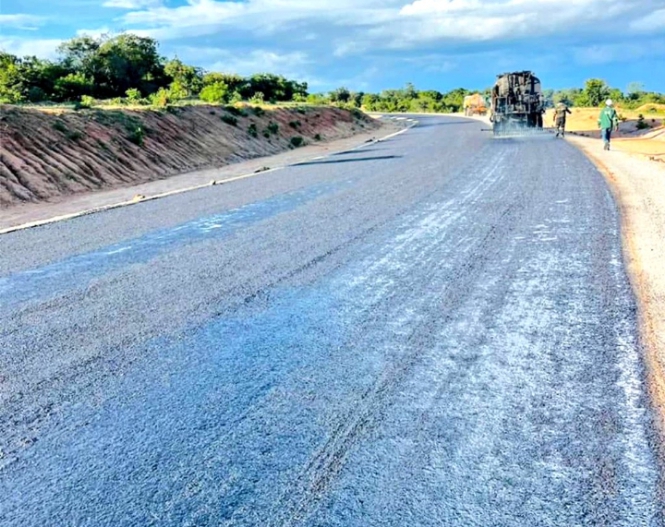
The rehabilitation of the strategic Birchenough–Murambinda Road has entered a critical phase, with priming works now underway to pave the way for surfacing, Transport and Infrastructural Development Director of Roads Engineer Jarawani Kangara has said.
The milestone marks a major step forward in the upgrading of the key rural corridor, a project being spearheaded under the Ministry’s aggressive nationwide road rehabilitation programme.
The Ministry stated that the project is a direct output of the Second Republic’s #KilometreByKilometre mantra, aligned with the National Development Strategy 1 (NDS1) and the broader Vision 2030 agenda of attaining an upper-middle-income economy.
Once completed, the route will slash travel times and vehicle operating costs for thousands of commuters, farmers, and haulage trucks.
By unlocking access to markets, schools and health facilities, the road is expected to catalyse agricultural production in Buhera District and streamline the movement of goods into surrounding growth points.
“This is more than just an asphalt layer; it is a lifeline for trade and rural modernisation.
“The completion of the surfacing will be a game-changer for regional trade integration and local economic development,” said Eng. Kangara.
The project is part of a wider infrastructure push by the Government to ensure transport resilience and boost connectivity between key economic hubs and administrative centres across the country.

President Mnangagwa Rallies Recruits Against Drug Networks

Car plunges into mineshaft, 2 Dead, 1 Missing

Biannual HIV Vaccine Begins

Operation restore order

Masasi High School Abuse Scandal Sparks Public Outcry

Kuwadzana Man Jailed for Reckless Driving and Driving Without a Licence
-
 Current Affairs3 months ago
Operation restore order
-
 Crime and Courts5 months ago
Masasi High School Abuse Scandal Sparks Public Outcry
-
 Crime and Courts5 months ago
Kuwadzana Man Jailed for Reckless Driving and Driving Without a Licence
-

 Current Affairs7 months ago
Breaking: ZIMSEC June 2025 Exam Results Now Available Online
-
 Current Affairs6 months ago
Munhumutapa Day: Zimbabwe’s Newest Public Holiday Set for Annual Observance
-

 Current Affairs4 months ago
BREAKING NEWS: ZANU PF Director General Ezekiel Zabanyana Fired
-

 Current Affairs6 months ago
No Racism in Our Cricket: Government
-

 Current Affairs6 months ago
Government Bans Tinted Car Windows in Nationwide Crime Crackdown