
Business
Govt Moves to Ease Cement Shortages as Demand Surges

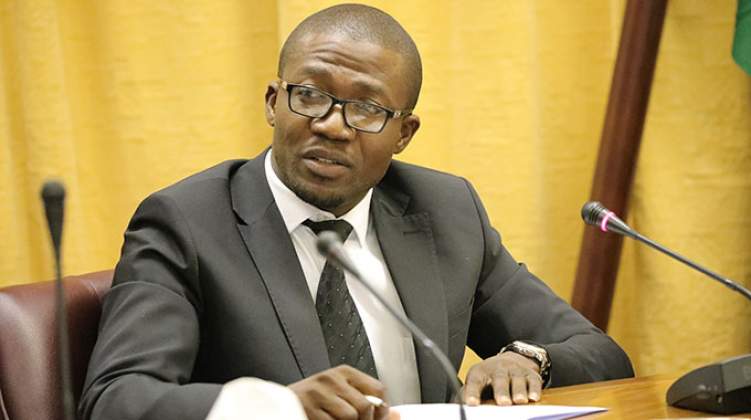
The Ministry of Industry and Commerce has announced a series of urgent measures to stabilise the country’s cement supply following weeks of widespread shortages and price volatility.
In a statement issued by the Minister of Industry and Commerce, Honourable N. M. Ndlovu, Government confirmed that local production has been severely constrained due to a shortage of clinker across the industry.
The situation has been worsened by scheduled plant maintenance and unexpected breakdowns at some manufacturing facilities.
According to the Minister, the construction boom fuelled by both public and private sector projects has created “huge demand for cement,” resulting in a significant mismatch between supply and consumption.
Regional dynamics have added further pressure, with rising demand in Zambia causing delays for Zimbabwean transporters collecting cement from that market.
To close the supply gap and curb price increases, the Ministry has authorised the importation of cement through the issuance of import licences. Since early October 2025, a total of 145,000 metric tonnes worth of import licences have been approved.
“These measures are expected to address the immediate national shortage,” the Minister said. However, he noted that some importers are facing delays as the Zimbabwe Revenue Authority (ZIMRA) intensifies a loss-control exercise targeting companies that previously failed to pay surtax on cement imports.
Hon Ndlovu also revealed that major producer Sino Zimbabwe has now resumed operations, while other manufacturers are increasing output.
The Cement and Concrete Institute of Zimbabwe has assured Government that local producers have not increased their prices, which remain at US$9.90 for a 32.5N bag and US$10.87 for a 42.5N bag.
Government says it will continue monitoring the situation to ensure both adequate supply and price stability.
Meanwhile, the Ministry reminded all stakeholders that import licences remain mandatory for anyone bringing cement into the country.
As part of Ease of Doing Business reforms, the licences are now obtainable at Ministry offices in Harare, Bulawayo, Mutare, Masvingo and Midlands.
Applicants must submit:
• Application letter
• Proforma invoice
• Current ZIMRA tax clearance
• Standard Development Fund receipt
• CR14
• Certificate of incorporation (CR6)
The licence fee of US$100 is payable in Zimbabwean dollar equivalent.








LONDON — International fintech executive Tinashe Muhove is playing an important role in expanding financial access, supporting small businesses, and helping young people enter the global fintech industry.
Muhove has worked in senior positions at well-known fintech companies such as Mukuru, Mama Money, and MoneyGram. In these roles, he focused on growing businesses and expanding into new markets, especially in cross-border payments and money transfer services.
Much of his work has targeted emerging and underbanked communities, helping improve access to financial services in Africa, Europe, and other regions.
Industry experts say his experience dealing with different regulations and business environments has given him a strong understanding of both business growth and financial inclusion.

Muhove is currently the Co-Founder and Chief Executive Officer of UJU, a UK-based technology company that supports small and medium-sized enterprises (SMEs). The platform helps high-street businesses keep customers and improve long-term profits at a time when competition and digital change are increasing.
UJU provides tools that help businesses encourage repeat customers and maintain steady income. This is important as many small businesses face rising costs and changing customer habits. The company’s work supports wider efforts in the UK to strengthen local economies and protect jobs.
Alongside his business work, Muhove is also involved in education and skills development. He founded Fin4NextGen, a four-week global programme that introduces young people to the fintech industry.
The programme teaches basic fintech ideas, career options, and real-life examples. It mainly targets young people who may not normally have access to the fintech sector. This supports industry efforts to improve skills and increase diversity in fintech.
Muhove is also sharing his ideas through writing. He is currently working on a book about the challenges of building fintech startups. The book follows two young entrepreneurs in the same industry but with very different goals, and looks at ambition, ethics, and purpose.
At the centre of the book is a key question he believes founders must ask themselves:
“Why am I building what I am building?”
Analysts say this focus on purpose reflects a wider shift in fintech, as companies are now expected to consider social impact as well as profit.
With experience in global fintech companies, SME technology, youth education, and thought leadership, Muhove is increasingly seen as someone helping shape the future of the UK and global fintech industry.

Africa’s richest man, Aliko Dangote, has appointed MTN Group Chief Executive Officer Ralph Mupita to the board of Dangote Fertiliser as the company prepares for a landmark initial public offering (IPO) on the Nigerian Stock Exchange later this year.
Dangote Fertiliser Managing Director Vishwajit Sinha confirmed Mupita’s appointment, signalling a strategic move as the fertiliser business positions itself for expansion and entry into public markets.
Mupita’s inclusion brings high-level capital markets and corporate governance experience to Dangote’s fast-growing fertiliser unit. He previously led the successful 2019 listing of MTN Nigeria, now one of the country’s most valuable companies. Since its listing, MTN Nigeria’s revenues have more than quadrupled, and the company currently boasts a market capitalisation of about US$8.6 billion, making it the Nigerian Exchange’s second-largest stock after BUA Foods.
The appointment comes at a pivotal moment for Dangote Fertiliser, which is seeking to tap public markets to fund ambitious expansion plans. The company currently produces around 3 million tonnes of granulated urea annually from its US$2.5 billion Lagos-based complex and aims to become the world’s largest fertiliser producer by 2028.
To support this goal, Dangote Fertiliser plans to expand its existing Nigerian operations and commence construction of a new production facility in Ethiopia later this year. The Ethiopian plant is expected to strengthen the company’s footprint in East Africa while supporting regional food security and agricultural productivity.
Africa’s fertiliser market is gaining prominence as the continent experiences the world’s fastest population growth. According to the African Development Bank, rising food demand, rapid urbanisation and expanding intra-African trade could see the continent’s agricultural sector grow to more than US$1 trillion by 2030. However, limited access to fertilisers remains a key challenge for many small-scale farmers, constrained by financing gaps, poor infrastructure and underdeveloped markets.
Dangote Fertiliser’s expansion is positioned as a response to these challenges, aiming to reduce Africa’s dependence on imported fertilisers while supporting higher crop yields across the continent.
Mupita has led MTN Group, Africa’s largest mobile network operator, for more than five years, having joined the group in 2017 as chief financial officer. Prior to MTN, he held senior roles at South African financial services group Old Mutual and began his career as a trained engineer. His blend of engineering, finance and capital-markets expertise is expected to bolster Dangote Fertiliser’s governance and investor appeal ahead of its IPO.
Beyond fertiliser, Dangote Industries is also preparing to list its massive oil refinery business, a move Aliko Dangote has previously described as part of a broader strategy to raise capital, deepen transparency and attract institutional investors.

Global gold prices climbed to historic highs yesterday, with the precious metal touching the US$5 000-per-ounce mark as investors rushed to safe-haven assets amid growing geopolitical tensions.
By yesterday morning, gold was trading about 2,2 percent higher at roughly US$5 089 an ounce, after earlier peaking at an all-time high of around US$5 110.
The surge caps an exceptional rally for gold, whose value has risen by close to 90 percent since former United States President Donald Trump took office in January last year, driven largely by global economic uncertainty.
For Zimbabwe, gold remains a cornerstone of the economy. It is the country’s biggest source of export earnings and foreign currency inflows, plays a central role in supporting the local currency, and sustains thousands of livelihoods across the mining value chain.
The Zimbabwe Gold (ZiG) currency, launched in April 2024, is backed by gold and foreign currency reserves. Authorities say this backing has helped stabilise the economy and strengthen confidence in the domestic monetary system.
Economic analyst Mr Persistence Gwanyanya said rising gold prices are expected to provide a major boost to Zimbabwe’s economic performance this year.
He noted that strong prices favour countries with bullion-based economies, adding that Zimbabwe stands to benefit significantly if the rally continues.
“This is very positive for the country, especially given our reliance on gold. The outlook suggests prices will remain firm for much of the year, which should support economic growth,” Mr Gwanyanya said.
He added that higher gold earnings are already spilling over into other sectors, including construction and related industries, stimulating broader economic activity.
Zimbabwe also exceeded its 2025 gold production target last year, largely due to increased output from artisanal and small-scale miners. By December, total deliveries had surpassed 46,7 tonnes, with small-scale producers contributing about three-quarters of the output.
Mr Gwanyanya said the Government is expected to benefit from increased revenues as global prices rise but stressed the need to turn the windfall into long-term economic gains.
He also called for better organisation and support for artisanal and small-scale miners to ensure sustained growth and improved returns for the country.

Government Hails Muroodzi River Rehabilitation Pilot

Chamisa Under Fire as High Court Is Asked to Probe CCC Finances

Minister Chadzamira Hands Over Starlink Kits to Junior Parliamentarians

Operation restore order

Masasi High School Abuse Scandal Sparks Public Outcry

Kuwadzana Man Jailed for Reckless Driving and Driving Without a Licence
-
 Current Affairs3 months ago
Operation restore order
-
 Crime and Courts4 months ago
Masasi High School Abuse Scandal Sparks Public Outcry
-
 Crime and Courts5 months ago
Kuwadzana Man Jailed for Reckless Driving and Driving Without a Licence
-

 Current Affairs6 months ago
Breaking: ZIMSEC June 2025 Exam Results Now Available Online
-

 Current Affairs5 months ago
Munhumutapa Day: Zimbabwe’s Newest Public Holiday Set for Annual Observance
-

 Current Affairs4 months ago
BREAKING NEWS: ZANU PF Director General Ezekiel Zabanyana Fired
-

 Current Affairs6 months ago
No Racism in Our Cricket: Government
-

 Current Affairs5 months ago
Government Bans Tinted Car Windows in Nationwide Crime Crackdown