
Business
MIF raises USD 1 billion in first year

Eyes USD 10 billion recapitalisation drive
Itai Mazire
The Mutapa Investment Fund (MIF) has raised about USD 1 billion in capital to support the recapitalisation, modernisation and restructuring of State-owned enterprises, marking a significant milestone in efforts to stabilise and revive some of Zimbabwe’s most strategic economic assets.
The Fund, in its inaugural annual report and first set of audited financial statements, said the capital mobilisation achieved through a mix of debt, equity and partnership arrangements represents a critical step towards addressing long-standing infrastructure deficits, modernising operations and restoring viability across its investment portfolio, whose total funding requirements exceed USD 10 billion.
The USD 1 billion already raised has been channelled towards priority interventions across the Fund’s clusters, including infrastructure refurbishment, capital expansion and recapitalisation initiatives aimed at restoring operational efficiency and improving service delivery.
MIF says the successful mobilisation of this initial funding demonstrates its growing capacity to leverage its balance sheet and attract diverse sources of capital.
“The Fund maintains a cluster-wide funding pipeline prioritising infrastructure refurbishment, capital expansion and recapitalisation initiatives,” reads the report.
“Total funding requirements exceed USD 10 billion, with approximately USD 1 billion raised to date for portfolio companies.”
According to the report, MIF is pursuing a multi-pronged funding strategy that combines debt and equity financing, public-private partnerships (PPPs) and joint ventures with development finance institutions, commercial banks and private investors.
Under this approach, the Fund structures transactions that allow private capital to co-invest alongside the State in specific projects or entities, while spreading risk and improving access to long-term financing.
In some cases, PPPs are being used to unlock private sector expertise and funding for infrastructure upgrades, while joint ventures enable strategic investors to inject capital and technical know-how into portfolio companies.
Beyond capital mobilisation, MIF has placed strong emphasis on strengthening corporate governance across its portfolio, which it says is critical to restoring investor confidence and ensuring sustainable performance.
The Fund has rolled out a governance roadmap anchored on diagnostic assessments, board induction and training, development of environmental, social and governance (ESG) frameworks, and the strengthening of internal and external audit processes.
“MIF places strong emphasis on good corporate governance, compliance and capacity building.
“The governance roadmap includes diagnostic assessments, board training, ESG framework development, internal and external audits, and alignment with international best practices.
“The Fund focuses on compliance with regulatory requirements, managing legal risks, and supporting effective governance through standardised reporting and training.
“Key governance targets include achieving 90 percent compliance with the Santiago Principles, 100 percent board member induction, and continuous professional development.”
Standardised reporting frameworks and compliance systems are also being enforced to manage legal risks and align portfolio companies with international best practice.
On performance, the Fund reports progress in stabilising and restructuring several investee companies, although it acknowledges that significant challenges remain.
These include legacy debts, historical governance weaknesses at some entities, and persistent liquidity constraints that limit the pace of recovery.
Looking ahead, MIF says its strategic focus is shifting from planning to execution, with increased emphasis on tighter portfolio monitoring, stricter enforcement of governance reforms and targeted capital deployment to unlock value.
The Fund believes these measures will strengthen the contribution of its portfolio to economic growth, fiscal stability and long-term national development.
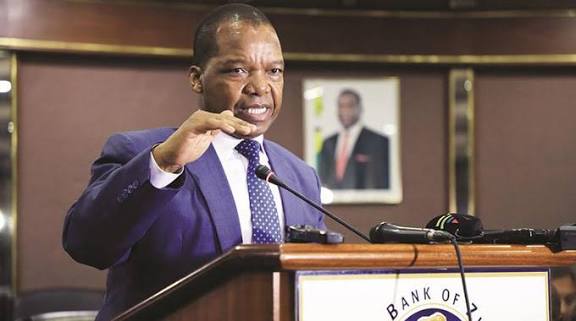
Chief executive officer Dr John Mangudya said MIF spent its first year undertaking diagnostic assessments and portfolio valuations to inform turnaround and growth strategies.
He said the Fund had a gross asset value of USD 16 billion and a fair value of USD 15 billion as at December 31, 2024.
“Our investment strategy prioritises resilience, diversification and sustainable value creation.
“Inspired and empowered by the country’s vision of becoming a prosperous upper-middle-income economy by 2030, we strengthened and continued to enhance governance frameworks across our portfolio companies, enhanced risk management practices, and deepened our focus on operational efficiency during 2024,” said Dr Mangudya.





Zimbabwe will sustain its programme of strategic mineral purchases in 2026 as part of broader efforts to build foreign currency reserves and support the long-term transition to the ZiG as the country’s sole legal tender by 2030.
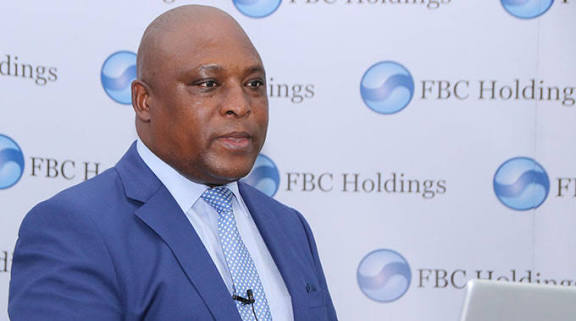
Reserve Bank of Zimbabwe (RBZ) Governor John Mushayavanhu confirmed the policy direction in an opinion piece published in the state-run Sunday Mail, saying reserve accumulation remains central to monetary stability.
Mushayavanhu noted that the central bank intends to strengthen and sustain the ongoing buildup of foreign currency reserves, with a target of achieving cover equivalent to three to six months of imports. He said this level of reserves is essential for a smooth shift to a mono-currency system.
According to the RBZ governor, the strategy will be underpinned by firm enforcement of export surrender requirements, continued strategic mineral purchases, and a resilient external sector.
He added that stronger reserves would help stabilise the ZiG and improve the country’s ability to withstand external economic shocks.
Mushayavanhu revealed that Zimbabwe’s foreign currency reserves comprising gold, other precious minerals, foreign deposits, and cash holdings rose significantly from US$276 million in April to about US$1.1 billion by December. This represents roughly 1.2 months of import cover.
Zimbabwe has spent close to two decades trying to restore a stable national currency after successive failures that culminated in hyperinflation and the adoption of the US dollar in 2009. The ZiG, introduced in April 2024, is the latest attempt and currently accounts for about 40 percent of daily transactions.
The RBZ governor said reserve accumulation has been driven by mandatory mining royalties, direct gold purchases, and favourable global prices for gold and platinum.
Under existing regulations, mining and exporting companies retain 70 percent of their foreign currency earnings, with the balance converted to local currency. Since October 2022, mining firms have also been required to pay half of their royalties in physical minerals, with the remaining portion settled in cash to the central bank.
Authorities believe the continuation of mineral purchases will play a key role in anchoring the ZiG, boosting confidence in the currency, and protecting the economy from external volatility as Zimbabwe works toward full currency normalisation.

Government ease-of-doing-business reforms under the Second Republic continue to attract local investment and create employment, with Masvingo Province recording increased participation by indigenous entrepreneurs.
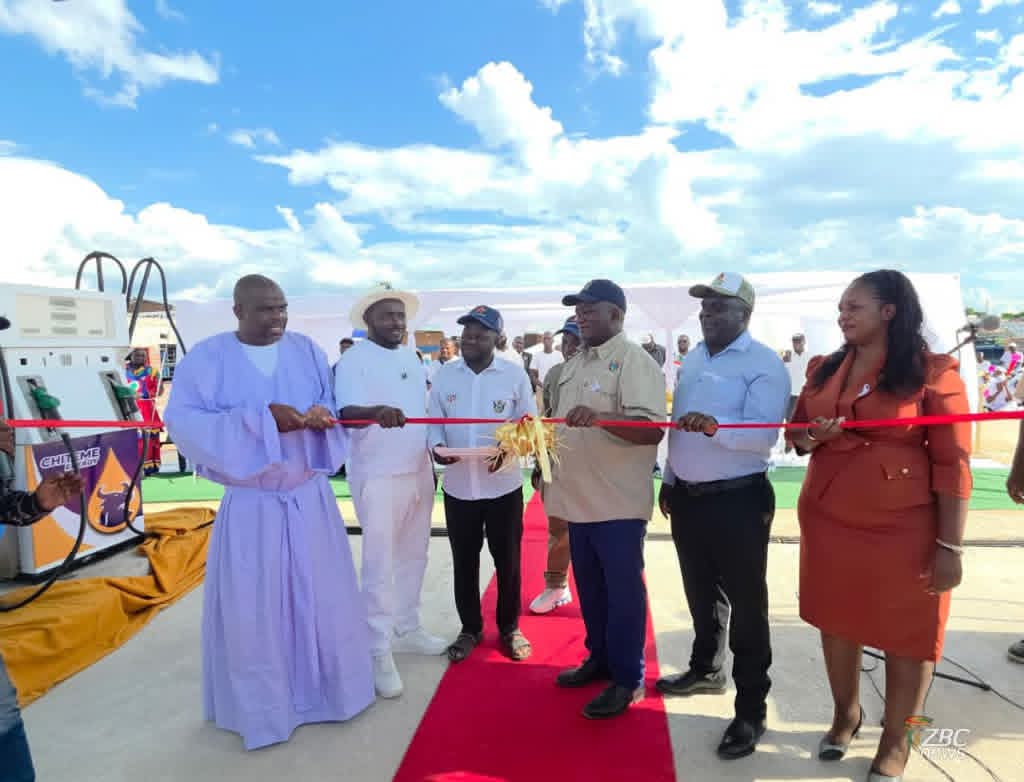
One such investment is a service station and retail complex in Rujeko suburb, established in 2025 by local businessman Against Chiteme. The project was commissioned on Monday and has created more than 30 jobs, while improving access to fuel and retail services for the surrounding community.
Mr Chiteme said the enabling business environment introduced by Government gave him the confidence to expand beyond small-scale ventures.
“The ease-of-doing-business measures encouraged us to invest and grow. This project is meant to serve the Rujeko community and we are looking to expand further,” he said.
Masvingo Minister of State for Provincial Affairs and Devolution, Hon Ezra Chadzamira, said the reforms were aimed at cutting costs, simplifying licensing processes and reducing red tape, particularly in key sectors such as retail and transport.
He added that the province had recorded increased local investment across sectors including manufacturing, agriculture, mining and tourism.
Political and religious leaders who attended the commissioning ceremony urged citizens to seize available opportunities, saying community-based investments were improving livelihoods and access to essential services.

A miner from Lower Gweru has risen from humble beginnings to become the owner of a multimillion-dollar gold operation—progress he credits to the empowerment initiatives rolled out under the Second Republic.
Latest figures show that small-scale miners now account for roughly 75 percent of Zimbabwe’s yearly gold deliveries, underscoring the sector’s growing influence.
Tawanda Muchenurwa, born 52 years ago in rural Chivi, Masvingo, discovered his love for gold prospecting as a young student, spending much of his time searching for the precious mineral along the Runde River.
He later joined Zim Alloys, where he sharpened his understanding of mining techniques. Eventually, he left formal employment to pursue artisanal mining in the Shurugwi mountains, a bold step that would lay the foundation for his future success.
Through persistence and careful saving, Muchenurwa managed to register a mining claim in Lower Gweru—land that he would transform into a thriving gold operation.
Today, his venture, Birthday Mine, employs more than 100 people and contributes over 1.5kg of gold to national reserves each month.
“It has been a long road. When I bought this place in 2016, it was nothing but a mountain. Using savings from my artisanal mining work, I slowly built the operation. The real turning point came after 2018, when the Second Republic opened more doors for local miners. I accessed a loan and began structured mining,” he said.
“With the President’s Vision 2030 in mind, we are pushing even further. We now have modern underground mining machinery, and by next year I’m targeting at least 10kg of gold every month.”
The mine has also brought relief to nearby communities, creating jobs and improving household incomes.
“For many of us, securing employment here has changed our lives. I can now support my husband and help my siblings with school fees,” said employee Mrs Brilliant Shumba.
Another worker, Mr Ikabot Chadza, echoed the sentiment: “This job has equipped me with new skills and eased the burden of supporting my family. It has truly empowered me.”
Muchenurwa’s rise from artisanal miner to major gold producer highlights the power of determination and hard work. And as Zimbabwe exceeds its 40-tonne annual gold target, miners like him—who make up about 75 percent of bullion deliveries—remain central to the sector’s continued growth.

23-Year-Old Jailed for Stealing Police Vehicle

ZANU PF PC Accused of Looting Food, Fuel Meant for Dr Tungwarara Rally

Harare City Nears PSL Return in “Swap and Top” Franchise Deal with Hunters FC

Operation restore order

Masasi High School Abuse Scandal Sparks Public Outcry

Kuwadzana Man Jailed for Reckless Driving and Driving Without a Licence
-
 Current Affairs2 months ago
Operation restore order
-
 Crime and Courts3 months ago
Masasi High School Abuse Scandal Sparks Public Outcry
-
 Crime and Courts4 months ago
Kuwadzana Man Jailed for Reckless Driving and Driving Without a Licence
-

 Current Affairs5 months ago
Breaking: ZIMSEC June 2025 Exam Results Now Available Online
-

 Current Affairs4 months ago
Munhumutapa Day: Zimbabwe’s Newest Public Holiday Set for Annual Observance
-

 Current Affairs3 months ago
BREAKING NEWS: ZANU PF Director General Ezekiel Zabanyana Fired
-

 Current Affairs5 months ago
No Racism in Our Cricket: Government
-

 Current Affairs4 months ago
Government Bans Tinted Car Windows in Nationwide Crime Crackdown