
Current Affairs
Ministry Rolls Out Second Round of Consultations on Road Accident Fund Bill


The Ministry of Transport and Infrastructural Development has commenced the second round of nationwide public consultations on the proposed Road Accident Fund (RAF) Bill, a transformative piece of legislation aimed at overhauling Zimbabwe’s post-crash response system and strengthening social protection for road traffic accident victims.
The consultations officially began in Marondera today and are being led by the Ministry under the guidance of Permanent Secretary, Engineer Joyline P. Makumbe. The process is designed to gather direct input from citizens and key stakeholders before the Bill is finalised and presented to Parliament.
Speaking through a keynote address read on her behalf, Eng Makumbe underscored the urgent need for reform, citing alarming national road safety statistics. She revealed that Zimbabwe records a road traffic accident every 15 minutes, resulting in more than 1,800 deaths and over 10,000 injuries each year.
“The Road Accident Fund mechanism will spread the social safety net to take care of every citizen involved in road traffic accidents, including vulnerable road users,” said Eng Makumbe. “Under this proposed system, claimants will no longer be required to prove who was at fault in order to receive assistance for medical treatment, funeral expenses and other related costs.”
The proposed RAF Bill represents a major policy shift from the current fault-based third-party insurance model to a no-fault compensation system. This change is expected to ensure quicker access to support for accident victims and their families, while reducing the lengthy legal processes that often delay compensation under the existing framework.
According to the Ministry, the Fund will be financed through a reallocation of the current third-party insurance premium. Under the proposal, 35 percent of the premium will be channelled directly to the Road Accident Fund, 34.3 percent will remain with insurance companies to cater for vehicle damage, while the balance will cover broker fees, regulatory costs and road safety awareness programmes.
“The new system promises to significantly cut down on complex legal delays that have continued to frustrate insurance settlements and deny victims timely assistance,” Eng Makumbe added.
The Marondera consultative meeting attracted a broad cross-section of stakeholders, including representatives from various government ministries, the Zimbabwe Republic Police, insurance companies, transport operators, health service providers, traditional leaders and civic organisations. Participants were given an opportunity to share views, raise concerns and make recommendations on the structure and implementation of the proposed Fund.
The Ministry emphasised that the Road Accident Fund Bill is a critical step towards achieving Zimbabwe’s Vision 2030 of an upper middle-income economy, particularly through improved social protection and safer transport systems.
The initiative also aligns with global road safety commitments under the United Nations Decade of Action for Road Safety, which seeks to reduce road traffic deaths and injuries by 50 percent by 2030.
Further consultations are expected to be conducted across other provinces as the Ministry moves to ensure that the final Bill reflects the collective aspirations and practical realities of all road users in Zimbabwe.






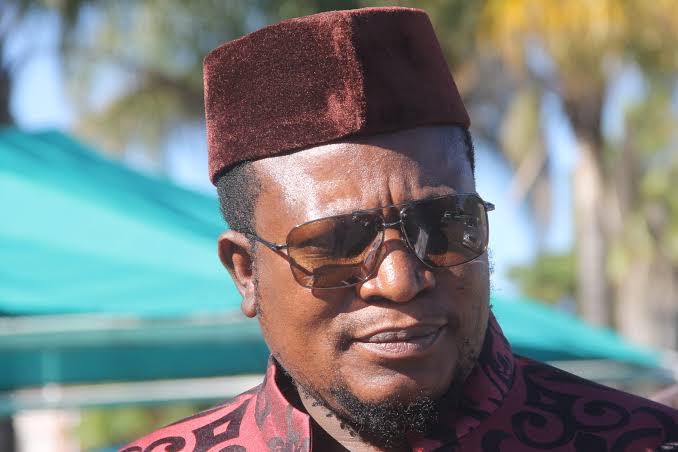
Takudzwa Karowangoro
In Zimbabwe, traditional leaders view Valentine’s Day not as a once-off celebration, but as a reminder that love should be practised every day. They emphasise that African culture promotes continuous affection, respect, and responsibility within families, rather than concentrating love on a single calendar date.
Traditional elders under the Zimbabwe National Traditional Healers Association (ZINATHA) say Zimbabwean tradition places strong value on day-to-day love that keeps homes united and peaceful. According to ZINATHA Secretary for Finance, Tateguru Ndudzo, Valentine’s Day itself carries little cultural importance.
“In our culture, we encourage people to love each other every day. Homes should always be filled with love and happiness. Celebrating love once a year does not make sense when love should exist at all times,” Ndudzo explains.
He adds that traditional values promote constant love, not seasonal or symbolic gestures. Ndudzo notes that Valentine’s Day has, in some cases, become a source of tension rather than unity.
“Some married men buy Valentine’s gifts for girlfriends outside marriage while their own homes lack love. When wives later discover this, families break down,” he says.
Traditional leaders also point out that, despite being described as a day of love, Valentine’s Day sometimes ends in conflict. Ndudzo says disagreements, fights, and domestic disputes often increase during this period, contradicting the true meaning of the day.
From a cultural perspective, prominent traditional healer Sekuru Banda explains that the celebration of love is not new to African societies. Long before Valentine’s Day was introduced, African communities already had cultural practices centred on strengthening relationships.
“In our culture, there was a day known as ‘zuva remoyo umwe’ chete the day of one heart. Couples would spend the day together, away from daily responsibilities, talking about love, reflecting on how they came together, and resolving issues peacefully,” Sekuru Banda explains.
He adds that this practice was not limited to young couples, as elders also participated. The celebration was flexible sometimes lasting one day and, in other cases, three days and was not tied to the month of February.
“The focus was on unity, understanding, and restoring harmony in the home,” he says.
Traditional leaders further argue that modern Valentine’s Day celebrations often prioritise material gifts over genuine care and responsibility. In Zimbabwean culture, love is demonstrated through daily actions providing, protecting, respecting, and remaining faithful rather than through once-off gestures.
Voices from the Streets of Harare
On the streets of Harare, residents shared mixed views about Valentine’s Day and its meaning.
Tendai Moyo, a 29-year-old commuter omnibus driver in the city centre, said love should not be commercialised.
“Valentine’s Day is nice, but real love is about how you treat someone every day. If you only buy flowers on 14 February and ignore your partner the rest of the year, that’s not love,” he said.
Rudo Chikore, a vendor in Mbare, agreed that daily care matters more than expensive gifts.
“We don’t need big presents. Even helping with groceries or checking on your partner shows love. Our parents didn’t celebrate Valentine’s Day, but their marriages lasted,” she said.
However, not everyone dismisses the celebration. Tapiwa Dube, a university student, believes Valentine’s Day can still have meaning.
“There’s nothing wrong with celebrating love on a special day. As long as it doesn’t destroy families, it can just be a reminder to appreciate each other,” he said.
While Valentine’s Day continues to gain popularity, Zimbabwe’s traditional leaders maintain that love should remain a daily commitment rooted in cultural values that strengthen families, preserve unity, and promote social harmony.
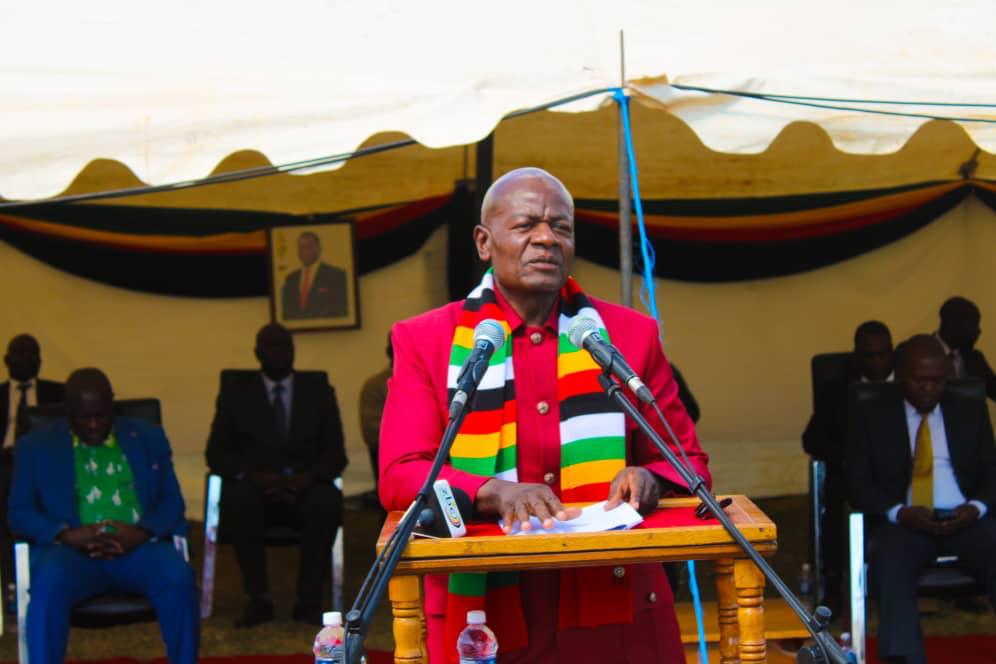
Local Government and Public Works Minister Daniel Garwe has thrown his weight behind the Constitutional Amendment No. 3b Bill, defending the proposed overhaul as a pro-people measure designed to slash election-related disruptions and ensure long-term development programmes reach completion.
Speaking amid a heated political storm over the Bill’s provisions-which include extending presidential and parliamentary terms from five to seven years and scrapping direct presidential elections-Hon Garwe framed the changes as a necessary evolution for national stability.
“This amendment is about shielding our development agenda from the paralysis that comes with endless election cycles,” Hon. Garwe told journalists following a tense Cabinet session.
“For the ordinary person in the village, this means their road is finished, their clinic is staffed, and their children’s school is built-without the stop-start chaos of annual political campaigns,” he said.
The Bill, approved by Cabinet on Tuesday, seeks to replace direct popular votes for the President with a parliamentary voting system.
It also proposes extending the current term of President Emmerson Mnangagwa, originally set to end in 2028, to 2030.
Hon. Garwe, dismissed opposition claims that the amendments were a power grab, insisting they were the logical culmination of the ruling party’s 2030 agenda.
“The Zanu PF conference in Mutare resolved that we want to see this vision through.
“This is not about individuals; it is about ensuring policy continuity for the benefit of the masses,” he said.
Former Information Minister Jenfan Muswere has echoed Garwe’s sentiments, stating the reforms aim to reduce “election-related disruptions” and “allow sufficient time for the implementation of long-term national projects.”
Opposition and civil society groups, however, have vowed resistance, with some petitioning the African Union to intervene against what they term a “coup in motion.”

Itai Mazire
In a significant move aimed at bolstering its vital tourism sector, the Government of Zimbabwe, through the Zimbabwe Tourism Authority (ZTA), has announced a drastic reduction in licence and registration fees across all categories.
This initiative, part of broader efforts to enhance the Ease of Doing Business, comes with a stern warning, all tourism-related businesses must register by February 28, 2026, or face immediate closure.
The ZTA’s decision to cut fees is designed to foster a competitive, compliant, and sustainable tourism environment.
The sector is a cornerstone of Zimbabwe’s economy, renowned for its diverse attractions including the majestic Victoria Falls, the wildlife-rich Hwange National Park, and the historical Great Zimbabwe ruins.
It plays a crucial role in foreign currency generation and economic diversification.According to statement by ZTA, registration is not merely encouraged but is a statutory requirement.
“In this regard, and in terms of Section 36 of the Tourism Act (Chapter 14:20), the ZTA hereby notifies ALL tourism-related businesses (designated tourist facilities) that registration with the Zimbabwe Tourism Authority is mandatory and a statutory requirement.”
The Authority has made it unequivocally clear about the consequences of non-compliance. “Failure to register will result in the CLOSURE of unregistered facilities,” the statement warns.
To enforce this, the ZTA, in collaboration with law enforcement agencies, will embark on nationwide inspections starting March 1, 2026.
These inspections will span all ten provinces, verifying registration status, ensuring adherence to regulatory standards, and taking decisive action against non-compliant operators.
The public is also urged to play a role in upholding industry standards.
The ZTA “strongly discouraged from utilising unregistered tourism facilities and is encouraged to report any facility operating without valid registration to the Zimbabwe Tourism Authority.”

Harisi Zuva reMusikanzwa — Love Must Be Practised Daily : Traditional

Garwe: Fewer Elections, More Development Under Amendment No. 3b

CZR Endorses Constitutional Amendment No. 3

Operation restore order

Masasi High School Abuse Scandal Sparks Public Outcry

Kuwadzana Man Jailed for Reckless Driving and Driving Without a Licence
-
 Current Affairs3 months ago
Operation restore order
-
 Crime and Courts5 months ago
Masasi High School Abuse Scandal Sparks Public Outcry
-
 Crime and Courts5 months ago
Kuwadzana Man Jailed for Reckless Driving and Driving Without a Licence
-

 Current Affairs7 months ago
Breaking: ZIMSEC June 2025 Exam Results Now Available Online
-

 Current Affairs6 months ago
Munhumutapa Day: Zimbabwe’s Newest Public Holiday Set for Annual Observance
-

 Current Affairs4 months ago
BREAKING NEWS: ZANU PF Director General Ezekiel Zabanyana Fired
-

 Current Affairs6 months ago
No Racism in Our Cricket: Government
-

 Current Affairs6 months ago
Government Bans Tinted Car Windows in Nationwide Crime Crackdown