
Current Affairs
A City Thirsty for Change: How Smart Water Meters Could End Harare’s Night Queues

Philemon Jambaya
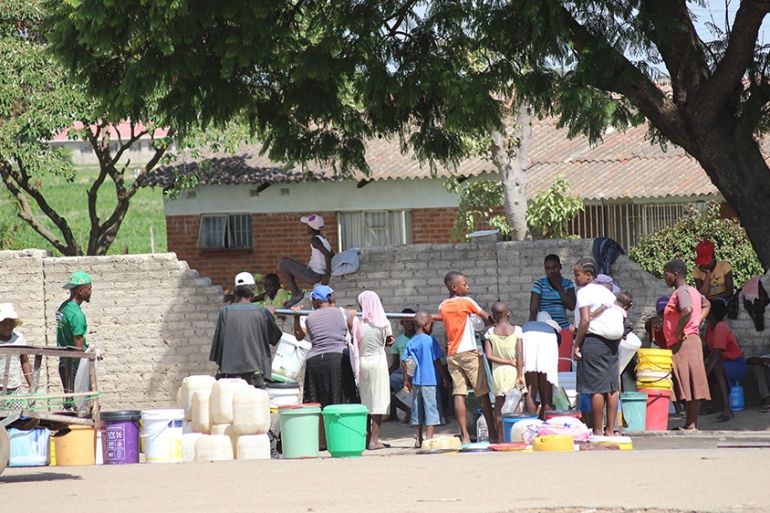
Nightfall in Harare’s high-density suburbs does not bring rest. In places like Budiriro and Glen View, sleep is often interrupted long before sunrise by a familiar sound the dull scraping of empty 20-litre containers dragged across cracked pavements. For many women, the day begins not with calm or comfort, but with a tense race through darkness to reach a community borehole before the queues grow unbearable.
For years, Zimbabwean women have been forced into a role they never chose. The sight of a woman balancing a heavy plastic container on her head has become normalised, yet it reflects failure rather than resilience.
Grandmothers, mothers, and even schoolgirls routinely wake before dawn, exposing themselves to harassment, intimidation, and sometimes violence, simply to collect water for basic household use. At the boreholes, exhaustion mixes with frustration as long lines stretch around corners, while self-styled “water controllers” sometimes demand bribes or favours before allowing access.
This crisis cuts deeper than physical strain. Harare’s chronic water shortages have created emotional and psychological stress that weighs heavily on women. When taps run dry, families are forced into painful compromises between cleanliness and survival. The threat of diseases such as cholera and typhoid lingers constantly.
Many mothers speak of the shame of sending children to school without proper hygiene, while others endure persistent back pain from years of lifting and carrying heavy loads of water. Countless hours that could have gone to work, education, or rest have instead been spent in queues.
A long-awaited change, however, is beginning to take shape in these same communities. Acknowledging the failure of outdated water management systems, the City of Harare has entered into a partnership aimed at restoring reliability and dignity to household water access.
Central to this shift is the introduction of smart prepaid water meters, designed to bring accountability, fairness, and consistency to supply.
Helcraw Water (Pvt) Ltd stands at the centre of this transformation. Working alongside the City Council, the company is not only installing modern meters but also rehabilitating decades-old infrastructure.
Key to the project is the refurbishment of Morton Jaffray Water Works and the replacement of severely damaged pipelines that previously leaked vast amounts of treated water before it ever reached residents. With smart meters in place, residents are no longer billed on estimates for water that never flowed.
Community reaction has been cautiously hopeful. Gladys Mutasa of Warren Park says the idea of turning on a tap after years of queueing feels almost unreal, describing it as a burden finally lifted. In Hopley, Nyarai Mudavanhu, who lives with a disability, recalls how the journey to boreholes excluded her daily; she believes the new system restores a sense of dignity she had lost.
In Budiriro, Amai Chipo explains that no longer waking at 2:00 AM to secure water will allow her to rest, work better, and care more fully for her children. Mai Tineyi from Chitungwiza shares that prepaid water access gives her peace of mind as she looks after her bedridden mother-in-law without fear of sudden shortages.
Women4Water leader Caroline Mutimbanyoka notes that the partnership marks a critical step toward ending the cycle of water deprivation that has held women back economically and socially for generations.



Zimbabwe has officially rolled out its latest HIV prevention tool, with Health and Child Care Minister Dr. Douglas Mombeshora launching the first phase of the national programme for Lenacapavir, a long-acting injectable Pre-Exposure Prophylaxis that provides six months of protection per dose.
Launching the programme, Dr. Mombeshora said that the introduction of the new drug does not replace existing HIV prevention options but rather serves to complement them.
He encouraged the public to seek accurate information from trained health professionals regarding the new method.
The rollout positions Zimbabwe among the first countries globally to introduce the next-generation prevention method, with the initial phase targeting more than 46 000 individuals at high risk.
Priority groups include adolescent girls, young women, sex workers, men who have sex with men, and pregnant or breastfeeding women in areas with elevated infection rates.
Health officials have established 24 sites across priority urban centres including Harare, Bulawayo, Gweru, Masvingo, Mutare and Chitungwiza, with plans to expand to additional districts.
Nearly 400 health workers have already received specialised training to administer the injection and manage recipients.
Lenacapavir is a capsid inhibitor that blocks the protein shell the HIV virus needs to replicate, offering long-lasting protection without the need for daily pills. Clinical trials demonstrated significant efficacy, with zero infections recorded among women who received the drug in the PURPOSE 1 trial, and a 96 percent reduction compared to background incidence among men and transgender people in the PURPOSE 2 trial.
The first consignment of the drug arrived in the country two weeks ago and was cleared by the Medicines Control Authority of Zimbabwe. Zimbabwe was selected in August 2025 as one of ten countries for a global early access programme, reflecting international confidence in the country’s HIV response systems.
The initiation regimen requires two injections and oral tablets on day one, with follow-up injections administered every six months.
Health authorities have stressed that PrEP is strictly for individuals who test HIV negative and is neither a vaccine nor a cure.
Dr. Mombeshora reiterated that the new option does not replace individual responsibility in making informed decisions to protect oneself and others.

THE Ministry of Local Government and Public Works has moved urgently to dismiss what it describes as “false, malicious, and fraudulent” reports circulating that headmen and village heads are being forced to pay money to the Ministry’s Headquarters.
In a strongly worded statement issued today, Minister of Local Government and Public Works, Hon.Daniel Garwe (MP), moved to kill the scam, making it clear that no traditional leader is required to pay a single cent to the government.
“The Ministry wishes to state that no Chief, Headman, or Village Head is required or instructed to make any form of payment to the Ministry.
“The Ministry operates strictly within the provisions of the Constitution of Zimbabwe, the Traditional Leaders Act, and all applicable public finance management laws.
“Any legitimate levies, allowances, or administrative processes involving traditional leaders are processed through lawful and established Government systems, and not through informal or personal channels,” said Hon. Garwe.
The Ministry’s intervention comes amid fears that fraudsters are preying on traditional leaders, who are constitutionally recognised as vital partners in governance and community development.
Members of the public and traditional leaders who encounter such demands have been urged to take immediate action.
“The Ministry advises members of the public and traditional leaders to report any such alleged cases to the Zimbabwe Republic Police or directly to the Ministry.
“The Ministry will not hesitate to act against any individuals or entities who are engaging in such misdemeanours,” he said.
The Government reaffirmed its commitment to respecting the status, welfare, and constitutional mandate of traditional leaders, who play a key role in peace-building and grassroots development.
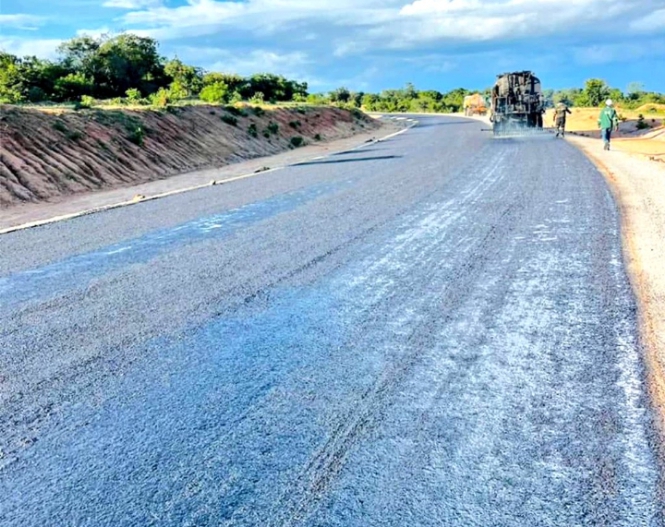
The rehabilitation of the strategic Birchenough–Murambinda Road has entered a critical phase, with priming works now underway to pave the way for surfacing, Transport and Infrastructural Development Director of Roads Engineer Jarawani Kangara has said.
The milestone marks a major step forward in the upgrading of the key rural corridor, a project being spearheaded under the Ministry’s aggressive nationwide road rehabilitation programme.
The Ministry stated that the project is a direct output of the Second Republic’s #KilometreByKilometre mantra, aligned with the National Development Strategy 1 (NDS1) and the broader Vision 2030 agenda of attaining an upper-middle-income economy.
Once completed, the route will slash travel times and vehicle operating costs for thousands of commuters, farmers, and haulage trucks.
By unlocking access to markets, schools and health facilities, the road is expected to catalyse agricultural production in Buhera District and streamline the movement of goods into surrounding growth points.
“This is more than just an asphalt layer; it is a lifeline for trade and rural modernisation.
“The completion of the surfacing will be a game-changer for regional trade integration and local economic development,” said Eng. Kangara.
The project is part of a wider infrastructure push by the Government to ensure transport resilience and boost connectivity between key economic hubs and administrative centres across the country.

President Mnangagwa Rallies Recruits Against Drug Networks

Car plunges into mineshaft, 2 Dead, 1 Missing

Biannual HIV Vaccine Begins

Operation restore order

Masasi High School Abuse Scandal Sparks Public Outcry

Kuwadzana Man Jailed for Reckless Driving and Driving Without a Licence
-
 Current Affairs3 months ago
Operation restore order
-
 Crime and Courts5 months ago
Masasi High School Abuse Scandal Sparks Public Outcry
-
 Crime and Courts5 months ago
Kuwadzana Man Jailed for Reckless Driving and Driving Without a Licence
-

 Current Affairs7 months ago
Breaking: ZIMSEC June 2025 Exam Results Now Available Online
-

 Current Affairs6 months ago
Munhumutapa Day: Zimbabwe’s Newest Public Holiday Set for Annual Observance
-

 Current Affairs4 months ago
BREAKING NEWS: ZANU PF Director General Ezekiel Zabanyana Fired
-

 Current Affairs6 months ago
No Racism in Our Cricket: Government
-

 Current Affairs6 months ago
Government Bans Tinted Car Windows in Nationwide Crime Crackdown