
Feature
The Sovereignty of the Self: Culture and Somatic Rights in Contemporary Africa

Tadiwa Rabecca Karidza-Chikomborero Jacqui Mapaya
As the field of biotechnology expands, the conversation surrounding reproductive rights and somatic rights is growing more intricate. Reproductive rights and somatic rights represent two pillars of bodily autonomy in the age of biotechnology. Reproductive rights, in a genetic framework, refer to the liberty of parents to make informed choices about the biological makeup of their offspring, often specifically through germline editing (modifying embryos, sperm, or eggs). Somatic rights pertain to the individual’s sovereign control over their own “non-heritable” cells, ensuring that any genetic intervention on an existing person is consensual and respects their physical integrity.
When utilized to eradicate devastating hereditary diseases like sickle cell anemia or cystic fibrosis, these rights function as powerful tools for health and survival. However, a critical ethical shift occurs when these technologies move beyond life-saving therapy into the realm of genetic “enhancement.” The danger arises when these rights are used to edit non-harmful traits to meet subjective beauty standards or social trends. This transition risks commodifying the human body, potentially erasing natural genetic diversity in favor of a homogenized, “curated” aesthetic that often prioritizes Western-centric ideals over indigenous heritage.
In Africa, these issues frequently intersect with deeply rooted cultural identities and communal obligations, sparking vital debates that challenge traditional norms. To understand contemporary African resistance to certain somatic rights, one must look at the history of bodily intervention. Colonialism was not merely a conquest of land but also a conquest of the body. Forced labour and invasive medical practices disregarded indigenous knowledge, making the African body a target of external control. In post-colonial Africa, cultural identity serves as a mechanism of reclamation. After decades of being defined by “the other,” the preservation of heritage is an act of sovereignty.
Therefore, the familial connections that bind individuals are not merely biological but also cultural, fostering a sense of identity and belonging. In traditional African communities, lineage functions as the foundational structure for social, legal, and spiritual life. The push for genetic modification and somatic rights can be viewed as a new wave of bio-colonialism, echoing past impositions that sought to erase African identities. In the midst of external influences reshaping African borders and laws, the “genetic frontier” stands as a crucial frontline for cultural preservation.
While global legal structures increasingly advocate for individual somatic rights, the core tension in the discourse around genetic modification lies in contrasting definitions of the “self.” Western notions of somatic rights are grounded in radical individualism, positing the body as private property. In contrast, the African philosophy of Ubuntu (“I am because we are”) suggests that an individual’s identity is inextricably linked to their community. Under Ubuntu, a child is not merely the product of two individuals but a continuation of a community. Altering a child’s genetic makeup is not an isolated parental choice; it is a decision that affects the entire social fabric.
When a human being is “designed” or “edited,” they risk being transformed from a subject of dignity (a unique creation of the ancestors) into an object of manufacture, curated to meet contemporary market or social trends. Moreover, if genetic editing trends toward certain “desirable” traits influenced by Western beauty standards, the unique characteristics that define African lineages may face erosion. Such a shift compromises the very identities that have been nurtured across generations, raising alarms about the consequences of placing global standards over local truths. It can also create a disconnection where the individual is physically alienated from their own history.
Accordingly, as African nations seek to reclaim governance over their borders and laws, they now confront the challenge of external universal standards dictating the fundamental nature of life. Decolonization necessitates the capacity to refuse global trends that do not resonate with local ethical frameworks. True decolonization requires the right to say “no” to global trends that do not align with local ethics.
Safeguarding cultural norms against invasive genetic technologies is an act of resistance against the assumption that Western liberal individualism represents the “final stage” of human rights. African nations must prioritize the preservation of their cultural norms in the face of emerging somatic rights, asserting their sovereignty in an increasingly globalized world. In doing so, they affirm not only their identities but also the collective responsibilities that bind communities together.
As we look to the future, the discourse surrounding reproductive rights and genetic technologies must be rooted in the rich cultural contexts that define Africa, ensuring that the narrative is one of enrichment of identity rather than erosion.
John Nyawo
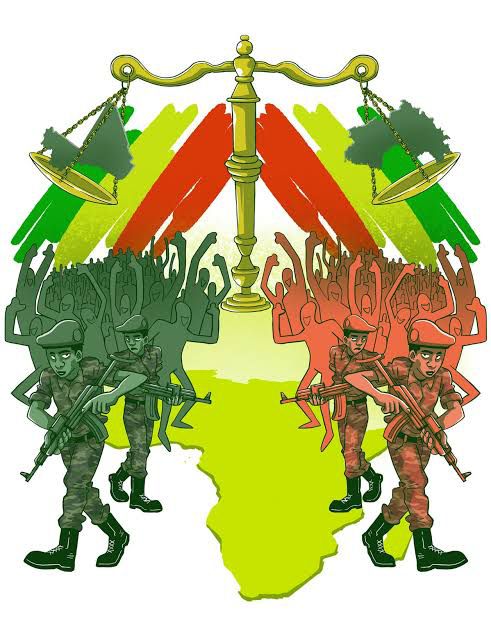
The year 2025 draws to a close with Africa confronting a paradox that cuts to the heart of its governance architecture. As I review the continent’s political landscape from my vantage point as a student of international relations and diplomacy, I am struck by a troubling duality: record numbers of African Union members suspended for unconstitutional military takeovers, juxtaposed against the stony silence of those same institutions when elected leaders engineer constitutional coups through term extensions. This is not merely a procedural inconsistency. It is a fundamental crisis of legitimacy that threatens to unravel decades of post-colonial institution-building.
Consider the numbers. As of February 2025, six African Union members find themselves in suspension Gabon, Niger, Guinea, Sudan, Burkina Faso, and Mali. This easily breaks the previous record of four, a threshold reached only twice in the AU’s quarter-century history. The cause? Military coups. Army officers toppling civilian administrations, as happened most recently in Niger in July 2023 when General Abdourahamane Tiani removed President Mohamed Bazoum, triggering suspensions from both the AU and ECOWAS.
Yet, as one perceptive observer noted in a widely circulated social media post, the AU “consistently turns a blind eye to leaders who stay in power unconstitutionally” through manipulated elections and refusal to accept term limits. The continental body has rules against this too. They simply choose not to enforce them.
This selective enforcement creates a legitimacy vacuum that aspiring authoritarians and coup plotters alike exploit. If the rules apply only to some, they apply to none. The result is a continent where neither constitutionalism nor its military interruption enjoys consistent sanction, leaving citizens trapped between two equally problematic modes of governance failure.
Nowhere is this legitimacy crisis more visible than in West Africa’s Sahel region, where three suspended nations—Mali, Niger, and Burkina Faso—have responded to their ostracism by forging an entirely new institutional architecture. The Alliance of Sahel States (AES), born from the ashes of deteriorating relations with ECOWAS, represents the most significant challenge to Africa’s regional integration project since the Organisation of African Unity’s founding.
The AES is not merely a protest movement. It is building genuine institutional capacity. In December 2025, the alliance launched a unified joint military force of approximately 5,000 troops, designed to combat the jihadist insurgencies that have plagued the region for over a decade. It has announced an Investment and Development Bank with initial capital of 500 billion CFA francs. It has launched AES Television, a dedicated media platform intended to counter what leaders describe as “media terrorism” and disinformation campaigns by foreign powers.
These are not the actions of states expecting a quick return to the ECOWAS fold. These are the building blocks of a rival regional order.
The diplomatic and economic consequences are already measurable. Before tensions escalated, 80% of Niger’s freight passed through Benin’s port of Cotonou. Today, with borders closed and relations frozen, that trade has been forcibly rerouted through Togo and Guinea. An OECD study cited by regional media found that this re-routing increases logistics costs by more than 100% compared to pre-crisis routes, with predictable effects on food prices and regional inflation. Political fragmentation has a direct, material cost borne by ordinary West Africans.
ECOWAS, for its part, continues to wield the tools at its disposal. Following the November 2025 coup attempt in Guinea-Bissau, the bloc threatened “targeted sanctions” against individuals obstructing the return to civilian rule. It has deepened coordination on implementing the African Continental Free Trade Area, holding its third Regional Committee meeting in Accra to strengthen national and regional alignment. The institutions of regional integration continue to function. But they function around the absent seats of three member states representing significant territory and population.
First, the fragmentation we are witnessing is not simply a product of military adventurism. It reflects genuine popular disillusionment with existing governance arrangements. The comment sections on African news posts overflow with frustrations that academic journals are only beginning to capture. “The AU has to be overhauled. It doesn’t have any actual use for Africans,” reads one representative remark. Another commentator dismisses the AU as irrelevant to Africans under 52, suggesting younger generations would prefer to “SCRAP THE AU AND CREATE A NEW ALL-AFRICA PEOPLE’S CONGRESS.” Hyperbolic, perhaps, but indicative of a generational legitimacy deficit that continental institutions ignore at their peril.
Second, the emergence of the AES demonstrates that regional integration is not inherently valuable it is valuable only insofar as it serves the perceived interests of participating states and their populations. When ECOWAS sanctions came to be viewed by Sahelian publics as punishment rather than principled enforcement, the legitimacy calculation shifted. Burkina Faso’s President Ibrahim Traoré now speaks of resisting “attempts by imperialist forces to subjugate Africans.” Whether one accepts this framing or not, its resonance with domestic audiences is undeniable.
Third, and most troublingly, the continent risks entering a cycle where governance failure begets institutional fragmentation, which in turn begets further governance failure. The AES states face existential security challenges. Their new unified force may improve counterterrorism coordination, but it operates without the intelligence-sharing infrastructure that ECOWAS membership once provided. Their new development bank may finance infrastructure, but it cannot replace the access to broader regional markets that fragmentation forecloses.
Africa’s institutional fragmentation occurs against a backdrop of profound human need. The Sahel faces a jihadist insurgency that has pushed vast areas beyond state control. The eastern Democratic Republic of Congo continues to experience cycles of violence involving the M23 rebel movement and rival regional powers. The recent Doha process between the DRC government and M23, facilitated by Qatar and the United States, offers hope, but implementation remains uncertain.
In such a context, institutional fragmentation is not an academic abstraction. It has consequences measured in lives disrupted, children out of school, and communities displaced by violence that effective regional cooperation might help contain.
The question for 2026 and beyond is whether Africa’s regional institutions can reform themselves rapidly enough to address the legitimacy crisis that now confronts them, or whether the fragmentation we are witnessing represents not a temporary disruption but the early stages of a more permanent reconfiguration. For a continent whose post-colonial project has always been bound up with the ideal of pan-African unity, the stakes could hardly be higher.
John Nyawo is a student pursuing a master’s degree in International Relations and Diplomacy.

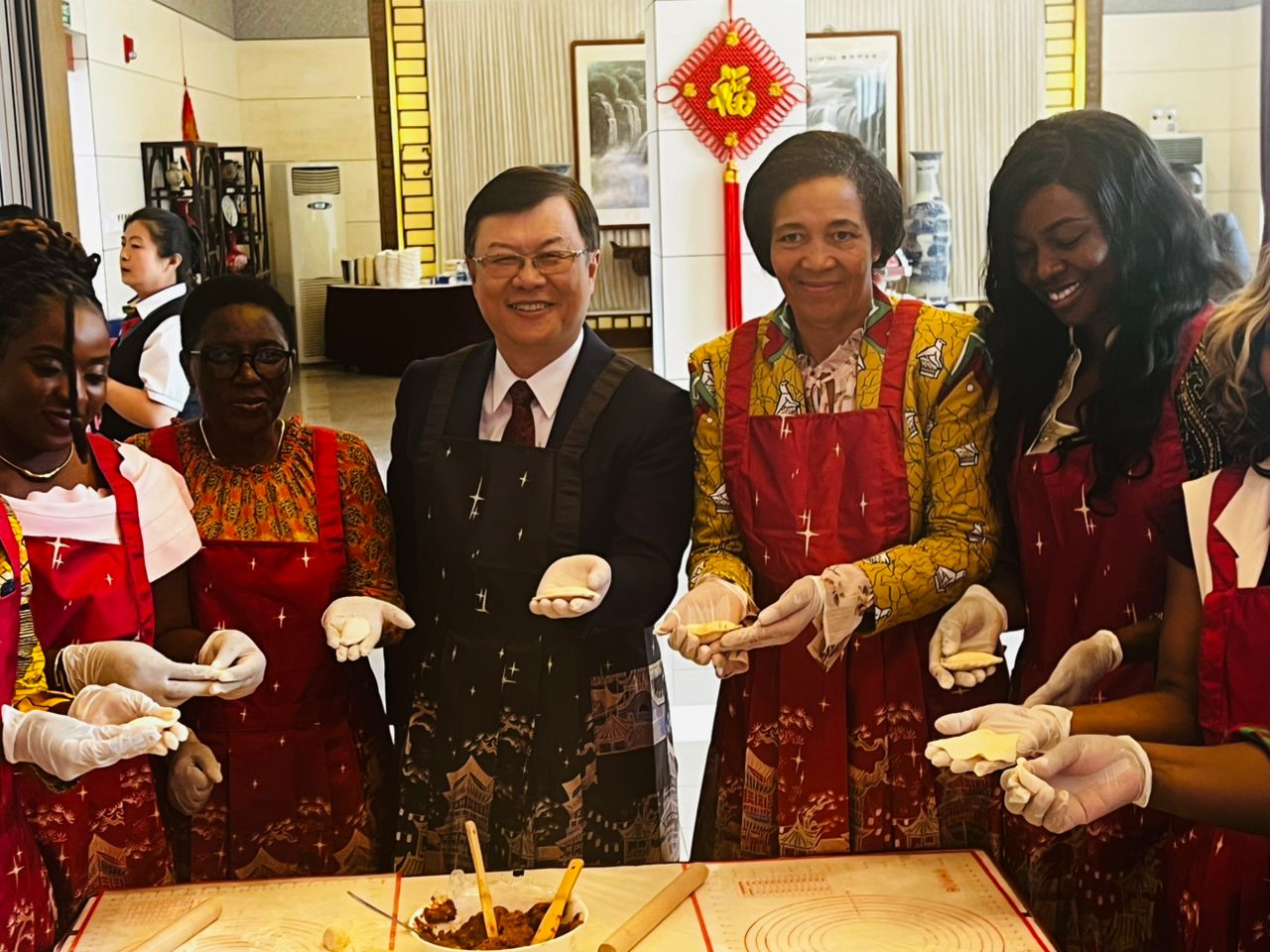
Under a sky still glowing with the spirit of the Lunar New Year, the Chinese Embassy transformed into a radiant celebration of light, culture, and unbreakable sisterhood on 27 February 2026. As lanterns swayed and the first full moon of the lunar calendar rose, diplomats, ministers, parliamentarians, and trailblazing women gathered to honour two powerful occasions: the Chinese Lantern Festival and International Women’s Day.
What unfolded was far more than a party—it was a vibrant testament to the truth that when women rise, nations shine brighter.
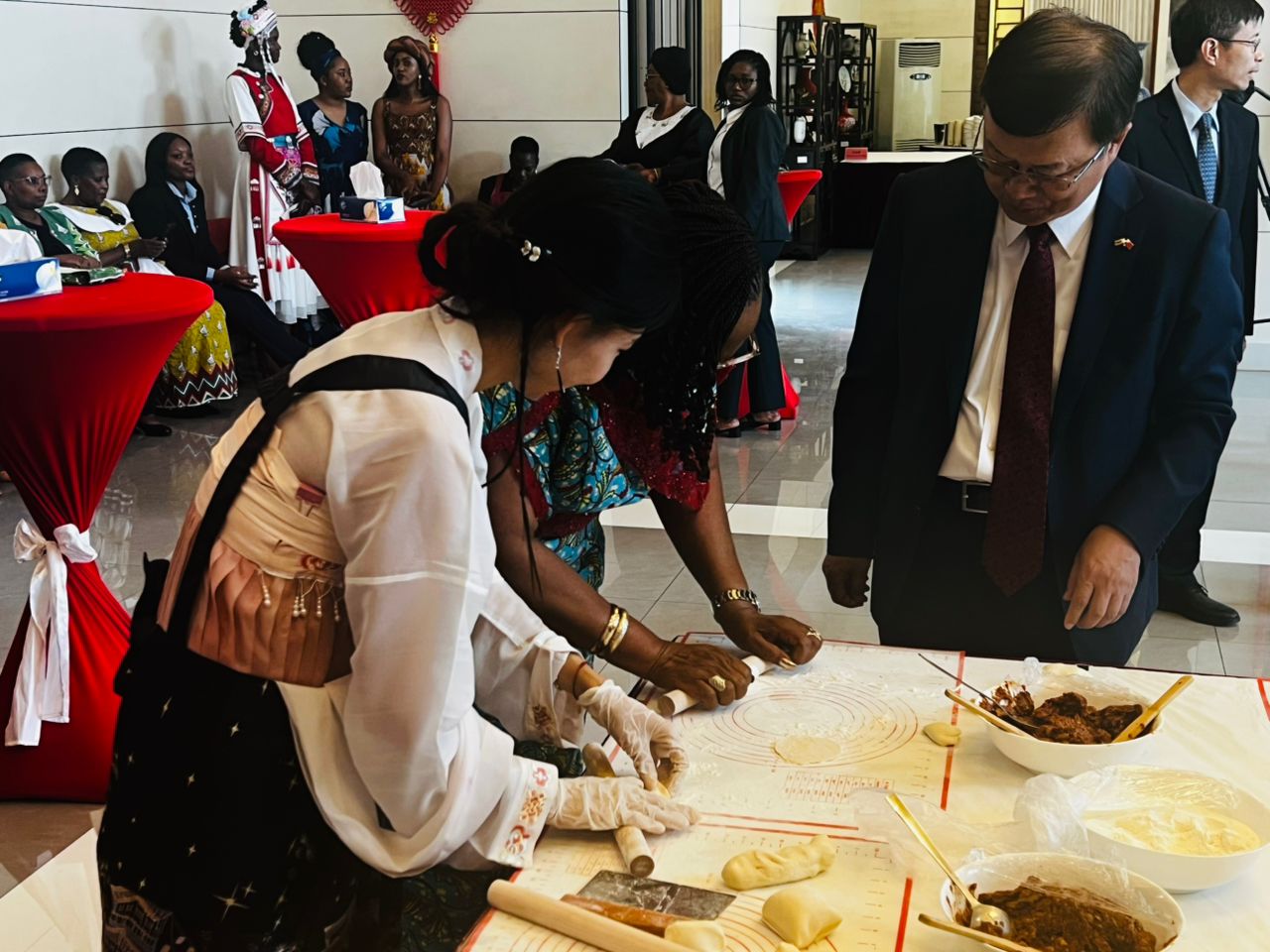
The air buzzed with harmony from the moment guests arrived. Chinese and Zimbabwean melodies floated through the halls, traditional attire from both nations dazzled in a colourful showcase, and hands-on experiences—from calligraphy strokes to dumpling-making—bridged cultures in the most delightful way. It was the perfect embodiment of 2026’s China–Africa Year of People-to-People Exchanges.
“Every woman is a star”, – and the stars were out in force
Chinese Ambassador H.E. Zhou Ding set the tone with warm Shona greetings and heartfelt praise. Standing alongside his wife, Madame Lyu Renhong, he declared, “Every woman is a star,” quoting President Xi Jinping’s words from the Global Leaders’ Meeting on Women. He turned to Zimbabwe’s Minister of Women Affairs, Hon. Sen. Monica Mutsvangwa—calling her “my dear sister”—and saluted her tireless work empowering women, communities, and small businesses.
The numbers Ambassador Zhou shared were staggering: China remains Zimbabwe’s largest source of foreign direct investment, with over 1,000 new Chinese enterprises registered in the past three years and planned investments exceeding US$5 billion. Bilateral trade hit a record US$4.4 billion in 2025, sustaining more than one million jobs—nearly half held by women.
But the Ambassador made it clear: real partnership is measured in lives changed.
He spotlighted life-changing projects that brought smiles and self-reliance: Prospect Lithium’s “Weaving the Future” programme in Goromonzi, turning sewing machines into sustainable livelihoods for local women; the Zimbabwe Chinese Business Chamber’s “Loving Mums” charity caring for orphaned girls at Hossanna Children’s Home; over 60,000 maternal health services delivered after Cyclone Idai; Chinese medical teams treating hundreds of thousands of patients since 1985; and the Bright Journey Programme restoring sight to more than 1,400 cataract patients, many of them women.
Add nearly 6,000 Zimbabwean professionals trained in China—including outstanding women leaders—and the picture is crystal clear: a friendship forged in the liberation struggle now powers a brighter tomorrow.
“A home is made by the woman” – the heart of the celebration
Madame Lyu Renhong captured the emotional core of the day.
“In both our cultures,” she said, “harmony within the family is the foundation of harmony in society.”
She quoted the Chinese proverb “家和万事兴” (Harmony at home brings prosperity in all things) and the beautiful Shona wisdom “Musha mukadzi” – “A home is made by the woman.” Women, she reminded everyone, are not just caregivers—they are leaders, innovators, and custodians of culture. When women flourish, entire societies grow stronger.
Her message resonated deeply in a year dedicated to people-to-people bonds:
“Enduring friendship is built not only through agreements, but by people—and very often, by women.”
“When we lift women, we uplift families… and build nations”
Minister Monica Mutsvangwa, resplendent as the host nation’s voice, brought the house to its feet. Drawing on the symbolism of lanterns rising into the night sky, she declared:
“Just as lanterns lift into the sky, carrying light and hope beyond the darkness, women who step confidently into their power illuminate the path for their families, communities, and nations.”
Quoting activist Audre Lorde—“when we dare to embrace our own strength… fear begins to lose its hold over us”, the Minister urged women to lead boldly.
She echoed Madame Lyu’s powerful chain:
“When we lift women, we uplift families. When we uplift families, we strengthen communities. When we strengthen communities, we build nations.”
The Minister’s closing call was electric:
“Let us commit to seeing the potential in every woman, creating opportunities where none exist, and lighting the path for generations to follow.”
Two proverbs, one powerful truth
Ambassador Zhou closed with wisdom that perfectly captured the day. The Shona proverb “Rume rimwe harikombi churu” (One man cannot surround an anthill) met its Chinese counterpart:
“A single tree cannot form a forest.” Both cultures, he noted, teach the same lesson—unity and shared effort create strength.
As lanterns glowed and laughter echoed late into the afternoon, guests left carrying more than good wishes. They carried a shared promise: that the light of women’s empowerment, the warmth of cultural friendship, and the unbreakable bond between China and Zimbabwe will continue to brighten the path ahead.
By Piason Maringwa
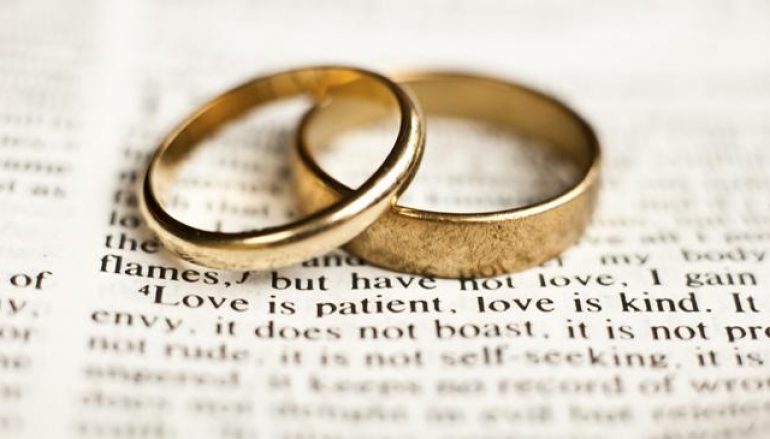
Marriage is a gift from God. The marital bedroom is a place of intimacy and vulnerability, where couples share their lives and build families together. While some marriages face significant challenges from the start, marriage remains a sacred gift intended to be a lifelong union between husband and wife. Couples should strive to nurture and sustain their relationship through all circumstances.
Marriage vows emphasise commitment through both joy and hardship, in health and in sickness, until death. However, in reality, many marriages face difficulties that challenge this ideal. Modern marriage can be demanding, and some relationships struggle from the very beginning. There are cases where marriages dissolve quickly—sometimes within days or weeks of the wedding. What this often means is that the couple may have emotionally separated long before their wedding day.
Marriage is a natural union and cannot survive if entered into artificially or for convenience.
Sex in Marriage
Sexual intimacy is an important part of any marriage and should be approached with mutual respect and understanding. When HIV enters a marriage, both partners need to communicate openly, reflect on their past behaviours, and avoid assigning blame. Understanding and support are crucial in facing such challenges together.
Sexual intimacy is a shared responsibility. When issues arise that lead a partner to seek intimacy outside the marriage, both individuals should reflect on their roles in the relationship and work together to address the underlying problems. Some marriages become so toxic that normal and fulfilling intimacy becomes almost impossible, resulting in one or both partners looking elsewhere for satisfaction.
Married couples should create a nurturing environment for healthy sexual relationships at home to avoid situations where partners are driven to seek gratification—and risk—elsewhere.
Sex is a powerful force that must be approached with the satisfaction and well-being of both partners in mind. If one partner is consistently left unfulfilled, the temptation to look elsewhere increases, along with the risk of HIV infection.
Some may wonder whether their spouse is to blame for HIV in the home. Truthfully, it is often a complex situation. For example, I suspect that when I married my wife in 1990, I was already HIV positive, although I had not yet been tested. I only got tested in 1999 when I became seriously ill with tuberculosis. Therefore, Mai Simba is absolved—I take full responsibility for bringing HIV into my family.
Our firstborn son, born in 1991, was not affected, perhaps because my wife had not yet been infected at that time.
The Bitter-Sweet Reality of Sex Outside Marriage
Stolen fruit is always sweet; similarly, stolen sex can seem exciting but often carries disastrous consequences. Those who have engaged in extramarital relationships may testify to the initial appeal and the eventual pain when consequences follow. It is wise to avoid such situations and prioritise the health and stability of your marriage.
Divorce When One Tests HIV Positive
Anger, bitterness, and a sense of betrayal can overwhelm a partner when one or both spouses test HIV positive. Divorce may seem like the next logical step. The pain can feel even more intense when the wife is perceived to be the source. Many men struggle with the thought of their wives being with another man, especially if they consider themselves innocent.
Society often judges men and women differently regarding infidelity, but the pain of betrayal affects everyone. Decisions about divorce should be made thoughtfully, with careful consideration of the well-being of both partners.
Many people later regret choosing divorce, especially if the decision was driven by anger or bitterness. In many cases, women are deeply affected—particularly if, out of anger or pride, they end their marriages believing they can easily find another partner.
My advice to wives who feel compelled to act rashly because of their husbands’ infidelity is to remain calm, consider the long-term consequences, and make wise decisions. Divorce should not be the first or only option. Finding a second chance at marriage—or even a stable relationship—can be difficult.
Some individuals remain single for many years after divorce or widowhood, which can be emotionally challenging. It is important to value and support one another, regardless of health status.
When I look at my wife today—more than 24 years after she chose to stay with me despite my HIV-positive status—I see a heroine. Today she has a family, a home, children, grandchildren, and a healthy HIV-positive husband. Some who divorced their partners because of HIV now live alone or have passed away.
Some may disagree with my perspective, but I speak from experience. I have not always been a perfect husband to Mai Simba—she could have left me, but she chose to stay. Today, we are a happy and respectable couple enjoying good health and a fulfilling life together.
Mai Simba is the woman who has known me for decades, and I am the man she has nurtured and helped transform. Some people agree with my message, while others regret the rushed decisions they made to divorce because of HIV.
A devil you know is better than an angel you do not know. Always listen to the man with scars.

Dynamos, Highlanders Play Out Thrilling Draw in Season’s First Battle of Zimbabwe

Ngezi Platinum Stars Hold Defending Champions Scottland at Rufaro

Garwe to Commission Fire Tender, Equipment for Insiza, Umzingwane

Operation restore order

Masasi High School Abuse Scandal Sparks Public Outcry

Kuwadzana Man Jailed for Reckless Driving and Driving Without a Licence
-
 Current Affairs4 months ago
Operation restore order
-
 Crime and Courts6 months ago
Masasi High School Abuse Scandal Sparks Public Outcry
-
 Crime and Courts6 months ago
Kuwadzana Man Jailed for Reckless Driving and Driving Without a Licence
-
 Current Affairs8 months ago
Breaking: ZIMSEC June 2025 Exam Results Now Available Online
-
 Current Affairs7 months ago
Munhumutapa Day: Zimbabwe’s Newest Public Holiday Set for Annual Observance
-
 Current Affairs5 months ago
BREAKING NEWS: ZANU PF Director General Ezekiel Zabanyana Fired
-

 Current Affairs7 months ago
No Racism in Our Cricket: Government
-
 World News5 months ago
Burkina Faso Reaps $18 Billion in Gold Revenue Under Ibrahim Traoré’s Leadership
Pardon Karidza
March 5, 2026 at 4:51 pm
Quite a thought provoking discussion. Thank you.
rumbidzai maketo
March 6, 2026 at 10:25 am
Profound