
Policy
ZANU-PF Clarifies Procedures for Filling Vacant Party Positions


ZANU-PF has released a statement explaining how internal party vacancies should be properly filled through co-option, based on Sections 554 and 555 of the Party Constitution.
This comes after two earlier circulars (numbers 0634 and 0635) were mistakenly sent out and have now been officially withdrawn. In a new directive signed by the Secretary for Legal Affairs, Cde P.A. Chinamasa, all party structures—including District Coordinating Committees (DCCs)—have been told to follow the correct constitutional procedures when carrying out co-options.
Key Provisions and Guidelines:
- Three-Month Deadline: Any vacant position must be filled within three months through co-option.
- Start with Consensus: The organ must first try to agree on one replacement. If two candidates are suggested and no agreement is reached, a vote must be held. The person with the most votes wins, as long as enough members are present.
- Same District Rule: The person chosen must come from the same district as the one being replaced.
- Organ Dissolution Rule: If one-third or more of the positions in any organ (except the Central Committee) become vacant, the whole organ will be dissolved.
- Flexible Role Assignment: The person co-opted does not have to take over the same position. They can be given other duties as long as fairness and proper representation are maintained.
- Observers Only: Members from other party organs can attend co-option meetings, but only to observe. They cannot speak, vote, or interfere in any way.
DCC-Specific Rules:
Only official DCC members listed in Article 13, Sections 144 (1) to 144 (25), can take part in co-option. For Women’s Affairs, Youth Affairs, or War Veterans Affairs, the vacancy must be filled by someone from the same wing within the district.
Enforcement:
Provincial leaders must make sure co-option meetings are held quickly when a vacancy occurs and that all procedures are followed correctly. Meeting minutes and results must be sent to the National Political Commissar’s office within seven days.
Cde Chinamasa made it clear that these rules will not apply to past actions. They only apply to future co-option processes. If these procedures are not followed, any such co-option will be considered invalid.









Policy
Digital Transformation and Artificial Intelligence’s New Responsibility: Safeguarding Information Integrity

By Elias Mambo (Zimpapers Editorial Executive and Digital Transformation Expert)
Digital transformation has reshaped the media industry by changing not only how news is produced and distributed, but also how audiences experience information. In today’s newsroom, editorial teams increasingly rely on digital tools such as content management systems, analytics dashboards, automated workflows, and algorithm-driven distribution platforms.
Artificial intelligence (AI) sits at the centre of this shift, assisting with tasks ranging from transcription, translation, and summarisation to content recommendation, fraud detection, and newsroom support. While these capabilities can improve speed, productivity, and reach, they also introduce a critical challenge: safeguarding information integrity.
Information integrity is the commitment to ensuring that what is published is accurate, authentic, properly contextualised, responsibly attributed, and ethically produced—particularly when AI is involved in generating, editing, or promoting content.
AI changes the integrity risk profile because it operates at scale and can generate text or insights that appear coherent even when the underlying facts are incorrect. This can lead to hallucinations, incomplete or misleading summaries, context collapse, and source ambiguity, where audiences struggle to distinguish verified information from secondary claims. At the same time, AI systems may reflect biases present in the data on which they were trained or in the objectives used to optimise performance, such as engagement or popularity.
In a digital environment where misinformation can spread quickly and corrections may not always receive equal visibility, integrity becomes not simply a journalistic value but an operational necessity. Digital speed without integrity can turn mistakes into widespread narratives before they are detected, making truth protection a core part of the media workflow rather than an afterthought.
For that reason, integrity must be designed into the transformation process from the beginning. Media organisations should treat integrity as a system requirement that governs how AI is used across the entire pipeline, including creation, verification, approval, and distribution. A human-in-the-loop approach is essential: AI may draft, assist, or organise information, but verification must remain an editorial responsibility with clear accountability.
This also requires stronger information provenance practices, including documenting where information came from, how it was processed, and which sources support key claims. Provenance and attribution controls should be implemented so that AI outputs can be traced back to credible evidence, with editorial oversight determining what is publishable. In high-stakes contexts such as elections, public safety, or health, integrity measures must be stricter and review processes more rigorous, because the cost of failure is higher.
Beyond workflow design, safeguarding integrity depends heavily on data quality and model accountability. AI tools are only as reliable as the inputs and rules they operate on, so newsrooms must invest in data stewardship, including curated reference materials for editorial use, reliable datasets for analysis, and continuous performance monitoring to prevent system degradation as language and events evolve.
Internal auditability also matters: organisations should be able to assess why AI produced a particular output and whether the information relied on trustworthy inputs. Additionally, red-teaming and stress testing should be conducted to expose weaknesses, especially in scenarios involving adversarial misinformation such as manipulated documents, coordinated disinformation, or misleading multimodal content. Transparency, in this sense, is less about public disclosure of every technical detail and more about ensuring internal governance, traceability, and ethical accountability.
Importantly, integrity does not end at publication, because the platform distribution layer can amplify both accuracy and error. Algorithmic ranking systems often promote content based on engagement signals, and when AI drives those signals, integrity becomes inseparable from distribution strategy. Media organisations should adopt ranking approaches that incorporate quality signals such as verification status, corrections history, source credibility, and adherence to editorial standards, rather than relying solely on what is most engaging.
They should also prioritise context-first presentation by using clear labels, source metadata, and messaging that distinguishes what is confirmed from what is still being verified. Corrections should be made visible and, where possible, given distribution weight comparable to the original item, so audiences are not left with outdated or incorrect narratives.
Ultimately, the responsibility for integrity in the age of AI shifts toward leadership. Safeguarding information integrity requires ethical frameworks for AI use, staff training that includes an understanding of AI limitations such as hallucination risks and bias, and clearly defined accountability roles specifying who verifies and who approves content.
It also calls for investment in integrity tools such as fact-checking support systems, source comparison tools, provenance tracking, and monitoring mechanisms that detect emerging errors or patterns of misinformation. More than all of these, it requires a culture of editorial scepticism, where AI outputs are treated as assistance rather than authority, and where journalistic principles of truth, fairness, and accuracy remain non-negotiable.
In conclusion, digital transformation and AI are transforming media with unprecedented speed and capability, but they also make integrity harder to protect if it is not managed deliberately. The new responsibility is therefore clear: media organisations must govern AI-enabled processes through verification, provenance, accountability, and ethical distribution.
In the evolved media landscape, information integrity is not merely a professional standard; it is the foundation of public trust, audience retention, and the broader credibility of information in society.


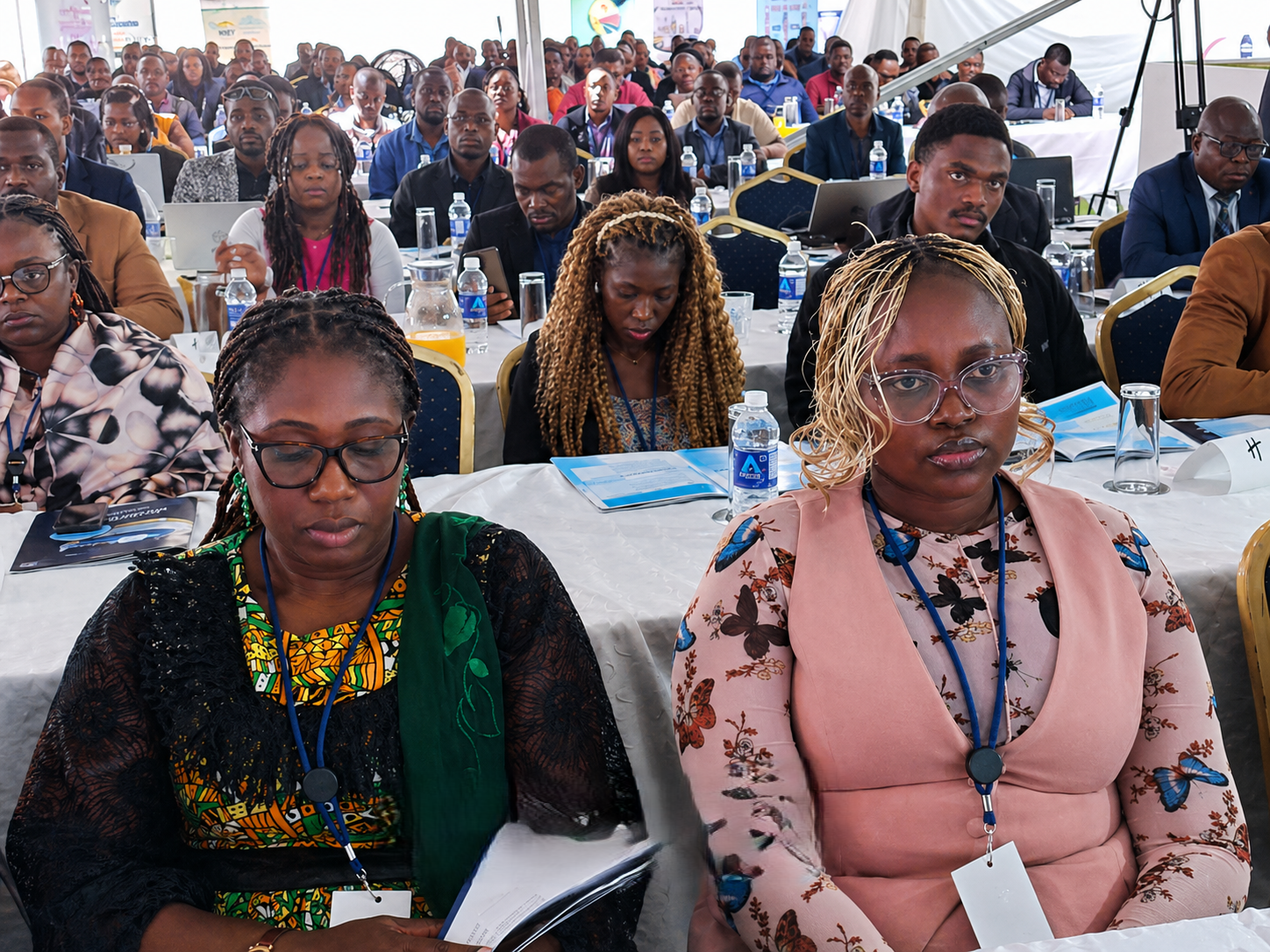
Zimbabwe must place data privacy at the centre of its digital transformation if it is to build trust, grow innovation and unlock the full potential of its digital economy, the Minister of ICT, Postal and Courier Services Tatenda Mavetera said.
Addressing delegates at the Third National Data Privacy Symposium held in Bulawayo on Wednesday, the Minister warned that failure to prioritise privacy could undermine public confidence in digital systems.
“Without privacy by design, there is no true consent. Without consent, there is no trust. And without trust, we cannot build the digital economy we so urgently need,” Minister Mavetera said.
The symposium, hosted by the Postal and Telecommunications Regulatory Authority of Zimbabwe (POTRAZ), drew participants from across government, regional regulators and the private sector, reflecting growing interest in data protection both locally and across the region.
Trust Key to Digital Growth
The Minister said Zimbabwe’s push towards a digital economy,driven by mobile money, e-government services and emerging technologies such as artificial intelligence,depends heavily on public trust.
“Can a digitised economy thrive without trust? The answer is no,” Mavetera said, describing trust as a critical driver of investment and adoption of digital services.
He added that privacy should no longer be treated as an afterthought but must be built into systems from the start.
“Privacy is not the enemy of innovation; it is its enabler,” she said.
Zim Building Data Protection Capacity
Zimbabwe has already taken steps to strengthen its data protection framework through the Cyber and Data Protection Act, with POTRAZ designated as the country’s Data Protection Authority.
Minister Mavetera said progress is also being made in building local expertise, revealing that over 1,000 Data Protection Officers have now been trained and certified.
“This shows that Zimbabwe is steadily building the human capital needed to sustain a trusted digital economy,” she said.
Regional Role and Cooperation
Zimbabwe is increasingly positioning itself as a regional player in data governance, with SADC partners identifying the country to help lead capacity-building efforts.
“Data knows no borders, and neither should our solutions,” the Minister said, calling for closer cooperation among African countries on data protection laws and standards.
AI and Data Risks
The Minister also linked privacy to Zimbabwe’s emerging Artificial Intelligence strategy, warning that weak data governance could expose citizens to risks such as profiling, bias and misuse of personal information.
He said innovation must be balanced with strong safeguards.
“Innovation must be ethical, accountable and respectful of human dignity, with privacy as its foundation,” she said.
The government, as one of the largest collectors of citizen data, must lead by example, the Minister added.
“Privacy should be embedded across all ministries and departments, not treated as a box-ticking exercise,” she said.
He urged regulators, businesses and institutions to adopt a privacy-first approach to ensure Zimbabwe builds a secure and inclusive digital economy.

Political Think tanks like SAPES have come and gone. Although, SAPES led by Ibbo Mandaza started well but later became partisan, taking the side position of the opposition and obviously becoming irrelevant.
Subsequently, there has not been independent academic political think tanks so far since the fall of SAPES, which was of course, never impartial.
Today, Zimbabwe has come to the crossroad where an independent academic political think tank should take centre stage especially towards the 2030 National Development Strategy 2.
Such a political think tank should be in line with the National Development Strategy 2. Unlike In Conversation with Trevor, Heart and Soul TV (HStv), Mandaza’s SAPES, the political think tank should podcast debates on national development agenda. The government of today and its national development agenda deserves a political think tank that will engage the citizenry from an academic approach.
Led by Dr Limukani Mathe (once a South African based scholar), co-founded by Roncemore Mhlanga, (LLB) and Paul Chairuka (MSC Finance), Harare Opinion (HO) has emerged to fill the gap.
Harare Opinion currently functioning as online editorial opinion, www.harareopinion.co.zw, with verified social media outlets on Facebook, X and WhatsApp, seeks to challenge political perspective from an academic point of view.
Taking its baby steps, Harare Opinion endeavours to become a popular political think- podcasting timely policy debates that seek to depolarise and engage miscellaneous audiences within Zimbabwe’s political demography.
Popular podcasts like Joe Rogan Experience, Crime Junkie and The Daily in America have not been seen in the Zimbabwean’s social media sphere.
Popular Podcasts like the Steven Barlett and the Rest in Politics have not been in Zimbabwe’s social media sphere. Common social life podcasts in Zimbabwe include that of DJ Ollar which remain superficial, touching on daily social life and with no benefit to Zimbabwe’s progressive government national agenda.
Thus, the National Development Strategy (NDS2) 2026-2030, needs supportive mechanisms through political think tanks like Harare Opinion which will group experts regardless of their political affiliation to debate national development. Harare Opinion endeavours to approach national development agenda from an academic expert’s view in order to
- offer unconventional and innovative persuasive dialogue
- Depolarise and popularise government developmental programmes
- Pull together home and diaspora in support of national agenda (2026-2030), NDS2
- Revive a united sense of belonging and patriotic citizenship
So far, Harare Opinion has published 34 opinion articles on its website mainly focusing on the Constitutional Amendment Bill No.3.
The Editor-In-Chief of the portal, Dr Limukani Mathe says the political think tank is yet to start podcasting on social media and running conference talks by inviting politicians to a free public debate in line with the National Development Strategy 2.
Dr Limukani Mathe is well established scholar with over 50 academic publications as books, book chapters and journal articles in high impacts journals. Published to his name are so far 6 books in Palgrave Macmillan and Routledge and another expected in Oxford Press.
Mathe says Harare Opinion is also in collaboration with the Zimbabwe Presidential Scholarship Alumni Association (ZPSAA) for Economic Development.
The Zimbabwe Presidential Scholarship Alumni Association (ZPSAA) attracts more than 10 000 professionals (including Doctors and Professors) at home and abroad. Led by the chairperson, Roncemore Mhlanga and Vice- Chairperson, Dr Limukani Mathe, ZPSAA will serve as supportive mechanism to Harare Opinion- making use of the intellectual capital from the pool of contributors.
Moreso, Harare Opinion’s intellectual capital will be drawn from industry experts in politics, economics, media, academics, and other. The success of the political think tank will be determined by its ability to attract vigorous engagement across the political divide, depolarising political segments, detoxing the political environment, and preparing Zimbabwe for 2030.

POTRAZ Q4 Report Highlights NetOne’s Strong Digital Growth and Rural Connectivity Expansion

Minister Masuka Defends BIPPA Farm Returns, Says Land Reform Remains Irreversible

Fake ID Fraud Suspect Appears in Court Over Loan Scam Allegations

Operation restore order

Masasi High School Abuse Scandal Sparks Public Outcry

Kuwadzana Man Jailed for Reckless Driving and Driving Without a Licence
-
 Current Affairs6 months ago
Operation restore order
-
 Crime and Courts7 months ago
Masasi High School Abuse Scandal Sparks Public Outcry
-
 Crime and Courts8 months ago
Kuwadzana Man Jailed for Reckless Driving and Driving Without a Licence
-

 Current Affairs9 months ago
Breaking: ZIMSEC June 2025 Exam Results Now Available Online
-

 Current Affairs8 months ago
Munhumutapa Day: Zimbabwe’s Newest Public Holiday Set for Annual Observance
-

 Current Affairs7 months ago
BREAKING NEWS: ZANU PF Director General Ezekiel Zabanyana Fired
-

 Current Affairs9 months ago
No Racism in Our Cricket: Government
-

 Business6 months ago
Tino Tungwarara Launches Prevail Mart, Becoming One of Zimbabwe’s Youngest Retail Entrepreneurs