
Policy
Zimbabwe Suspends New Urban Fuel Station Licences


The Zimbabwe Energy Regulatory Authority (ZERA) has temporarily suspended the issuing of new licences for fuel stations in urban areas, citing a need to curb the “mushrooming” of retail filling stations across the country.
The regulator is also considering a new by-law that would enforce a minimum distance of 15 kilometres between two retail service stations while also advocating for a shift towards containerised or portable fuel retail stations in urban centres to reduce land use.
This development follows the Harare City Council’s recent admission of chaos and poor coordination in issuing permits for service stations, resulting in three fuel stations within a 50 km radius, with some located just one metre apart.
Speaking during an Environmental Social Governance (ESG) conference held in Harare last Friday, Zimbabwe Energy Regulatory Authority’s technical services director, Engineer Man’arai Ndovorwi, said they are now working on closing all loopholes to curb the mushrooming of service stations.
“The issue of mushrooming of service stations in the CBD or in urban centres is, of course, of concern for us, and I think one of the challenges or loopholes that we had in our legislation was the licensing of these sites after they had obtained commercial rights in terms of development of these properties in urban centres,” he said.
“However, we are currently in talks with the local authorities to ensure that we revise the by-laws so that the actual permitting and licensing of these service stations is done before the development of these service stations, and so that we also amend our regulations to indicate the minimum distances that should be between service stations.”
Eng Ndovorwi also revealed that new licences will only be issued after the current challenges have been addressed.
“We are happy that the Government, through the Minister of Local Government and Public Works, issued a moratorium in terms of development in urban centres, and this is also not only impacting in terms of housing developments, but it’s also involving the development of these commercial entities or commercial sites in terms of development of service stations.
“So that moratorium is also applying to the development of service stations, and so currently we are not licensing any service stations in urban areas, but at least we are also working around the issue to ensure that we have minimum safe distances between these service stations being established.”
In urban areas, Eng Ndovorwi said, they were pushing for the minimum distance between retail fuel stations to curb further mushrooming of such facilities.
“In other jurisdictions, we find that the minimum distance between these service stations should be around 15 kilometres, so that is what we are also anticipating to happen as we develop our communities and move outside the CBDs to actually also do investment in rural communities.”
In the future, Eng Ndovorwi added that traditional fuel stations in urban areas will be phased out.
“So we are now encouraging them to put containerised fuel stations, which are coming at 20 percent of the cost of putting up a service station. So this is actually a way to help issues of mushrooming of service stations in the epicentres.”
A containerised or portable fuel retail station is a complete, self-contained fuel storage and dispensing unit built inside a standard shipping container.
The storage tanks are above ground, and the shipping container provides secondary containment.
They are also called portable fuel stations because the container installation can be transported on a low-bed trailer as and when necessary.


Zimbabwe must place data privacy at the centre of its digital transformation if it is to build trust, grow innovation and unlock the full potential of its digital economy, the Minister of ICT, Postal and Courier Services Tatenda Mavetera said.
Addressing delegates at the Third National Data Privacy Symposium held in Bulawayo on Wednesday, the Minister warned that failure to prioritise privacy could undermine public confidence in digital systems.
“Without privacy by design, there is no true consent. Without consent, there is no trust. And without trust, we cannot build the digital economy we so urgently need,” Minister Mavetera said.
The symposium, hosted by the Postal and Telecommunications Regulatory Authority of Zimbabwe (POTRAZ), drew participants from across government, regional regulators and the private sector, reflecting growing interest in data protection both locally and across the region.

Trust Key to Digital Growth
The Minister said Zimbabwe’s push towards a digital economy,driven by mobile money, e-government services and emerging technologies such as artificial intelligence,depends heavily on public trust.
“Can a digitised economy thrive without trust? The answer is no,” Mavetera said, describing trust as a critical driver of investment and adoption of digital services.
He added that privacy should no longer be treated as an afterthought but must be built into systems from the start.
“Privacy is not the enemy of innovation; it is its enabler,” she said.
Zim Building Data Protection Capacity
Zimbabwe has already taken steps to strengthen its data protection framework through the Cyber and Data Protection Act, with POTRAZ designated as the country’s Data Protection Authority.
Minister Mavetera said progress is also being made in building local expertise, revealing that over 1,000 Data Protection Officers have now been trained and certified.
“This shows that Zimbabwe is steadily building the human capital needed to sustain a trusted digital economy,” she said.
Regional Role and Cooperation
Zimbabwe is increasingly positioning itself as a regional player in data governance, with SADC partners identifying the country to help lead capacity-building efforts.
“Data knows no borders, and neither should our solutions,” the Minister said, calling for closer cooperation among African countries on data protection laws and standards.
AI and Data Risks
The Minister also linked privacy to Zimbabwe’s emerging Artificial Intelligence strategy, warning that weak data governance could expose citizens to risks such as profiling, bias and misuse of personal information.
He said innovation must be balanced with strong safeguards.
“Innovation must be ethical, accountable and respectful of human dignity, with privacy as its foundation,” she said.
The government, as one of the largest collectors of citizen data, must lead by example, the Minister added.
“Privacy should be embedded across all ministries and departments, not treated as a box-ticking exercise,” she said.
He urged regulators, businesses and institutions to adopt a privacy-first approach to ensure Zimbabwe builds a secure and inclusive digital economy.

Political Think tanks like SAPES have come and gone. Although, SAPES led by Ibbo Mandaza started well but later became partisan, taking the side position of the opposition and obviously becoming irrelevant.
Subsequently, there has not been independent academic political think tanks so far since the fall of SAPES, which was of course, never impartial.
Today, Zimbabwe has come to the crossroad where an independent academic political think tank should take centre stage especially towards the 2030 National Development Strategy 2.
Such a political think tank should be in line with the National Development Strategy 2. Unlike In Conversation with Trevor, Heart and Soul TV (HStv), Mandaza’s SAPES, the political think tank should podcast debates on national development agenda. The government of today and its national development agenda deserves a political think tank that will engage the citizenry from an academic approach.
Led by Dr Limukani Mathe (once a South African based scholar), co-founded by Roncemore Mhlanga, (LLB) and Paul Chairuka (MSC Finance), Harare Opinion (HO) has emerged to fill the gap.
Harare Opinion currently functioning as online editorial opinion, www.harareopinion.co.zw, with verified social media outlets on Facebook, X and WhatsApp, seeks to challenge political perspective from an academic point of view.
Taking its baby steps, Harare Opinion endeavours to become a popular political think- podcasting timely policy debates that seek to depolarise and engage miscellaneous audiences within Zimbabwe’s political demography.
Popular podcasts like Joe Rogan Experience, Crime Junkie and The Daily in America have not been seen in the Zimbabwean’s social media sphere.
Popular Podcasts like the Steven Barlett and the Rest in Politics have not been in Zimbabwe’s social media sphere. Common social life podcasts in Zimbabwe include that of DJ Ollar which remain superficial, touching on daily social life and with no benefit to Zimbabwe’s progressive government national agenda.
Thus, the National Development Strategy (NDS2) 2026-2030, needs supportive mechanisms through political think tanks like Harare Opinion which will group experts regardless of their political affiliation to debate national development. Harare Opinion endeavours to approach national development agenda from an academic expert’s view in order to
- offer unconventional and innovative persuasive dialogue
- Depolarise and popularise government developmental programmes
- Pull together home and diaspora in support of national agenda (2026-2030), NDS2
- Revive a united sense of belonging and patriotic citizenship
So far, Harare Opinion has published 34 opinion articles on its website mainly focusing on the Constitutional Amendment Bill No.3.
The Editor-In-Chief of the portal, Dr Limukani Mathe says the political think tank is yet to start podcasting on social media and running conference talks by inviting politicians to a free public debate in line with the National Development Strategy 2.
Dr Limukani Mathe is well established scholar with over 50 academic publications as books, book chapters and journal articles in high impacts journals. Published to his name are so far 6 books in Palgrave Macmillan and Routledge and another expected in Oxford Press.
Mathe says Harare Opinion is also in collaboration with the Zimbabwe Presidential Scholarship Alumni Association (ZPSAA) for Economic Development.
The Zimbabwe Presidential Scholarship Alumni Association (ZPSAA) attracts more than 10 000 professionals (including Doctors and Professors) at home and abroad. Led by the chairperson, Roncemore Mhlanga and Vice- Chairperson, Dr Limukani Mathe, ZPSAA will serve as supportive mechanism to Harare Opinion- making use of the intellectual capital from the pool of contributors.
Moreso, Harare Opinion’s intellectual capital will be drawn from industry experts in politics, economics, media, academics, and other. The success of the political think tank will be determined by its ability to attract vigorous engagement across the political divide, depolarising political segments, detoxing the political environment, and preparing Zimbabwe for 2030.

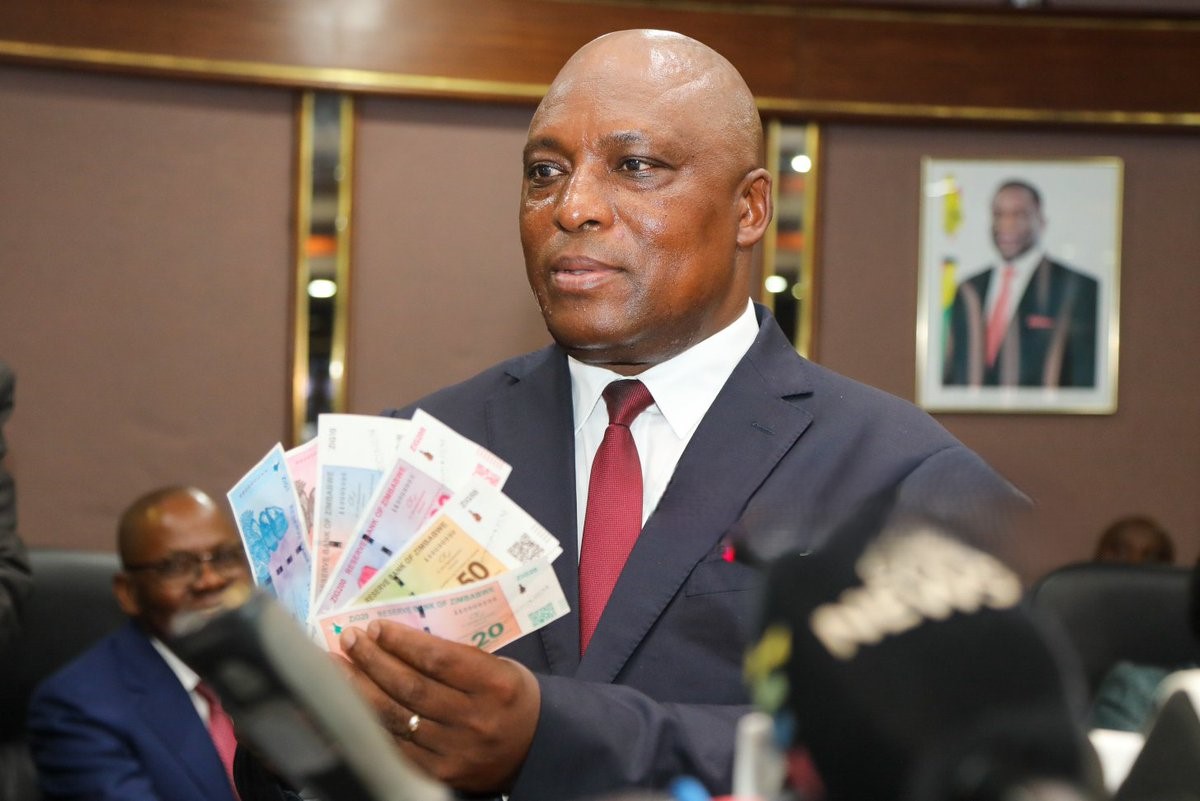
The Reserve Bank of Zimbabwe (RBZ) has introduced significant reforms to banking fees, capping cash withdrawal charges at 2% and eliminating fees for account balance inquiries and cash deposits, as part of the 2026 Monetary Policy Statement presented on 27 February 2026.
RBZ Governor Dr. John Mushayavanhu announced the measures during his presentation, noting that banks had voluntarily approached the central bank with proposals for further reductions.
The changes, effective by 31 March 2026, aim to reduce transaction costs, encourage greater use of formal banking channels, and support the Zimbabwe Gold (ZiG) currency framework amid ongoing efforts to stabilise the financial system.
Key reforms include:
- Cash withdrawal fees at banking halls and automated teller machines (ATMs) are capped at a maximum of 2% of the withdrawn amount for both US dollars and ZiG (previously ranging from 2.5% to 3.75% or higher in some cases).
- Point-of-sale (POS) transaction charges are limited to 1.5% of the transaction value for both local and international cards, with a cap of US$20 or the ZiG equivalent. From 1 April 2026, no minimum POS fee may be charged.
- Charges for account balance inquiries have been removed entirely across all banking and mobile banking platforms for both ZiG and US$ accounts.
- Fees for cash deposits have been eliminated.
Governor Mushayavanhu highlighted the collaborative nature of the reforms, stating:
“Just recently, bankers approached and offered a further reduction of cash withdrawal charges… to a maximum of 2%.”
He further directed: “Reduce cash withdrawal charges for both banking halls and automated teller machines (ATMs) to a maximum of 2% of the withdrawn amount for US$ and ZiG cash withdrawals.”
The RBZ applauded banks for additional concessions, with Mushayavanhu noting:
“The Reserve Bank applauds banks for exempting the banking public from monthly service fees for accounts with a balance of US$100 and below or the ZiG equivalent, and for waiving charges on transactions of US$5 and below or the ZiG equivalent.”
These steps address longstanding public complaints about high transactional costs that discouraged formal savings and lending.
Mushayavanhu framed the package as a response to sector scrutiny, emphasising that the banking sector had “come under heavy scrutiny and criticism for high bank fees,” and that the voluntary reductions would help shift focus toward productive lending.
The central bank has also instructed mobile network operators (including those behind EcoCash, OneMoney, Telecash, and similar platforms) to audit all accounts with assistance from the Registrar General and deactivate any that cannot be validated with a valid ID by the end of June 2026.
This measure targets fraud, money laundering, and illicit flows through anonymous wallets.
The reforms form part of broader measures to deepen ZiG usage, including increased mobile money and ZIPIT transaction limits and the rollout of new ZiG banknotes, with redesigned 10, 20, and 50 ZiG notes entering circulation from 7 April 2026.
Analysts say the changes will improve transactional efficiency, rebuild public confidence in the banking system, and support financial inclusion.
The announcement follows the government’s decision in December 2025 to scrap a proposed 2% tax on certain cash withdrawals from the 2026 national budget, which had faced widespread backlash over fears it would undermine trust in formal banking.
Banks and deposit-taking microfinance institutions must implement the new fee structures by 31 March 2026.

Chipinge Bids Farewell to Respected Chief Mapungwana

Minister Mavetera Issues Stark Digital Warning

Govt to Roll Out AI Grand Challenge to Boost Zimbabwe’s Tech Industry

Operation restore order

Masasi High School Abuse Scandal Sparks Public Outcry

Kuwadzana Man Jailed for Reckless Driving and Driving Without a Licence
-
 Current Affairs6 months ago
Operation restore order
-
 Crime and Courts7 months ago
Masasi High School Abuse Scandal Sparks Public Outcry
-
 Crime and Courts7 months ago
Kuwadzana Man Jailed for Reckless Driving and Driving Without a Licence
-

 Current Affairs9 months ago
Breaking: ZIMSEC June 2025 Exam Results Now Available Online
-

 Current Affairs8 months ago
Munhumutapa Day: Zimbabwe’s Newest Public Holiday Set for Annual Observance
-

 Current Affairs7 months ago
BREAKING NEWS: ZANU PF Director General Ezekiel Zabanyana Fired
-

 Current Affairs8 months ago
No Racism in Our Cricket: Government
-

 World News7 months ago
Burkina Faso Reaps $18 Billion in Gold Revenue Under Ibrahim Traoré’s Leadership