
Current Affairs
One Feared Dead After Vehicle Plunges into Mukuvisi River


Harare — One person is feared dead after a Toyota D4D truck plunged into the Mukuvisi River near the Trabablas Interchange today.
The incident occurred during what was reportedly a routine drive, which suddenly turned tragic when the vehicle veered off the road and landed in the river. Emergency services attended the scene, while investigations into the cause of the accident are ongoing.
More details to Follow:
Current Affairs
POTRAZ Q4 Report Highlights NetOne’s Strong Digital Growth and Rural Connectivity Expansion


The latest Fourth Quarter 2025 Postal and Telecommunications Sector Performance Report released by the Postal and Telecommunications Regulatory Authority of Zimbabwe (POTRAZ) has highlighted NetOne’s growing role in driving Zimbabwe’s digital transformation through infrastructure expansion, rising data usage and improved rural connectivity.
According to the report, NetOne recorded significant growth in mobile internet and data traffic during the final quarter of 2025, with usage increasing by 18.50 percent from 25.29 billion megabytes in the third quarter to 29.97 billion megabytes in Q4.
The growth also resulted in a 1.14 percentage point increase in the operator’s mobile internet and data traffic market share, strengthening NetOne’s competitiveness in the country’s fast-growing digital communications sector.
The report further noted growth in NetOne’s active subscriber base, which rose from 4,062,894 subscribers to 4,101,492 during the quarter, reflecting continued customer confidence in the operator’s services and digital products.
POTRAZ acknowledged the company’s continued investment in network infrastructure, particularly in expanding broadband access across the country.
“NetOne continued to make strides particularly in 3G and LTE deployments, to expand its network coverage,” the report stated.
During the quarter, the operator added 89 LTE base stations while increasing its 5G sites from 21 to 26 as part of efforts to improve connectivity and digital inclusion.
The report also identified NetOne as a major contributor to rural telecommunications infrastructure, revealing that the operator now controls 46.14 percent of Zimbabwe’s rural base stations.
The expansion of rural connectivity is helping bridge the digital divide by improving access to online learning, financial services, healthcare information and digital commerce opportunities in underserved communities.
Under the leadership of Group Chief Executive Officer Raphael Mushanawani, the company has continued repositioning itself as a modern digital services provider focused on innovation, accountability and customer-centred solutions.
Commenting on the latest sector performance results, Engineer Mushanawani said the company remained committed to inclusive national development through digital connectivity.
“These results affirm our commitment to connecting communities, empowering businesses and accelerating Zimbabwe’s digital transformation through resilient and accessible network infrastructure,” said Engineer Mushanawani.
NetOne has also expanded customer-focused services through affordable broadband packages, improved OneMoney solutions and data bundles designed for students, entrepreneurs and rural communities.
Beyond telecommunications services, the company has intensified its corporate social responsibility programmes, including borehole drilling initiatives, support for schools through digital learning tools and partnerships with healthcare institutions on community wellness programmes.
The operator’s commitment to diversity was also reflected in its workforce, with women accounting for 436 out of its 1,045 employees.
In recognition of his leadership and contribution to Zimbabwe’s telecommunications industry, Engineer Mushanawani was recently inducted into the prestigious Business Leaders Hall of Fame 2026.


The Government has dismissed claims that the return of 67 farms protected under Bilateral Investment Promotion and Protection Agreements (BIPPA) marks a reversal of Zimbabwe’s land reform programme, with authorities stressing that the move is part of resolving legal obligations and strengthening the country’s land tenure framework.
Acting Leader of Government Business in Parliament, Minister of Agriculture, Mechanization and water resource Dr Anxious Masuka, on Wednesday directly addressed the misconception, explaining that the return of BIPPA properties is a narrowly defined legal and constitutional obligation not a policy shift back to the pre-2000 era.
“The BIPPA process is about settling outstanding legal claims and compensating investments protected by bilateral treaties, it does not open the floodgates for the return of all former white farms, the land reform programme remains irreversible,” he said.
The Minister confirmed that while 67 properties covered under BIPPA will be returned to their previous owners, this represents a fraction of the total land under the programme and is being done strictly within the framework of Zimbabwean law and international investment obligations.
The development comes at a time when the government is simultaneously granting secure tenure to a staggering 450,000 black farmers under President Emmerson Mnangagwa’s administration.
According to the Minister, in terms of the Constitution Sections 289, 293, and 295, the government will provide permits, leases, and offer letters to 360,000 A1 farmers 23,500 A2 farmers Over 70,000 old resettlement farmers.
In addition to these, the government is correcting historical and administrative errors that have fuelled the reversal myth. Authorities are returning 840 farms that were wrongly gazetted but which rightfully belong to black farmers.
In another move that reinforces the government’s commitment to indigenous ownership, some 10,000 Matenganyika farms whose beneficiaries were given leases before 1980 will now finally receive title deeds.
For the 409 former farm owners who have remained on their properties due to long-standing peaceful co-existence with new owners, the government has crafted a specific solution that stops short of outright reversal. These individuals will now be allowed to purchase the properties they occupy.
Itai Mazire
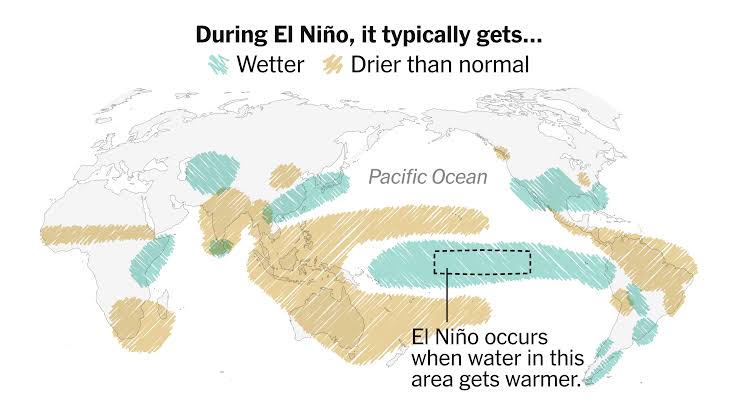
Zimbabwe faces a high probability of a looming El Niño event during the 2026/27 rainy season, with forecasts indicating a significant chance of below-normal rainfall.
The Meteorological Services Department (MSD) has issued a preliminary update, urging calm but emphasising the need for proactive measures.
Global climate forecasting centers predict an 88 to 94 percent chance of an El Niño event, historically linked to drier-than-average conditions in Zimbabwe.
“Historically, El Niño conditions in Zimbabwe carry a 65 percent chance of below-normal rainfall, which can lead to drier-than-average conditions.”
Despite the concerning outlook, the MSD cautions against premature decisions.
They said that early forecasts face a “spring predictability barrier,” meaning atmospheric and oceanic conditions could still change significantly before the season begins.
Consequently, the department has not yet released its official seasonal forecast.
“Because of this inherent uncertainty, the MSD has not yet issued its official seasonal forecast and warns the public and stakeholders against making final agricultural or financial decisions based solely on these preliminary models,” the statement read.
A more definitive national outlook (NACOF) is anticipated in August 2026, following the Southern African Development Community (SADC) Climate Outlook Forum (SARCOF).
In the interim, the MSD is advising both the public and the farming community to remain composed.
They recommend continuing with standard preparations for the upcoming season and adopting climate-resilient practices.
These practices include water conservation and the identification of drought-tolerant seed varieties.
The MSD further encouraged stakeholders to stay informed through official channels.
“Stakeholders are encouraged to stay informed exclusively through official MSD channels for regular updates as the weather outlook becomes clearer in the months ahead.”
The upcoming NACOF report will incorporate more recent data, providing crucial scientific guidance for accurate seasonal planning.
The MSD will continue to monitor updates closely.

POTRAZ Q4 Report Highlights NetOne’s Strong Digital Growth and Rural Connectivity Expansion

Minister Masuka Defends BIPPA Farm Returns, Says Land Reform Remains Irreversible

Fake ID Fraud Suspect Appears in Court Over Loan Scam Allegations

Operation restore order

Masasi High School Abuse Scandal Sparks Public Outcry

Kuwadzana Man Jailed for Reckless Driving and Driving Without a Licence
-
 Current Affairs6 months ago
Operation restore order
-
 Crime and Courts7 months ago
Masasi High School Abuse Scandal Sparks Public Outcry
-
 Crime and Courts8 months ago
Kuwadzana Man Jailed for Reckless Driving and Driving Without a Licence
-

 Current Affairs9 months ago
Breaking: ZIMSEC June 2025 Exam Results Now Available Online
-

 Current Affairs8 months ago
Munhumutapa Day: Zimbabwe’s Newest Public Holiday Set for Annual Observance
-

 Current Affairs7 months ago
BREAKING NEWS: ZANU PF Director General Ezekiel Zabanyana Fired
-

 Current Affairs9 months ago
No Racism in Our Cricket: Government
-

 Business6 months ago
Tino Tungwarara Launches Prevail Mart, Becoming One of Zimbabwe’s Youngest Retail Entrepreneurs