
Current Affairs
Fuel Supply Stable Despite Middle East Conflicts, Government Says


The Government has reassured citizens that Zimbabwe has enough fuel reserves to meet demand for the next three months, easing concerns about potential shortages linked to ongoing conflicts in the Middle East.
Acting Minister of Energy and Power Development, Dr. Zhemu Soda—who also serves as Minister of Information, Publicity and Broadcasting Services—briefed the National Assembly yesterday. He presented a report on the country’s fuel preparedness, confirming that reserves are sufficient to maintain supply.
Dr. Soda addressed legislators’ worries about possible disruptions and the risk of rising pump prices due to international instability. He noted that national storage facilities are well-stocked and that agreements with regional suppliers remain in place.
The Minister, however, cautioned that while the Government has implemented measures to secure fuel supplies, prices could still be affected by global market conditions if the supply chain faces disruptions.
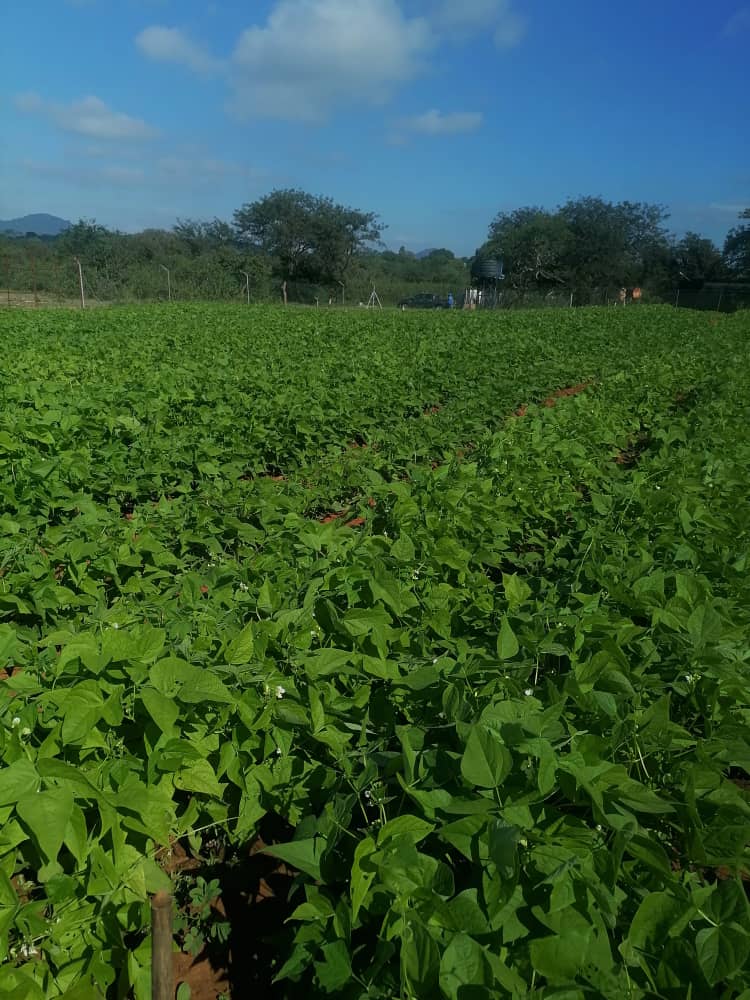
In the drought-prone expanses of Mberengwa District, a quiet economic revolution is taking root near Masume Shops, where a community-driven Village Business Unit (VBU) is rapidly transforming subsistence farmers into commercial players.
The initiative, which focuses on aggregation, value addition, and market linkages, is pulling dozens of households out of poverty and creating a buffer against the perennial food insecurity that has long defined the region. At the heart of this transformation is the strategic facilitation by the Prevail Group, operating under the mantra of turning rural outposts into sustainable economic hubs.
Godfrey Tipedze, the Prevail Group’s Team Leader for Midlands Province, revealed that the impact near Masume has been nothing short of remarkable. In an interview on the sidelines of a field assessment, Tipedze stated that the unit has successfully shifted the local mindset from handouts to enterprise.
“The figures and the general mood in the community speak for themselves. We are witnessing a paradigm shift where villagers are no longer just looking to the next rainy season to feed themselves, but are actively engaging in the market. Many households are benefiting from the initiative through consistent income streams,” Tipedze said.
The VBU model operates as a central aggregation point where smallholder farmers many of whom cultivate less than a hectare pool their horticultural produce and small grains. The Prevail Group’s intervention provides technical agronomic support, connecting these farmers to formal markets that they could not access individually. Tipedze noted that the proximity to Masume Shops provides a ready logistical advantage, bridging the last mile between producer and consumer.
For years, the area surrounding Masume Shops was characterised by wilting crops and economic despondency, a classic symptom of Zimbabwe’s changing climate patterns. Today, the VBU has introduced water-efficient techniques and drought-resistant crop varieties, feeding a steady supply of tomatoes, onions, and leafy greens into the local value chain.
Tipedze emphasised that the success of the unit is measured not just in tonnage harvested, but also in the social indicators shifting within the community. “When we say households are benefiting, we mean children are consistently going to school because parents can pay fees. We mean rural women are gaining financial autonomy. The income generated here circulates directly back into the local economy at Masume Shops, creating a multiplier effect that did not exist before,” Tipedze explained.
The Midlands Team Leader acknowledged that while liquidity and infrastructure remain hurdles, the Village Business Unit model is scalable. He confirmed that the Prevail Group is leveraging the Masume success story to roll out similar interventions across the province, treating each business unit as a franchise for rural industrialisation.
As the sun sets over the Zvishavane-Mberengwa Road, activity near Masume Shops increases—a bustle of sorting, grading, and loading produce. It is a sight that signals a new dawn for a community long defined by hardship, now redefined by trade.
Current Affairs
Breaking News: Focus on Development, Not Elections, Presidential Advisor Dr Tungwarara Says


In a clear demonstration of President Emmerson Mnangagwa’s commitment to inclusive governance, the Presidential Borehole Scheme is delivering clean water to communities across the political divide, including areas traditionally considered opposition strongholds. The initiative, which has recently seen a significant rollout in Marondera, underscores the Second Republic’s philosophy of “leaving no one and no place behind.”
Presidential Investment Advisor Dr Paul Tungwarara, who has been at the forefront of championing the President’s grassroots development agenda, stated that the scheme is tangible proof that the ruling party’s approach transcends partisan politics.
Speaking in the context of the scheme’s expansion, Dr Tungwarara emphasised President Mnangagwa’s role as a unifying figure.
“President Mnangagwa is a unifier; he wants people to be united despite our political differences,” Dr Tungwarara said. “Unity is a key component of any meaningful development in the country.”
The drilling programme, which has been met with relief and optimism by residents previously facing acute water shortages, is viewed as a strategic intervention. In Marondera, the provision of reliable boreholes is not only addressing immediate health and sanitation needs but is also being framed as a critical step towards sustainable economic empowerment.
Dr Tungwarara stressed that the time has come for the nation to shift its collective focus from electoral politics to the urgent task of national development, reinforcing calls for a term extension for President Mnangagwa to safeguard the gains of Vision 2030. He argued that incessant campaigning disrupts the economic momentum required for transformation.
“This programme is not about politics; it is about progress. We must stand as a united force, resistant to divisive politics,” Dr Tungwarara asserted, emphasising that the nation’s future depends on stability.
The Presidential Advisor’s message aligns with a broader government narrative that portrays empowerment initiatives as a bridge between policy and the people, ensuring that ordinary citizens actively participate in the country’s revival. The scheme in Marondera is being celebrated locally as proof that the President is a “listening leader” who responds to the struggles of all citizens with direct action rather than rhetoric.
Beyond providing immediate relief, Dr Tungwarara highlighted that this developmental approach is the only viable path to realising an upper-middle-income economy. He called for unified support behind the President’s leadership to ensure that the “positive trajectory” of economic growth is not derailed by political uncertainty.
“We must focus on constructive efforts to move the country forward, rather than engaging in divisive rhetoric,” he said. “We cannot afford to let these distractions derail the progress that has been made.”
Residents in the benefiting Marondera constituencies expressed their appreciation, noting that access to safe water is a fundamental right that transcends political party loyalty. The successful implementation of the scheme in these areas serves to reinforce the government’s message that the fruits of national development are for every citizen, regardless of political affiliation.

By Everisto Zhuwao
The Zimbabwe Prisons and Correctional Service (ZPCS) Mashonaland West Province has purchased a new percussion set and two bugle trumpets to establish its own musical department. The acquisition aims to end the province’s long-term reliance on hiring outside musical groups for official events.
Commissioner Luke Zondai Makuvire, the officer commanding the province, handed over the new equipment at Chinhoyi Remand Prison on Wednesday. He stated that the arrival of these instruments marks the official start of a programme to build a fully functional provincial band.
“I am directing the band leadership to intensify talent identification and training,” Commissioner Makuvire said. He further urged the band members to work hard to reach the high standards required for national duties.
The province has previously struggled to host official functions without a dedicated military wing. The band in charge, Principal Correctional Officer Cynthia Bangure, explained that they often had to hire groups like the Crocodile Band to perform during events such as Prison Days.
“We aim to be fully operational for all official functions by January 2027,” PCO Bangure said. She noted that while the military wing is still growing, the provincial dance band is already equipped and available for hire by the public to generate income.
The band offers competitive booking rates to help fund provincial operations. PCO Bangure added that ZPCS officers who wish to hire the band for private events receive a 50 per cent discount.
This investment is part of the ZPCS Turnaround Strategy launched on May 15, 2023. This plan encourages the service to run business units, such as catering and construction, alongside its traditional correctional duties. These initiatives help the province remain productive while providing essential services to the community.

Prevail Group Sparks Economic Revival in Arid Mberengwa

Breaking News: Focus on Development, Not Elections, Presidential Advisor Dr Tungwarara Says

ZPCS MASHONALAND WEST EQUIPS PROVINCIAL BAND

Operation restore order

Masasi High School Abuse Scandal Sparks Public Outcry

Kuwadzana Man Jailed for Reckless Driving and Driving Without a Licence
-
 Current Affairs6 months ago
Operation restore order
-
 Crime and Courts7 months ago
Masasi High School Abuse Scandal Sparks Public Outcry
-
 Crime and Courts7 months ago
Kuwadzana Man Jailed for Reckless Driving and Driving Without a Licence
-

 Current Affairs9 months ago
Breaking: ZIMSEC June 2025 Exam Results Now Available Online
-

 Current Affairs8 months ago
Munhumutapa Day: Zimbabwe’s Newest Public Holiday Set for Annual Observance
-

 Current Affairs7 months ago
BREAKING NEWS: ZANU PF Director General Ezekiel Zabanyana Fired
-

 Current Affairs8 months ago
No Racism in Our Cricket: Government
-

 World News7 months ago
Burkina Faso Reaps $18 Billion in Gold Revenue Under Ibrahim Traoré’s Leadership
Pingback: Raw Mineral Export Ban Takes Effect - Hurumende