

Connect with us

Current Affairs

Cabinet Task Force Moves to Rein in Grocery Black Market

Published

on

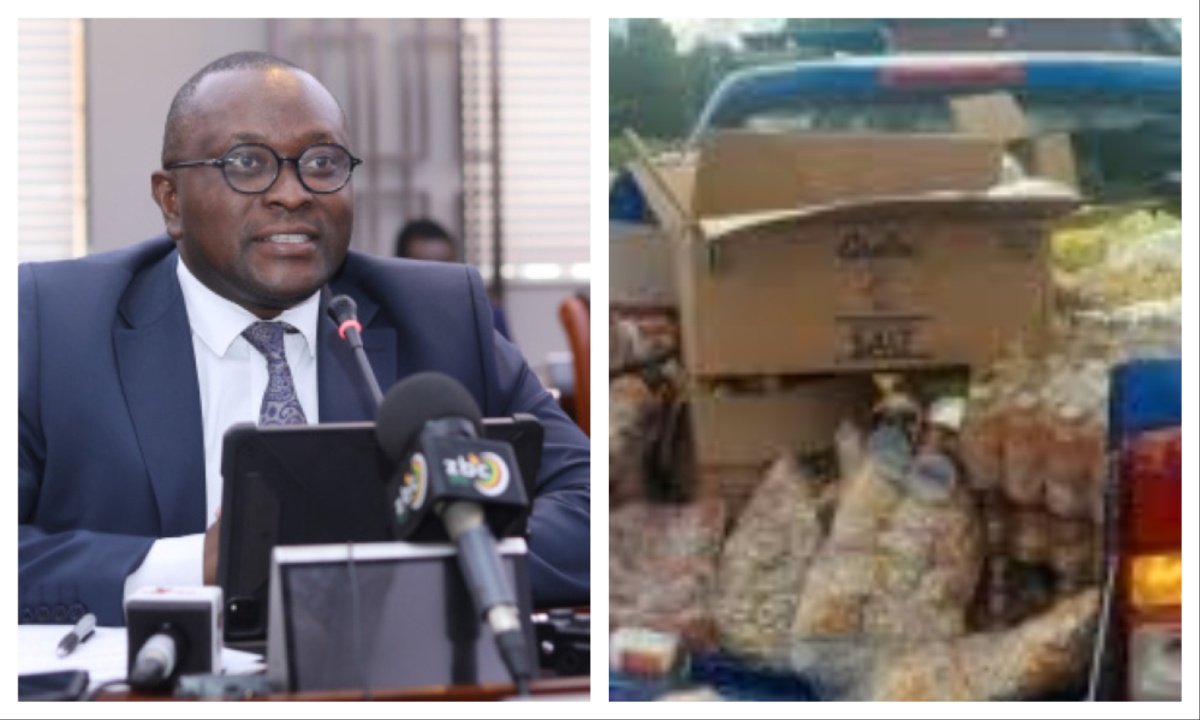
Minister Muswere addresses the media on Zimbabwe’s crackdown on smuggling and efforts to stabilize grocery prices

Zimbabwe’s inflation rate lingers around 94 per cent annually, a little-known but hard-hitting Cabinet task force is emerging as the unsung hero behind fuller supermarket shelves and steadier prices for everyday essentials like mealie-meal and cooking oil.

Information Minister Dr Jenfan Muswere, in a post-Cabinet briefing yesterday, credited the Task Force on Business Malpractices with sparking a “renewed sense of confidence” among retailers, whose sales volumes have climbed thanks to aggressive crackdowns on smuggling and substandard goods.

Established earlier this year by the Cabinet under the Ministry of Industry and Commerce, the multi-agency task force, comprising the Zimbabwe Revenue Authority (Zimra), Zimbabwe Republic Police (ZRP), Reserve Bank of Zimbabwe (RBZ), and Consumer Protection Commission,  has launched province-wide raids that have netted millions in illicit hauls.

In a January operation alone, Zimra seized goods worth US$2.4 million, including foodstuffs and second-hand clothes, while impounding dozens of vehicles used by cross-border smugglers.

A December 2024 sweep, its precursor, targeted small businesses and transporters, confiscating smuggled items that flooded markets and undercut local producers.

“These operations have led to the identification and confiscation of substandard products for destruction,” Muswere said.

A government report on 14 basic commodities, from bread and sugar to beef and eggs, shows adequate stocks maintained across retail outlets, with exchange rate stability in the new Zimbabwe Gold (ZiG) currency helping preserve consumer purchasing power.

Monthly inflation rose just 0.4 per cent in August, per Trading Economics, allowing families to budget without the dread of overnight price spikes.

Business feedback, as relayed by Muswere, points to “increased sales volumes attributed to enhanced compliance,” a direct nod to the task force’s vigilance.

Confederation of Zimbabwe Retailers president, Mr Denford Mutashu, said the change is palpable.

“Smugglers used to dump cheap, fake oil that spoiled fast and drove away customers,” he said.
“Now, with these raids, legit suppliers are back, and prices aren’t jumping like before.”
The task force’s efforts align with National Development Strategy 1, aiming to shift Zimbabwe up the value chain amid a projected 6 per cent GDP growth in 2025, buoyed by mining booms and better rains after last year’s El Niño drought.

Smuggling persists as a drag on local industries, with authorities vowing to intensify surveillance.

“This reflects a growing alignment between regulatory enforcement and private sector interests,” Muswere said.


Current Affairs

Local Government cracks down on ‘Fundraising’ workshops for Councils

Published

on

Itai Mazire

The Ministry of Local Government and Public Works has issued a stern directive to local authorities, urging them to cease participation in non-essential workshops and conferences perceived as mere fundraising ventures by external entities.

The move, outlined in a memorandum signed by Permanent Secretary Dr. John Basera on 14 May 2026, shows a critical shift towards prioritizing efficient service delivery amidst ongoing financial challenges.

The memorandum highlights a growing concern within the ministry regarding the proliferation of such events.

“It has been noted with concern that some institutions and entities are organising workshops and conferences targeting local authorities primarily for their fundraising purposes,” said Dr Basera.

This directive comes as local authorities grapple with

depressed revenue collection.

The Ministry emphasizes the need to re-direct resources towards core functions.

“Considering the current challenges facing local authorities, particularly depressed revenue collection and the need to prioritize efficient service delivery, it is imperative that available resources be directed towards operational and service delivery-related activities,” he said.

Local authorities are now advised to significantly reduce their involvement in events that do not directly contribute to improving public services.

The memorandum explicitly warns against arrangements that offer little to no tangible benefit.

“Accordingly, local authorities should not support or tolerate arrangements by third-party entities requiring the purchase of tables, payment of conference fees, accommodation costs and related expenditures which offer limited or no tangible value to service delivery outcomes.”

This new position is effective immediately and will remain in force until further notice, signaling a resolute effort by the Ministry to streamline operations and ensure accountability in resource allocation within local governance.

Continue Reading

Current Affairs

Malaba Urges Proper Governance in Farewell Address

Published

on

Retired Chief Justice Luke Malaba called for governance that serves all citizens and praised inter-branch cooperation as he delivered the vote of thanks at his retirement ceremony.

Speaking at a special sitting of the Constitutional Court, Malaba said the rule of law requires leaders to govern properly and create conditions for others to thrive.

Malaba said he leaves a vision of a Zimbabwe that all citizens can be proud to belong to, built on revolution, reform and adding value to people’s lives. He said he was proud to have lived and worked in government until his retirement

“Let us have a vision of a Zimbabwe where we can all be proud to belong. The vision of a revolution, the vision of reform, the vision of adding value to the lives of the people,” Malaba said.

He noted there is no rulebook defining what a Chief Justice should do, saying it falls to the person in office to create and innovate. Malaba said creation is only possible when those in power allow it and respect the judiciary’s role.

“There are no rules, there is no definition of what a Chief Justice should do. It is that person who is in an office of a Chief Justice who must create,” he said.

Malaba credited the executive and legislative arms for allowing the judiciary to operate independently. He said the progress was not his achievement alone but the result of many in government.

“The three arms of government have worked marvelously allowing the judiciary to pursue independently what is best for the country. It is a journey by many people in government,” he said.

Continue Reading

Current Affairs

Bulawayo Resident Dies from Acute Gastro-enteritis Amidst Contaminated Water Concerns

Published

on

Bulawayo Resident Dies from Acute Gastro-enteritis Amidst Contaminated Water Concerns

Bulawayo, Zimbabwe – A tragic incident in Bulawayo has highlighted critical public health concerns, with a resident succumbing to acute gastro-enteritis, commonly known as stomach flu. The death is reportedly linked to the consumption of contaminated borehole water in Pumula South, following disruptions to the municipal reticulated water supply.

The unfortunate fatality was documented in the latest health surveillance report issued by the Bulawayo City Council (BCC). Investigations detailed in the report indicate that the deceased did not seek timely medical intervention, leading to severe diarrhea and dehydration that ultimately proved fatal. Post-mortem examinations confirmed that the patient died from hypovolemic shock, a direct consequence of acute gastro-enteritis.

Further compounding the household’s distress, another individual within the same residence subsequently fell ill. Fortunately, this person recovered after receiving treatment at Mpilo Central Hospital, underscoring the severity of the water contamination.

Laboratory tests conducted on water samples from the affected borehole in Pumula South revealed significant contamination, specifically identifying the presence of non-faecal coliforms. This finding points to a serious breach in water safety standards, posing a substantial risk to public health.

Council health officials noted challenges in their investigation, as family members reportedly declined stool sampling and contact tracing efforts. This non-cooperation can impede comprehensive epidemiological assessments and the implementation of effective public health interventions.

The broader context of Bulawayo’s water infrastructure raises further alarms. Recent council water quality checks indicated that a staggering 62% of water points tested across the city failed one or more safety criteria, including instances of faecal contamination. This widespread issue has impacted numerous public facilities, including schools and clinics, in areas such as Nkulumane, Emganwini, and Luveve.

Adding to the crisis, the council’s most recent environmental health report also brought attention to persistent sewer overflows in Emganwini and numerous complaints regarding foul-smelling water in various residential zones. The report explicitly warned that the city’s aging sewer systems and the increasing pressure on existing water networks are significantly elevating public health risks.

In March alone, Bulawayo recorded 247 cases of diarrhea, with one fatality, as detailed in the report. Residents in the western suburbs, particularly affected by the worsening water situation, voiced their concerns, stating that they often have no alternative but to rely on potentially unsafe borehole water sources.

In response to these alarming developments, council health officials have issued an urgent advisory. Residents are strongly urged to boil or disinfect any water obtained from unverified sources. Furthermore, they emphasize the critical importance of seeking immediate medical attention for symptoms such as diarrhea, vomiting, and dehydration to prevent further tragic outcomes.

Continue Reading

Trending