
Policy
Youth at the Heart of Agri-Policy


When young people gather to talk about agriculture, the energy in the room is different—lively, hopeful, and often, impatient for change. That was the atmosphere at the recent SADC Youth Dialogue, where policymakers, youth leaders, and agricultural experts converged under the theme “Advancing Youth Inclusion in Africa’s Agricultural Policy and Investment Frameworks.”
At the heart of the conversation was a simple but urgent message: Africa’s agricultural future cannot be built without its youth.
“I Wish I Were Still a Youth” — A CEO’s Honest Reflection
Dr. Tshilidzi Madzivhandila, CEO of the Food, Agriculture, and Natural Resources Policy Analysis Network (FANRPAN), opened the dialogue with a moment of candid humor—and truth.
“We value your contribution as youth and young people,” he said, smiling. “I wish I was still a youth.”
But his message quickly deepened.
“Across the continent, we are seeing increased recognition of the role youth and young people must play in shaping the future of agriculture and food systems. This conversation is not only timely—it is necessary.”
For Dr. Madzivhandila, inclusion is not a feel-good gesture; it is a structural need.
“Inclusion must go beyond participation; it must translate into voice, leadership, and ownership,” he emphasized.
“If we are serious about sustainable transformation, youth cannot be on the margins of policy—they must be part of the agenda.”
The Weight Young People Carry
Despite the potential of agribusiness, Dr. Madzivhandila lamented the realities many young people face:
- unemployment
- limited access to land, finance, and inputs
- exclusion from policymaking spaces
“Young people remain vulnerable to socio-economic injustice,” he said.
“They have ideas, but they lack the tools to turn those ideas into action.”
To bridge these gaps, FANRPAN and AGRA are working under the Youth Employment From Food and Agriculture (YEFFA) initiative. A key component is strengthening and harmonizing the African Agribusiness Youth Strategy (AAYS) across the region.
“Our goal is clear,” Dr. Madzivhandila said.
“To institutionalize youth inclusion in policy processes—from national plans to regional and continental strategies.”
A Region Facing Hard Realities
The conversation shifted from possibility to stark reality when Domingos Zefanias Gove, SADC’s Director of Food, Agriculture and Natural Resources, took the stage. His message was sobering.
“We are not doing well as a continent,” he began.
“We are not doing well as a region.”
His assessment was blunt:
- Manufacturing has been stagnant for over 20 years.
- Industrial employment remains stuck at around 11%, far from the 2030 target of 40%.
- Food and nutrition insecurity affects 18% of the population, worsened by climate shocks and economic failures.
- The continent has faltered on its Malabo Declaration commitments.
“This is the context in which the youth must try their best to thrive,” Gove said. “But we cannot expect them to thrive without giving them the right environment.”
He noted that SADC’s Regional Agriculture Investment Plan—aligned with the new Kampala Declaration—explicitly prioritizes youth inclusion.
“Inclusivity is not optional,” he said. “Youth must be empowered so that they are included in the development of the policies.”
Agriculture as a Pathway Out of Unemployment
For Prof. Jean Jacques M. Muhinda, AGRA’s Regional Director for East and Southern Africa, youth represent more than a demographic—they are Africa’s strongest resource.
“Youth remains the most dynamic asset the continent has,” he said.
“The food sector offers massive opportunities to address youth unemployment.”
He stressed the importance of equipping young people—not merely encouraging them.
“When we provide youth, especially young women, with training, mentorship, and access to resources such as land and finance, we empower them to be change agents in the agri-food system.”
A Young Continent Ready to Lead
Dr. Rachel Mkandawire of FANRPAN brought data—and urgency—to the discussion.
“Africa has more than 450 million young people. In the SADC region alone, over 60% of the population is under 35,” she said.
“Most of them are in rural areas, yet they face significant barriers. They are marginalized from owning land and lack capital assets needed for decent employment.”
But she also sees something powerful in African youth:
“Young people have creativity, adaptability, and lived experience. They understand digitalization, food trends, and the changing consumption patterns. Their insights are not theoretical—they are real.”
This, she argued, is why youth must be embedded in every step of the agricultural value chain.
“The strategy seeks to promote youth not only as beneficiaries but as decision-makers and implementers,”Dr. Mkandawire said.
“From co-creation to production, from distribution to marketing—youth must be present.”
SADC’s Leadership Recognized
For Dr. Mwaka Namukonda, coordinator of the Consortium of African Youth in Agriculture and Climate Change (CAYACC), SADC deserves recognition.
“SADC is the first regional economic community pushing the agenda of a regional agriculture investment plan while ensuring that youth are included through the African Agribusiness Youth Strategy,” she said.
“This is a milestone for the region—and for Africa.”
A Future Built With, Not Just For, Youth
The youth dialogue revealed a consensus: Africa’s agricultural transformation cannot be realized without young people—and not simply as workers or beneficiaries, but as architects of new food systems.
The narrative is shifting. Youth are no longer being asked to wait their turn. They are being invited to lead.
“If you marginalize young people, who make up most of the population, what will the future look like?” Dr. Mkandawire asked.
It is a question Africa cannot ignore. The future of food, agriculture, and rural development is already in the hands of the continent’s youth—now the policies, investments, and opportunities must catch up.
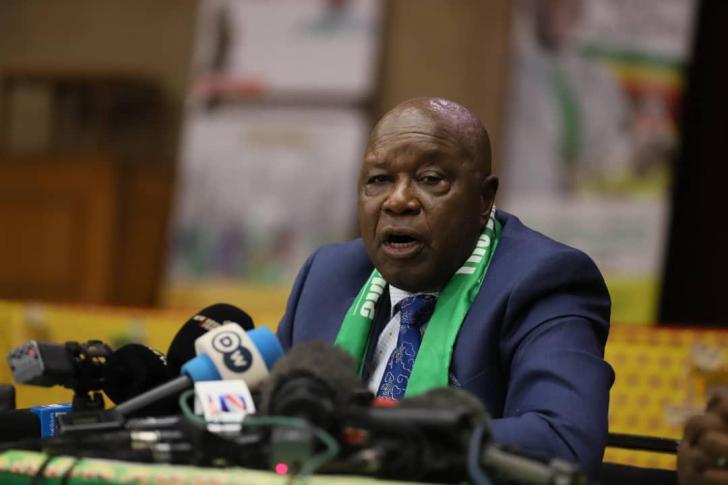
ZANU-PF Secretary for Information and Publicity, Christopher Mutsvangwa, on Thursday said the ruling party’s position on Vision 2030 remains clear, describing President ED as central to the fulfillment of the country’s long-term development agenda.
Speaking during a press conference at the party headquarters in Harare, Mutsvangwa said Vision 2030 is a structured national development programme designed to transform Zimbabwe into an upper-middle-income economy by the end of the decade.
He said the agenda is anchored on economic reforms, infrastructure development, rural industrialisation and youth empowerment initiatives being implemented under the leadership of His Excellency Emmerson Mnangagwa.
“Vision 2030 is a national mission which requires unity, discipline and policy consistency,” Mutsvangwa told journalists.
The press conference comes amid growing national debate over proposals within some party structures to amend the Constitution in a manner that could extend President Mnangagwa’s tenure beyond 2028.
Zimbabwe’s 2013 Constitution limits a President to two five-year terms. President Mnangagwa, who assumed office in November 2017 and was elected in 2018 before winning re-election in 2023, is currently serving his second and final term under the existing constitutional framework.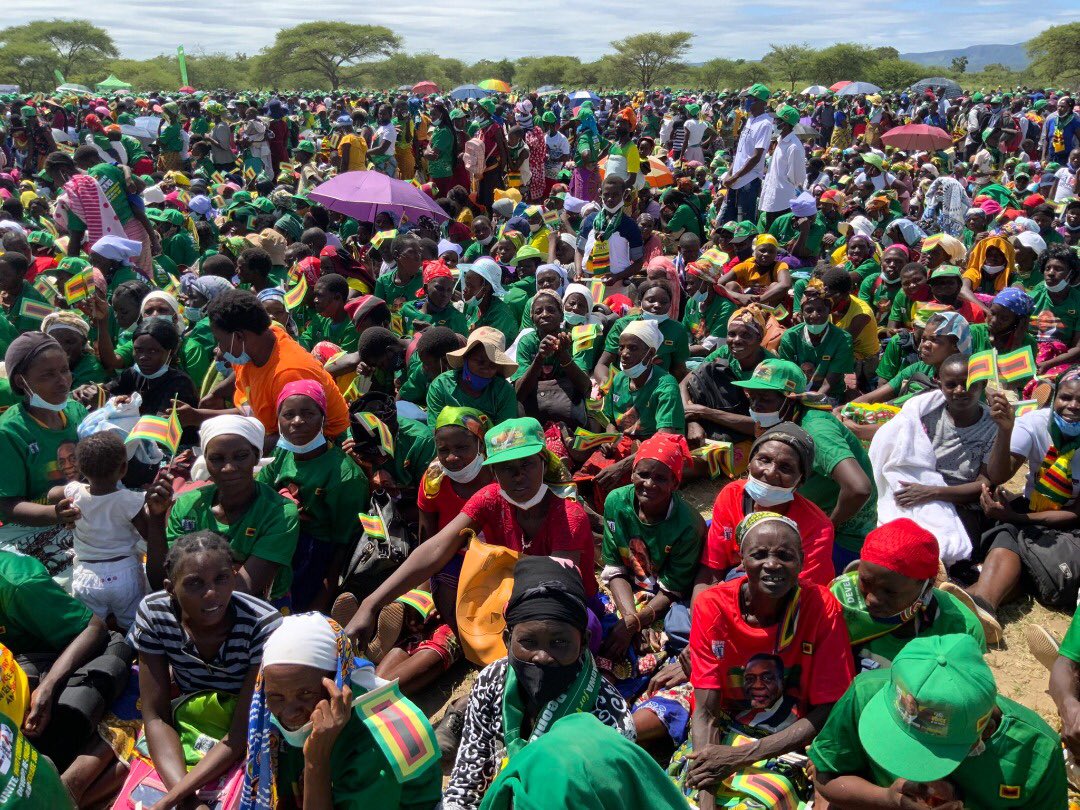
In recent months, some ZANU-PF provincial structures have publicly endorsed continued leadership up to 2030, arguing that stability and continuity are necessary to fully implement Vision 2030.
The discussion has triggered debate in political and legal circles. Constitutional experts note that any amendment to presidential term limits would require a two-thirds majority in Parliament and could necessitate a national referendum, depending on the scope of the proposed changes.
Opposition parties and civil society organisations have raised concerns over the implications for constitutional governance, saying term limits were introduced under the 2013 Constitution to strengthen democratic accountability and prevent prolonged incumbency.
President Mnangagwa has previously stated that he is a constitutionalist and respects the provisions of the Constitution.
Mutsvangwa maintained that the party’s primary focus remains the successful implementation of Vision 2030, describing it as a people-centred development blueprint requiring collective national effort.
As debate continues, ZANU-PF’s message at Thursday’s briefing was that Vision 2030 remains the guiding framework for the country’s socio-economic transformation.
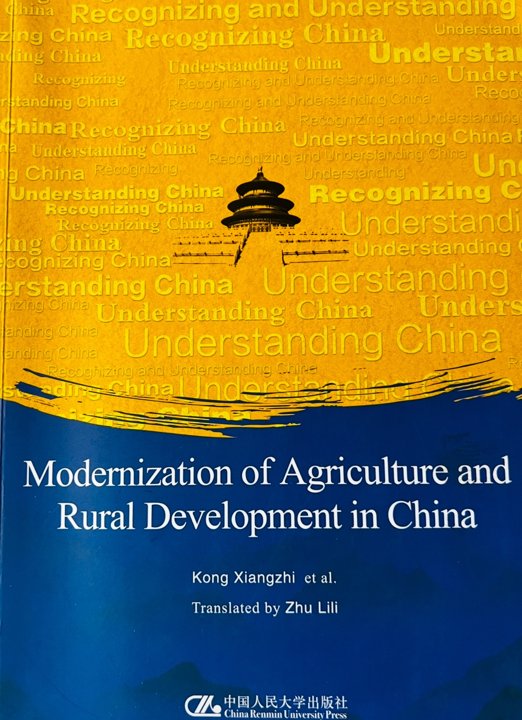
Book Review: Modernization of Agriculture and Rural Development in China by Kong Xiangzhi et al.
Agriculture continues to anchor livelihoods across the Global South, yet it is also the sector most exposed to climate volatility, market instability, and structural inequality. Few countries have confronted these challenges as comprehensively as the People’s Republic of China. The book Modernization of Agriculture and Rural Development in China, authored by Professor Kong Xiangzhi and his colleagues and translated by Zhu Lili, offers one of the most systematic analyses of how China engineered a far-reaching rural transformation.
More than a historical account, the book presents a coherent framework for rural modernization one that integrates agricultural productivity with social protection, governance reform, cultural revitalization, and ecological sustainability. For countries such as Zimbabwe, which possess immense agricultural potential yet continue to face rural poverty and productivity constraints, China’s experience offers critical strategic insights.
Part I: Reviewing Kong Xiangzhi’s Framework
Beyond Yields: Reimagining Rural Development
A central argument of Kong Xiangzhi’s work is that agricultural modernization cannot be reduced to increases in yields or mechanization alone. China’s success, he argues, lies in treating rural development as a whole-system transformation, driven by long-term political commitment and institutional coordination.
This transformation is organized around a five-pillar framework, which serves both as an analytical lens and a policy guide.
The Five Pillars of Rural Modernization
First, the book highlights the importance of new-type agricultural management entities. These include cooperatives, family farms, and agribusiness enterprises that replace isolated smallholder production with organized systems capable of achieving scale, adopting technology, and accessing markets. Kong describes these entities as the “skeleton and bridges” of modern agriculture, enabling farmers to integrate into value chains rather than remain at the margins.
Second, Kong emphasizes rural social security systems as foundational to sustainable development. Pensions, healthcare, and anti-poverty programs act as protective barriers that stabilize rural livelihoods. By reducing vulnerability to economic and climate shocks, these systems allow farmers to invest, innovate, and take calculated risks—an insight strongly supported by World Bank and FAO research on productive social protection.
Third, the book elevates rural culture and education as the “fuel” of modernization. China’s rural revitalization strategy recognizes that infrastructure and technology are ineffective without human capital. By preserving cultural heritage while modernizing education and skills training, China cultivated a rural workforce capable of managing modern farms, cooperatives, and enterprises.
Fourth, Kong identifies effective rural governance as the lifeblood of transformation. Strengthened grassroots institutions, clear lines of authority, and participatory governance mechanisms ensured that national policies were implemented at village level. This focus on governance underscores a critical lesson: policy success depends not only on design, but on local capacity to execute.
Finally, the concept of “beautiful villages” represents the integrated outcome of the framework. Rural modernization in China extends beyond income growth to include environmental restoration, waste management, spatial planning, and livable infrastructure. The goal is to make rural areas attractive places to live and work, reversing rural decline and migration.
Policy Consistency and Strategic Vision
Kong situates this framework within China’s broader policy environment, notably the annual No. 1 Central Document, which has consistently prioritized agriculture, rural areas, and farmers for more than a decade. This sustained political focus ensured continuity, funding, and institutional alignment.
Three policy themes stand out: food security as a national red line, the integration of urban and rural development to reduce inequality, and a transition toward environmentally sustainable and climate-smart agriculture. Together, these pillars demonstrate that China’s rural transformation was neither accidental nor short-term, but the product of deliberate, long-horizon planning.
Conclusion of the Review
Modernization of Agriculture and Rural Development in China succeeds in translating a vast national transformation into a clear analytical structure. Its central contribution is the demonstration that agricultural modernization must occur alongside social, cultural, institutional, and ecological renewal. For Zimbabwe and other developing economies, the book offers a disciplined starting point for rethinking rural development strategy.
Part II: Translating Lessons into Action for Zimbabwe
Zimbabwe’s agricultural sector remains central to employment and food security, yet it continues to struggle with low productivity, climate vulnerability, fragmented landholdings, and weak market integration. The Chinese experience is instructive not because it can be replicated wholesale, but because it offers principles that can be adapted to Zimbabwe’s unique ecological, economic, and institutional context.
A key priority for Zimbabwe is the formation of modern agricultural business structures. Rather than leaving small-scale farmers isolated, policy should encourage the development of farmer-owned cooperatives, contract farming arrangements, and public-private partnerships organized around strategic value chains such as horticulture, livestock, and grains. These structures would facilitate access to machinery, finance, processing facilities, and export markets.
Equally important is the transformation of rural social protection from short-term humanitarian assistance into a resilience-building system. Cash transfers, food aid, and climate support programs should be integrated with asset creation, soil and water conservation, and irrigation development. This approach would mirror China’s use of social policy as a developmental tool rather than a safety net of last resort.
Zimbabwe must also invest in rural skills and cultural capital. Agricultural education and training institutions need to align curricula with modern agri-business, climate-smart technologies, and cooperative management. At the same time, indigenous knowledge—particularly around drought-resistant crops, seed selection, and water harvesting—should be systematically documented and incorporated into national extension services.
Institutional reform at local level is another critical pillar. Strengthening district-level integrated planning, involving local authorities, traditional leaders, and farmer organizations, would improve land-use planning, water management, and coordination of public and private investment. Effective governance, as China’s experience shows, is indispensable for translating policy into results.
Finally, Zimbabwe’s rural future depends on building a climate-smart and livable countryside. Infrastructure investment in roads, renewable energy, irrigation, and digital connectivity must go hand-in-hand with ecological restoration. Solar-powered irrigation, agroforestry, and catchment-based conservation programs can simultaneously boost productivity and climate resilience.
The Central Lesson: Food Sovereignty and Policy Stability
Perhaps the most urgent lesson from China is its unwavering focus on food security as a national priority. Zimbabwe must clearly define its strategic food basket—likely maize, traditional grains, and legumes—and commit to consistent policies that support self-sufficiency through pricing, extension, and strategic reserves.
Equally critical is policy consistency. Agricultural transformation cannot occur under shifting rules and short political cycles. A long-term Rural Revitalization Charter, supported across the political spectrum and backed by transparent financing, would provide the stability required for farmers and investors to plan for the future.
Conclusion
Kong Xiangzhi’s work demonstrates that rural transformation is not a technical fix, but a systemic and generational project. China’s success lies in its ability to align policy, institutions, and society around a shared rural vision.
For Zimbabwe, the challenge is not to copy China, but to learn from its structured and holistic approach. By adapting the five-pillar framework to local realities and committing to long-term policy coherence, Zimbabwe can lay the foundations for a more productive, resilient, and equitable rural economy. The journey begins with seeing rural development not as a sectoral issue, but as a national project.
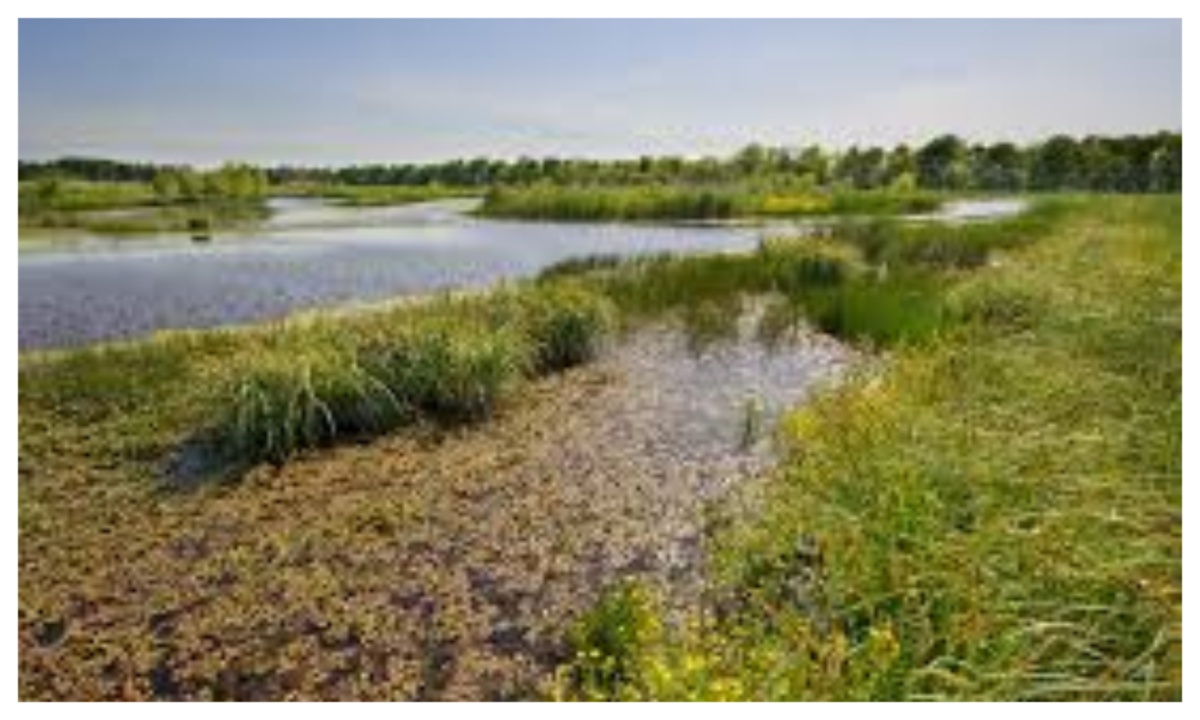
Zimbabwe Lawyers for Human Rights (ZLHR) has issued an urgent call for stronger action to protect the nation’s wetlands, which are disappearing at an alarming rate due to illegal developments, weak regulatory enforcement, and urban pressures, despite constitutional protections and international commitments.
In a statement released on World Wetlands Day, ZLHR urged citizens, government authorities, the private sector, civil society, and other stakeholders to prioritise the conservation, restoration, sustainable management, and wise use of wetlands for the benefit of present and future generations.
World Wetlands Day, observed annually on 2 February, commemorates the signing of the Ramsar Convention on Wetlands in 1971.
The 2026 theme, “Wetlands and Traditional Knowledge: Celebrating Cultural Heritage,” highlights the role of wetlands in sustaining human culture, well-being, and ecological resilience.
ZLHR noted that Zimbabwe’s indigenous and customary practices have historically treated wetlands as sacred spaces, restricting cultivation, construction, and resource extraction, while controlling grazing, protecting vegetation, and preventing pollution.
The organization emphasized that traditional knowledge remains a vital complement to modern conservation strategies.
“Wetlands are among the planet’s most productive ecosystems,” ZLHR said.
Globally, however, wetlands are disappearing due to land-use changes, agriculture, infrastructure development, pollution, and climate change.
Monavale Wetland, also known as Monavale Vlei in Harare, is facing severe pressure from illegal developments, land clearing, and urban expansion, threatening water security and ecological integrity. Despite fines and enforcement actions by the Environmental Management Agency (EMA) in response to recent grader operations in late 2025, housing and commercial developments continue to encroach on protected areas.
ZLHR highlighted the constitutional provisions that safeguard water (Section 77) and a non-harmful environment (Section 73), urging immediate action to prevent further degradation.
Other wetlands of concern include the country’s seven Ramsar Sites: Cleveland Dam, Lake Chivero, Victoria Falls National Park, Mana Pools National Park, Driefontein Grasslands, and Chinhoyi Caves.
The organisation recommended key measures to halt wetland loss:
- Stop illegal developments on wetlands and meet Zimbabwe’s Ramsar obligations.
- Integrate international wetland conventions into local laws, policies, and land-use planning.
- Protect and incorporate indigenous knowledge into wetland management, with active community leadership.
- Suspend and reverse approvals for housing and property projects on wetlands.
- Strengthen climate change mitigation and adaptation strategies to safeguard ecosystems and communities.
Zimbabwe has been a regional leader on wetland issues, hosting Ramsar COP15 in Victoria Falls in 2025, but ZLHR warned that without decisive enforcement and community involvement, continued wetland loss could exacerbate water shortages, biodiversity decline, and climate vulnerability across the country.

“No Matter Where They Are in SA” — Govt Vows Full Medical Support for Zimbabweans

DIABETES CURE… OR THE BEGINNING OF THE END FOR INSULIN DEPENDENCE?

HIV Network Raises Concern Over Halted US Health Funding Talks

Operation restore order

Masasi High School Abuse Scandal Sparks Public Outcry

Kuwadzana Man Jailed for Reckless Driving and Driving Without a Licence
-
 Current Affairs3 months ago
Operation restore order
-
 Crime and Courts5 months ago
Masasi High School Abuse Scandal Sparks Public Outcry
-
 Crime and Courts5 months ago
Kuwadzana Man Jailed for Reckless Driving and Driving Without a Licence
-

 Current Affairs7 months ago
Breaking: ZIMSEC June 2025 Exam Results Now Available Online
-

 Current Affairs6 months ago
Munhumutapa Day: Zimbabwe’s Newest Public Holiday Set for Annual Observance
-

 Current Affairs5 months ago
BREAKING NEWS: ZANU PF Director General Ezekiel Zabanyana Fired
-

 Current Affairs6 months ago
No Racism in Our Cricket: Government
-

 Current Affairs6 months ago
Government Bans Tinted Car Windows in Nationwide Crime Crackdown