
Presidential Affairs
President Mnangagwa Drives Export Surge as Zimbabwe Records 30% Growth

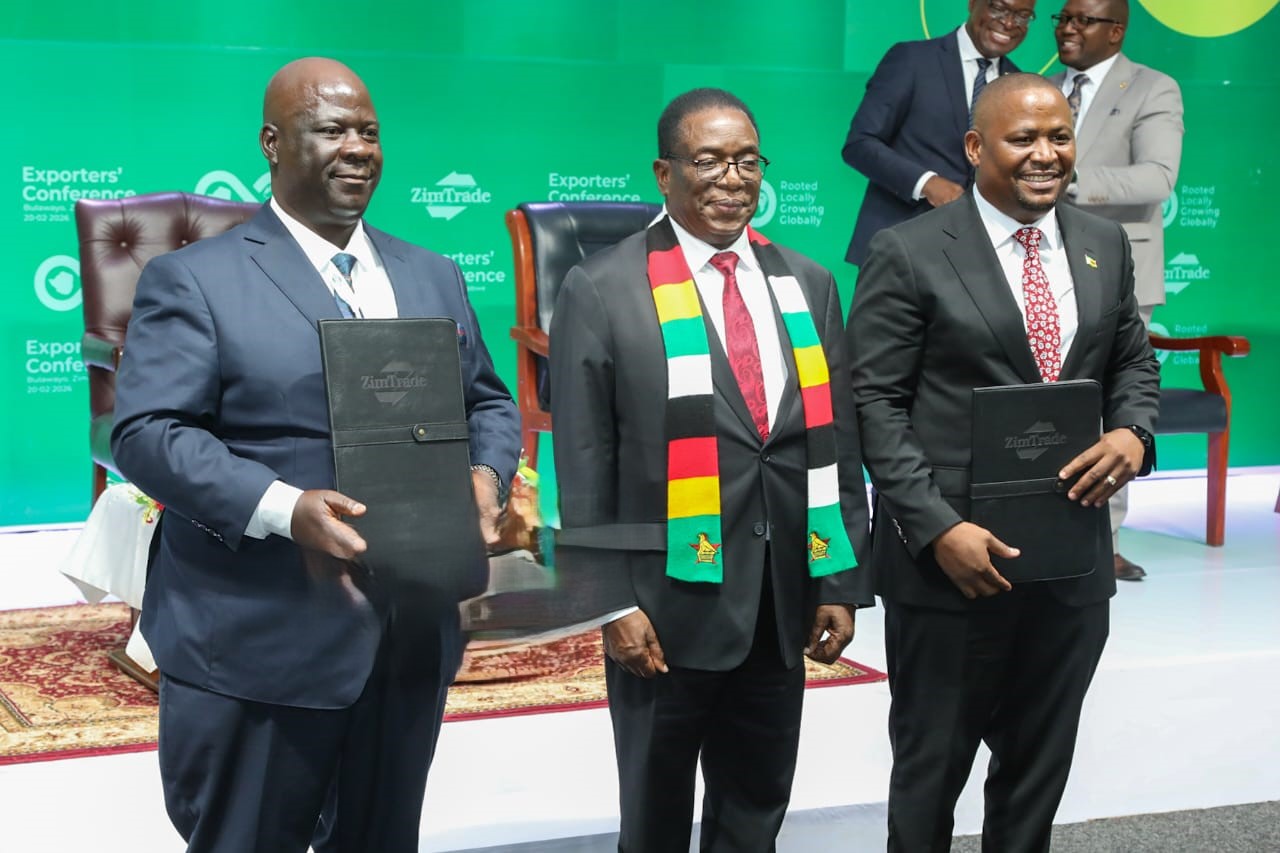
Zimbabwe’s export sector is surging ahead under the Second Republic, with President Emmerson Mnangagwa rallying industry leaders to deepen value addition and accelerate industrialisation as the country recorded a 30 per cent rise in exports in 2025.
Officially opening the 2025 ZimTrade Annual Exporters’ Conference at the Zimbabwe International Trade Fair (ZITF) in Bulawayo, President Mnangagwa said export-led growth was now central to the country’s transformation agenda under National Development Strategy 2 (NDS2).
Speaking under the theme “Rooted Locally, Growing Globally,” the President reaffirmed his administration’s commitment to building a competitive, diversified and value-driven export economy.
“Dependence on raw exports is no longer sustainable nor desirable. We must earn more from every tonne, every kilogramme, and every product we export,” President Mnangagwa said.
In a strong endorsement of Government reforms, ZimTrade Chief Executive Officer Mr Allan Majuru revealed that Zimbabwe’s exports rose sharply in 2025.
“Zimbabwe’s export performance has recorded encouraging growth. For the period January to December 2025, the country’s exports stood at US$9.71 billion, representing a 30% increase from the US$7.43 billion recorded over the same period in 2024,” Mr Majuru said.
The impressive growth reflects the impact of macroeconomic stability, targeted incentives, trade facilitation reforms and sustained investment in productive sectors championed by the Government.
President Mnangagwa underscored that Zimbabwe is decisively shifting from exporting raw materials to processing and beneficiation across key sectors.
In mining, he reiterated that Zimbabwe will no longer be content with exporting unprocessed minerals, with policy now firmly focused on local processing, downstream industries and technology transfer.
Agriculture is also transforming, with the tobacco industry moving from raw leaf exports toward finished cigarettes and related products. Revitalisation of the cotton-to-clothing value chain, expansion of horticulture exports and livestock production for leather beneficiation are being prioritised.
The President further challenged stakeholders to unlock greater value from forestry resources and expand production of processed foods, beverages, pharmaceuticals, engineering products and steel under the “Made in Zimbabwe” brand.
The Second Republic’s Whole-of-Government Approach to export competitiveness is yielding tangible results.
Key reforms include the Zimbabwe Electronic Single Window platform, which has significantly reduced paperwork and clearance times for exporters, enhancing efficiency and productivity.
Massive infrastructure development—spanning road rehabilitation, trade corridors, rail modernisation and logistics upgrades—is positioning Zimbabwean goods to reach regional and global markets more efficiently.
The President reaffirmed Zimbabwe’s practical and results-oriented commitment to the African Continental Free Trade Area (AfCFTA), urging businesses, particularly SMEs, to seize emerging regional opportunities.
In line with the national development philosophy of “leaving no one and no place behind,” President Mnangagwa stressed that export growth must benefit youth, women, rural producers and SMEs.
As the nation prepares to commemorate National Youth Day on February 21, he challenged young entrepreneurs to become innovators, digital traders and global exporters of value-added Zimbabwean goods and services.
Established corporates were urged to mentor and integrate youth into export value chains to ensure sustained industrial growth.
President Mnangagwa said Zimbabwe’s economic diplomacy thrust remains firmly focused on converting international relations into markets, investments and technology partnerships.
He directed ZimTrade and the Ministry of Foreign Affairs and International Trade to accelerate the establishment of warehousing and logistics facilities in strategic markets to enhance export penetration within the region, across Africa and beyond.
Declaring the conference officially open, the President called for unity and determination in advancing the country’s transformation agenda.
“Sector by sector, province by province, we all have the capacity to build a value-added, diversified and competitive export economy under National Development Strategy 2,” he said.
With exports surging and reforms firmly in motion, Zimbabwe’s path toward sustained industrialisation and upper-middle-income status continues to gain momentum under the Second Republic.









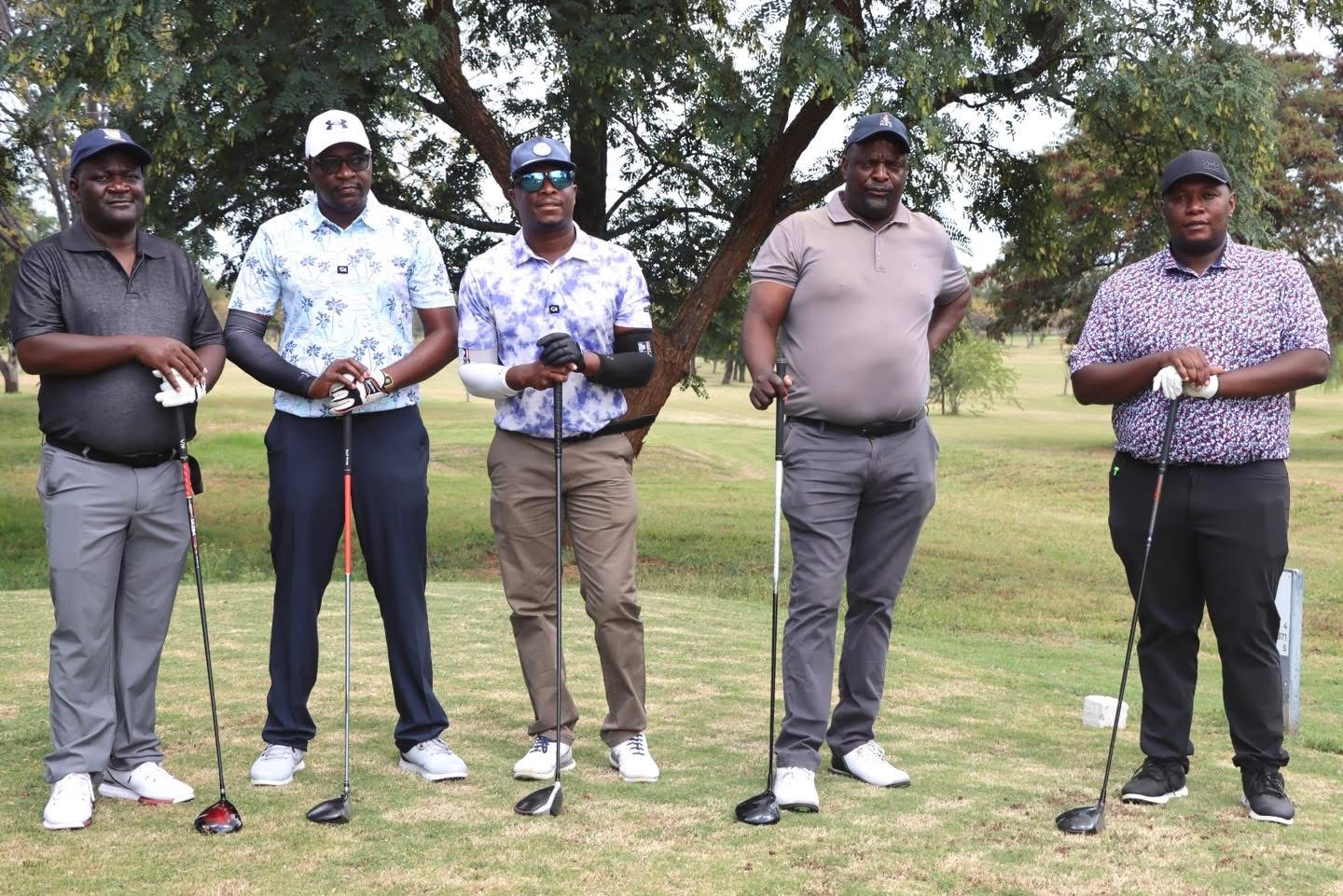
Day 2 of the President’s Cup delivered exactly what golf fans had hoped for , high-quality competition, emotional swings, and a few talking points that extended beyond the fairways.
After a tense opening day, both teams returned with renewed intensity, fully aware that Day 2 often shapes the trajectory of the entire tournament.
The format brought out aggressive play, with captains opting for bold pairings in both foursomes and fourballs, a move that paid off in some matches but backfired in others.
On the course, the level of golf remained exceptional.

Several matches went down to the final holes, with clutch putting and precise approach shots proving decisive.
The greens, however, became a central issue. Players from both sides were seen struggling with pace and reading subtle breaks, sparking quiet complaints about consistency.
A few missed short putts in key moments highlighted just how tricky conditions had become.
Weather also played its part. Changing wind conditions throughout the day made club selection unpredictable, forcing players to constantly adjust strategies.
While some adapted brilliantly, others faltered under pressure, leading to costly mistakes that shifted momentum between the teams.
Beyond the play itself, officiating decisions and rules interpretations began to draw attention.
There were moments of uncertainty regarding drop procedures and relief situations, leading to brief delays and visible frustration among players.
Though none escalated into major disputes, they added an extra layer of tension to an already competitive environment.
Team dynamics were another key storyline.
Certain pairings showed clear chemistry, feeding off each other’s energy and lifting their performances when it mattered most.
In contrast, a few partnerships appeared out of sync, struggling to find rhythm and ultimately dropping valuable points.
As the day progressed, momentum swung back and forth, keeping spectators on edge.
Every hole seemed to carry increased significance, and the pressure was evident in both the body language and decision-making of the players.
By the end of Day 2, the scoreboard reflected just how closely contested the competition remains.
Neither side has managed to establish a decisive lead, setting up what promises to be a thrilling continuation.
However, alongside the excitement, questions linger. Course conditions, officiating clarity, and player fatigue are all emerging as factors that could influence the outcome moving forward.
With everything still to play for, Day 3 now looms large.
If the intensity and drama of the first two days are anything to go by, the President’s Cup is far from decided , and the best may still be yet to come.
ALSO READ: President’s Cup Golf Tournament: A Beacon of Unity and Progress in Zimbabwean Sport

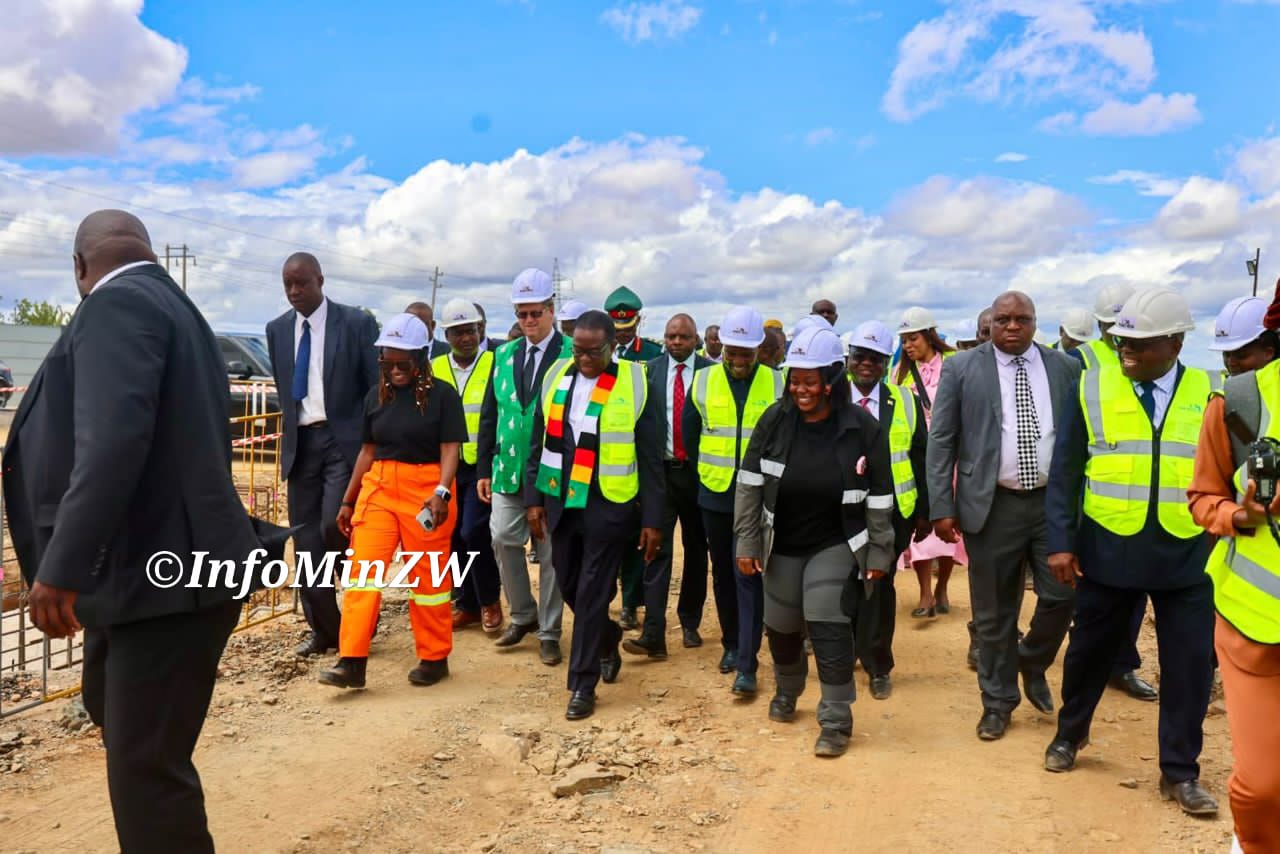
President Emmerson Mnangagwa on Wednesday toured the ongoing construction works at the Mabvuku Interchange along Mutare Road, assessing progress on one of the capital’s most anticipated traffic decongestion projects.
The President, accompanied by the Minister of Transport and Infrastructure Development, Hon. Felix Mhona, inspected the scale of the earthworks, drainage systems, and the rising structural pillars that will define the new flyover.
President Mnangagwa (centre) points towards the eastern span of the interchange as Minister Felix Mhona (right) explains the project’s phasing.
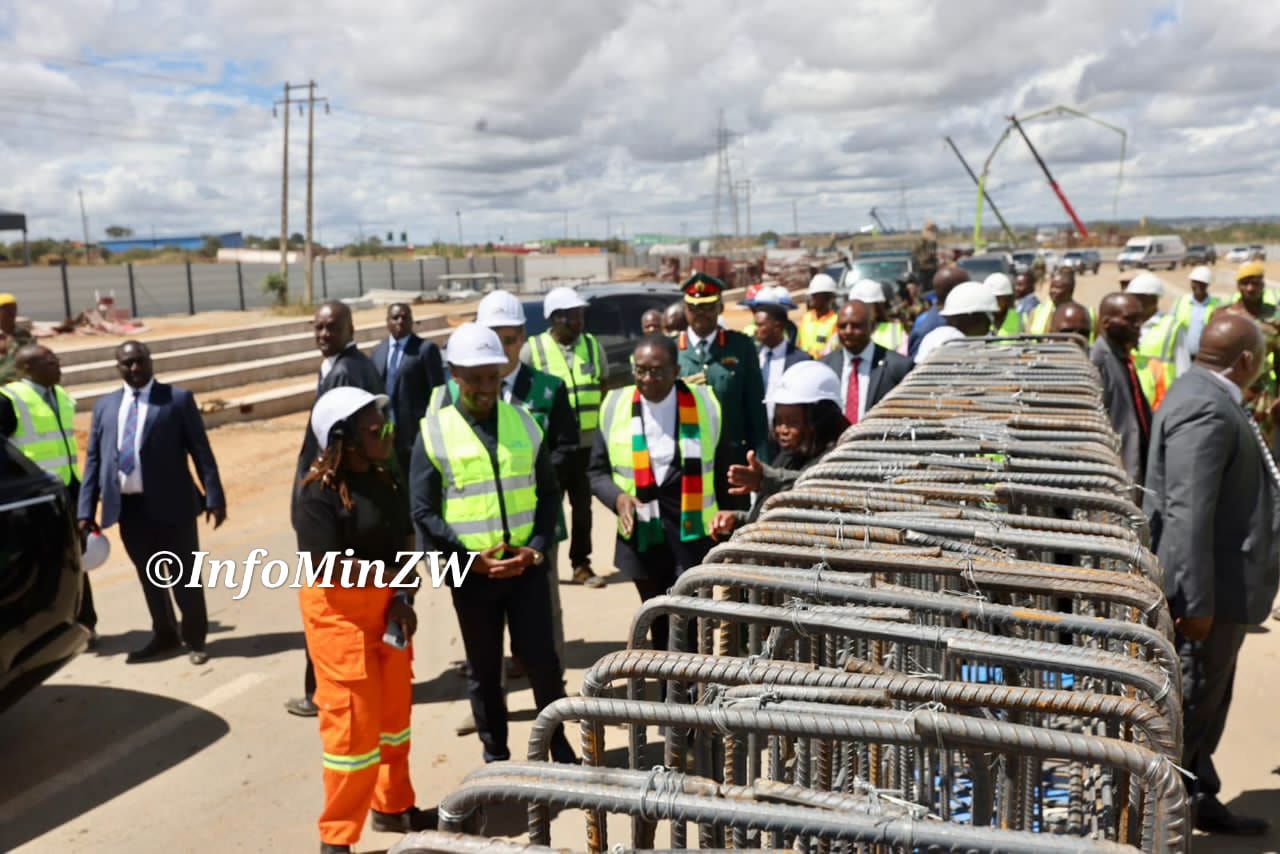
The President walks along the compacted gravel shoulder of the interchange, wearing a hard hat and safety vest. He pauses to inspect the reinforced steel bars (rebar) of a support column, with Minister Mhona looking on.
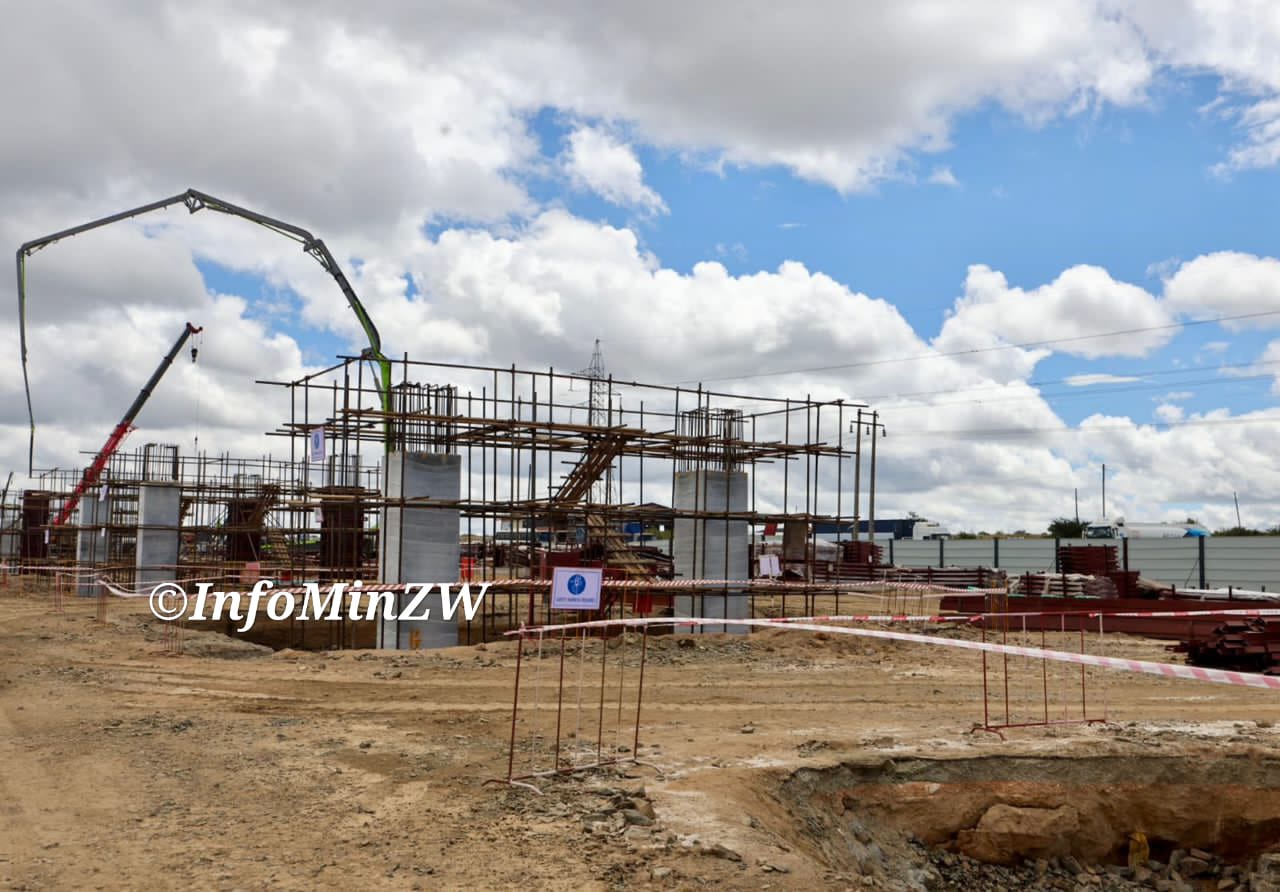
A wide shot of the Mabvuku interchange site, showing the scale of excavation and the new road alignment taking shape against the backdrop of the high-density suburb.
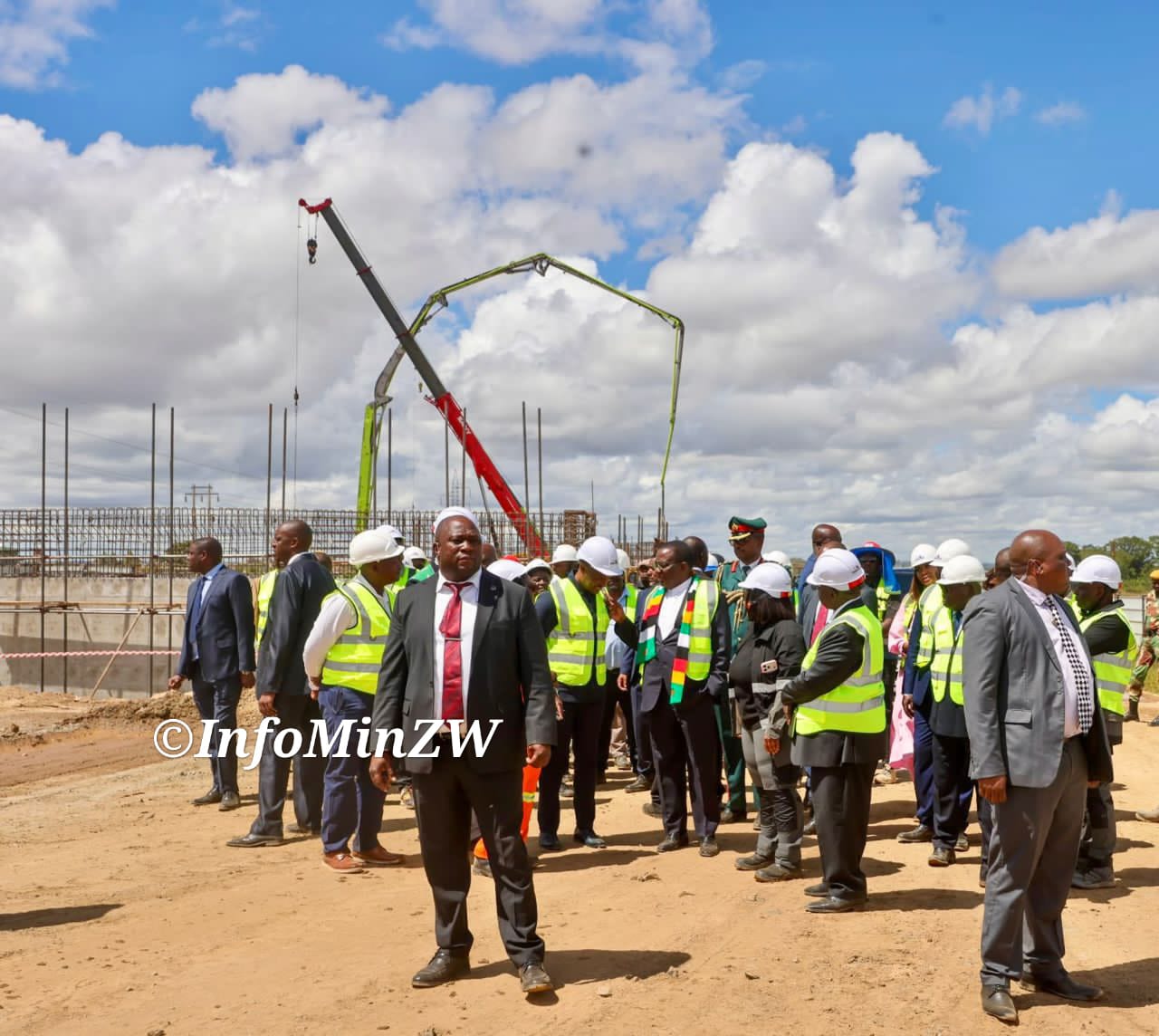
His Excellency engages directly with site engineers and construction workers, receiving a technical briefing on the project’s timeline and the durability of materials being used.
The project, spearheaded by the Ministry of Transport, is part of ongoing efforts to modernise Harare’s road network and reduce bottlenecks at major intersections.
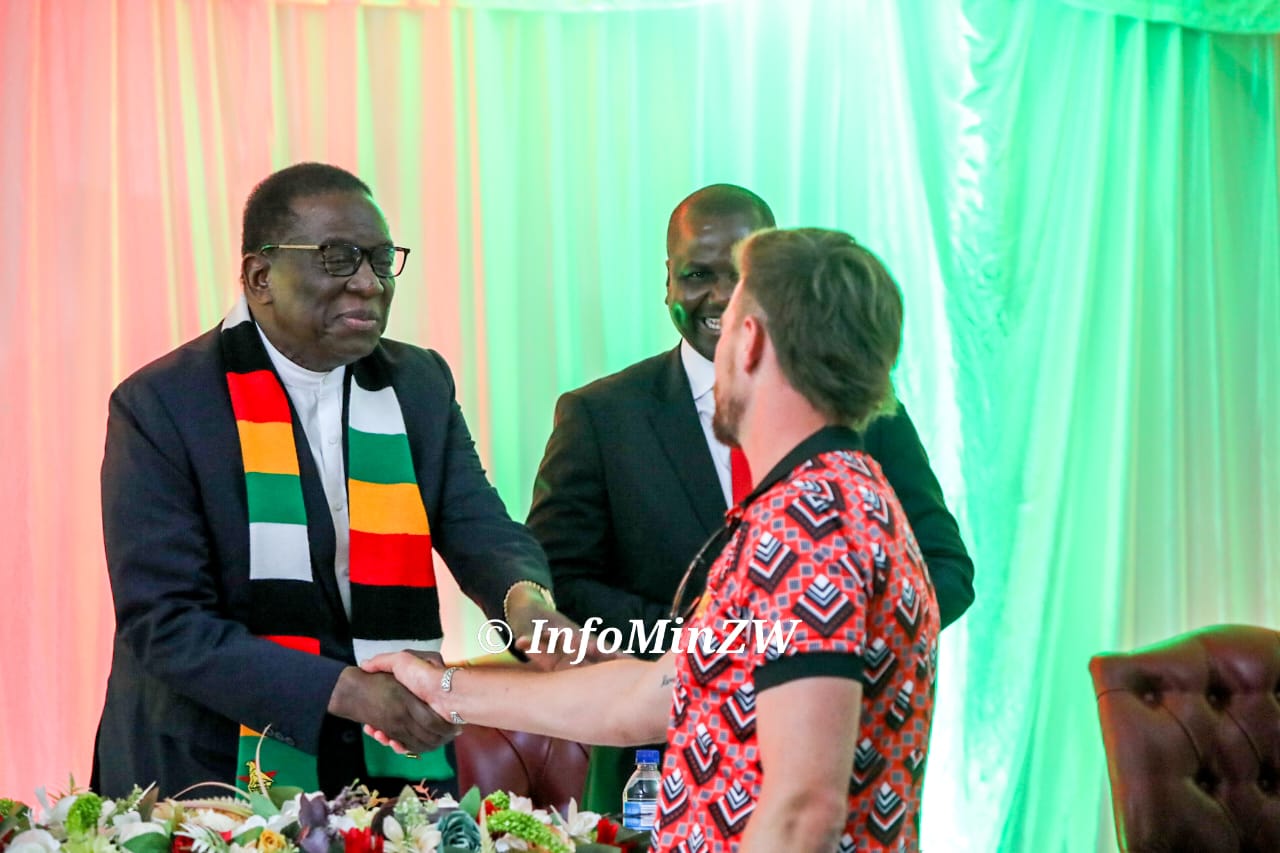
President Emmerson Mnangagwa on Wednesday honoured the men’s national cricket team, the Chevrons, at State House, praising their historic run to the Super 8 stage of the ICC T20 World Cup and describing their victory over Australia as a moment that “captured the imagination of the cricketing world.”
Addressing players, officials, and dignitaries at a formal presentation ceremony, President Mnangagwa said the team’s performance had demonstrated that Zimbabwe is “worthy of participating at the global stage across various sporting disciplines.”
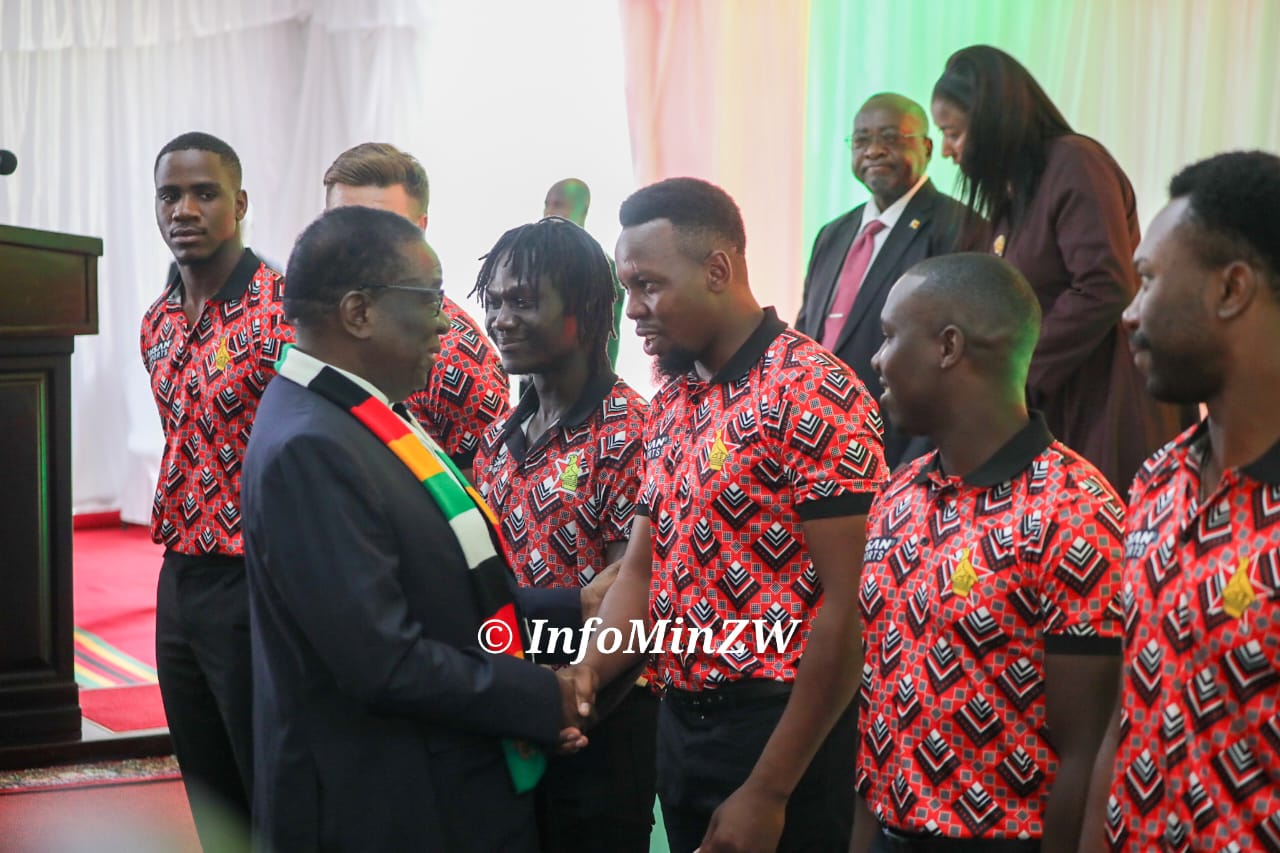
“The historic victory over Australia stands out as a defining moment in the Chevrons’ campaign,” the President said.
“It was a victory that captured the imagination of the cricketing world and re-ignited national pride here at home. The result sent a strong message that Zimbabwe is capable of overcoming the most formidable teams.”
The Chevrons’ progression to the Super 8 stage marked one of the team’s best performances in recent global tournaments.
President Mnangagwa described the players as “true ambassadors of Zimbabwe’s national character of resilience and an inherent warrior spirit,” adding that they had helped positively profile “brand Zimbabwe” internationally.
The President also commended Zimbabwe Cricket for its development efforts, including new facilities in Victoria Falls, Necma Valley Country Club, and Masvingo Sports Club.
He congratulated the board for successfully hosting the ICC Under-19 Cricket World Cup, calling it “a clear testament of our country’s organisational capacity and professionalism.”
President Mnangagwa announced that his government stands ready to provide guarantees and support for Zimbabwe to co-host the ICC Men’s Cricket World Cup next year alongside South Africa and Namibia.
“This presents a historic opportunity to once again showcase on the global stage the unique hospitality of our people and passion for cricket,” he said.
The President urged the Chevrons to “go further, aim higher, write new chapters in Zimbabwean sport,” while thanking supporters in the stands and from the diaspora who “carried the spirit of Zimbabwe and created a home away from home atmosphere.”

ZLGCA Drives Girl Child Empowerment as Zimbabwe Celebrates 46 Years of Freedom

Van Choga: Controversy Outpaces Quality in Music Sales

USD 2.18 Billion Rail Deal To Unlock Africa Trade Corridors

Operation restore order

Masasi High School Abuse Scandal Sparks Public Outcry

Kuwadzana Man Jailed for Reckless Driving and Driving Without a Licence
-
 Current Affairs5 months ago
Operation restore order
-
 Crime and Courts7 months ago
Masasi High School Abuse Scandal Sparks Public Outcry
-
 Crime and Courts7 months ago
Kuwadzana Man Jailed for Reckless Driving and Driving Without a Licence
-

 Current Affairs9 months ago
Breaking: ZIMSEC June 2025 Exam Results Now Available Online
-
 Current Affairs8 months ago
Munhumutapa Day: Zimbabwe’s Newest Public Holiday Set for Annual Observance
-
 Current Affairs6 months ago
BREAKING NEWS: ZANU PF Director General Ezekiel Zabanyana Fired
-
 Current Affairs8 months ago
No Racism in Our Cricket: Government
-
 World News6 months ago
Burkina Faso Reaps $18 Billion in Gold Revenue Under Ibrahim Traoré’s Leadership