
Current Affairs
Not Just a Ward, But a Wound Dressed with Empathy


Losing a baby is an indescribable heartache—an experience many mothers endure in silence, often without emotional or psychological support.
In response to this often-overlooked grief, the Parirenyatwa Group of Hospitals established a dedicated bereavement suite in 2023.
This safe and compassionate space was created to support women facing miscarriages, stillbirths, neonatal deaths, or postnatal depression—providing a much-needed refuge from the surrounding hospital bustle.
Tucked away from the usual activity of maternity wards and emergency rooms, the bereavement suite offers more than just privacy—it offers solace. Unlike typical hospital rooms, it’s not built for clinical care, but for emotional healing.
The facility was launched through a partnership between Parirenyatwa Hospital and Someone Always Listens To-You (SALT) Africa, a local organisation focused on mental health and grief support. It has since become a place of comfort for grieving families navigating unimaginable loss.
For Gracious Katiyo, who lost her baby just before giving birth, the support she received in the bereavement suite was instrumental in her healing.
“After I arrived at the hospital, the doctors informed me the baby had passed away and I needed to be induced. After the stillbirth, I was referred to SALT for counselling. They guided me through the stages of grief and helped me prepare emotionally for the difficult conversations I would face when I returned home,” she shared.
Gracious is one of two women who received maternal bereavement counselling featured in a ZBC News report.
The concept behind the suite was pioneered by Tafadzwa Meki, a counselling psychologist. Her inspiration came from findings during a pilot study conducted at Mbuya Nehanda Maternity Hospital, which revealed the widespread lack of psychosocial support for mothers experiencing perinatal loss.
“We identified a serious gap in care. Unaddressed maternal grief can develop into long-term emotional and psychological distress,” said Meki.
“It’s not just the mothers who suffer—partners and close family members also experience the loss and must be supported too, as they are part of the recovery environment.”
Respinah Kareramombe is another mother who benefited from the suite. After her newborn developed a fatal infection, the emotional strain affected her physically—her milk production stopped entirely.
“Every mother wants to breastfeed and bond with her baby. When I couldn’t, it deepened my trauma. It took three months to recover and for my body to produce milk again,” she recalled.
Though modest in size, the bereavement suite has marked a significant step forward in maternal healthcare. It provides space for grieving families to process their loss in a society where such grief is often invisible or dismissed.
“As a society, we tend to overlook maternal loss because there’s often no shared memory or visible signs of the baby. But for the mother, the bond was already there—it was real,” explained Meki. “In many cases, even the father has felt the baby kick and was emotionally attached. Maternal bereavement affects the whole family.”
Encouraged by its success at Parirenyatwa, conversations are now underway about expanding this model to other hospitals nationwide.
As Zimbabwe works toward achieving Vision 2030—with a focus on inclusive, high-quality healthcare—initiatives like the bereavement suite show how compassion, research, and cultural awareness can transform the healthcare landscape for the better.
ALSO READ : Sakupwanya and Tungwarara Back Youth Football With $40,000 Boost to Jadel Academy








The Minister of ICT, Postal and Courier Services of the Republic of Zimbabwe, Hon. Tatenda Mavetera, officially opened the Digital Economy Conference 2026 at the Zimbabwe International Trade Fair 2026 in Bulawayo, urging Zimbabwe to embrace digital transformation and artificial intelligence (AI) as key drivers of economic growth under Vision 2030.
Speaking at the conference, Minister Mavetera highlighted the urgency of adopting new technologies, quoting Klaus Schwab, who said, “In the new world, it is not the big fish that eats the small fish but the fast fish that eats the slow fish.”
She emphasised that Zimbabwe must act quickly, adding, “Zimbabwe must be fast. We must not be spectators in this revolution. We must be active participants, deliberate builders, and confident leaders.”
The minister also reflected on the launch of the Zimbabwe National Artificial Intelligence Strategy (2026–2030) by President Emmerson Mnangagwa on March 13, 2026.

“The strategy is meant to drive transformation across key sectors such as agriculture, mining, healthcare, education, and finance,” she said.
The President stressed that the country’s approach must focus on local ownership, saying Zimbabwe’s AI journey “must not be defined by dependency but by ownership… building systems that understand our values, speak our languages, and solve our unique national challenges”.
Minister Mavetera underscored that the strategy is guided by the principle “Nyika inovakwa nevene vayo / a nation is built by its own people”, reinforcing the need for homegrown innovation.
She also pointed to progress in other African countries. Rwanda, under ICT Minister Paula Ingabire, has made significant strides in digital transformation, while Kenya and Ghana are also advancing AI adoption.
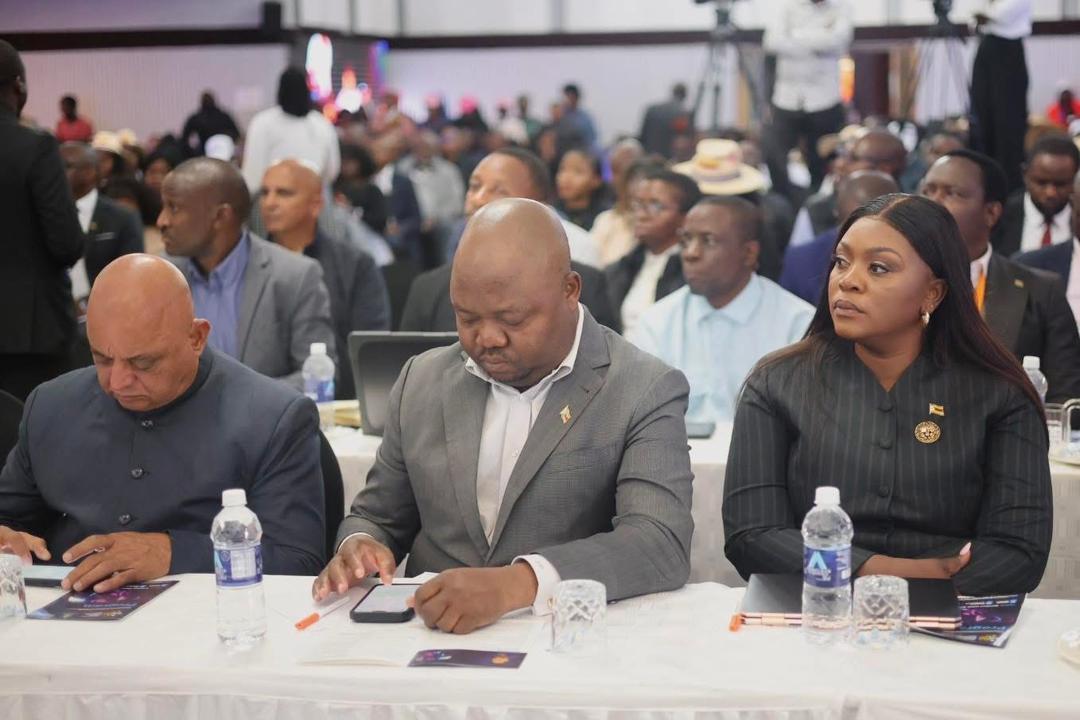
Quoting Kofi Annan, she said, “Knowledge is power.” Information is liberating. Education is the premise of progress, in every society, in every family.” She added that Africa must take control of its digital future.
“The launch of the Zimbabwe National Innovation Acceleration Centre (NIAC) will help turn ideas into businesses and support young innovators. Practical action and innovation must lead to real results, jobs, and economic growth,” Minister Mavetera added.
Quoting Satya Nadella, she said, “Ultimately, progress is measured by the impact of technology on people,” emphasising that AI must improve lives.
“Technology should reach all citizens, from farmers to students and entrepreneurs, ensuring inclusive development,” she said.

Minister Mavetera also referenced Andrew Ng, who said, “Artificial intelligence is the new electricity”, highlighting how AI is transforming industries worldwide.
“Zimbabwe must use AI not just for basic applications but for real solutions such as improving agriculture, mining efficiency, and financial services,” Hon. Mavetera stated.
In closing, the minister called for action and collaboration, urging stakeholders to move beyond discussion to implementation.
She welcomed Minister Paula Ingabire as Guest of Honour, describing her as a key figure in Africa’s digital transformation, and encouraged stronger partnerships across the continent to build a competitive and inclusive digital economy.

JOHANNESBURG, South Africa – Prosecutors in South Africa have called for a custodial sentence for Bellarmine Chatunga Mugabe, son of the late former Zimbabwean president Robert Mugabe, as sentencing was postponed to April 29.
The State is requesting a total of two years in prison for Mugabe 12 months for unlawfully pointing a firearm and another 12 months for violating immigration laws.
His co-accused, Tobias Matonhodze, faces significantly heavier penalties after admitting to more serious offences.
Prosecutors are seeking five years for attempted murder, 12 years for illegal possession of a firearm, another 12 years for obstructing justice, a fine for unlawful possession of ammunition, and an additional 12 months for immigration-related violations.
If granted, the combined sentences for the firearm and obstruction charges alone could amount to 24 years behind bars for Matonhodze.
Mugabe admitted to being in South Africa illegally and to pointing a firearm in an earlier, unrelated incident that occurred shortly before the shooting of his security guard, Sipho Mahlangu, at his Hyde Park residence on February 19.
The investigating officer told the Alexandra Magistrates’ Court that Mahlangu has so far received R250,000 in compensation, with an additional R150,000 still unpaid.
The officer urged the court to impose a strict sentence, highlighting that neither accused has revealed the location of the firearm used in the shooting, which remains missing.
“Both accused have not shown remorse,” the officer said, adding that their failure to produce the weapon reflects a lack of cooperation.
However, the defence argued for leniency, suggesting that other individuals present at the property could have removed the firearm. They also pointed to the partial compensation paid as a sign of responsibility, though prosecutors noted the full amount has yet to be settled.
The case has been adjourned to April 29, when sentencing is expected.


A groundbreaking initiative, U CAN GROW ZIMBABWE, is poised to revolutionise the nation’s agricultural landscape and economic future, moving beyond traditional farming to foster a new generation of successful agri-preneurs.
Spearheaded by Chairman Dr. David Munowenyu who is also the Chief Executive Officer for Discovery Ambulances, this visionary movement promises to transform lives and uplift communities across Zimbabwe.
Dr. Munowenyu said the profound scope of this endeavor is about building sustainable livelihoods.
“If you thought Discovery Ambulance Services was a game changer, then brace yourself for what U CAN GROW ZIMBABWE is about to become.
“This is not just another initiative it is a bold, visionary movement designed to transform lives, uplift communities and redefine the future of agriculture and economic empowerment,” said Dr Munowenyu.
He said the initiative is designed as a comprehensive value chain solution.
“U CAN GROW ZIMBABWE goes beyond farming. It is about building sustainable livelihoods, turning struggling farmers into successful agri-preneurs and creating a powerful ecosystem where innovation, technology, and opportunity meet.
From establishing agriculture hubs and seed banks to securing reliable markets for every product, this is a complete value chain solution that leaves no one and no place behind,” said Dr. Munowenyu.
He further indicated the far-reaching impact, saying it aims to achieve empowering communities.
“It strengthens food security, creating jobs, and contributing meaningfully to national development goals.
“This is about rewriting the narrative, proving that with the right support, structure and vision, anyone can grow, succeed, and thrive.”
Dr Munowenyu said the future of the country needs a morden drive and backed up with a sustainable financial system for all.
“The journey ahead is bold, the mission is clear and the impact will be undeniable. Watch closely because what’s coming is not just impressive… it is going to be truly mind-blowing.”
Dr. David Munowenyu, through his Discovery Ambulance Services, has a notable history of philanthropic contributions to Zimbabwe’s healthcare sector.
His efforts have included donating state-of-the-art ICU mobile ambulances and strengthening emergency medical response capabilities across the nation.
These initiatives have significantly improved healthcare access and outcomes for countless Zimbabweans, demonstrating a consistent commitment to community welfare and national development.
His work with Discovery Ambulance Services has been recognized for its systemic impact in reducing healthcare inequalities.

Minister Mavetera Urges Zimbabwe to Embrace AI for Economic Growth

SA Prosecutors Push for Jail Time for Bellarmine Mugabe

A New Era of Agri-preneurship and Economic Empowerment Dawns

Operation restore order

Masasi High School Abuse Scandal Sparks Public Outcry

Kuwadzana Man Jailed for Reckless Driving and Driving Without a Licence
-
 Current Affairs5 months ago
Operation restore order
-
 Crime and Courts7 months ago
Masasi High School Abuse Scandal Sparks Public Outcry
-
 Crime and Courts7 months ago
Kuwadzana Man Jailed for Reckless Driving and Driving Without a Licence
-

 Current Affairs9 months ago
Breaking: ZIMSEC June 2025 Exam Results Now Available Online
-

 Current Affairs8 months ago
Munhumutapa Day: Zimbabwe’s Newest Public Holiday Set for Annual Observance
-

 Current Affairs7 months ago
BREAKING NEWS: ZANU PF Director General Ezekiel Zabanyana Fired
-

 Current Affairs8 months ago
No Racism in Our Cricket: Government
-

 World News6 months ago
Burkina Faso Reaps $18 Billion in Gold Revenue Under Ibrahim Traoré’s Leadership