
Uncategorized
Gvt Tightens Grip on Land Barons, Approves Architects Amendment Bill

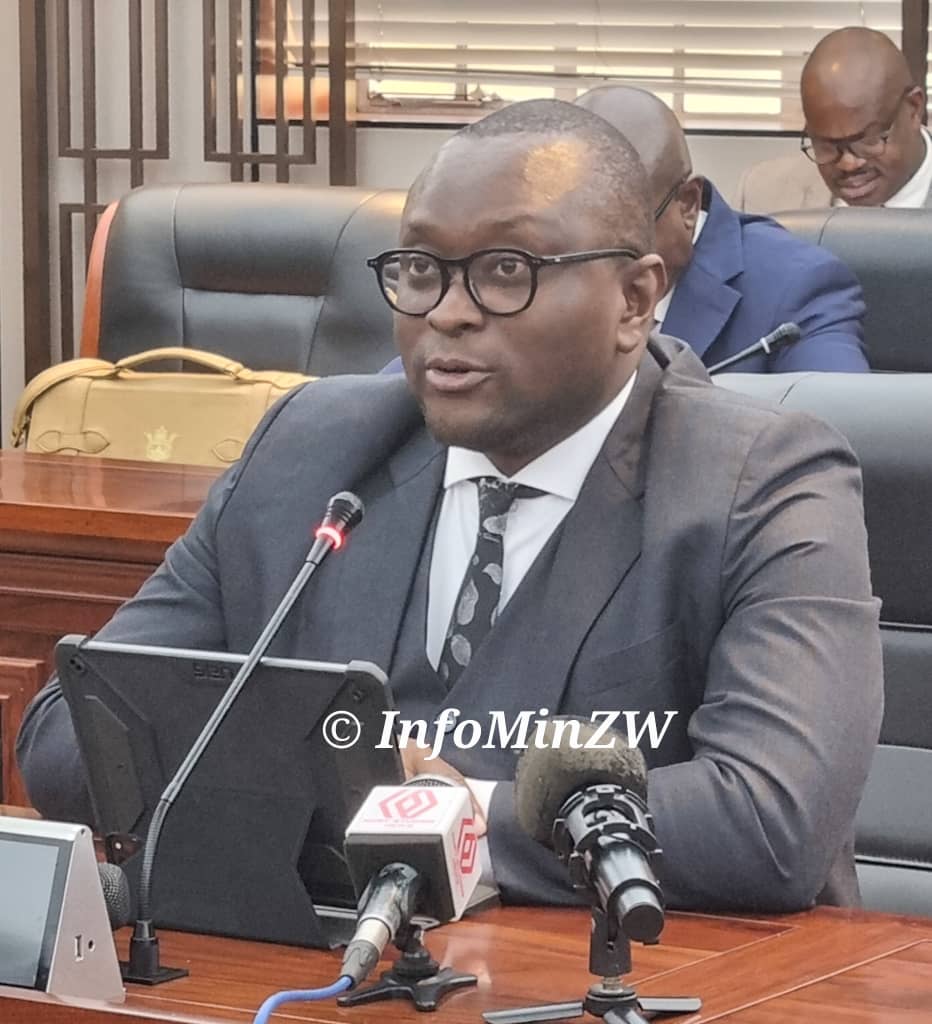
The Zimbabwean government has intensified its crackdown on illegal land dealings by land barons while bolstering regulatory oversight in the architectural sector, as announced by Minister of Information, Publicity, and Broadcasting Services, Dr. Jenfan Muswere, during a post-Cabinet briefing in Harare on Tuesday.
The government has reaffirmed its commitment to enforcing stringent measures to regularise urban and agricultural land tenure.
Dr. Muswere said that the ongoing urban land policy reforms aim to ensure compliance with town and country planning laws, addressing the chaos caused by illegal land sales and unregulated developments.
“The menace of land barons, who have little or no regard for the country’s town and country planning laws and policies, is being addressed decisively,” Muswere said.
The reforms, part of the government’s efforts to unlock the economic value of land, include issuing bankable, registrable, and transferable tenure certificates to beneficiaries of the 2000 land reform program.
These measures prioritise indigenous Zimbabweans, particularly veterans of the liberation struggle, and aim to enhance security of tenure while curbing fraudulent succession and illegal land transfers.
Urban land will only be allocated to credible developers capable of adhering to legal and regulatory frameworks, ensuring high-quality housing developments in line with Vision 2030.
In a parallel development, the Cabinet approved the Principles of the Architects Amendment Bill, 2025, presented by the Minister of Local Government and Public Works.
The amendment seeks to strengthen the regulatory authority of the Architects Council of Zimbabwe, ensuring that only qualified and registered professionals undertake architectural work in the country.
“The amendment aims to reinforce the Council’s authority, ensuring compliance with professional standards and protecting the public from substandard architectural practices,” Dr. Muswere said.
The Bill is expected to modernise the architectural sector, aligning it with international best practices and supporting Zimbabwe’s infrastructure development goals. The Architects Amendment Bill responds to the need for stricter oversight in a rapidly urbanising Zimbabwe, where unregulated construction has often led to safety concerns and non-compliance with urban planning standards.
By empowering the Architects Council, the government aims to foster sustainable urban development and curb the influence of unqualified practitioners in the sector. These dual measures reflect the government’s broader strategy to restore order in land governance and professional services while promoting economic growth.
The policies are expected to facilitate investments in agriculture, infrastructure, and urban renewal, aligning with the National Development Strategy 2 (NDS2), which is set to replace NDS1 in 2026.
As Zimbabwe approaches the 2025 harvesting season and continues its push toward Vision 2030, the government’s commitment to addressing land baron activities and strengthening professional regulation signals a robust approach to sustainable development.
However, analysts note that effective implementation and enforcement will be critical to ensuring these policies achieve their intended impact.



A strong push to “catch them young” is taking shape in Zimbabwean golf, as the ongoing President’s Cup Juniors Tournament highlights the importance of early talent identification and development.
Now in its third day, the four-day event running from April 14 to 17 at Bulawayo Country Club Golf Course has drawn promising young golfers from across the country, all showcasing skill, discipline and growing confidence on the course.
ZGA president Blessmore Gandawa said investing in young players is the only sustainable way to grow the sport.
“We believe in catching them young. The earlier we introduce structured training and competitive exposure, the better we prepare them for the future. What we are witnessing here is a generation that, with proper support, can take Zimbabwean golf to greater heights,” he said.
Gandawa credited parents and coaches for their dedication, saying their involvement is laying a solid foundation for long-term success.
Among the standout young players is Ayanda Ndlovu, who recently represented Zimbabwe in Ireland. Her participation on the international stage at such a young age underscores the value of early development and exposure.
Other juniors have also impressed across various age categories, reinforcing the depth of talent emerging through grassroots programmes.
NetOne Cellular Pvt Ltd partners said their support is anchored on empowering young people and creating opportunities through sport.
Public Relations Manager Ernest Magadzire said junior golf development aligns with the company’s broader vision.
“Supporting these young golfers is about investing in the future. We are seeing talent, discipline and passion at a very early stage, and that is exactly why platforms like this are important. These are future champions in the making,” he said.
NetOne Regional Manager Gugulethu Ndlovu added that early exposure builds not only sporting ability but also character.
“When you catch them young, you are not just developing athletes — you are shaping confident, disciplined individuals. We are impressed by the maturity and focus shown by these juniors, and we remain committed to supporting their journey,” she said.
As the tournament heads towards its conclusion on Friday, the message from stakeholders is clear — investing in junior golfers today is key to securing Zimbabwe’s success on the international stage tomorrow.



The Government of Zimbabwe has recently suspended exports of raw minerals and lithium concentrates and introduced new regulations concerning reserved sectors.
The Embassy of the People’s Republic of China in Zimbabwe reminds Chinese enterprises and nationals in Zimbabwe to further strengthen risk prevention and compliance awareness.
These developments follow Zimbabwe’s policy shifts in February 2026, including the Ministry of Mines and Mining Development’s immediate export suspension announced on February 25, 2026.
The measures are intended to address malpractices, promote local beneficiation, and enforce reserved sectors under new indigenisation rules (e.g., Statutory Instrument 215 of 2025).
In this context, investors should conduct a comprehensive, in-depth assessment of the local business environment, industrial policies, and relevant laws and regulations; fully consider investment and operational risks; and make informed decisions to avoid losses from government policy changes.
Important Notice from the Chinese Embassy in Zimbabwe
The Government of Zimbabwe has recently suspended exports of raw minerals and lithium concentrates, and introduced new regulations concerning reserved sectors.
The Embassy of the People’s Republic of China in Zimbabwe reminds…
— Chinese Embassy in Zimbabwe (@ChineseZimbabwe) March 19, 2026
In the course of production and business operations in Zimbabwe, Chinese enterprises and nationals should strictly abide by local laws and regulations, adopt proactive risk prevention and control measures, and protect their legitimate rights and interests through legal channels.

ZLGCA Drives Girl Child Empowerment as Zimbabwe Celebrates 46 Years of Freedom

Van Choga: Controversy Outpaces Quality in Music Sales

USD 2.18 Billion Rail Deal To Unlock Africa Trade Corridors

Operation restore order

Masasi High School Abuse Scandal Sparks Public Outcry

Kuwadzana Man Jailed for Reckless Driving and Driving Without a Licence
-
 Current Affairs5 months ago
Operation restore order
-
 Crime and Courts7 months ago
Masasi High School Abuse Scandal Sparks Public Outcry
-
 Crime and Courts7 months ago
Kuwadzana Man Jailed for Reckless Driving and Driving Without a Licence
-

 Current Affairs9 months ago
Breaking: ZIMSEC June 2025 Exam Results Now Available Online
-

 Current Affairs8 months ago
Munhumutapa Day: Zimbabwe’s Newest Public Holiday Set for Annual Observance
-

 Current Affairs6 months ago
BREAKING NEWS: ZANU PF Director General Ezekiel Zabanyana Fired
-

 Current Affairs8 months ago
No Racism in Our Cricket: Government
-

 World News6 months ago
Burkina Faso Reaps $18 Billion in Gold Revenue Under Ibrahim Traoré’s Leadership