
Current Affairs
US prison forced labour, a silent form of slavery for Blacks

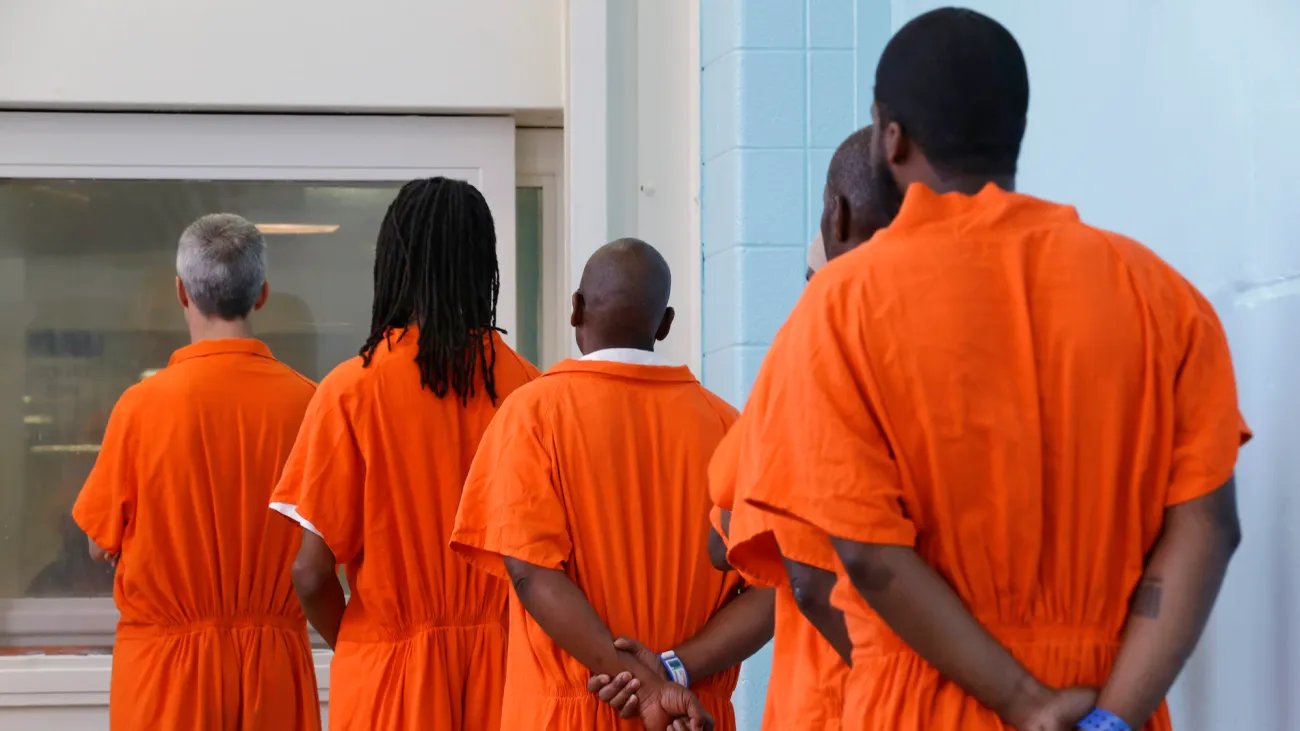
The United States government’s rhetoric about democracy often rings hollow in the South, where white supremacy remains deeply entrenched.
Democracy is a public relations strategy to cover up acts of modern day slavery in its prison system targeting incarcerated Blacks and Hispanic nationals.
Prisons in the South, over the past years have come under scrutiny and criticism for prolonging modern-day slavery through forced labor practices that disproportionately affect Black individuals.
Modern slavery roots backdate when the 13th Amendment to the US Constitution that abolished slavery.
Under this, white supremacists after slavery ban reinforced a loophole- “except as a punishment for crime,” led to exploitation to justify forced labor in prisons.
Some of the common states in the South are Texas, Florida, Georgia, North and South Carolina, Alabama, Mississippi, Louisiana, Arkansas, Tennessee, Kentucky and Virginia.
Research has shown that Black people are overrepresented especially in the South.
“Of the 12 states where more than half the state prison population is Black, nine of these states are in the South,” (The Sentencing Project 2022) revealed.
It further stated that the incarcerated population in the South is primarily and disproportionate “Within state and federal prisons, Black men are more likely to be assigned work in lower-paid or unpaid agriculture and prison.”
Incarcerated people of colour in the South are subjected to low wages are often paid minimal wages, ranging from USD0.04 to USD 2.00 per hour, for their labor.
While in states, like Alabama, Arkansas, Florida, Georgia, Mississippi, South Carolina, and Texas, do not pay prisoners for their labour.
In some instances prisoners are often forced to work under threat of punishment, including solitary confinement or denial of privileges.
Under these conditions Black people are more likely to be incarcerated and forced into labour due to systemic racism and biased policing practices.
At the end of the day the prison labour system exploits Black labour for profit, reinforcing racial disparities and inequality.
Under this system, the South has generated billions of dollars.
Harare-based political commentator Mr Naboth Dzivaguru said the US government is famously known for its sham adherence and the rule of law.
He added that the government has a reputation for indicating right whilst turning left.
US is famously known for its sham adherence to the tenets of democracy and the rule of law.
It is known for indicating right whilst turning left.
“The country is known for poor labor laws and ethics.
“It thrives on cheap labour and this is why it has resorted to modern-day slavery on blacks confined in their prisons.Its main concern or aim is to make profits notwithstanding the route taken to achieve results.
“It is a polite hypocrisy that should be exposed to the extreme and to the full glare of the world,” said Mr Dzivaguru.
Over the past years a crop of lawmakers in the US have called for the abolishment of 13th Amendment’s loophole to end forced labor.
While others have called an end to forced labour an immediate increase on wages and creation of better working conditions.
A paper by Sawyer and Wagner 2024, revealed that nearly 2 million people are confined in state and federal prisons, county jails, juvenile and immigrant detention and other confinement facilities.
ACLU and GHRC 2022 report stated that of the 1. 2 million people incarcerated in state and federal prisons, nearly 800 000 are prison labourers, most of them by force.
80 percent of them are employed in facility and maintenance operations, such as janitorial duties, food preparations, ground maintenance and laundry. These jobs keeps institute that enslave them to keep running.
Renowned Harare-based political analyst Derick Goto said the United States has perfected the art of double standards,loudly preaching democracy and human rights abroad while running one of the most exploitative systems of forced labour at home.
“The 13th Amendment was celebrated as the abolition of slavery yet its “exception clause” allowed slavery to continue for the incarcerated, a loophole disproportionately targeting African Americans.
He said the current US prison system, mainly in the South is not about rehabilitation but a man-made profit
making machine.
“American prisons generate billions annually, with fortune 500 companies – from agriculture to telecommunications and textiles – benefiting from this coerced labour. “Prisoners sew uniforms for the military, fight wildfires for a fraction of the minimum wage, and manufacture goods sold on the open market, yet they leave prison with no savings and no safety net.
Mr Goto said the US government exposes a democracy that is selective, exploitative, and built on the continued subjugation of Black citizens.
“Until America confronts this modern-day slavery within its borders, its lectures on democracy elsewhere remain nothing more than hollow propaganda.”
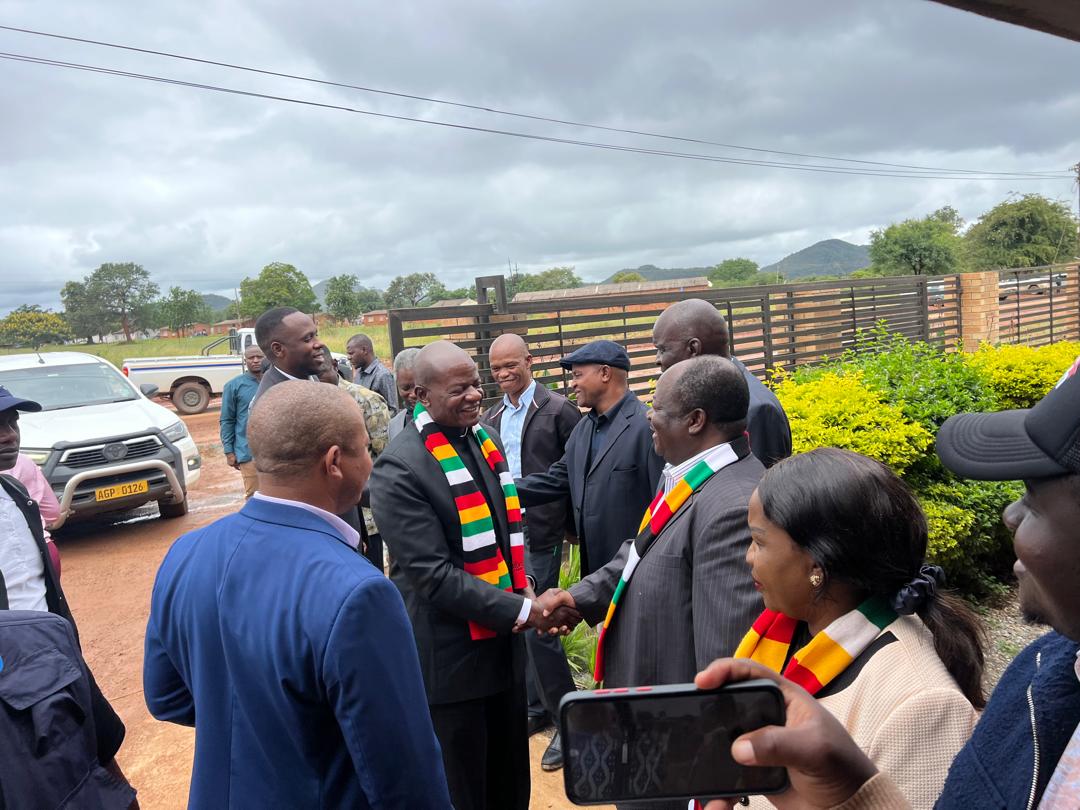
The Minister of Local Government and Public Works, Daniel Garwe, is today expected to commission motorbikes, a fire tender and earth-moving equipment acquired by Insiza Rural District Council and Umzingwane Rural District Council.
Minister Garwe will begin the programme at Insiza RDC before travelling to Umzingwane RDC to officially hand over the equipment. He will be accompanied by his deputy, Albert Mavunga, together with senior officials from the Ministry of Local Government and Public Works.
Also expected to attend the event is the Minister of State for Matabeleland South Province Provincial Affairs and Devolution, Albert Nguluvhe, alongside traditional leaders, ZANU PF officials, heads of Government departments and members of the local community.
The initiative is aimed at strengthening service delivery in line with the vision of Emmerson Mnangagwa, who has consistently called for improved efficiency and accountability in local authorities.
Funding for the equipment came from several sources, including devolution funds, allocations from the Zimbabwe National Road Administration (ZINARA), and resources from the respective councils.
The newly acquired machinery is expected to improve the councils’ capacity to carry out critical tasks such as servicing residential stands, maintaining road infrastructure and responding to emergencies.
By Everisto Zhuwao
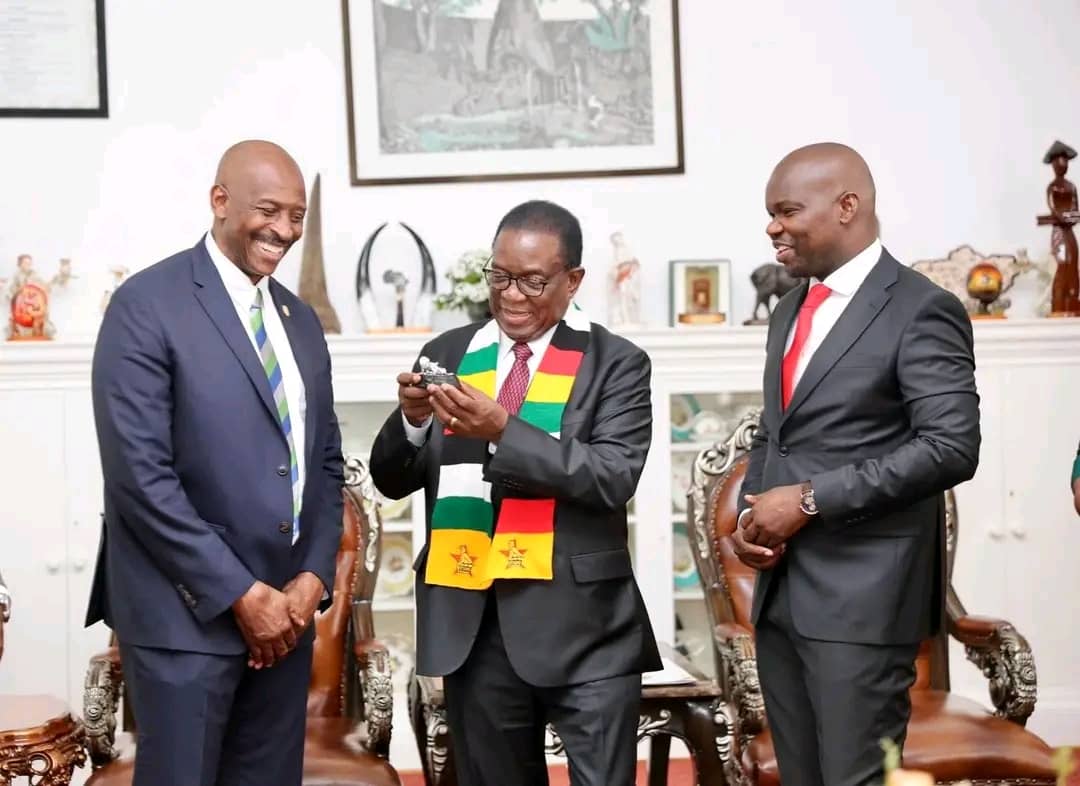
President Emmerson Mnangagwa hosted Herbert Mensah, President of Rugby Africa, at State House in Harare to celebrate the rising success of Zimbabwe’s national rugby team.
The high-level meeting focused on the Sables’ historic qualification for the 2027 Rugby World Cup in Australia. During the visit, the President praised the team for securing their place alongside South Africa national rugby union team as one of the continent’s primary representatives.
He described the achievement as a symbol of national resilience and excellence that extends beyond the sports field. Mr Mensah acknowledged Zimbabwe’s growing influence on the global rugby stage and highlighted the talent within the country’s local ranks.
President Mnangagwa also called on the entire nation to rally behind the Sables as they begin preparations for the global tournament.
The visit marks an important moment for Zimbabwean sport, as the country prepares to showcase its spirit and sporting talent to the world in 2027.
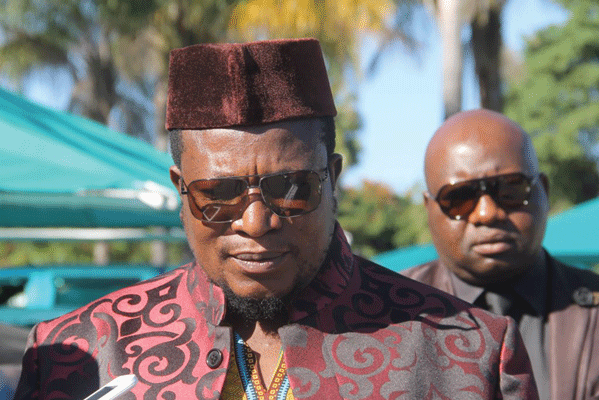
A well-known traditional healer has defended businessman and philanthropist Wicknell Chivayo following criticism on social media over why he has not renovated the rural home where he spent his childhood.
Renowned traditional healer Dr Kamwelo Banda said the criticism overlooks the deeper personal meaning behind Chivayo’s decision to keep the homestead in its original state.
The controversy began after Chivayo posted photos and a video of his family’s old house, a modest structure built in 1962, giving followers a glimpse into his humble beginnings before his rise to wealth.
The post quickly attracted attention online. While many praised his openness, some social media users questioned why the businessman known for gifting luxury cars and displaying a lavish lifestyle had not upgraded the property.
However, Banda explained that leaving the house unchanged should not be viewed as neglect but rather as a way of honouring personal history.
“This is about preserving memories, not ignoring the home,” Banda said. “Old houses hold stories of our lives the joy, the hardships and the dreams we once had. When we remove them completely, we also lose a part of who we are.”
In his social media post, Chivayo spoke about the emotional connection he still has to the homestead. He recalled childhood memories of sleeping on the floor in the small kitchen alongside his grandmother and siblings.
Although he said he has the means to replace the structure with a modern house, he believes doing so would erase an important piece of his past.
“These houses carry deep sentimental value. To me, they are like a museum,” Chivayo wrote, explaining that changing them would remove a powerful reminder of the journey that shaped him.
Banda urged people to view the homestead as a symbol of heritage rather than judging it as a reflection of wealth. He compared it to famous historical sites around the world that have been preserved in their original condition.
Among the examples he mentioned were the former home of Nelson Mandela in Soweto and the ancient ruins of Great Zimbabwe, both of which hold value because of their authenticity.
He also referred to the early home of Zimbabwe’s late former president Robert Mugabe in Highfield, which has long been recognised as a historical landmark.
Banda said historical sites retain their significance precisely because they are preserved rather than modernised.
“If we were to rebuild the pyramids in Egypt today, they would lose their meaning,” he said. “Their true power lies in the fact that they have remained unchanged.”
According to Banda, Chivayo’s decision to show his rural home is an important reminder that many success stories begin in modest circumstances.
He added that the images should inspire young people to embrace their roots rather than feel embarrassed by them.
“The key message is simple,” Banda said. “Never be ashamed of where you started. Your background does not limit your future it simply shows how far you have come.”

Dynamos, Highlanders Play Out Thrilling Draw in Season’s First Battle of Zimbabwe

Ngezi Platinum Stars Hold Defending Champions Scottland at Rufaro

Garwe to Commission Fire Tender, Equipment for Insiza, Umzingwane

Operation restore order

Masasi High School Abuse Scandal Sparks Public Outcry

Kuwadzana Man Jailed for Reckless Driving and Driving Without a Licence
-
 Current Affairs4 months ago
Operation restore order
-
 Crime and Courts6 months ago
Masasi High School Abuse Scandal Sparks Public Outcry
-
 Crime and Courts6 months ago
Kuwadzana Man Jailed for Reckless Driving and Driving Without a Licence
-

 Current Affairs8 months ago
Breaking: ZIMSEC June 2025 Exam Results Now Available Online
-
 Current Affairs7 months ago
Munhumutapa Day: Zimbabwe’s Newest Public Holiday Set for Annual Observance
-
 Current Affairs5 months ago
BREAKING NEWS: ZANU PF Director General Ezekiel Zabanyana Fired
-

 Current Affairs7 months ago
No Racism in Our Cricket: Government
-
 World News5 months ago
Burkina Faso Reaps $18 Billion in Gold Revenue Under Ibrahim Traoré’s Leadership