
Current Affairs
Sanganai/Hlanganani 2025 Draws Record Exhibitors
The Sanganai/Hlanganani/Kumbanayi World Tourism Expo 2025 officially opened in Mutare this morning, attracting a record 409 exhibitors and drawing heightened expectations from both seasoned players and first-time participants in Zimbabwe’s fast-evolving tourism sector.

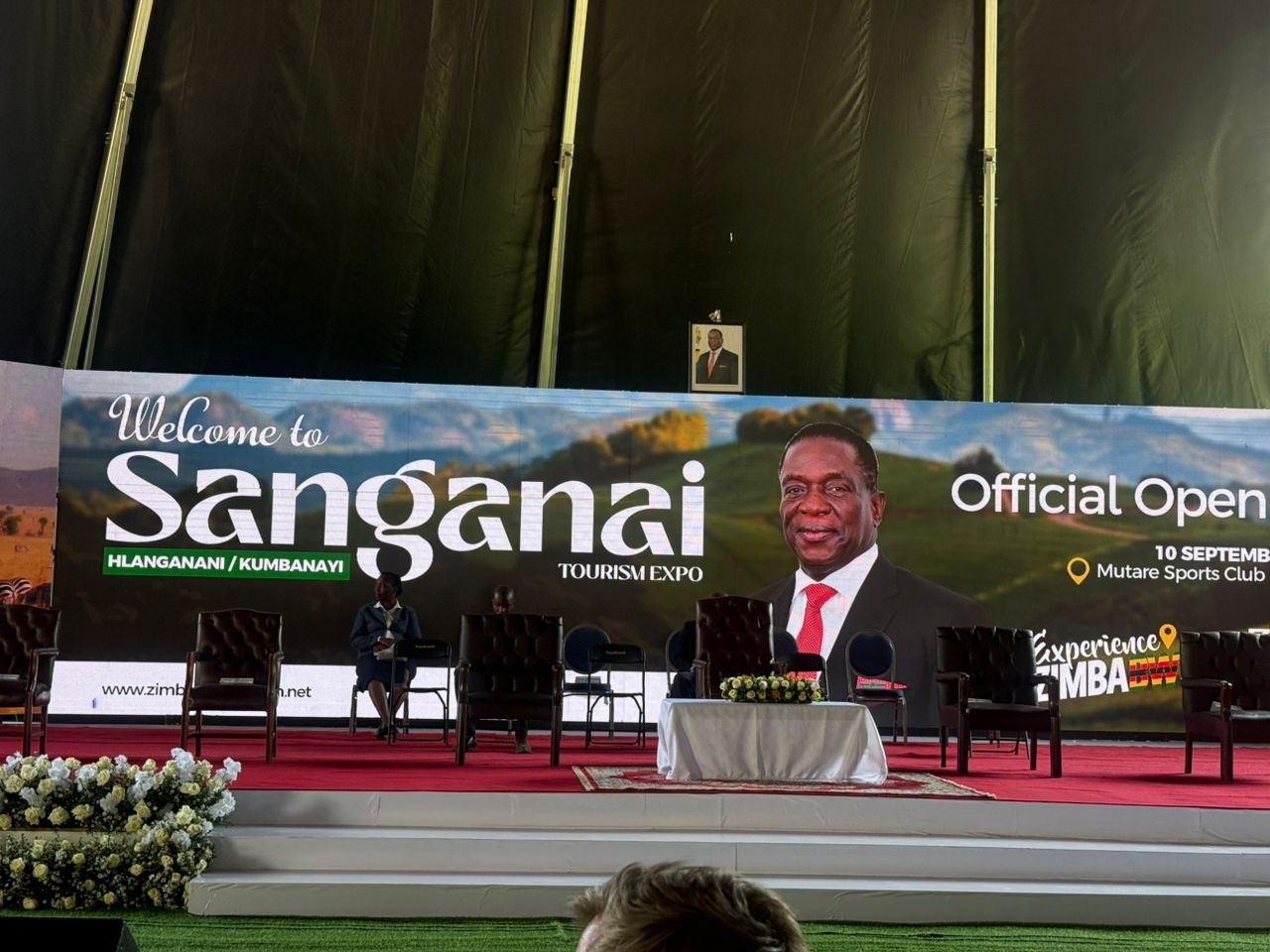
The Sanganai/Hlanganani/Kumbanayi World Tourism Expo 2025 officially opened in Mutare this morning, attracting a record 409 exhibitors and drawing heightened expectations from both seasoned players and first-time participants in Zimbabwe’s fast-evolving tourism sector.
Industry stakeholders have described this year’s edition as one of the most comprehensive in recent years, with exhibitors spread across all corners of the travel value chain. The breakdown includes 65 accommodation providers, 79 service providers and suppliers, and 72 rural and urban councils, underscoring the sector’s diversity.
Other notable categories include 40 travel agents and tour operators, 42 parastatals and government institutions, 31 tertiary institutions, and 25 small-to-medium enterprises (SMEs). International representation is also evident, with eight foreign exhibitors joining 11 airlines and 13 car hire and transport operators.
Among the new entrants is Platinum Peaks, a Victoria Falls-based operator that only launched in 2023. Manager Tariro Bigazhi said the expo marks a defining moment for the young company.
Platinum Peaks was established in 2023. We provide accommodation in the form of self-catering apartments at Victoria Falls Estate, with both two- and three-bedroom units,” she explained. “This is our first time at Sanganai, and we are confident the platform will help us market and sell our product. Beyond accommodation, we also arrange activities for clients and handle transfers, from Victoria Falls Airport to town and other local destinations.”
Her sentiments reflect the broader mood of optimism among exhibitors, many of whom see Sanganai not just as a showcase but as a launchpad for deeper engagement with international buyers.
Already, buyers from Japan, China, India, the USA, and the UAE have been touring key tourism sites, including those in Manicaland, ahead of the four-day exhibition. Organisers believe such engagements will help solidify Zimbabwe’s position as a competitive destination on the global tourism map.
The expo, which runs until the weekend, is expected to generate significant networking opportunities, business deals, and fresh exposure for Zimbabwe’s tourism assets, ranging from its iconic natural wonders to emerging community-based attractions







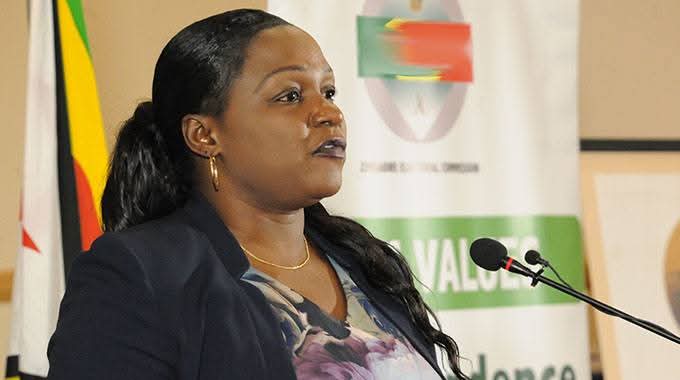
Attorney-General Virginia Mabiza has cautioned that members of Cabinet, including Vice Presidents, are not permitted to publicly contradict Government decisions, stating that those unable to align with official policy should consider stepping down.
Addressing the issue over the weekend, Mabiza pointed to the Constitution, noting that it enshrines the principle of collective responsibility, which requires all members of the Executive to uphold and defend Cabinet resolutions.
“The law is very clear in terms of how Ministers, Deputy Ministers and Cabinet should conduct themselves,” she said.
She referred to Sections 106 and 107 of the Constitution, explaining that Cabinet members answer both individually and collectively to the President.
According to Mabiza, each minister is tasked with managing their portfolio, executing Government policies, and implementing directives issued by the President in accordance with legal and procedural frameworks.
However, she emphasised that Cabinet functions as a unified body, meaning members must publicly support agreed positions, regardless of any private disagreements during deliberations.
“Once Cabinet adopts a policy, every Cabinet member must publicly support and defend it,” Mabiza said.
“If a minister can’t support a Cabinet decision, the obvious option is to resign.”
Mabiza also issued a warning against the disclosure of Cabinet discussions or attempts by members to distance themselves from official positions after decisions have been finalised.
“Discussions stay in Cabinet. A member is not allowed to leak or distance themselves later,” she said.
She further noted that the President holds ultimate authority over Cabinet members, with the power to discipline, reshuffle, demote, or dismiss individuals without dissolving the entire Cabinet.
“The President appoints and may remove ministers at his discretion,” Mabiza said, adding that ministers serve at the President’s pleasure under Section 104 of the Constitution.
Mabiza cited Nkosana Moyo as an example of a minister who chose to resign after determining he could no longer continue in Government.
She also revealed that Government is in the process of crafting legislation aimed at strengthening governance standards, including the introduction of a formal code of conduct for senior officials, in line with Section 106(3) of the Constitution.

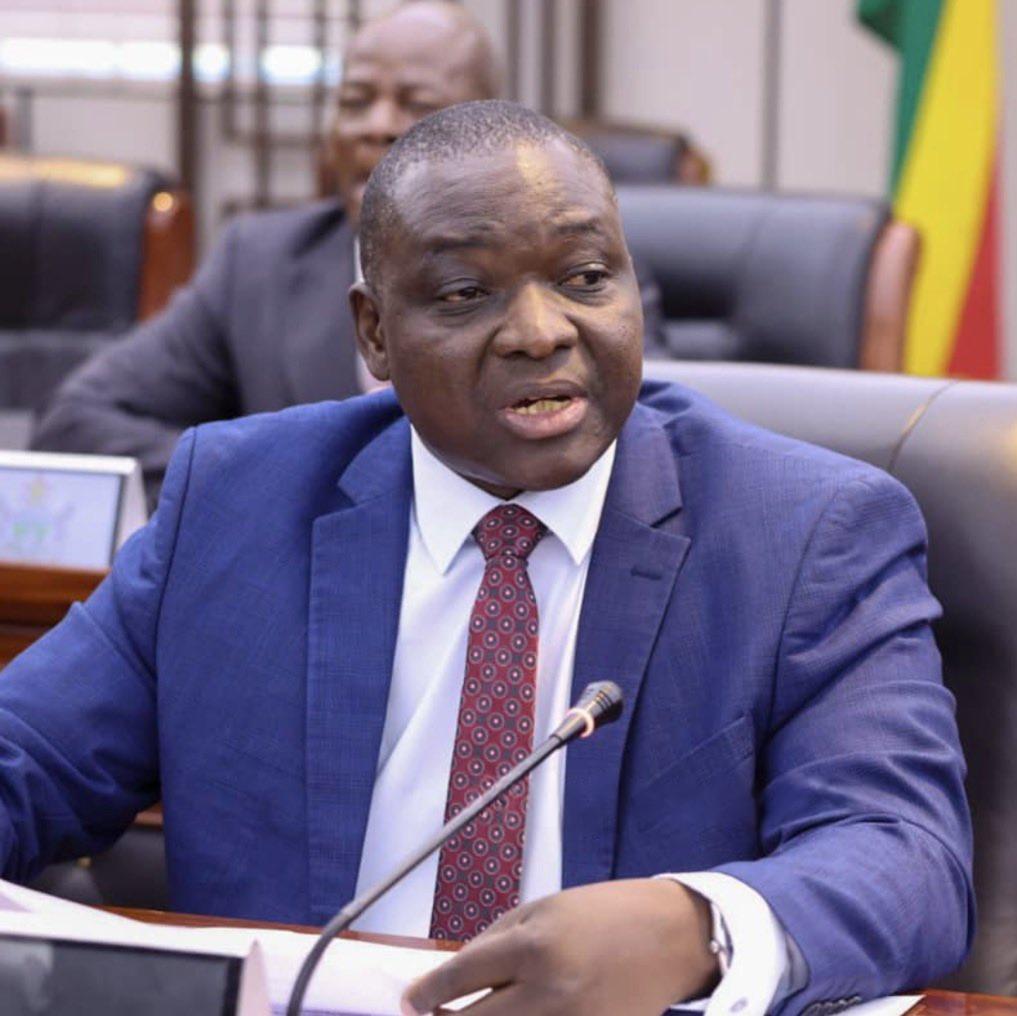
Harare, Zimbabwe – On the occasion of World Press Freedom Day, Hon. Dr. Z. Soda, Minister of Information, Publicity and Broadcasting Services, emphasized the fundamental value of a free, independent, and responsible press as a cornerstone of democratic society. In his statement, Minister Soda highlighted the government’s commitment to fostering an informed citizenry and uniting Zimbabwe through responsible journalism.
Minister Soda pointed to significant advancements in press freedom under the Second Republic, led by His Excellency Dr. E.D. Mnangagwa. These include the enactment of the progressive Freedom of Information Act, the operationalization of the independent Zimbabwe Media Commission, and the licensing of 40 new independent community and commercial radio stations. He stated that these developments have created a transparent environment for information, fostering trust in public institutions and recognizing an informed citizenry as essential for democracy.
Addressing the growing challenges posed by fake news, disinformation, and hyper-realistic manipulated content (deepfakes), Minister Soda issued a stern warning. He asserted that press freedom does not grant license “to lie, to manipulate, or to destroy.” The Minister stressed the ethical responsibility of every journalist, editor, and media house to verify information, correct errors, and reject sensationalism, ensuring that media serves as a vehicle for truth and not disinformation.
To counter the spread of misinformation, the government has initiated a national program to promote Media Literacy. This initiative aims to equip citizens with critical thinking skills to evaluate information, identify credible sources, and recognize manipulated content. Minister Soda underscored that media literacy is crucial, as press freedom alone is insufficient without an informed public. He reiterated that an empowered citizenry is the best defense against disinformation, and the program seeks to ensure all Zimbabweans become active, informed, and responsible consumers of media.
Furthermore, Minister Soda emphasized that press freedom should not be an excuse to import or propagate ideas alien to Zimbabwean values, traditions, and way of life. He highlighted the importance of honoring Zimbabwe’s rich cultural practices, including respect for elders, communal spirit, Ubuntu, languages, and heritage. He affirmed that the media has a sacred duty to be a custodian of Zimbabwean culture, telling national stories and celebrating heroes, while offering constructive critique rooted in love for the nation.
In closing, Minister Soda reiterated the Ministry of Information, Publicity and Broadcasting Services’ role as a partner, not an adversary, in building a better Zimbabwe. He encouraged all media workers, from veterans to rookies, to collaborate constructively and ensure that the nation remains unified. “Your work matters. Your freedom is precious. Protect it, and use it well,” he concluded, reinforcing the government’s dedication to a vibrant and responsible media landscape.

Harare, Zimbabwe – Zimbabwe’s National Pharmaceutical Company (NATPHARM), the critical backbone of the nation’s medicine supply chain, is in dire need of a substantial financial injection to avert a collapse that could severely impact public health.
This stark revelation emerged from Aspect Maunganidze, the Secretary for Health and Child Care, during a recent appearance before the Health and Child Care Portfolio Committee.
Maunganidze painted a grim picture for legislators, stating unequivocally that NATPHARM is currently in a precarious financial position and requires immediate intervention. “NATPHARM is currently not financially sound to deliver its mandate and there is a need for some form of capitalization at this stage,” he emphasized, highlighting the urgency of the situation.
In response to this looming crisis, the Ministry of Health and Child Care has already initiated efforts to secure emergency funding. Maunganidze confirmed that the ministry is actively mobilizing US$10 million through the Treasury for an immediate release. This sum is deemed crucial to “allow for immediate medicines to replenish stock,” a vital step to prevent further deterioration of medicine availability.
The financial woes extend to NATPHARM’s obligations to its suppliers. The company is currently burdened with approximately US$7.5 million in outstanding payments to two key contractors, IntraFAMO and Clean Planet.
As a wholly state-owned entity, NATPHARM’s mandate encompasses the procurement, warehousing, and distribution of all medicines and medical supplies to public health institutions nationwide. Its operational stability is thus intrinsically linked to the overall functionality and effectiveness of Zimbabwe’s healthcare system.
Further insights into NATPHARM’s struggles were provided by Maunganidze, who disclosed that the company significantly underperformed financially in 2025. Total revenue reached only US$25.5 million, falling substantially short of the projected US$36.2 million. While handling income slightly surpassed its budget at US$9.7 million (against US$9.1 million), sales revenue stood at US$15.8 million.
However, these figures are overshadowed by considerable liabilities and operational inefficiencies. Maunganidze pointed out a total debt of US$1.1 million and a staggering US$3 million worth of expired stock written off in 2025. Internal assessments indicate that a significant portion—nearly 80%—of this expired stock could have been salvaged with improved systems and more effective planning.
The Health Ministry also raised concerns about the persistent shortage of essential medicines in public health facilities. “The ministry expects that 50% of its institutions should at least be well stocked on tracer medicines. Currently, our performance is at about 47%,” Maunganidze reported, indicating a shortfall in critical drug availability.
Tracer medicines, along with the Vital, Essential, and Non-essential (VEN) classification system, are standard metrics used to evaluate the availability of crucial drugs and the efficiency of supply chain performance. NATPHARM’s current performance on the VEN system is 65%, which is below the minimum acceptable threshold of 70%. “We are generally below the levels on both the tracer medicines and on the VEN for us to be supplying medicines adequately for our institutions,” Maunganidze concluded, emphasizing the systemic challenges that continue to plague the nation’s pharmaceutical supply and distribution network.

Mzembi Granted Bail Over 2010 World Cup TV Donation Case

AG Mabiza: Ministers Must Back Cabinet Decisions or Resign

Ferguson Hospitalised as Manchester United Edge Liverpool FC in 3-2 Thriller

Operation restore order

Masasi High School Abuse Scandal Sparks Public Outcry

Kuwadzana Man Jailed for Reckless Driving and Driving Without a Licence
-
 Current Affairs6 months ago
Operation restore order
-
 Crime and Courts7 months ago
Masasi High School Abuse Scandal Sparks Public Outcry
-
 Crime and Courts7 months ago
Kuwadzana Man Jailed for Reckless Driving and Driving Without a Licence
-

 Current Affairs9 months ago
Breaking: ZIMSEC June 2025 Exam Results Now Available Online
-

 Current Affairs8 months ago
Munhumutapa Day: Zimbabwe’s Newest Public Holiday Set for Annual Observance
-

 Current Affairs7 months ago
BREAKING NEWS: ZANU PF Director General Ezekiel Zabanyana Fired
-

 Current Affairs9 months ago
No Racism in Our Cricket: Government
-

 World News7 months ago
Burkina Faso Reaps $18 Billion in Gold Revenue Under Ibrahim Traoré’s Leadership