
Uncategorized
Judicial Service Commission Honors Late Justice Chinhengo


The Judicial Service Commission (JSC) of Zimbabwe has announced the passing of Honourable Justice Moses Hungwe Chinhengo, a former High Court judge.
Mourners are gathered at Chinhengo Farm in the Nyaningwe area of Masvingo Province.
Chief Justice Luke Malaba, Chairperson of the JSC, along with commissioners, judges, magistrates, and JSC members, expressed their deepest condolences to the Chinhengo family.
Justice Chinhengo, born on October 29, 1955, in Masvingo Province, served as a High Court judge in Zimbabwe from February 26, 1996, to February 29, 2004.
ALSO READ: Woman Remanded for Enabling Teen’s Sexual Exploitation in Chiredzi
He later held judicial positions in Botswana and Lesotho and served as an Acting Judge of the High Court of Namibia.
A graduate of the University of Zimbabwe with a Bachelor of Laws (Honours) degree in 1978, Justice Chinhengo held significant roles early in his career, including Undersecretary at the Ministry of Justice and Foreign Affairs from 1980 to 1982 and head of the Department of Parliamentary Affairs and Justice Department in 1983.
Before his judicial appointment, he worked as a legal officer in the Ministry of Justice, as a legal practitioner, and as a corporate executive.
Burial arrangements will be announced in due course.
The JSC and the legal community mourn the loss of a distinguished jurist whose contributions to Zimbabwe’s judiciary and beyond will be remembered.
ALSO READ: SRC Director General Nengomasha Steps Down, Mudzimiri Appointed Acting Head

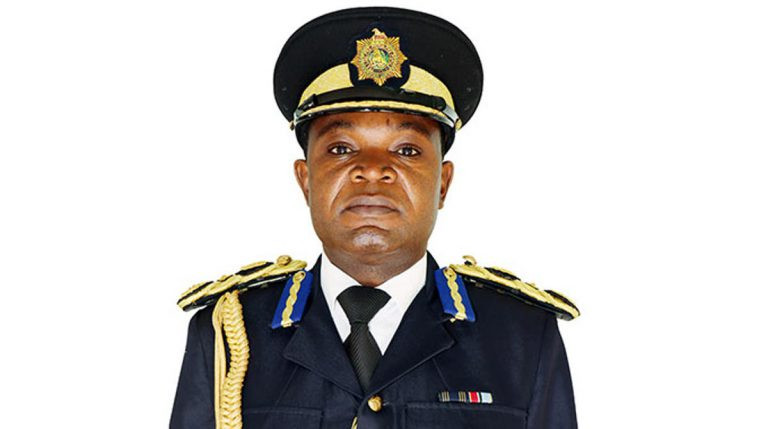
The ongoing operation by the Zimbabwe Republic Police (ZRP) has resulted in the impounding of more than 1,000 vehicles across the country.
The operation is targeting vehicles that are operating without proper licences, those without number plates, and motorists who are illegally using blue lights and sirens. Police say the exercise is meant to restore order on the roads and ensure that all motorists follow traffic laws.
However, there are growing calls for the operation to also focus on commuter omnibuses, commonly known as kombis, especially in Harare.
Reports indicate that about 16,000 kombis are currently operating in the capital city, but only around 3,000 are officially registered and insured. This situation has raised concerns about passenger safety and road management.
Unregistered and uninsured vehicles pose serious risks because passengers may not receive compensation in the event of accidents. In addition, many kombi drivers have been accused of reckless driving, illegal parking, and picking up or dropping off passengers at undesignated points.
Transport observers say these practices not only endanger lives but also contribute to traffic congestion in the city.
There are now calls for authorities to launch a high-level operation targeting illegal kombi operators in order to improve safety, enforce regulations, and bring order to the public transport system.
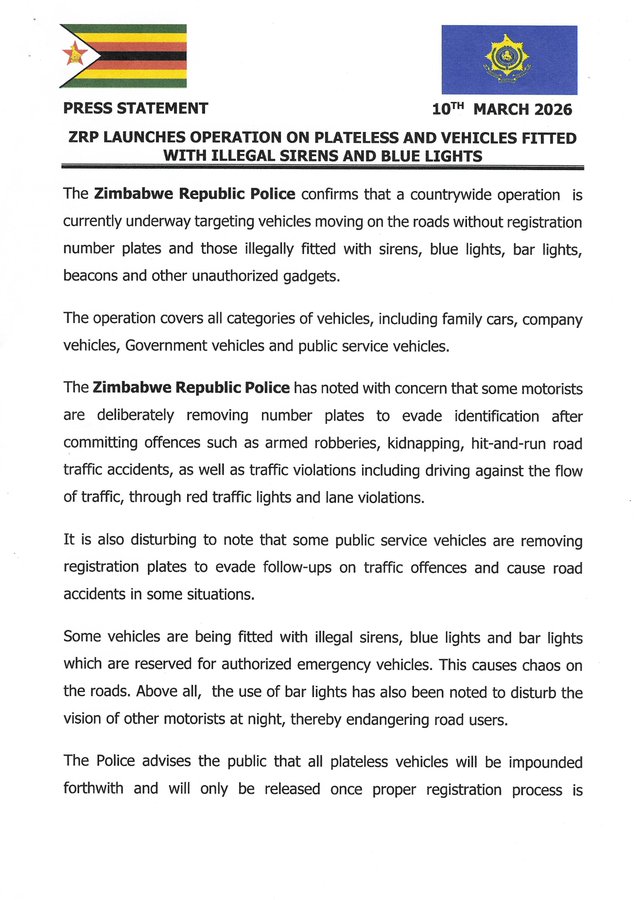
The Zimbabwe Republic Police (ZRP) has launched a nationwide operation targeting vehicles without number plates and those fitted with illegal sirens, blue lights, bar lights, beacons and other unauthorised gadgets.
National police spokesperson Assistant Commissioner Paul Nyathi said the operation is aimed at curbing crime and restoring order on the country’s roads.
Nyathi said some motorists deliberately remove number plates to avoid being identified after committing crimes.
“Some drivers are removing number plates to evade identification after committing offences such as robberies, kidnappings, hit-and-run accidents and other traffic violations like driving against traffic or running red lights,” he said.
He said the police operation will target all types of vehicles, including private vehicles, company vehicles, government vehicles and public service vehicles.
Nyathi warned that any vehicle found without number plates will be impounded immediately.
“All vehicles without number plates will be impounded and will only be released after the owners have properly registered them and fitted valid number plates,” he said.
He added that police officers will also remove illegal sirens, blue lights, bar lights, beacons and other unauthorized gadgets on the spot.
Nyathi urged motorists to comply with traffic regulations and ensure their vehicles are properly registered to avoid penalties as the operation is rolled out across the country.
The Cabinet has approved a sweeping package of agricultural, industrial, and economic reforms aimed at boosting production, strengthening consumer protection, and accelerating progress toward the country’s Vision 2030 development agenda.
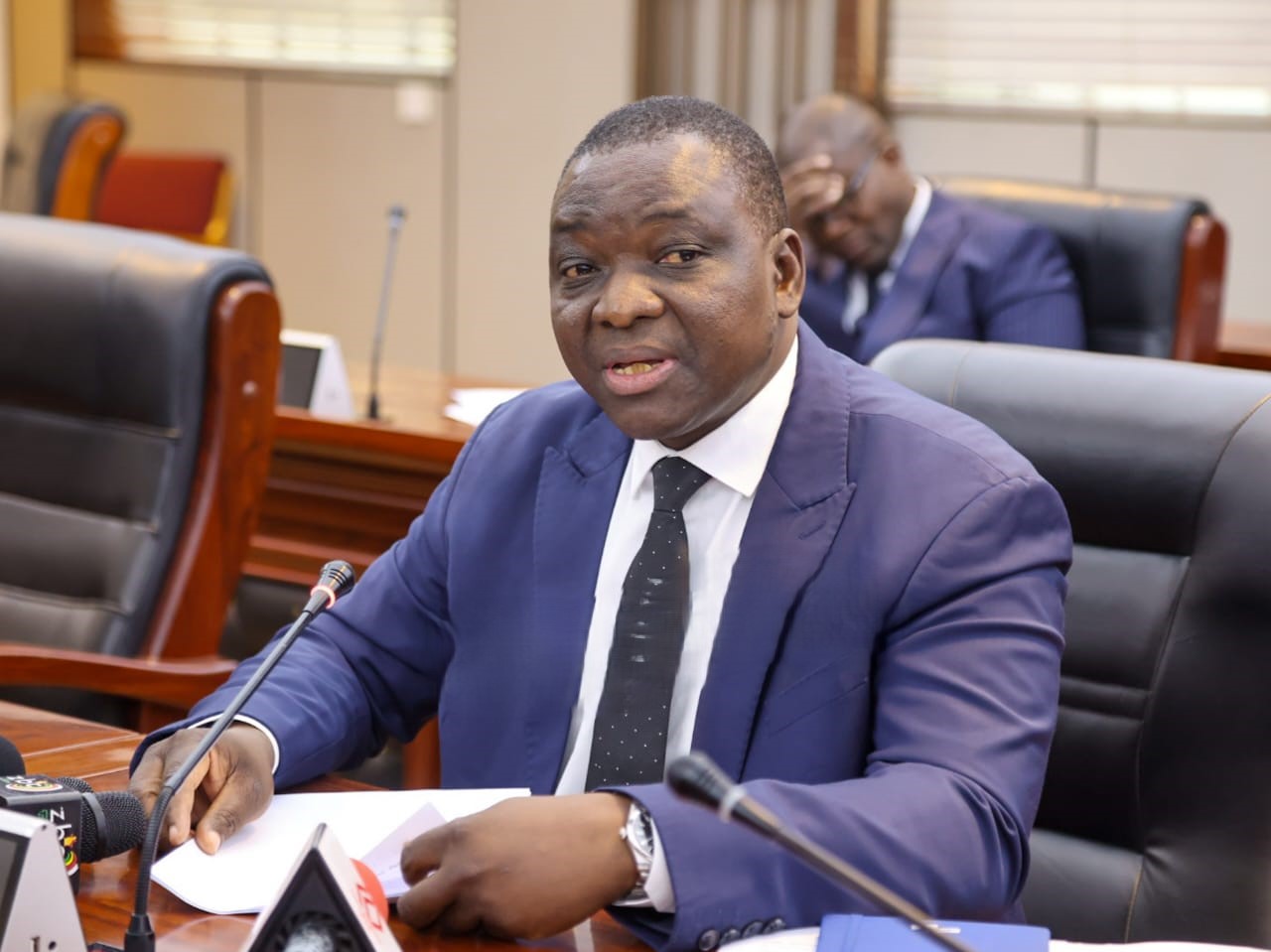
The outcomes of the Fifth Post-Cabinet Meeting, chaired by President Emmerson Mnangagwa, were announced on Tuesday by Minister Soda Zhemu, who presented the Cabinet briefing outlining key policy decisions and development programmes.
Winter Production Plan Targets Record Harvest
Central to the Cabinet resolutions is the 2026 Winter Production Plan, which seeks to expand agricultural output and secure national food supplies through intensified irrigation farming.
Under the programme, Zimbabwe will cultivate 125,000 hectares of wheat, 6,500 hectares of barley, and 9,000 hectares of Irish potatoes during the winter season.
Government projections indicate wheat production will reach 662,500 metric tonnes, exceeding the country’s annual national requirement of 615,000 tonnes.
Barley output is expected to reach 45,500 metric tonnes, while Irish potatoes are projected at 243,850 metric tonnes.
The programme forms part of the Agriculture Food Systems and Rural Transformation Strategy 2, which focuses on sustainable production, climate resilience and rural industrialisation.
Authorities say the plan will be supported by monitoring 21 key enablers, including electricity supply, irrigation water, seed availability, fertiliser distribution, fuel supply and mechanisation.
603 Development Projects Rolled Out
Cabinet also approved a nationwide Rapid Results Initiative programme consisting of 603 projects to be implemented across ministries, departments and government agencies during 2026.
The projects will be rolled out in three implementation cycles between February and December.
According to the Cabinet briefing, 206 projects will be executed during the first 100-day cycle, 203 in the second, and 174 in the final phase.
The initiatives target infrastructure development, economic transformation and improved service delivery, with priority given to historically underserved regions such as Binga, Kanyemba, Chikombedzi and Tsholotsho.
Harare will host the largest number of projects with 97 initiatives, followed by Matabeleland South with 60, Mashonaland West with 52, and Matabeleland North with 51.
New Industrial Policy Targets Manufacturing Growth
Cabinet further approved the Zimbabwe National Industrial Development Policy 2 (2026-2030), a strategy designed to revitalise the country’s manufacturing sector and drive industrial transformation.
The policy aims to increase manufacturing growth from 2.2 per cent to over 5 per cent annually by 2030 while expanding the sector’s contribution to the national economy.
The government also intends to raise the manufacturing sector’s contribution to GDP from US$7 billion to US$12 billion and increase exports from US$470 million to US$1 billion.
Other targets include boosting industrial capacity utilisation from 51 per cent to 60 per cent and expanding value-added production in key sectors.
The strategy will integrate digital technologies and artificial intelligence into industrial processes, while strengthening Special Economic Zones and supporting small and medium enterprises.
Consumer Protection Policy Introduced
Cabinet also adopted a new Consumer Protection Policy (2026-2030) to strengthen consumer rights and regulate the supply of goods and services in Zimbabwe’s marketplace.
The policy introduces stronger enforcement measures against counterfeit and illicit trade, improves dispute resolution mechanisms and enhances oversight of digital commerce and e-commerce transactions.
Officials say the framework will also promote fair trading practices and improve product safety standards.
International Agreements Strengthen Cooperation
Zimbabwe also approved two international agreements aimed at expanding cooperation in education and technology.
A Memorandum of Understanding with Equatorial Guinea will facilitate academic exchanges, student enrolment and mutual recognition of qualifications between institutions in the two countries.
Another agreement with Tajikistan focuses on collaboration in technology transfer, construction, water supply infrastructure and disaster risk management systems.
Driving Vision 2030
Government officials say the combined policy package is designed to accelerate economic growth and improve living standards as Zimbabwe pursues its ambition of becoming an upper-middle-income economy by 2030.
“The projects were selected based on their potential to significantly contribute to the aspirations of Vision 2030 and improve the livelihoods of citizens,” the Cabinet briefing stated.

Ngezi Platinum Stars Hold Defending Champions Scottland at Rufaro

Garwe to Commission Fire Tender, Equipment for Insiza, Umzingwane

State Moves to Compel Walter Magaya to Plead in Court

Operation restore order

Masasi High School Abuse Scandal Sparks Public Outcry

Kuwadzana Man Jailed for Reckless Driving and Driving Without a Licence
-
 Current Affairs4 months ago
Operation restore order
-
 Crime and Courts6 months ago
Masasi High School Abuse Scandal Sparks Public Outcry
-
 Crime and Courts6 months ago
Kuwadzana Man Jailed for Reckless Driving and Driving Without a Licence
-

 Current Affairs8 months ago
Breaking: ZIMSEC June 2025 Exam Results Now Available Online
-

 Current Affairs7 months ago
Munhumutapa Day: Zimbabwe’s Newest Public Holiday Set for Annual Observance
-

 Current Affairs5 months ago
BREAKING NEWS: ZANU PF Director General Ezekiel Zabanyana Fired
-

 Current Affairs7 months ago
No Racism in Our Cricket: Government
-

 World News5 months ago
Burkina Faso Reaps $18 Billion in Gold Revenue Under Ibrahim Traoré’s Leadership