
Presidential Affairs
“Go well, General Officer, Commander and Patriot” — President Mnangagwa

By Itai Mazire
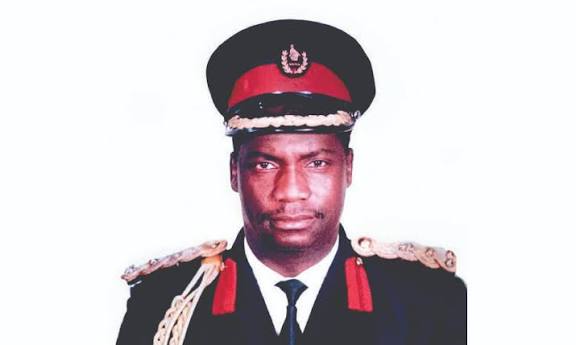
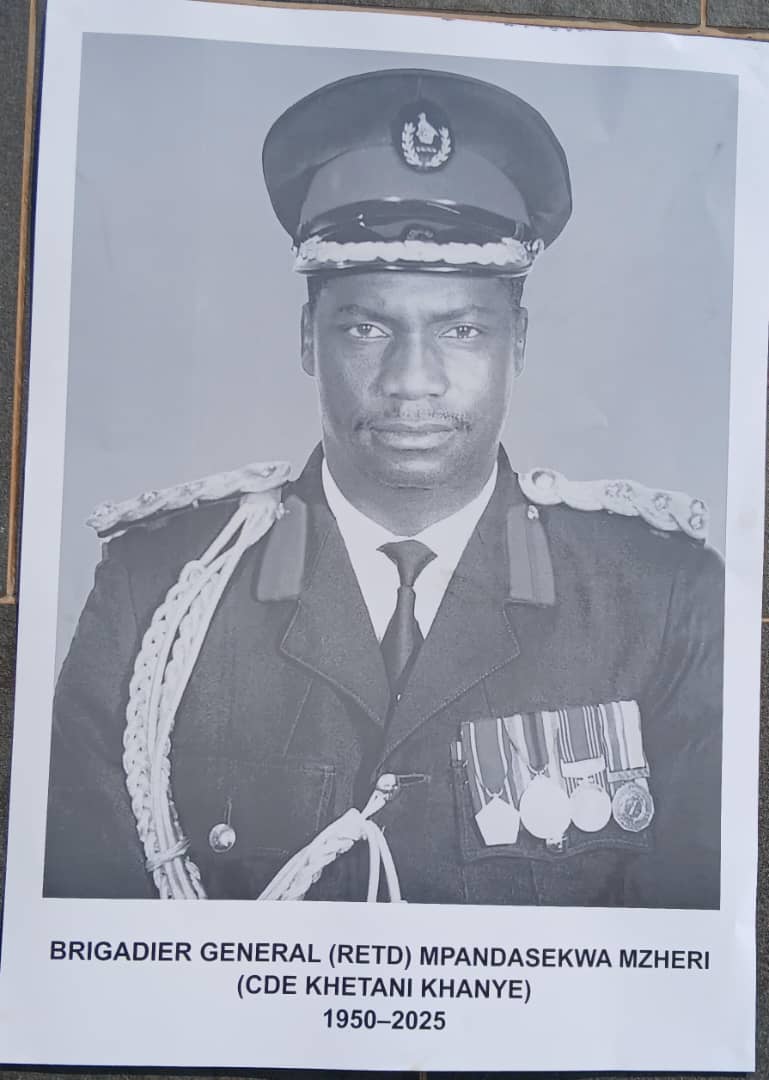
President Emmerson Mnangagwa has made a clarion call to the nation to take heed and follow in the footsteps of courage, bravery, and patriotism shown by the late decorated military officer, Brigadier General (Rtd) Mpandasekwa Mzheri.
Brig Gen Mzheri, whose Chimurenga name was Cde Khetani Khanye, passed away in Harare at the age of 75.
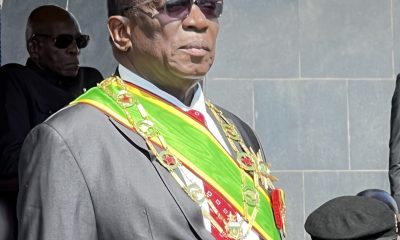
Addressing thousands of mourners gathered at the National Heroes Acre, President Mnangagwa extended heartfelt condolences to the bereaved Mzheri family on behalf of the people of Zimbabwe, the Government, and ZANU PF.
“I challenge the nation to be inspired by the life of our National Hero, which is a testament to courage, bravery, focus, discipline on the battlefield, hard work, professional probity, as well as steadfast service to one’s country.
Fellow mourners, ladies and gentlemen, the late National Hero, Brigadier General (Rtd) Mpandasekwa Mzheri, will always be remembered as one of the most decorated military officers produced by our country.
I say to you, Cde Khetani Khanye your professional conduct, whose qualities were based on honesty, integrity, humility, loyalty, enthusiasm, and leadership must inspire many to carry our beloved motherland, Zimbabwe, forward.”
The President added that the nation continues to benefit from the wisdom, expertise, and professionalism of men and women in the mould of the late National Hero and other veterans of the liberation struggle.
“In honour of our national heroes and heroines, the security sector and the Defence Forces in particular are called upon to draw inspiration from the cadres, commanders, and officers of yesteryear as we advance our national interests and protect our independence and sovereignty.
On its part, the ZANU PF-led Government remains unwavering in its quest to consolidate national unity, harmony, and the virtues of servant leadership as well as hard, honest work.
Our enduring philosophy, Nyika inovakwa, inotongwa, inonamatigwa nevene vayo! (Ilizwe lakhiwa, libuswe, likhulekelwe ngabanikazi balo) is a continuous call to action,” said President Mnangagwa.
Brigadier General (Rtd) Mzheri was born on 7 March 1950 in Mberengwa District. He began his education at Rengwe Lower Primary School in 1959, then proceeded to Mnene Primary School in 1964, before enrolling at Manama Secondary School in 1967.
After completing his secondary education in 1970, he attended Esigodini Agricultural College. He later trained and worked at Sable Chemical Industries Limited as a Plant Operator between 1972 and 1974.
Despite his academic qualifications and technical skills, the youthful Mzheri left Rhodesia in 1974 for Zambia, where he joined the Liberation Struggle under the Zimbabwe People’s Revolutionary Army (ZIPRA).
He received his initial military training at Mwembeshi Military Camp before proceeding to Mgagao Camp in Tanzania and later Morogoro Training Camp in 1975 for advanced military training.
President Mnangagwa noted that Mzheri’s leadership potential saw him selected for officer training in the Union of Soviet Socialist Republics (USSR).
“Upon his return in 1977, he was appointed Deputy Commander at Freedom Camp. In 1978, he became an Administrator in the ZAPU Presidency under the leadership of Father Zimbabwe, the late Vice President Dr. Joshua Mqabuko Nyongolo Nkomo.
In recognition of his understanding of the role and significance of the military in statecraft, he participated in the Lancaster House Peace Talks as a Military Advisor in 1979.
The late General Officer later became a member of the ZIPRA High Command in the Training Department,” said President Mnangagwa.
At independence in 1980, Mzheri was among the first 18 ex-combatants to be integrated into the Zimbabwe National Army (ZNA).
“On 16 April 1981, he was attested at the rank of Colonel, after which he was promoted to Brigadier General in 1987.
The late National Hero, Brigadier General (Rtd) Victor Mpandasekwa Mzheri, attended all requisite career courses within the Defence Forces, which complemented his leadership skills and resulted in his appointment as the first Commandant at Inkono Garrison.
Later, he was entrusted with the command of Harare District and subsequently the 1 Infantry Brigade, as well as the Special Taskforce for Mozambique. He also served as Director General of Administration and Finance in the Democratic Republic of Congo (DRC).
During his illustrious career, he played an important role as Brigadier General, serving with loyalty and unwavering patriotism toward our beloved country, Zimbabwe,” said the President.







Takudzwa Karowangoro
Zimbabwe has formally pulled out of talks on a proposed US$350 million health-financing deal after President Emmerson Dambudzo Mnangagwa ordered an immediate suspension of the negotiations, citing serious concerns over national sovereignty.
The decision was communicated in a letter dated December 23, authored by Ambassador A.R. Chimbindi, the Secretary for Foreign Affairs and International Trade, and addressed to senior officials in the finance and health ministries. The move effectively ends months of engagement between Harare and the United States under Washington’s America First Global Health Strategy, which was being positioned as a new framework for future assistance.
Zimbabwean authorities took issue with provisions in the draft memorandum of understanding that would have granted the US long-term access to the country’s health data. Officials argued that such access posed risks to sensitive population-level information and amounted to undue external intrusion.
In the letter, Chimbindi stated that the President had directed government to immediately abandon discussions on what was described as a heavily skewed agreement that “compromises and undermines the sovereignty and independence of Zimbabwe.”
Negotiators were also alarmed by proposals to link Zimbabwe’s critical minerals sector to the health funding arrangement. Government advisers warned that such an inclusion could allow Washington indirect leverage over strategic economic sectors unrelated to public health but vital to Zimbabwe’s long-term development prospects.
While the draft agreement sparked resistance in Harare, the United States has made progress elsewhere, with more than a dozen African countries reportedly signing similar health cooperation deals.
By the time of publication, the US Embassy in Harare had not issued a response to requests for comment.
Government officials framed Zimbabwe’s withdrawal as a principled position on global health governance. They argued that entering into a bilateral health framework with Washington would be inconsistent with the country’s commitment to multilateral cooperation, especially given the US decision to distance itself from the World Health Organization during the administration of Donald Trump.
Officials maintained that endorsing a parallel health architecture would effectively legitimise a shift they believe weakened the global health system.
Zimbabwe’s stance, however, comes at a sensitive time. As the country disengages from Washington’s new funding model, it also faces the possibility of reduced American humanitarian support.
With the scaling down of USAID operations and internal US State Department signals pointing to an orderly withdrawal from several African countries, Zimbabwe risks losing long-standing assistance for HIV treatment, nutrition initiatives, and other essential programmes previously classified as lifesaving.
Itai Mazire
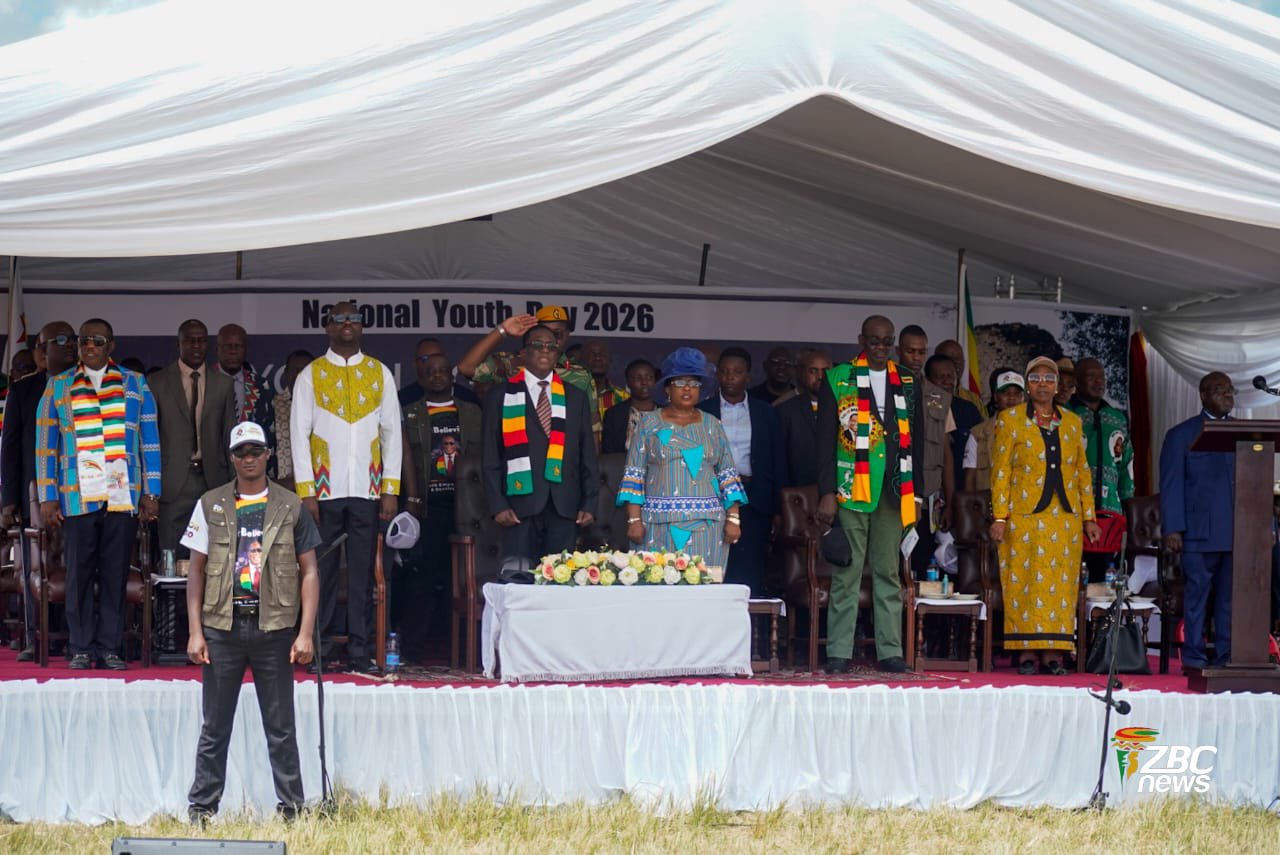
They came in their thousands a sea of young faces waving party regalia, chanting and dancing under the African sun.
From the streets of high-density suburbs to the remote villages of Mashonaland East, Zimbabwe’s youth descended on Igava Training Centre on Saturday, filling the air with a patriotism that moved even the President.
For a moment, as Emmerson Mnangagwa stepped onto the podium to commemorate National Youth Day, the roars of “Pamberi ne ZANU-PF” drowned out the wind sweeping across the vast grounds.
These were the children of the liberation struggle, and the message to them was clear — the fight is not over; it has simply changed form.
In a speech that alternated between paternal encouragement and revolutionary fire, the President warned the young generation to remain vigilant against what he described as a new wave of colonial influence.
“The shameful agenda of saboteurs, sell-outs and counter-revolutionaries, who seek to advance a neo-imperial agenda for ‘a few pieces of silver and false fame’, will never succeed.”
“As a sovereign nation and independent people, we make no apologies for our sacred duty to continuously defend and advance our national interest,” said President Mnangagwa.
The President, who is also First Secretary of ZANU-PF, commended the youth for their massive turnout, seeing in their energy a reflection of the revolutionary spirit of the 1970s.
However, he warned them against becoming spectators in their own future.
“Through political education, mobilisation and visibility, continuously win more young people into Party structures. Resist the temptation of being visible only during such commemorations.”
Beyond politics, there was a raw, parental plea. As grandmothers in the crowd nodded in agreement, Mnangagwa addressed the creeping crisis of drug and substance abuse that has consumed too many young lives.
“Regai mutoriro, tumbwa, mbanje ne guka. Resist, reject drug and substance abuse,” he said emphatically, switching between Shona and English for impact.
“The future of Zimbabwe is in your hands.”
The event was not just about rhetoric. The President toured exhibitions showcasing youth innovations in agriculture, technology and the arts, praising graduates of the Youth Service Programme.
He acknowledged that while the vision of an empowered, upper-middle-income society by 2030 is ambitious, it is attainable if the youth remain disciplined and industrious.
“You are not merely spectators in our ongoing development journey; you are active participants, demonstrating remarkable leadership,” he said.
For 22-year-old Tariro Moyo, a vocational training graduate from Manicaland who travelled to attend, the President’s words were personal.
“He spoke to us like we are his own children. He reminded us that we own this country. That means something,” she said, clutching a small Zimbabwean flag.
As the sun dipped behind the training centre, the celebrations continued.
But the message lingered: the youth are the wall against which enemies of the state will break.
“Nyika inovakwa, inotongwa, inonamatigwa nevane vayo,” said President Mnangagwa.
The land is built, ruled and prayed for by its owners.

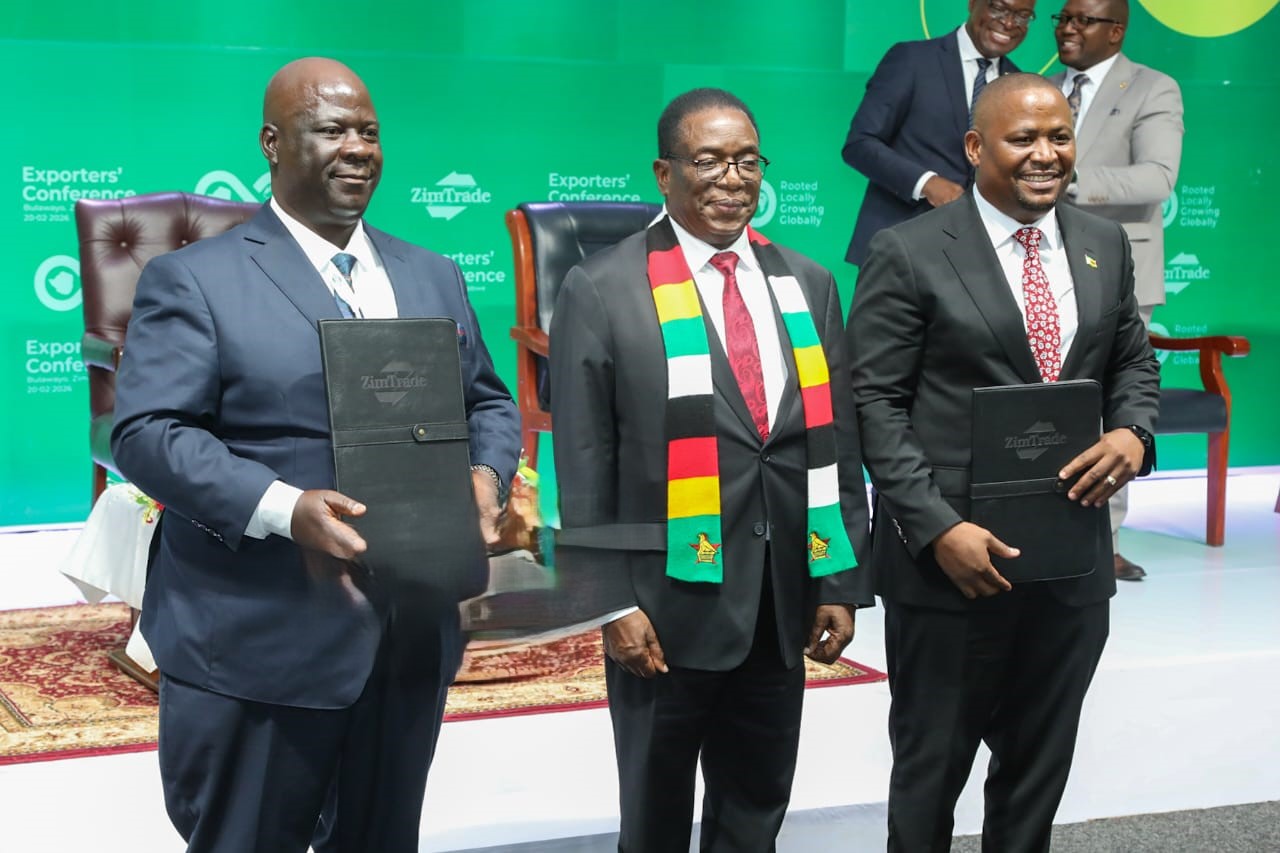
Zimbabwe’s export sector is surging ahead under the Second Republic, with President Emmerson Mnangagwa rallying industry leaders to deepen value addition and accelerate industrialisation as the country recorded a 30 per cent rise in exports in 2025.
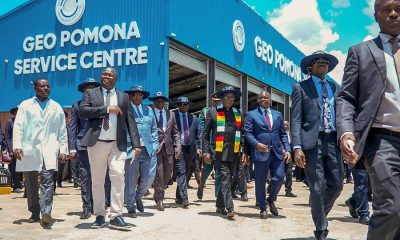
Officially opening the 2025 ZimTrade Annual Exporters’ Conference at the Zimbabwe International Trade Fair (ZITF) in Bulawayo, President Mnangagwa said export-led growth was now central to the country’s transformation agenda under National Development Strategy 2 (NDS2).
Speaking under the theme “Rooted Locally, Growing Globally,” the President reaffirmed his administration’s commitment to building a competitive, diversified and value-driven export economy.
“Dependence on raw exports is no longer sustainable nor desirable. We must earn more from every tonne, every kilogramme, and every product we export,” President Mnangagwa said.
In a strong endorsement of Government reforms, ZimTrade Chief Executive Officer Mr Allan Majuru revealed that Zimbabwe’s exports rose sharply in 2025.
“Zimbabwe’s export performance has recorded encouraging growth. For the period January to December 2025, the country’s exports stood at US$9.71 billion, representing a 30% increase from the US$7.43 billion recorded over the same period in 2024,” Mr Majuru said.
The impressive growth reflects the impact of macroeconomic stability, targeted incentives, trade facilitation reforms and sustained investment in productive sectors championed by the Government.
President Mnangagwa underscored that Zimbabwe is decisively shifting from exporting raw materials to processing and beneficiation across key sectors.
In mining, he reiterated that Zimbabwe will no longer be content with exporting unprocessed minerals, with policy now firmly focused on local processing, downstream industries and technology transfer.
Agriculture is also transforming, with the tobacco industry moving from raw leaf exports toward finished cigarettes and related products. Revitalisation of the cotton-to-clothing value chain, expansion of horticulture exports and livestock production for leather beneficiation are being prioritised.
The President further challenged stakeholders to unlock greater value from forestry resources and expand production of processed foods, beverages, pharmaceuticals, engineering products and steel under the “Made in Zimbabwe” brand.
The Second Republic’s Whole-of-Government Approach to export competitiveness is yielding tangible results.
Key reforms include the Zimbabwe Electronic Single Window platform, which has significantly reduced paperwork and clearance times for exporters, enhancing efficiency and productivity.
Massive infrastructure development—spanning road rehabilitation, trade corridors, rail modernisation and logistics upgrades—is positioning Zimbabwean goods to reach regional and global markets more efficiently.
The President reaffirmed Zimbabwe’s practical and results-oriented commitment to the African Continental Free Trade Area (AfCFTA), urging businesses, particularly SMEs, to seize emerging regional opportunities.
In line with the national development philosophy of “leaving no one and no place behind,” President Mnangagwa stressed that export growth must benefit youth, women, rural producers and SMEs.
As the nation prepares to commemorate National Youth Day on February 21, he challenged young entrepreneurs to become innovators, digital traders and global exporters of value-added Zimbabwean goods and services.
Established corporates were urged to mentor and integrate youth into export value chains to ensure sustained industrial growth.
President Mnangagwa said Zimbabwe’s economic diplomacy thrust remains firmly focused on converting international relations into markets, investments and technology partnerships.
He directed ZimTrade and the Ministry of Foreign Affairs and International Trade to accelerate the establishment of warehousing and logistics facilities in strategic markets to enhance export penetration within the region, across Africa and beyond.
Declaring the conference officially open, the President called for unity and determination in advancing the country’s transformation agenda.
“Sector by sector, province by province, we all have the capacity to build a value-added, diversified and competitive export economy under National Development Strategy 2,” he said.
With exports surging and reforms firmly in motion, Zimbabwe’s path toward sustained industrialisation and upper-middle-income status continues to gain momentum under the Second Republic.

“No Matter Where They Are in SA” — Govt Vows Full Medical Support for Zimbabweans

DIABETES CURE… OR THE BEGINNING OF THE END FOR INSULIN DEPENDENCE?

HIV Network Raises Concern Over Halted US Health Funding Talks

Operation restore order

Masasi High School Abuse Scandal Sparks Public Outcry

Kuwadzana Man Jailed for Reckless Driving and Driving Without a Licence
-
 Current Affairs3 months ago
Operation restore order
-
 Crime and Courts5 months ago
Masasi High School Abuse Scandal Sparks Public Outcry
-
 Crime and Courts5 months ago
Kuwadzana Man Jailed for Reckless Driving and Driving Without a Licence
-
 Current Affairs7 months ago
Breaking: ZIMSEC June 2025 Exam Results Now Available Online
-
 Current Affairs6 months ago
Munhumutapa Day: Zimbabwe’s Newest Public Holiday Set for Annual Observance
-
 Current Affairs5 months ago
BREAKING NEWS: ZANU PF Director General Ezekiel Zabanyana Fired
-
 Current Affairs6 months ago
No Racism in Our Cricket: Government
-
 Current Affairs6 months ago
Government Bans Tinted Car Windows in Nationwide Crime Crackdown