
World News
Mali Imposes $10,000 Visa Bond on US Nationals in Reciprocal Move

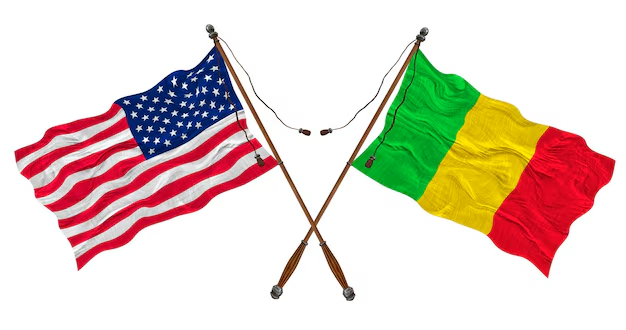
Mali has announced that United States nationals visiting the West African country will now be required to post a bond of up to $10,000 (£7,500) when applying for business or tourist visas.
The move is in direct response to a similar visa bond programme introduced by the Trump administration targeting citizens of several countries, including Mali.
The US Embassy in Mali confirmed on Friday that Washington had imposed the fee to reinforce its “commitment to protecting America’s borders and safeguarding US national security.”
In a swift reaction, Mali’s Ministry of Foreign Affairs said on Sunday that the visa bond had been imposed “unilaterally” by the US, prompting Bamako to adopt an identical policy for American visitors.
“The government of Mali has decided to establish an identical visa programme for United States citizens,” the ministry said in a statement.
The policy change comes at a time when both nations have been attempting to mend strained relations. In July 2025, senior US officials visited Bamako to discuss counterterrorism cooperation, economic partnerships, and possible access to Mali’s gold and lithium reserves resources seen as crucial for global clean energy supply chains.
However, relations between Mali and the US deteriorated following the 2021 military coup, which brought Gen. Assimi Goïta to power. The transitional government shifted its alliances away from Western partners, forging closer military and economic ties with Russia.
Mali later expelled French troops and welcomed Russian Wagner Group mercenaries, who have since been replaced by the Africa Corps, a unit now under Moscow’s defence ministry.
The latest visa dispute mirrors growing diplomatic friction between Washington and several West African states led by military governments.
Just last week, Burkina Faso’s foreign minister Karamoko Jean-Marie Traoré accused the US Embassy in Ouagadougou of “blackmail” after the US suspended visa issuance in the country. The suspension reportedly followed Burkina Faso’s refusal to accept deported migrants from the United States.
Observers say the developments underscore the growing rift between Washington and the Alliance of Sahel States (ASS) comprising Mali, Niger, and Burkina Faso which have increasingly turned toward Russia and other non-Western partners for security and economic support.
Analysts describe Mali’s new visa bond as largely symbolic, reflecting Bamako’s determination to assert sovereignty and challenge perceived Western double standards. Yet the decision could complicate travel and business relations at a time when Mali is seeking foreign investment to revive its struggling economy.
As one Malian political analyst noted, “This is more about reciprocity and political messaging than practical policy a signal that Mali is willing to stand its ground in global diplomacy.”

The cost of condoms could increase if the ongoing conflict involving Iran continues to strain global supply chains, according to the head of the world’s largest condom producer.
Karex CEO Goh Miah Kiat told Reuters that the company may have to increase prices by between 20% and 30%, depending on how long the disruptions persist.
Since late February, supply chains have been affected by tensions around the Strait of Hormuz, a key route for materials used in manufacturing.
Goh noted that the situation remains unstable, with rising costs forcing the company to pass expenses on to customers.
Karex, based in Malaysia, produces a wide range of medical and personal care products, including well-known condom brands such as ONE, Trustex, Carex and Pasante. The firm manufactures billions of condoms each year and supplies over 130 countries.
In addition to higher production and packaging costs, the company is also facing shipping delays. Goh explained that many shipments are stuck in transit, leaving some markets undersupplied despite high demand.
While global attention has largely focused on rising fuel prices linked to the conflict, experts say the impact goes beyond oil.
Shortages of key industrial materials known as feedstocks are also affecting production. These include naphtha, used in packaging, as well as silicon oil and ammonia, which are essential in condom manufacturing.
According to industry analysts, disruptions in the supply of these materials many of which come from the Middle East are pushing up production costs. Asia, in particular, is vulnerable due to its reliance on the region for energy and raw materials.
The situation is further complicated by fuel rationing in some Southeast Asian countries, which is affecting transport and workers’ ability to reach factories. This could slow down manufacturing and delay exports of essential goods.
For now, Karex says it has enough stock to last a few months, but continued instability could lead to higher prices and tighter supply in the near future.
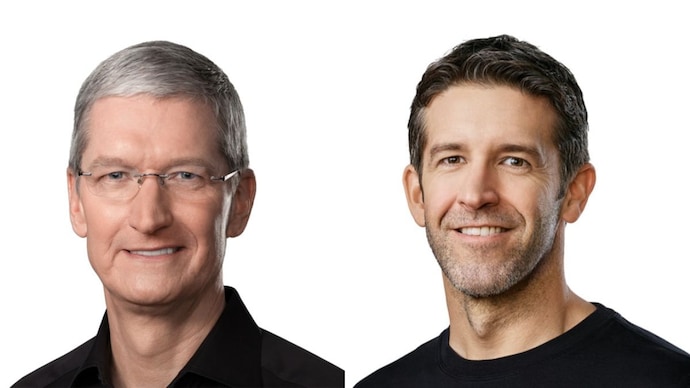
Apple Inc. has announced that John Ternus will take over as chief executive officer, succeeding Tim Cook, who is stepping down after leading the company for 15 years.
Ternus, who currently heads hardware engineering and has spent 25 years at the company, is set to assume the role on 1 September. Cook will transition into the position of executive chairman.
Cook has served as CEO since 2011, when he took over from co-founder Steve Jobs, who resigned due to health challenges shortly before his passing.
He will remain in charge throughout the summer to ensure a smooth handover, after which he will continue supporting the company in selected areas, including engaging with global policymakers.
His decision to step down comes after months of speculation about leadership succession within Apple.
Reflecting on his time in charge, Cook described the role as the greatest honour of his career, during which he guided the company to become one of the most valuable in the world.
In 2018, Apple made history by becoming the first publicly traded company to reach a $1 trillion valuation. Today, its market value stands at approximately $4 trillion.
Cook praised Ternus as a forward-thinking leader, highlighting his engineering expertise, innovative mindset, and strong leadership qualities.
He expressed full confidence in Ternus’s ability to guide the company into its next phase.
Ternus had increasingly been viewed as a leading candidate for the top role, especially following the departure of longtime chief operating officer Jeff Williams.
Over his extensive career at Apple, Ternus has contributed to nearly all major product lines, including multiple generations of the iPad and iPhone, as well as the introduction of AirPods and the Apple Watch.
He also played a key role in transitioning Mac computers to Apple-designed processors.
Having previously worked closely with Jobs, Ternus acknowledged Cook as a mentor and expressed enthusiasm about the company’s future, saying he is optimistic about what lies ahead.

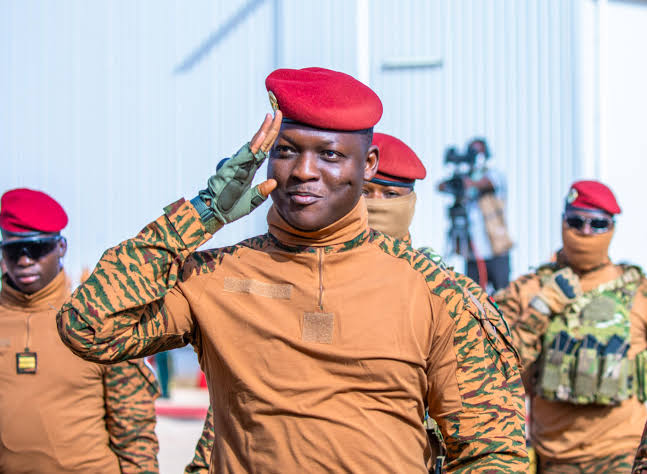
Burkina Faso’s leader, Ibrahim Traoré, has told citizens to “forget democracy,” arguing that the system is not suitable for the country at this time.
Speaking on state television, Traoré said Burkina Faso should not focus on elections but instead prioritise rebuilding the nation. His remarks follow the decision by the military government to dissolve all political parties in January 2026 and take control of their assets.
The 36-year-old leader, who came to power after a coup in 2022, has repeatedly postponed elections, citing ongoing jihadist attacks and instability.
He maintains that restoring security must come before any political transition.
Despite criticism, Traoré has recorded several achievements since taking office.
His administration has intensified military operations against armed groups, leading to the recovery of some territories previously controlled by insurgents. The government has also strengthened local defence units and increased recruitment into the armed forces.
In addition, Traoré has pushed for economic independence by promoting local production and reducing reliance on foreign influence.
His government has also invested in agriculture and small-scale industries to support food security and job creation.
However, critics argue that his recent statements signal a growing shift toward authoritarian rule. They warn that sidelining democratic processes could weaken governance and limit citizens’ rights.
Supporters, on the other hand, believe his approach is necessary, saying stability and security must come first before democratic reforms can take place.

Safe Sex May Get Costly As War Hits Production Materials

40 000 households now on prepaid metres

Man Killed in Crocodile Attack at Lake Kariba

Operation restore order

Masasi High School Abuse Scandal Sparks Public Outcry

Kuwadzana Man Jailed for Reckless Driving and Driving Without a Licence
-
 Current Affairs5 months ago
Operation restore order
-
 Crime and Courts7 months ago
Masasi High School Abuse Scandal Sparks Public Outcry
-
 Crime and Courts7 months ago
Kuwadzana Man Jailed for Reckless Driving and Driving Without a Licence
-
 Current Affairs9 months ago
Breaking: ZIMSEC June 2025 Exam Results Now Available Online
-
 Current Affairs8 months ago
Munhumutapa Day: Zimbabwe’s Newest Public Holiday Set for Annual Observance
-

 Current Affairs6 months ago
BREAKING NEWS: ZANU PF Director General Ezekiel Zabanyana Fired
-

 Current Affairs8 months ago
No Racism in Our Cricket: Government
-

 World News6 months ago
Burkina Faso Reaps $18 Billion in Gold Revenue Under Ibrahim Traoré’s Leadership