
Current Affairs
Govt commissions US$300 000 gold milling centre in Shurugwi

By Itai Mazire
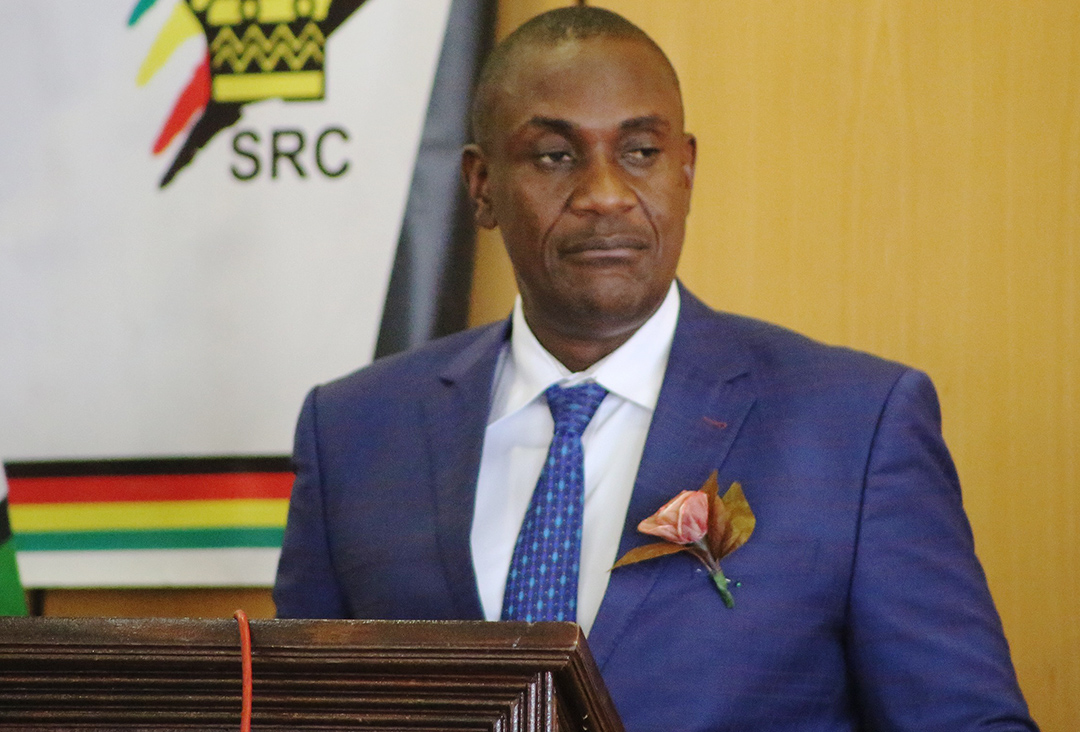
Government has commissioned a US$300 000 gold milling and processing centre in Shurugwi District as part of efforts to formalise artisanal and small-scale mining operations across the gold rich province.
The facility was funded by Cheng-Xi Chengetai Investments and officially opened by Midlands Minister of State for Provincial Affairs and Devolution Owen Ncube .
It is expected to provide affordable and efficient gold processing services to more than 5 000 small-scale miners in the area.
Speaking during the commissioning, Minister Ncube said the investment was a key milestone in promoting responsible mining and improving livelihoods in the district.
“This centre will ensure accessible and safe gold processing for our artisanal miners, while minimising environmental and health risks. It will also boost gold production and create jobs,” Ncube said.
The plant comprises three round mills, a jaw crusher, three hammer mills, water reservoirs, an administration block and supporting infrastructure.
Ncube commended Cheng-Xi Investments for its contribution to Zimbabwe’s mining growth saying the initiative reflected the strength of bilateral cooperation between Zimbabwe and China.
He said government remained committed to empowering small-scale miners, particularly youth and women under the devolution and Vision 2030 frameworks.
According to official figures, small-scale miners delivered 24.5 tonnes of gold to Fidelity Gold Refinery in the first nine months of 2025 out of the 33 tonnes recorded nationally.
Minister Ncube also urged other corporates to emulate the company’s corporate social investment initiatives and warned individuals involved in drug peddling that the law would take its course regardless of social standing.
The Shurugwi gold centre is expected to enhance production efficiency, promote formalisation of artisanal operations and support government’s push towards a US$12 billion mining industry by 2030.

By Everisto Zhuwao
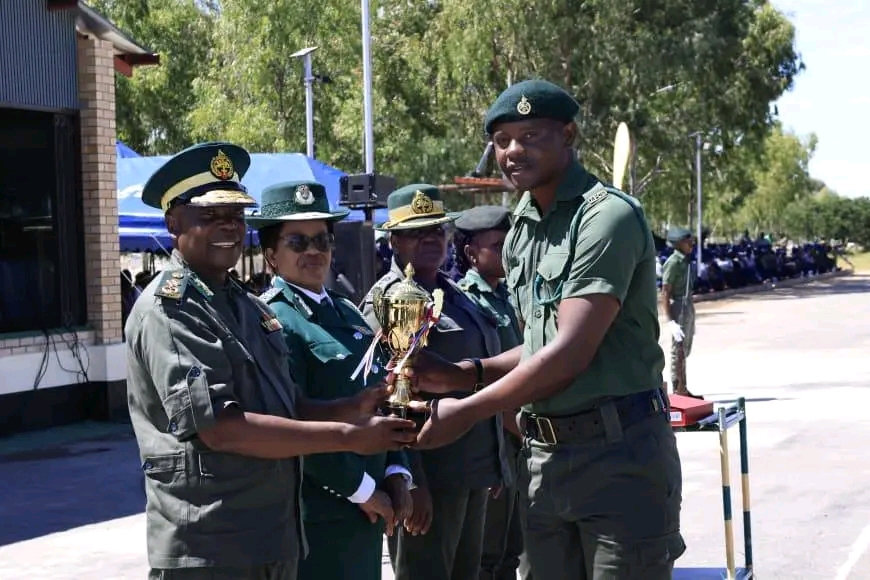
A total of 732 officers recently graduated from the Ntabazinduna Prisons Training School, marking a significant expansion in regional correctional cooperation.
The graduation ceremony was a milestone for the Zimbabwe Prisons and Correctional Service (ZPCS), as it hosted non-commissioned officers from allied forces for the first time. Among the graduates were three officers from Eswatini, a development that highlights the growing partnership between the two nations’ security sectors.
The Commissioner-General of Eswatini’s His Majesty’s Correctional Services, LaMakhosini Phindile Dlamini, attended the event as the guest of honour. The graduates completed various professional courses, including basic security, investigations, and correctional reaction tactics.
ZPCS Commissioner-General Dr. Moses Cyril Ngawaite Chihobvu presided over the ceremony and thanked the government for modernising the service. He also expressed gratitude to President Emmerson Mnangagwa for his continued commitment to strengthening correctional operations.
Dr. Chihobvu described the training as a strategic investment in human capital and urged the new graduates to maintain high levels of discipline and ethical conduct in their work environments.
“The environment in which you operate calls for the highest levels of discipline and ethical conduct,” said Dr. Chihobvu. He further advised the officers to remain vigilant and demonstrate unwavering moral strength.
Addressing the threat of misconduct, the Commissioner-General issued a stern warning against corruption, describing it as a “cancer” that tarnishes the image of the organisation. He warned that the law would apply to any offenders without favour.
The ceremony concluded with a call for the graduates to return to their stations with a professional philosophy anchored in honesty. The graduation forms part of a broader ZPCS effort to professionalise its workforce and improve service delivery across Zimbabwe and the region.
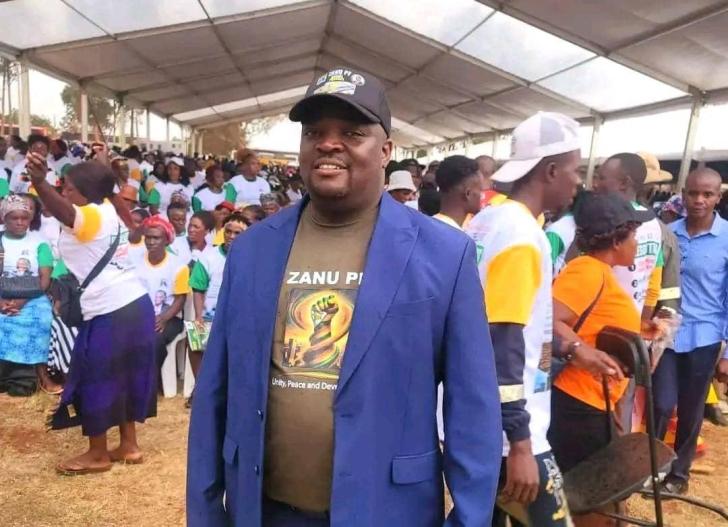
ZANU PF, Harare Province Political Commissar, Cde Voyage Dambuza has issued a fiery call for Zimbabweans to set aside political differences and rally behind Constitutional Amendment Number 3, declaring that national unity must trump partisan interests to secure Vision 2030.
Speaking yesterday at the Independence Day celebrations held in Makoni, Chitungwiza, Dambuza told thousands that the Second Republic has already proved its commitment to peace across Harare and the nation and that the constitutional amendment is the next logical step to lock in stability.
“We cannot afford to let political squabbles derail our progress. Unity over politics, always.
“Constitutional Amendment Number 3 is not about one party. It is about giving this nation the time and space to fully realise Vision 2030. I am calling on all Zimbabweans, regardless of their political flag, to push this amendment forward,” said Cde Dambuza.
The Makoni festivitie, attended by a sea of residents from Glen View, Budiriro, and beyond, served as a powerful backdrop for the message.
Under the Second Republic, Harare Province leadership has successfully bridged the divide, with opposition political parties now recognising the value of Vision 2030 and openly backing the amendment’s cause.
“The days of bamboo are gone.
“We have peace from Harare to Mutare. Now we need the constitutional tools to sustain it.”
He reiterated that the proposed amendment, which extends presidential and parliamentary terms from five to seven years,has gained cross-party understanding, thanks to grassroots unity programmes championed by the province.
“As the future leaders of tomorrow, they should understand that the Bill will benefit them. It is not about politics; it is about Zimbabwe’s future. The students are rallying behind the leadership of President Mnangagwa. They are eager to see the Bill sailing through,” said Cde Dambuza.
The celebrations, held outside the traditional provincial capital as part of devolution, indicated how the Second Republic has brought lasting unity and peace across the country. With a US$53 billion economy now within sight, Harare Province leadership declared that Constitutional Amendment Number 3 is the final pillar to entrench the gains of independence.
“We have moved from near-zero reserves in 2017 to a US$53 billion economy,” Dambuza said. “Now let us unite, pass Amendment Number 3, and march to 2030 as one people.”

As Zimbabwe tomorrow celebrates its 46th Independence Anniversary under the theme “Zim@46-Unity and Development Towards Vision 2030,” the Zimbabwe Liberated Girl Child in Action (ZLGCA) has reaffirmed its commitment to empowering the girl child as a cornerstone of the nation’s development agenda.
Speaking ahead of the historic commemorations set to take place at Maphisa Stadium in Matobo District, ZLGCA executive director Mrs Anna Mabhena outlined the organisation’s ambitious vision for 2026, declaring that no nation can develop if half its population is left behind.
“Our target is crystal clear, to reach 10 000 beneficiaries with road traffic safety and provisional licence training in 2026.
We believe this will inspire more and more girls to contribute to the national driving skills set,” said Mrs Mabhena, unveiling a nationwide free driving programme for all girls countrywide.
The organisation, which boasts a membership of approximately 2 000 people comprising children of war veterans, has made significant strides in reaching out to vulnerable girls and women across the country.
In a major push to advance gender equality and national development, ZLGCA has launched a free driving programme targeting 10 000 girls nationwide this year, directly tackling unemployment and social challenges while fast-tracking skills development in line with President Emmerson Mnangagwa’s Vision 2030.
Mrs Mabhena drew a direct connection between the organisation’s work and the country’s long-term development blueprint.
“ZLGCA is inspired by Vision 2030 and therefore aims to reach at least 50 000 girls nationwide by 2030,” she said, adding that impact reviews would guide the ongoing strategy.
“No nation can develop if 52 percent of its population is left on the sidelines. Today, we are putting wheels on the President’s vision,” Mrs Mabhena said emphatically.
The national rollout is designed to be inclusive, with all 10 provinces set to benefit. Masvingo Province will be the next stop after Bulawayo.
The driving initiative is part of a broader, holistic empowerment programme for the girl child.
“For the year 2026, ZLGCA will continue to roll out practical livelihood skills training in areas such as agriculture, mining, ICTs and many others. Additionally, life-skills training will be provided in financial literacy, emotional intelligence, first aid, business skills and goal setting,” she said.
Mrs Mabhena linked the skills training directly to combating social ills.
“The two key factors drawing girls into substance abuse and early marriages are idleness and poverty. Provisional licence training provides girls with opportunities for gainful employment, potentially addressing these challenges.
“We plan to expand our projects meant to empower women and girls in order to ensure that no one is left behind. Our goal is to support vulnerable women, including those who are abused and those on drugs,” Mrs Mabhena said, indicating the organisation’s unwavering commitment to the principles of the Second Republic.
The 46th Independence commemorations, being held in Maphisa for the first time, mark a profound homecoming to a region that breathes the history of the liberation struggle.
The choice of venue is a bold statement in the Second Republic’s decentralisation agenda, bringing the flagship national celebration to the heart of Matabeleland South and living true to the philosophy of “leaving no one and no place behind”.
For Mrs Mabhena and the young women of ZLGCA, many of whom are children of war veterans-the link between the liberation struggle and today’s empowerment drive is deeply personal.
She described the commemoration as a tribute to the peace and unity fought for during the liberation struggle.
“The girls felt the need to be responsible citizens, propagating the principles that underline the mandate of the war of liberation which our parents fought for.
“In everything that we are doing, we are trying our best to help our communities. One way we are appreciating the war of liberation and the sacrifices which our parents made is by donating to the less fortunate, visiting those in jails and also assisting patients in hospitals,” she said.
Since gaining Independence in 1980, Zimbabwe has made remarkable strides across multiple sectors.
The country’s education system became one of Africa’s most robust, with literacy rates surging from 45 percent in 1980 to an impressive 92 percent by 1995. Primary school enrolment doubled between 1980 and 1990, while secondary school enrolment increased seven-fold, demonstrating the new nation’s commitment to human capital investment.
In agriculture, Zimbabwe has surpassed its initial agricultural target of USD 8 billion, now set at USD 13.75 billion.
The nation has emerged as the largest tobacco producer on the continent and ranks sixth globally, trailing only agricultural powerhouses like China and India. The fast-track land reform programme, which President Mnangagwa has declared “irreversible,” has empowered local farmers and rectified historical injustices, enabling black farmers, especially smallholders, to boost production and productivity.
The mining sector has emerged as a key economic driver, contributing 13 percent to GDP in 2024, up from 8 percent in 2010. Infrastructure projects completed under NDS1 include the Robert Gabriel Mugabe International Airport Expansion and the Hwange Units 7 and 8, which added 700 megawatts to the national grid.
The National Development Strategy 2 (NDS2: 2026-2030), the final medium-term plan before Vision 2030, seeks to consolidate achievements recorded under NDS1 and accelerate Zimbabwe’s journey toward becoming an upper-middle-income society.
The strategy prioritises industrialisation, modernisation, value addition and beneficiation, predominantly of agriculture and mineral commodities.
For Mrs Mabhena, the alignment between ZLGCA’s grassroots empowerment work and the national vision is unmistakable.
“Our goal is to support vulnerable women, including those who are abused and those on drugs. We plan to expand our projects meant to empower women and girls in order to ensure that no one is left behind,” she said, directly echoing the Second Republic’s philosophy that underpins both NDS2 and Vision 2030.
As Zimbabweans gather tomorrow in Maphisa to celebrate 46 years of freedom, the work of organisations like ZLGCA serves as a living testament to the enduring promise of independence, that the sacrifices of the liberation struggle must translate into tangible opportunities for every citizen, especially the girl child.
Mrs Mabhena’s message to the nation is clear, empowering girls is not just a charitable endeavour but a strategic imperative for national prosperity.
“We want them to stand alone and be responsible citizens,” she said, capturing the essence of a movement that is defending the gains of liberation by building a generation of skilled, confident, and empowered young women.

ZPCS Expands Regional Training as 732 Officers Graduate

Dambuza Pushes Unity Agenda, Rallies Support for Amendment No. 3

Top SA Police Chief Faces R5 Million Bribery Allegation

Operation restore order

Masasi High School Abuse Scandal Sparks Public Outcry

Kuwadzana Man Jailed for Reckless Driving and Driving Without a Licence
-
 Current Affairs5 months ago
Operation restore order
-
 Crime and Courts7 months ago
Masasi High School Abuse Scandal Sparks Public Outcry
-
 Crime and Courts7 months ago
Kuwadzana Man Jailed for Reckless Driving and Driving Without a Licence
-
 Current Affairs9 months ago
Breaking: ZIMSEC June 2025 Exam Results Now Available Online
-
 Current Affairs8 months ago
Munhumutapa Day: Zimbabwe’s Newest Public Holiday Set for Annual Observance
-
 Current Affairs6 months ago
BREAKING NEWS: ZANU PF Director General Ezekiel Zabanyana Fired
-

 Current Affairs8 months ago
No Racism in Our Cricket: Government
-

 World News6 months ago
Burkina Faso Reaps $18 Billion in Gold Revenue Under Ibrahim Traoré’s Leadership