
World News
Kenya’s Veteran Opposition Leader Raila Odinga Dies at 80 While Receiving Treatment in India

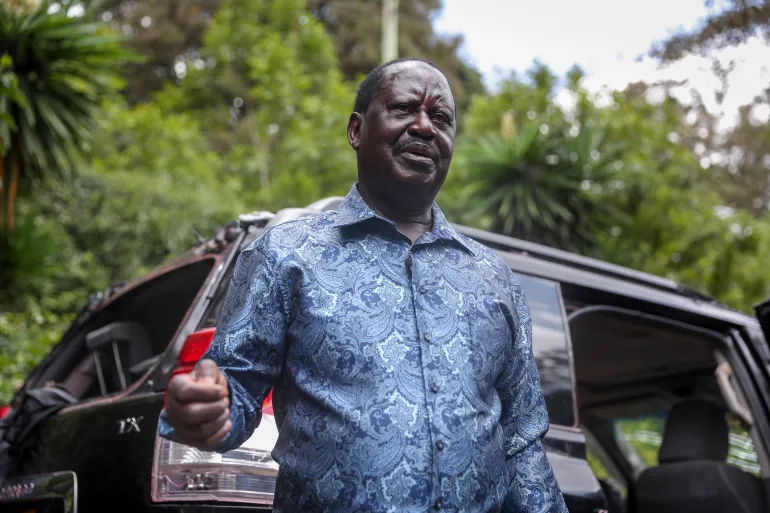
Kenyan opposition leader and former prime minister Raila Odinga, one of Africa’s most influential political figures, has died at the age of 80 while undergoing medical treatment in India, officials have confirmed.
Hospital authorities at Devamatha Hospital in Kerala reported that Odinga suffered a fatal heart attack on Wednesday morning. Local police said he collapsed while on a morning walk accompanied by his sister, daughter, personal physician, and security personnel from both Kenya and India.
“He was rushed to a nearby private hospital, but was pronounced dead upon arrival,” said Krishnan M, the additional superintendent of police in Ernakulam, Kerala.
Officials in Odinga’s office also confirmed the death to multiple international media outlets. Indian newspaper Mathrubhumi earlier reported that Odinga had been receiving medical care in the coastal city of Kochi.
Born in 1945, Odinga was the son of Jaramogi Oginga Odinga, Kenya’s first vice president after independence in 1963. Over a political career spanning more than four decades, he became a symbol of opposition politics and pro-democracy movements across Africa.
Odinga’s passing leaves a major void in Kenya’s political landscape, particularly within the opposition, as the country heads toward the 2027 general elections.
Throughout his life, Odinga made five unsuccessful presidential bids — in 1997, 2007, 2013, 2017, and 2022 — each campaign strengthening his image as a resilient, if controversial, figure in Kenyan politics. His followers affectionately called him “Baba” (father in Swahili), while others referred to him as “Agwambo”, meaning “the mysterious one” in his native Luo language.
A fierce critic of one-party rule under President Daniel arap Moi, Odinga spent years behind bars for his alleged involvement in a 1982 coup attempt. Despite imprisonment and exile, he emerged as one of the key voices pushing for Kenya’s return to multiparty democracy in 1991.
He entered parliament in 1992 and later served as prime minister from 2008 to 2013, following a disputed 2007 election that sparked Kenya’s deadliest political violence since independence — leaving more than 1,300 people dead and displacing hundreds of thousands.
Odinga also played a central role in ushering in Kenya’s new constitution in 2010, which introduced sweeping reforms to decentralize power and strengthen checks on the executive.
News of Odinga’s death prompted an outpouring of grief in Kenya and beyond. President William Ruto visited the Odinga family home in Karen, Nairobi, where hundreds of mourners gathered, some waving tree branches in traditional mourning rituals.
Former President Uhuru Kenyatta, who once opposed Odinga before backing his 2022 presidential run, hailed him as “a father to the nation, a steadfast champion of the people, and a true son of Kenya.”
“His legacy lies not only in the political battles he fought but also in the peace he helped build. It is woven into the very fabric of our nation,” Kenyatta said.
Tanzanian President Samia Suluhu Hassan described Odinga’s passing as “a tragedy not just for Kenya, but for Africa as a whole,” calling him “a visionary leader, a peacebuilder, and a unifier whose influence transcended borders.”
Indian Prime Minister Narendra Modi also paid tribute, calling Odinga “a towering statesman and cherished friend of India.”
Mahmoud Ali Youssouf, Chairperson of the African Union Commission, praised him as “a steadfast advocate for democracy, justice, and people-centred governance whose legacy will continue to inspire generations of African leaders.”
Odinga’s decades-long fight for democracy and justice left an indelible mark on Kenya and the African continent. Even in his final years, he remained active in shaping national dialogue, most recently through a power-sharing pact with President Ruto that saw members of his Azimio la Umoja coalition appointed to key government positions.
As Kenya mourns the man many called “Baba,” his lifelong pursuit of democratic reform, equality, and unity remains a defining chapter in the country’s modern political history.

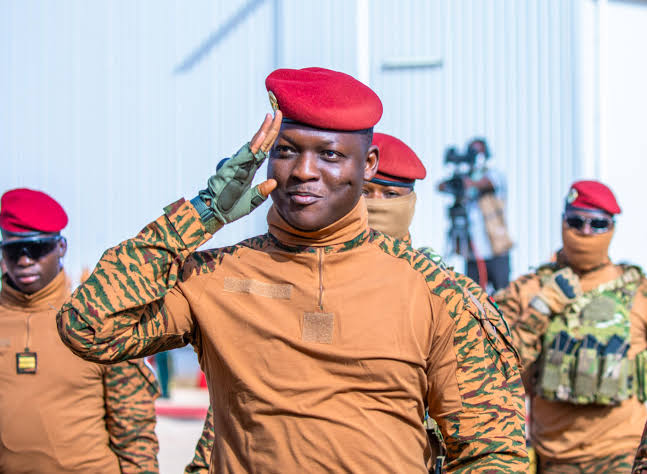
Burkina Faso’s leader, Ibrahim Traoré, has told citizens to “forget democracy,” arguing that the system is not suitable for the country at this time.
Speaking on state television, Traoré said Burkina Faso should not focus on elections but instead prioritise rebuilding the nation. His remarks follow the decision by the military government to dissolve all political parties in January 2026 and take control of their assets.
The 36-year-old leader, who came to power after a coup in 2022, has repeatedly postponed elections, citing ongoing jihadist attacks and instability.
He maintains that restoring security must come before any political transition.
Despite criticism, Traoré has recorded several achievements since taking office.
His administration has intensified military operations against armed groups, leading to the recovery of some territories previously controlled by insurgents. The government has also strengthened local defence units and increased recruitment into the armed forces.
In addition, Traoré has pushed for economic independence by promoting local production and reducing reliance on foreign influence.
His government has also invested in agriculture and small-scale industries to support food security and job creation.
However, critics argue that his recent statements signal a growing shift toward authoritarian rule. They warn that sidelining democratic processes could weaken governance and limit citizens’ rights.
Supporters, on the other hand, believe his approach is necessary, saying stability and security must come first before democratic reforms can take place.
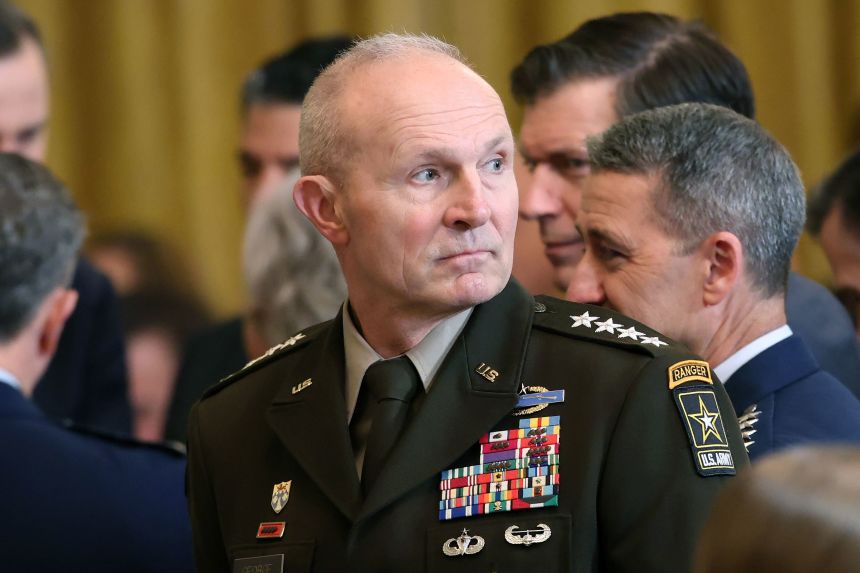
United States Defence Secretary Pete Hegseth has directed Army Chief of Staff General Randy A. George to step down with immediate effect, as tensions continue during the ongoing conflict involving the US, Israel and Iran.
In a statement shared on X on Thursday night, Pentagon spokesperson Sean Parnell confirmed that General George “will be retiring from his position,” although no explanation was provided for the sudden move during a period of active military engagement.
The 61-year-old general was appointed to the role in 2023 under former US President Joe Biden. Throughout his career, he served in several international deployments, including operations in Iraq and Afghanistan.
During his tenure as chief of staff, he focused on streamlining army structures and advancing modern warfare capabilities, such as low-cost missile defence drones and artificial intelligence-driven targeting systems.
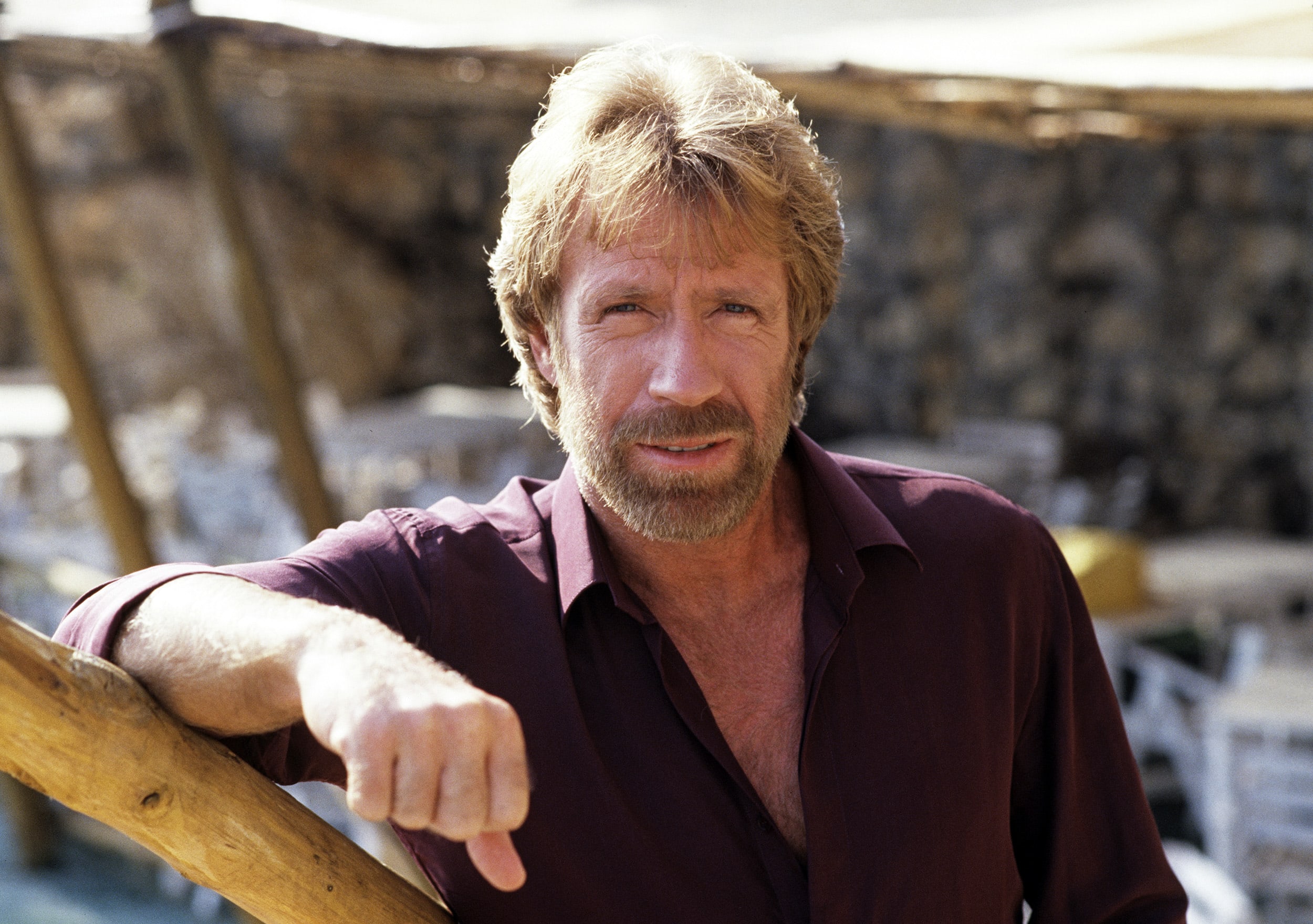
Legendary action actor and martial arts icon Chuck Norris has passed away at the age of 86.
In a statement shared on social media, his family confirmed that he died on Thursday. They noted that he was surrounded by loved ones and passed away peacefully, while requesting privacy regarding further details.
Norris first rose to prominence as a highly successful karate champion in the late 1960s. His close association with fellow martial arts legend Bruce Lee led to a memorable role in the 1972 film The Way of the Dragon.
He later transitioned into a successful acting career, becoming known for a series of popular action films such as Invasion USA and The Delta Force. He also gained widespread recognition on television through the long-running series Walker, Texas Ranger.
Beyond entertainment, Norris became known for his outspoken views and involvement in conservative political causes.

ZLGCA Drives Girl Child Empowerment as Zimbabwe Celebrates 46 Years of Freedom

Van Choga: Controversy Outpaces Quality in Music Sales

USD 2.18 Billion Rail Deal To Unlock Africa Trade Corridors

Operation restore order

Masasi High School Abuse Scandal Sparks Public Outcry

Kuwadzana Man Jailed for Reckless Driving and Driving Without a Licence
-
 Current Affairs5 months ago
Operation restore order
-
 Crime and Courts7 months ago
Masasi High School Abuse Scandal Sparks Public Outcry
-
 Crime and Courts7 months ago
Kuwadzana Man Jailed for Reckless Driving and Driving Without a Licence
-
 Current Affairs9 months ago
Breaking: ZIMSEC June 2025 Exam Results Now Available Online
-
 Current Affairs8 months ago
Munhumutapa Day: Zimbabwe’s Newest Public Holiday Set for Annual Observance
-
 Current Affairs6 months ago
BREAKING NEWS: ZANU PF Director General Ezekiel Zabanyana Fired
-
 Current Affairs8 months ago
No Racism in Our Cricket: Government
-
 World News6 months ago
Burkina Faso Reaps $18 Billion in Gold Revenue Under Ibrahim Traoré’s Leadership