
Current Affairs
Zimbabwe Edges Toward Cutting Wheat Imports as Hard Wheat Trials Show Major Success

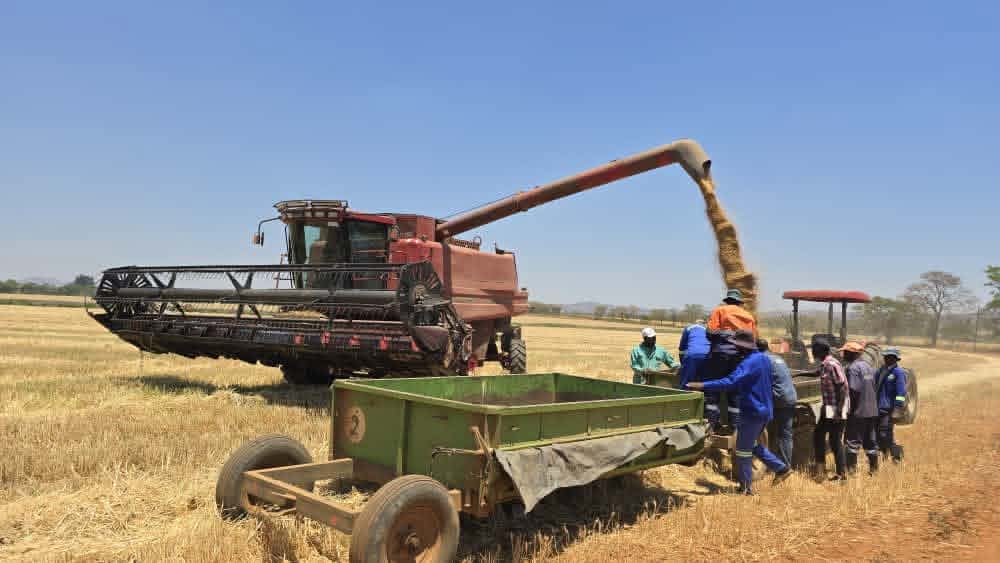
Zimbabwe is making significant strides toward reducing its dependence on hard wheat imports, following promising results from ongoing national trials aimed at boosting local production of the grain used in bread-making.
The Agricultural and Rural Development Authority (ARDA) has concluded four consecutive years of testing new hard wheat varieties, and early indications show that the country may soon be ready for full-scale commercial production. Seed producers have also developed varieties that meet the baking industry’s stringent protein and gluten standards.
ARDA Chief Executive Officer Tinotenda Mhiko said the trials have consistently delivered strong results, demonstrating the potential to transform Zimbabwe’s wheat value chain.
“We have been trialling this variety for four years, and the performance has remained consistent,” he said. “It is a white-grained variety suitable for bakery products, with protein levels reaching up to 17 percent in high-altitude areas and gluten content at 37.6 percent. The elastic gluten formed during milling gives the strength needed for bread, improving loaf volume and texture. Once trials are completed, this will be a game changer in our quest for food self-sufficiency under NDS1.”
Lands, Agriculture, Fisheries, Water and Rural Development Minister Dr. Anxious Masuka said the breakthrough should trigger national conversations about the country’s wheat import bill.
“Zimbabwe mainly produces soft wheat, while bread-making requires hard wheat, which is the type we import,” he said. “When we talk about wheat imports, we are referring to hard wheat.”
Information, Publicity and Broadcasting Services Minister Dr. Jenfan Muswere said the country is building on the momentum of a record breaking winter wheat season.
“Harvesting has been completed, with 640,195 metric tonnes realised from 122,146 hectares at an average yield of 5.2 tonnes per hectare,” he said. “ARDA is now conducting trials for a hard wheat variety. Meanwhile, 47,709 tonnes of barley have been harvested from 6,156 hectares.”
Zimbabwe currently imports hard wheat from countries such as Russia and Canada, which accounts for about 30 percent of the wheat required for bread production.
With successful trials pointing toward viable local production, officials say the shift could reshape the agriculture sector, strengthen food security and reduce the foreign currency burden associated with wheat imports.









By Itai Mazire
A high-level government delegation, led by Deputy Chief Secretary in the Office of the President and Cabinet, Engineer Amos Marawa, has praised the progress made on the pilot project of the Presidential River Rehabilitation Program at Muroodzi River in Mazowe.
The delegation, which included secretaries from various government departments, expressed satisfaction with the ongoing de-siltation and restoration efforts being carried out by Prevail Group of Companies, owned by Special Advisor to the President, Dr. Paul Tungwarara.
Engineer Marawa said the initiative is set to be rolled out nationwide.
“All provinces are working to identify degraded river sites so we can quantify the amount of rehabilitation work required,” he said.
“To kick-start this process, the government approved a pilot project, which was implemented at Muroodzi River in Mazowe.”
The project, which began last year, initially focused on a five-kilometre stretch of the river.
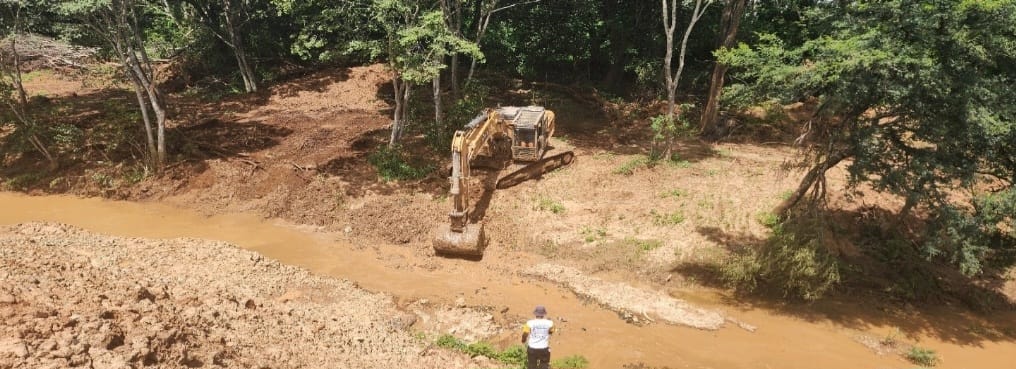
“We developed a rehabilitation plan in consultation with Prevail International, the company appointed for the work,” Eng. Marawa explained.
“They have already restored about three kilometres, starting with the most degraded section of the five-kilometre stretch. We are here to assess the quality of their work, and we are pleased with the progress in de-siltation and river restoration.”
Prevail International Project Manager, Simbarashe Makonese, outlined the challenges and solutions implemented.
“This site was heavily mined, with excessive silt in the river, unstable banks, and eroded riverside slopes. Our work has involved removing silt, stabilising degraded slopes, installing soil erosion control sheets, and rehabilitating the riverbanks,” he said.
Mrs. Tendai Sithole, Chief Executive Officer of Prevail International, highlighted the project’s achievements.
“We intentionally started with a five-kilometre stretch of Muroodzi River, and to date, three kilometres have been restored. Our work has restored irrigation, agricultural activities, and access to clean and safe water for communities along the river,” she said.
The Presidential River Rehabilitation Program is a key government initiative aimed at reversing extensive environmental damage caused by years of illegal and uncontrolled riverbed mining.
Such activities led to severe siltation, disrupted water flow, and negatively affected irrigation, agricultural productivity, and access to clean water for communities.
The government has banned riverbed mining through Cabinet resolutions, reinforced by Statutory Instrument 88 of 2024.
The Muroodzi River project serves as a prototype, demonstrating practical and sustainable methods for restoring degraded rivers and improving water flow. Once the model proves successful, plans are in place for a national rollout across all provinces.
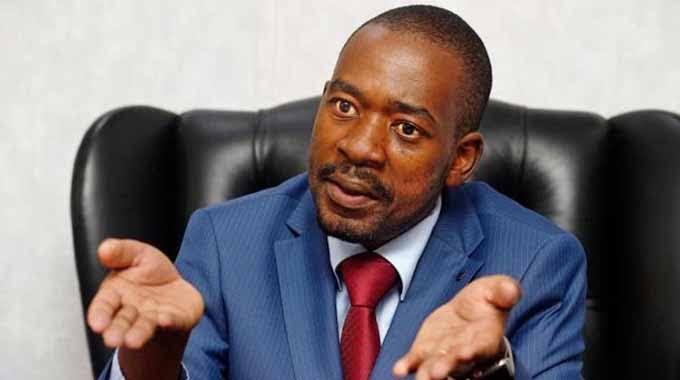
A Harare resident has petitioned the High Court, calling for former Citizens Coalition for Change (CCC) leader Nelson Chamisa to account for the party’s finances before establishing or registering any new political formation.
The applicant, Mr Talent Rusere, filed the application on Thursday, arguing that Mr Chamisa should not be permitted to launch another political entity without first ensuring a transparent handover of CCC affairs and a full audit of the party’s financial records.
In his court papers, Mr Rusere is requesting a comprehensive review of CCC assets and expenditures, including an armoured vehicle allegedly acquired for Mr Chamisa in 2021, as well as the management of both public and donor-funded resources.
He further argues that the audit should be conducted independently, certified by the Auditor-General, and formally acknowledged by the party’s current leadership.
The application also seeks an order compelling Mr Chamisa to submit a sworn financial statement within 21 days, outlining how party funds were handled during his time at the helm.
The matter is now awaiting consideration by the High Court.
Itai Mazire
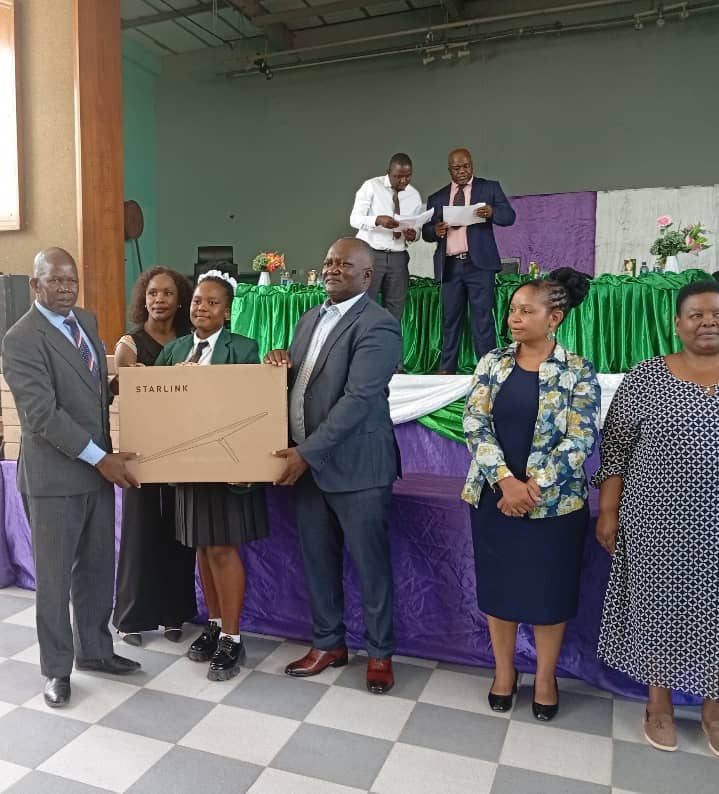
In a pivotal move set to revolutionise education in Masvingo Province, the Minister of State for Provincial Affairs and Devolution, Hon. Ezra Chadzamira, handed over 35 Starlink kits to 35 Junior Parliamentarians at Victoria High School.
The initiative marks a significant step in the Government’s unwavering commitment to bridging the digital divide and nurturing a technologically advanced generation in line with Vision 2030.
The event showcased the national drive to integrate technology into the learning environment, ensuring that Zimbabwean students are equipped to meet the demands of the 21st century. This vision has been consistently championed by the Minister of Primary and Secondary Education, Professor Torerayi Moyo.
“Connectivity is no longer a luxury; it is a necessity for learning in the 21st century,” said Professor Moyo.
“We are building an education system that is inclusive, modern and future-ready. By investing in connectivity, we are investing in the dreams of our children, the strength of our communities, and the prosperity of our nation,” he added.
Minister Chadzamira echoed these sentiments, highlighting the transformative potential of the Starlink kits.
“This gesture is more than just the distribution of equipment; it is a powerful symbol of our commitment to bridging the digital divide and empowering the next generation of leaders,” he said.
He also outlined ambitious plans for the province.
“My office intends to roll out this initiative across the entire province to create a technologically savvy generation in line with Vision 2030,” said Hon. Chadzamira.
The Junior Parliamentarians, now equipped with high-speed internet access, are expected to use the technology to enhance their learning and to serve as digital ambassadors within their respective schools and communities.
This strategic distribution forms part of a broader Government programme to connect schools nationwide, ensuring that every learner, regardless of geographical location, has access to global knowledge and resources.
The Government’s proactive approach underscores its commitment to building a future-ready education system and advancing Zimbabwe’s national development goals.

Government Hails Muroodzi River Rehabilitation Pilot

Chamisa Under Fire as High Court Is Asked to Probe CCC Finances

Minister Chadzamira Hands Over Starlink Kits to Junior Parliamentarians

Operation restore order

Masasi High School Abuse Scandal Sparks Public Outcry

Kuwadzana Man Jailed for Reckless Driving and Driving Without a Licence
-
 Current Affairs3 months ago
Operation restore order
-
 Crime and Courts4 months ago
Masasi High School Abuse Scandal Sparks Public Outcry
-
 Crime and Courts5 months ago
Kuwadzana Man Jailed for Reckless Driving and Driving Without a Licence
-
 Current Affairs6 months ago
Breaking: ZIMSEC June 2025 Exam Results Now Available Online
-
 Current Affairs5 months ago
Munhumutapa Day: Zimbabwe’s Newest Public Holiday Set for Annual Observance
-
 Current Affairs4 months ago
BREAKING NEWS: ZANU PF Director General Ezekiel Zabanyana Fired
-

 Current Affairs6 months ago
No Racism in Our Cricket: Government
-
 Current Affairs5 months ago
Government Bans Tinted Car Windows in Nationwide Crime Crackdown