
Current Affairs
Court Finds Senior Medical Practitioner Guilty of Perjury

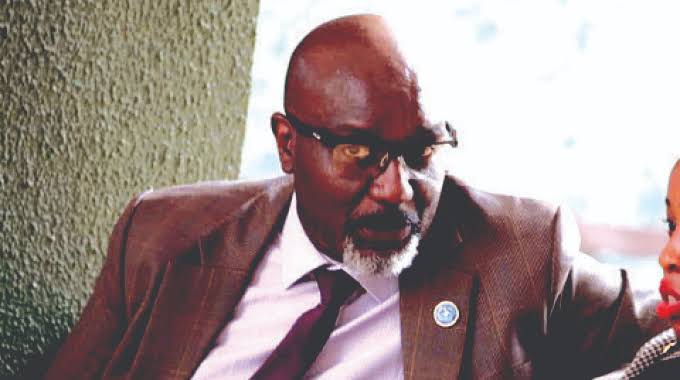
A difficult day in court unfolded for Dr Collen Benyure, a senior medical practitioner and former registrar of a statutory council, after a Harare magistrate ruled that his account of events could not withstand scrutiny under the law.
Regional Magistrate Donald Ndirowei on Wednesday convicted Dr Benyure of perjury, finding that he had falsely told the court that he had authority to testify on behalf of the council he once served.
The court held that the claim was not supported by evidence and was directly contradicted by official records.
The conviction followed the production of a formal council resolution, which clearly showed that Dr Benyure had never been authorised to represent the institution in judicial proceedings.
In earlier testimony, the doctor had assured the court that he appeared in an official capacity. During the perjury trial, however, prosecutors tabled documentary evidence demonstrating that no such mandate had been given.
The case became a stark contrast between personal confidence and institutional procedure, with the court firmly siding with the latter.
In his ruling, Magistrate Ndirowei emphasised that statutory bodies, as juristic persons, can only act through properly authorised representatives. He held that professional status or seniority does not substitute for lawful authority, and that claims of representation must be supported by clear proof.
Legal analysts say the judgment reinforces a fundamental principle of justice: that honesty before the courts is not optional, regardless of one’s professional standing.
A senior legal practitioner, commenting after the verdict, said the case offered an important reminder of the standards expected of those who take the witness stand.
“Titles carry weight in the workplace, but in court only the truth carries authority. The justice system depends on accuracy, not assumption,” the practitioner said.
Dr Benyure was convicted under Section 183 of the Criminal Law Codification and Reform Act, which criminalises the making of false statements under oath. The offence carries a potential penalty of a Level Ten fine, imprisonment for up to five years, or both.
The law further provides that a statement may be false by omission as well as by commission, meaning that withholding the truth can be as serious as stating an untruth.
The doctor was remanded out of custody and is expected to return to court tomorrow for mitigation and sentencing, when the magistrate will determine an appropriate sentence in light of the seriousness of the offence and the professional responsibilities that accompanied his position.
As the case moves to its final stage, it stands as a clear reminder that in the courtroom, authority is earned through truth and not through title.


The Zimbabwe Broadcasting Corporation (ZBC) says it is embracing modern technology and decentralisation to remain competitive in the broadcasting industry.
Speaking at the Zimbabwe International Trade Fair (ZITF), ZBC Board Chairperson Helliate Rushwaya said the organisation’s participation aligns with this year’s theme.
“The theme is connected economies and competitive industries. So at ZBC, through the various platforms that we are showcasing, we are showing that we are being competitive with regard to modern platforms,” she said.
Rushwaya added that the use of digital technology is helping ZBC strengthen its position in the broadcasting sector.
“Modern technology and the use of digital platforms are also highlighting that we are connecting and we are connected in a competitive industry, which is the broadcasting industry,” she said.
She explained that the corporation’s modernised studios go beyond infrastructure upgrades and are part of a broader strategy to improve operations.
“These modernised studios are not just about new equipment or new infrastructure; they are beyond that,” she said.
Rushwaya said Montrose Studios is now playing a key role in decentralising operations from Pockets Hill in Harare.
“For us, Montrose is more about decentralisation from Pockets Hill. We are now also using Montrose Studios, not just for local productions,” she said.
She noted that the studios are becoming a hub for creative industries in the southern region and are also being used for major national events.
“We know Montrose Studios is the hub for creative industries in the southern regions, but also Montrose Studios is now coming in really useful in terms of national events,” she said.
Rushwaya highlighted recent productions handled from Bulawayo, including national broadcasts.
“Only a week ago, we were broadcasting the independence celebration from Mapisa using Montrose Studios for our productions. At the moment, we are at ZITF. Again, Montrose Studios are playing a really important role in terms of all our broadcasting,” she said.
She emphasised that the shift is not just about upgrading equipment but about expanding operations beyond Harare.
“So it’s not about modernisation only. This actually also is about decentralisation from Pockets Hill to Bulawayo,” she said.

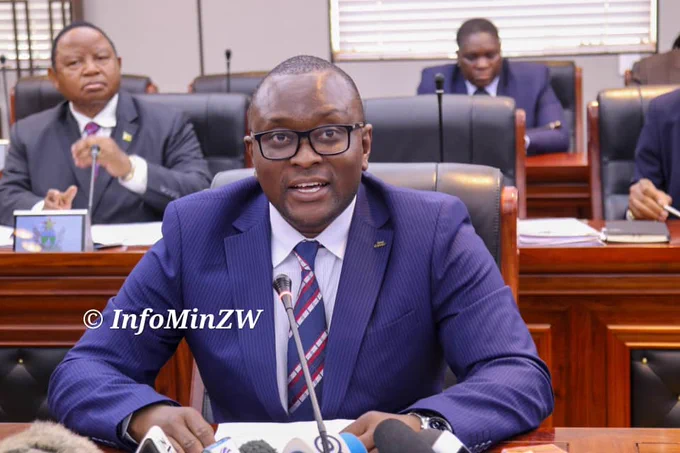
The government has intensified efforts to harness skills from both within the country and the diaspora as part of a broader strategy to drive economic growth and industrialisation.
Speaking on the Diaspora Skills Platform, the Minister of Skills, Audit and Development, Jenfan Muswere, said the initiative focuses on “upskilling, skilling and reskilling” citizens to meet national development needs.
“But turning to the precise question in terms of the Diaspora Skills Platform, which is of great importance in terms of us as a nation to be able to turn brain drain into brain gain,” Minister Muswere said.
Muswere explained that government is conducting comprehensive skills audits locally, internationally, and among retired professionals to identify expertise that can support the economy.
“This is one of the objectives that we’ve committed to ensure that as we work on ensuring that we have a skills audit internally, a skills audit externally and also a skills audit in terms of retired experts both within and outside Zimbabwe in order to support macroeconomic growth,” he said.
He noted that the country has faced significant challenges due to the migration of skilled professionals, particularly in technical, health, and engineering sectors.
“But at the same time, to highlight that a number of technical, health, and engineering skills flights were some of the biggest challenges that we faced as a country for the past decades,” he said.
Muswere highlighted the importance of value addition, using lithium exports as an example of missed opportunities due to limited local processing capacity.
“If you are going to export raw lithium at some point at a price of less than $200 per tonne, but the rest of the value addition process is taking place externally to a value of around $20,000 per tonne, this clearly shows us the skills gap in terms of processing,” he said.
He stressed that building a strong skills base is key to reducing imports and boosting local production.
“So basically, what you import, when you import toothpicks, means you are failing to produce toothpicks. When you import cooking oil, it means you are failing to produce,” he added.
Muswere said the government is working closely with various ministries to align skills development with industry demands.
“As we collaborate and coordinate skills within provinces, this is also part of a whole-of-government approach,” he said.
He added that human capital remains central to achieving national development goals, including Vision 2030.
“For the most dynamic resource that we have in any nation is the human resource, which has always been a priority in terms of both NDS1 and NDS2,” he said.
Muswere also pointed to opportunities in the health sector, where diaspora expertise can be leveraged through modern technologies.
“But now within the context of the fourth industrial revolution, we can also utilise telemedicine using ICT, utilisation of artificial intelligence, for us to be able to come up with a number of solutions in terms of health service delivery,” he said.
He concluded that Zimbabwe must transition towards a demand-driven education system that responds to economic needs.
“As we continue to develop this, it becomes part of a national manpower plan… in order to ensure that we have a demand-driven education system, not a supply-driven education system,” he said.

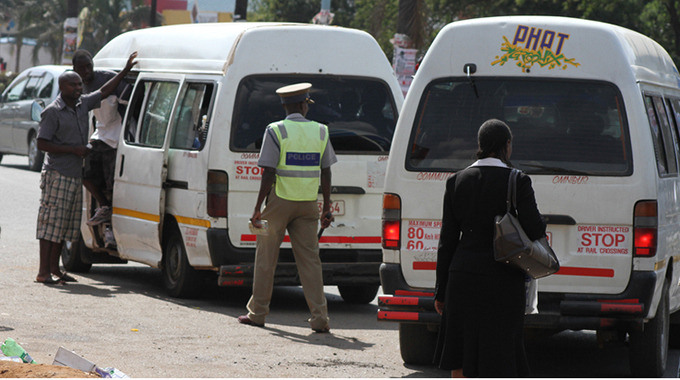
Commuters in Bulawayo are urging authorities to replicate the “Mutare model” at the city’s bus termini following a successful security operation in Mutare that dismantled illegal taxi rank cartels.
The nationwide enforcement campaign, led by the Joint Operations Command (JOC) comprising the Zimbabwe Republic Police, Zimbabwe National Army, and Zimbabwe Prisons and Correctional Service has already restored order in several urban transport hubs, particularly in Mutare.
In the eastern border city, authorities recently arrested 57 suspected touts in a coordinated operation targeting what officials described as entrenched extortion networks at bus ranks.
Acting Manicaland provincial police spokesperson Assistant Inspector Wiseman Chinyoka said law enforcement teams remain active on the ground to maintain pressure on offenders.
“Our teams moved in swiftly and made 57 arrests. We are committed to sustaining operations until the situation is fully under control,” he said.
The developments in Mutare have sparked growing calls in Bulawayo for similar interventions at busy ranks such as Entumbane, Renkini, and 6th Avenue, where commuters say illegal fees and intimidation remain widespread.
Some residents argue that only a coordinated multi-agency response can dismantle what they describe as deeply rooted criminal networks.
“The police alone are sometimes overwhelmed. We need a joint operation like in Mutare so that commuters are protected,” said Mr Sibangilizwe Ndlovu, a frequent traveller at Entumbane rank.
Another resident, Miss Khethiwe Moyo, said Bulawayo deserves the same level of security now seen in Mutare.
“We hear that Mutare is now peaceful. We want the same here. Authorities must show that law and order still prevail,” she said.
Before the crackdown, touts in Mutare were reportedly demanding illegal loading fees of around US$2 per passenger, often backed by intimidation and harassment of bus crews and travellers.
The seriousness of the issue was also highlighted by a separate incident in Harare, where Tafadzwa Simbarasi was arrested for allegedly leading a blockade against a bus company after it refused to pay illegal rank fees.
Commuters such as Mrs Alice Mutasa described the situation prior to the interventions as unbearable, citing daily harassment and extortion at bus terminals.

ZBC Highlights Modernisation and Decentralisation at ZITF

Diaspora Skills Key to Turning Brain Drain into Brain Gain

Bulawayo Commuters Call for Mutare-Style Crackdown on Violent Rank Touts

Operation restore order

Masasi High School Abuse Scandal Sparks Public Outcry

Kuwadzana Man Jailed for Reckless Driving and Driving Without a Licence
-
 Current Affairs5 months ago
Operation restore order
-
 Crime and Courts7 months ago
Masasi High School Abuse Scandal Sparks Public Outcry
-
 Crime and Courts7 months ago
Kuwadzana Man Jailed for Reckless Driving and Driving Without a Licence
-

 Current Affairs9 months ago
Breaking: ZIMSEC June 2025 Exam Results Now Available Online
-

 Current Affairs8 months ago
Munhumutapa Day: Zimbabwe’s Newest Public Holiday Set for Annual Observance
-

 Current Affairs7 months ago
BREAKING NEWS: ZANU PF Director General Ezekiel Zabanyana Fired
-

 Current Affairs8 months ago
No Racism in Our Cricket: Government
-

 World News6 months ago
Burkina Faso Reaps $18 Billion in Gold Revenue Under Ibrahim Traoré’s Leadership