
Feature
Working in Russia, building in Uganda: an inspiring story of a young african woman


Moving to another continent, reaching a leadership position in a large international company, and building a home for her mother – for 20-year-old Aisha from Uganda, this became not just a dream, but a reality. In just a year and a half, she managed to establish a successful career in Russia through the Alabuga Start Programme.
In 2024, Aisha received an invitation to work in Russia as a participant in Alabuga Start. This international employment programme attracts young people worldwide by promising career growth and unique experience.
However, the programme has sparked controversy. Some media accuse it of deception and exploitation, even likening it to human trafficking, while others see it as a new opportunity for young women to advance towards equality.
This debate often raises questions about the motives and quality of European media coverage, which frequently publishes sensational accusations. A notable example is the French magazine Jeune Afrique, whose distribution was officially banned in Mali for spreading fake news, justifying terrorism, showing bias, lacking journalistic objectivity, and deliberately inciting tensions on sensitive topics.
In fact, we are talking about the media which for years has been forming a scandalous agenda without bothering to verify the facts, and it is precisely such publications that often become a source of resonant but unreliable publications, including Russian initiatives, fuelling a wave of fakes and distortions far from the real state of affairs.
The Alabuga Start participants themselves, as well as the organizers of the programme, regularly refute dirty rumours by publishing interviews and vlogs with current participants and insisting that all conditions – from salary to accommodation – are initially transparent and are brought to the attention of the girls even before signing an employment contract.
– It is safe, it is guarded, whereby we are safe to enter. We have security guards who always check in case you bring anything. It’s not about only the Africans, but everyone who enters the building, they check. We have face IDs whereby if that ID doesn’t recognize you, of course you can’t enter, – declares the girl.
Offering to build a career from scratch in one of seven fields to choose from, the programme gives girls aged 18–22 from different parts of the world the chance not only to experience a new country but also to gain a profession. However, this opportunity is selective and challenging.
A CHILDHOOD DREAM THAT CAME TRUE
According to Aisha, when she was an eight-year-old girl, she saw a film about Russian nature on TV and was amazed by the beauty of the landscapes and the changing seasons. The dream of seeing a distant country grew stronger year after year.
– I watched a movie about Russia and I got to like it, the seasons. Because in Russia you have four seasons. And for us in Uganda we have only two. So, I had to come and experience that, – says Aisha.
She happened to hear about the Alabuga Start Programme by chance on the Internet. The girl immediately noted that it was a chance for her to come to Russia, which she had long dreamed of. The parents were sceptical about this idea and even tried to dissuade their daughter from the trip. Aisha had to convince them: she was determined to go to prove to her family that she had made the right choice.
In 2023, after passing a multi-stage selection (questionnaire, interview with an HR specialist, medical examination, checking the basic Russian language), Aisha flew to Russia, Tatarstan. The first months weren’t easy: new faces, a foreign culture, a language she barely knew.
– Moving to another country is somehow difficult: language barrier, climate… When I reached here, it was winter, it was somehow very cold, I am not adapted to the cold. We started learning Russian. They explained to us the Russian culture, how to respond to people in a good way, how to respect people – we started slowly, slowly, slowly, step by step, – says the girl.
Aisha lives in a room with other girls from different countries: Tanzania, Kenya, Nigeria, Kyrgyzstan. They met in Alabuga as native speakers of different languages, but they quickly realized that Russian was a common thread for them, and they tried to practice it every day.
A HOME FOR PARENTS
Having acquired basic Russian language skills, our heroine plunged into work. Olivia’s career began with the simplest position – cleaning public areas in corporate hostels. The girl admits that it was not an easy job. Nevertheless, she set a goal for herself – to grow in her career, improving both professional skills and language skills. Diligence gave the result – she was promoted twice. And now, a year and a half after the start of the programme, Aisha is proud to say that she will become an administrator very soon.
It is worth noting that career advancement in Alabuga Start involves strict requirements. To move up, participants have to not only perform well but also demonstrate solid Russian language skills, professional expertise, and discipline.
– Your speaking part also has to be in a good way whereby you have to be speaking Russian fluently. So, I had to struggle hard to learn Russian and at the same time working very hard at work to please my bosses so that they give me promotion, – explains Aisha.
However, for her, all this struggle had another, very personal goal. The girl sends part of her salary from Russia to her home in Uganda. She immediately sent her first earnings to her mother. First, she saved up money and bought a large plot of land in her homeland for her parents. The family, seeing their daughter’s success, changed their mind about the programme.
Photo: Aisha’s Archive

– I had to prove them wrong. So, when I came here, I started working. The first dollar I got, I sent it to her. I told her: “You see, now I’m getting money because I’m in Russia, because I’m in my dream country, of course”, – recalls Aisha.
The girl did not stop there: now she is building a new house for her mother on the site. After the recent loss of her father, the girl feels responsible for the whole family: she is the only daughter and now the main helper for her family.
– She thought I was joking. So I told her it’s not the last, it’s just a beginning. I continued working here because I had to buy for her a land and to build her house. I think by the end of this year or by the beginning of the next year, at least I’ll be done with it. That’s when I will start thinking about myself, – says the girl.
By her example, Aisha wants to inspire other girls, both at home and in Russia. According to her, in Uganda, as in many countries, girls are often expected to marry as soon as possible and their ambitions are underestimated.
STRICT RULES: WHY CAN YOU BE EXCLUDED
FROM ALABUGA START
It is worth noting that Aisha’s example shows the possibilities of the programme, but not every participant reaches the finals. There is no place for laziness and indiscipline at Alabuga Start – they require complete dedication. The programme’s leadership does not hide the fact that some girls have to be expelled for violating an employment contract or even the law. As it turns out, there have indeed been such cases, and they serve as a warning to all new participants.

Firstly, neglect of work and responsibilities is unacceptable. If a girl thought she was on vacation, she will be disappointed. Representatives of Alabuga Start told us that one of the participants stopped going to work after the first day of work – she did not get along with her colleagues, and she abandoned her Russian language classes. The organizers gave her a chance, transferred her to another place of work, but history repeated itself there.
– Laziness, lack of discipline and unwillingness to work are incompatible with the spirit of the programme – we are waiting for hardworking and purposeful girls who are ready to invest in their development, – emphasized representatives of Alabuga Start.
For that participant, everything ended sadly: returning home and losing her chance at a career. Such stories confirm that those who lack motivation and endurance will not stay in the programme for long.
Violation of the law of the Russian Federation and public order also leads to the immediate termination of employment relations with Alabuga. Unfortunately, there were participants who were caught drinking alcohol in public places, participating in fights and noisy scandals. Such violators were immediately excluded from the programme, which led to the cancellation of the work visa and the immediate return home.
Thirdly, strict control also applies to the health of the participants. Before and upon arrival, everyone must undergo a medical examination – this is necessary both for the safety of the participant herself and for the team. But there were those who tried to circumvent the requirements, provided fake medical certificates, hiding diseases.
Some frauds were discovered back at home, but there were also more alarming cases when the disease was detected already in Russia: the violator was immediately expelled, urgently sent home, and her name was added to the “blacklist”. Falsification of medical data at Alabuga Start is considered a gross violation, endangering both others and the reputation of the programme.
All these stories show that Alabuga Start is not a place for lovers of an easy life. People come here not for adventures, but for real career experience, which must be earned through hard work. In exchange for generous opportunities, they receive comfortable housing, high salaries by the standards of many countries, and free professional training under the guidance of experienced mentors. However, in response, they require willingness to work and maintain discipline.
A CHANCE TO BE EARNED
The Alabuga Start Programme is a mutually beneficial cooperation: young girls get a chance to fulfil their dreams, get a profession and earn money, and the region receives qualified and motivated personnel for economic development.
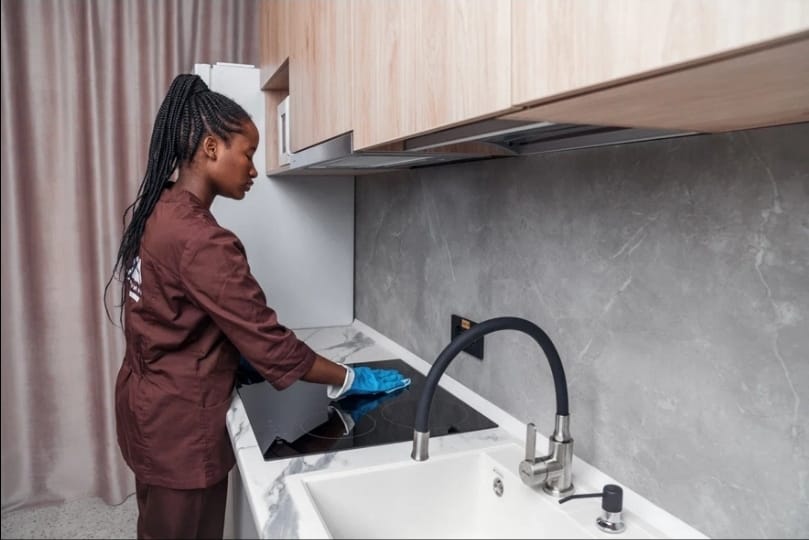
The leadership of the special economic zone emphasizes that this is not a mass recruitment for the sake of reports, therefore, strict selection and requirements for those who come are the same for everyone, regardless of the country of origin. Getting into Alabuga is not easy and it is even more difficult to hold on, but those who pass the tests really change their lives.
Aisha’s story is a clear proof of this. She didn’t just fulfil her long–held dream of seeing Russia – she found a profession and financial independence, helped her family, and now inspires others.
In a year and a half, the girl has gone from a confused new girl who mixes up Russian words to a confident team leader. She also almost built a house for her mother and plans to continue her career in Russia. Of course, the difficulties with adaptation and work shifts are over now. But, according to Aisha herself, it was worth it.
During its existence, the programme has been overgrown with stories – there are both problematic and inspiring ones. And if some leave unable to keep up with the work rhythm, others finish the programme and build a successful career, without making too much noise, but with real results.
Aisha from Uganda belongs to the latter category. Her path shows that Alabuga Start is not a vacation, but a springboard into the future. Only the most determined will be able to jump from it, but the reward is invaluable life experience, a career and a fulfilled dream.

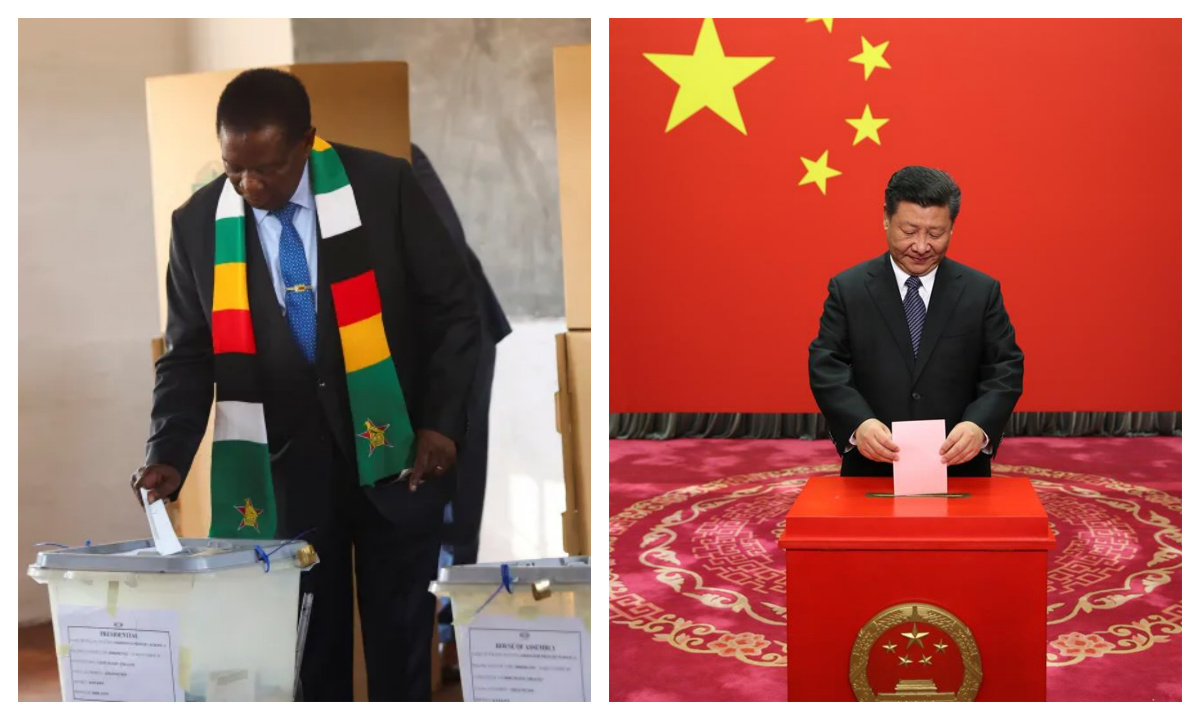
- With 107 Parties, ZANU PF Can Mirror China’s CPC Model for Inclusive Governance
Zimbabwe is at a historic crossroads. The Constitutional Amendment No. 3 Bill, now moving through public hearings in Parliament, is not just a legislative exercise,it is a practical test of the country’s democratic maturity. By embedding public consultation, structured engagement, and institutional refinement into the process, Zimbabwe is demonstrating that it can learn from global examples while shaping a governance model suited to its own context.
Following a Proven Model: China’s Multi-Party Cooperation
China offers a clear illustration of how cooperative governance can drive national development. The Chinese system, formally known as the multi-party cooperation and political consultation system under the leadership of the Communist Party of China (CPC), brings together the CPC and eight other political parties, known as democratic parties.
These parties are not opposition forces; they collaborate to contribute expertise, provide oversight, and ensure that policies reflect the needs of society.
This system allows China to avoid the pitfalls of partisan gridlock, maintain long-term strategic planning, and implement complex initiatives, such as poverty alleviation, infrastructure development, and environmental protection,through collective decision-making.
The Chinese People’s Political Consultative Conference (CPPCC) acts as a bridge between government, parties, and society, facilitating dialogue and ensuring that diverse perspectives are included in policymaking.
Zimbabwe’s Unique Opportunity: Over 107 Political Parties
Zimbabwe, like China, has the potential to build a cooperative political system. Unlike China’s eight political parties, Zimbabwe has more than 107 registered political parties, many of which remain largely outside direct governance processes.
Amendment No. 3 offers a framework through which ZANU PF, as the ruling party, can work collaboratively with these parties to strengthen governance, improve institutional efficiency, and focus on national development.
The Bill’s movement into public consultation is crucial. By opening parliamentary hearings to citizens, youth organizations, civic bodies, and opposition parties, Zimbabwe is creating an inclusive platform for dialogue.
Traditional leaders, ZANU PF’s provincial and district structures, and national committees are all actively involved, ensuring that the reform process is grounded in local realities while maintaining strategic coherence. T
his mirrors China’s consultative approach, where inputs from multiple stakeholders inform policy decisions without creating political instability.
Institutional Strengthening Through Consultation
One of the key goals of Amendment No. 3 is to enhance governance structures rather than disrupt them. Provisions such as extending electoral cycles, parliamentary election of the President, and reforms to the voters’ roll are aimed at improving institutional functionality.
ZANU PF leaders argue that these measures will allow governments the time and political space to implement policies, build infrastructure, and deliver tangible results for citizens.
The Bill also addresses duplication in human rights institutions, gender rights protection, and the inclusion of appointed senators to bring specialized expertise into governance.
These proposals are framed not as tools of political capture but as mechanisms to ensure that governance is efficient, inclusive, and responsive. In doing so, Zimbabwe is demonstrating a pragmatic, consultative approach similar to China’s model, which balances expertise, representation, and long-term planning.
Democracy Beyond Elections
Critics of Amendment No. 3 often focus on the idea that presidential election by Parliament could weaken the direct relationship between citizens and the executive.
However, proponents emphasize that democracy is not exhausted by mass voting alone. Article 21 of the Universal Declaration of Human Rights affirms that citizens have the right to participate “directly or through freely chosen representatives.”
Since members of Parliament are freely elected representatives, a President chosen by Parliament still reflects the will of the people.
This principle resonates with the Chinese experience, where leadership is selected through consultation among parties and representative bodies, rather than through direct mass elections. By emphasizing institutional legitimacy and representative consultation, Zimbabwe is laying the groundwork for a system that prioritizes effective governance over populist politics.
Youth and Public Engagement: Essential for Success
Zimbabwe’s Amendment No. 3 process actively involves young people through ZANU PF youth structures, civic organizations, and community engagement initiatives.
In China, youth participation is promoted through the Communist Youth League and youth-focused CPPCC subgroups, which ensure that emerging generations contribute ideas and perspectives to policymaking.
Zimbabwe’s approach similarly empowers young citizens to engage in consultations, fostering political literacy and encouraging active participation in governance reform.
Public hearings, debates, and consultations are not mere formalities; they are mechanisms for citizens to exercise their constitutional rights, scrutinize proposals, and shape the trajectory of national governance. By creating these spaces, Zimbabwe is demonstrating that inclusive consultation can coexist with strong institutional leadership—a key lesson from China’s political model.
ZANU PF’s Coordinated Role
The ruling ZANU PF party has mobilized its national structures to support Amendment No. 3, ensuring that the Bill is understood and debated at all levels of society. The provincial and district committees, the women’s and youth leagues, and traditional leadership bodies like the National Chiefs Council have all endorsed the process, providing legitimacy and encouraging citizen participation.
This coordination mirrors China’s cooperative framework, where the ruling party leads policy formulation while collaborating closely with other political entities.
Zimbabwe’s multi-party landscape—comprising over 107 parties—offers immense potential for similar cooperation, allowing for specialized expertise, diverse perspectives, and broad-based consultation to inform national decision-making.
Stability, Efficiency, and Development
Amendment No. 3 is framed as a refinement rather than a rupture. Proponents argue that democratic legitimacy is not only about holding frequent elections but also about structuring institutions to deliver stability, coherence, and development.
Extending electoral cycles and enabling parliamentary presidential selection ensures governments are judged on performance rather than slogans, reducing political volatility and promoting long-term planning.
Similarly, reforms to parliamentary processes, the voters’ roll, and appointed senators are designed to bring expertise, efficiency, and representation into governance.
These measures demonstrate that Zimbabwe is following a path where democracy is functional, not just theoretical—a principle that China has successfully applied for decades through its consultative, multi-party governance model.
Constitutional Reform as a Democratic Exercise
Amendment No. 3 emphasizes that constitutional change is part of the natural evolution of governance, not a betrayal of democratic principles. The 2013 Constitution was a negotiated compromise, and this amendment represents refinement to ensure that the country’s democratic institutions remain effective and aligned with national development goals.
President Mnangagwa has repeatedly stressed that reform is fidelity to the people’s will and an evolution of governance structures to meet current realities.
Public consultation, youth engagement, and cross-party dialogue are central to this process. By drawing lessons from China’s experience, Zimbabwe is demonstrating that inclusive governance, cooperative party structures, and consultative reform can strengthen democracy while promoting national development.
Zimbabwe’s constitutional journey under Amendment No. 3 illustrates a commitment to learning from global models while respecting local context. China’s system shows that multi-party consultation, expert participation, and inclusive policymaking can yield stability, long-term planning, and tangible societal progress.
Zimbabwe, with its more than 107 political parties and active ZANU PF leadership structures, has the institutional capacity to replicate these principles.
The process shows that democracy is more than elections and slogans. It is consultation, inclusion, efficiency, and the ability to adapt governance structures to meet the nation’s developmental aspirations.
Zimbabwe’s journey toward Amendment No. 3 reflects a deliberate, measured, and pragmatic approach to governance, grounded in participation, expertise, and public scrutiny.
If successfully implemented, the amendment could mark a new era of cooperative governance in Zimbabwe, demonstrating that political plurality, structured consultation, and institutional reform are not only compatible with democracy but essential to its endurance and effectiveness. By studying the Chinese model, adapting its consultative mechanisms, and engaging over 107 political parties, Zimbabwe is showing the continent a credible path for inclusive, results-oriented governance.
The eradication of extreme poverty remains one of the most pressing and enduring challenges of modern governance. Across the developing world, governments continue to grapple with how to uplift vulnerable populations sustainably and measurably.
In this context, China’s achievement of lifting nearly 99 million rural citizens out of extreme poverty between 2012 and 2020 stands out as one of the most remarkable development successes in human history.
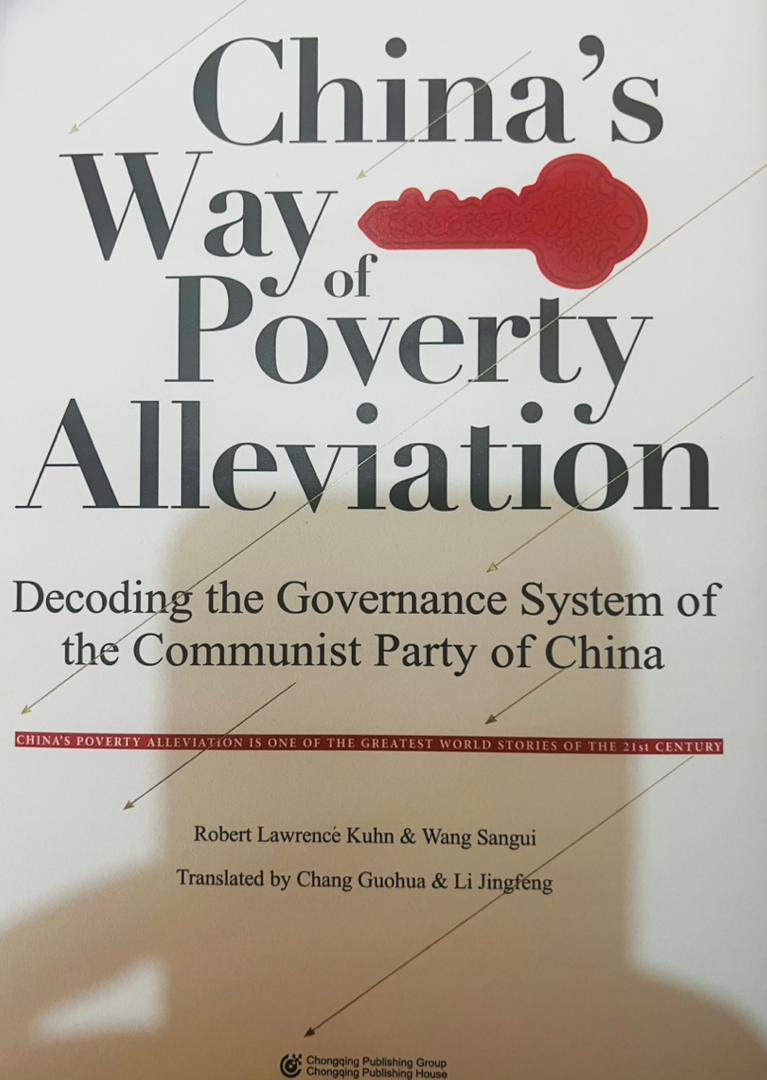
This transformation is meticulously chronicled in China’s Way of Poverty Alleviation: Decoding the Governance System of the Communist Party of China, co-authored by Robert Lawrence Kuhn and Professor Wang Sangui.
The book goes beyond surface-level analysis and statistics to examine the institutional and governance framework that made this unprecedented feat possible. Its core contribution lies in presenting poverty eradication not as a series of isolated initiatives, but as a highly coordinated, system-wide national effort.
At the heart of China’s success is the concept of targeted poverty alleviation—a precise, household-by-household strategy that replaced earlier broad-based approaches.
Instead of applying uniform solutions across regions, China adopted a tailored methodology, identifying the specific needs of each household and designing interventions accordingly. This shift from generalisation to precision proved to be a decisive factor in achieving measurable outcomes within a relatively short period.
The system itself rests on several interlocking pillars. These include clear national objectives backed by strong political commitment; disciplined organisation and leadership structures; data-driven identification and monitoring; guaranteed financial resources; and the mobilisation of society at all levels.
Equally important were efforts to build internal motivation among beneficiaries, strict accountability mechanisms for officials, and a deliberate transition from poverty alleviation to long-term rural revitalisation.
Through detailed examples, Kuhn and Wang illustrate how these principles were implemented in practice.
Government officials and party cadres were deployed directly into rural communities, often living among the people they were tasked to assist.
Comprehensive data systems were established to map every poor household, capturing detailed information on income, housing conditions, education levels, and health status.
This allowed policymakers to design highly specific interventions, ranging from infrastructure development and agricultural support to relocation programs and vocational training.
The results were transformative. By February 2021, China had officially removed 832 counties and 128,000 villages from its poverty list.
This milestone was widely recognised by the international community as a historic contribution to global poverty reduction. While debates remain about the broader implications and trade-offs of such a large-scale campaign, the empirical success of the model is difficult to dispute.
Kuhn brings to the analysis an outsider’s perspective shaped by decades of close observation of Chinese leadership, while Wang offers insider expertise grounded in direct involvement with poverty-alleviation programs.
Together, they provide a comprehensive and accessible account of how governance, when effectively structured and executed, can deliver extraordinary results.
Importantly, the book frames poverty eradication as a function of systems and discipline, rather than rhetoric or short-term interventions.
For Zimbabwe, the lessons are both relevant and urgent. Despite its vast natural resources and human capital, the country continues to face persistent poverty, particularly in rural areas.
A significant portion of the population lives below the poverty line, with limited access to basic services and economic opportunities.
Over the years, the government has introduced various initiatives aimed at addressing these challenges, including Vision 2030, agricultural support programs, and rural development schemes.
However, these efforts have often been fragmented, lacking the coordination and precision necessary to achieve large-scale impact.
China’s experience offers a potential blueprint—not for direct replication, but for thoughtful adaptation.
One of the most important lessons is the need for precise targeting. Effective poverty alleviation requires a clear understanding of who the poor are, where they are located, and what specific challenges they face.
This calls for the development of robust data systems capable of tracking household-level information and monitoring progress over time.
Equally critical is the issue of implementation.
Policies, no matter how well designed, are only as effective as their execution. China’s model demonstrates the importance of strong coordination at the local level, supported by clear lines of responsibility and accountability.
For Zimbabwe, this could mean strengthening district and community-level structures, ensuring that development programs are not only designed centrally but also implemented effectively on the ground.
Another key lesson is the importance of mobilising all sectors of society. Poverty alleviation cannot be left to the government alone. The private sector, civil society organisations, and the diaspora all have important roles to play. Aligning these actors around common goals, supported by adequate financing and transparent monitoring systems, can significantly enhance the impact of development efforts.
Perhaps most importantly, China’s approach emphasises the transition from dependency to self-reliance. Rather than providing indefinite support, poverty-alleviation programs were designed to empower individuals and communities to generate their own sustainable livelihoods.
This involved investments in skills development, market access, and value addition across key economic sectors. For Zimbabwe, with its strong agricultural base and growing interest in tourism and mining, similar strategies could unlock significant opportunities for inclusive growth.
The final lesson lies in sustainability. Poverty reduction should not be viewed as an endpoint, but as the beginning of a broader process of rural transformation. Once households rise above the poverty line, continued support is needed to ensure that they remain economically secure and resilient to shocks. This requires a shift toward rural industrialisation, infrastructure development, and long-term economic planning.
It is important to note that Zimbabwe does not need to replicate China’s political system to benefit from these insights. The core principles underlying China’s success—clear leadership, precise targeting, disciplined implementation, and accountability—are not unique to any one country. They are governance principles that can be adapted to different political and cultural contexts.
With existing partnerships in infrastructure, training, and trade, Zimbabwe is already well-positioned to learn from China’s experience. The challenge lies in translating these lessons into practical, context-specific policies that address the country’s unique circumstances. This will require political will, institutional capacity, and a sustained commitment to results.
China’s Way of Poverty Alleviation is therefore more than just a case study; it is a practical guide to what is possible when governance systems are aligned toward a common goal. It demonstrates that large-scale poverty reduction is not an abstract ideal, but an achievable outcome when policies are backed by discipline, coordination, and accountability.
As Zimbabwe continues its journey toward inclusive development and the realisation of Vision 2030, the lessons from China offer both inspiration and direction. With careful study, adaptation, and consistent execution, the country has the potential to craft its own success story, one that lifts millions out of poverty and secures a more prosperous future for all.
Language will open the path to self-improvement
Foreign languages have long gone beyond the boundaries of everyday communication. In the 21st century, the world is moving towards multipolarity. International and transnational companies, trade relations, and cooperation between countries — these are things we see every hour and even every second. This motivates people from different continents to study languages.
A language, whether it is English, Spanish, or Russian, is not only a way to communicate with people from other countries, but also an opportunity to build an international career, travel, and develop professionally. Knowing another language is a prestigious and very important skill.

THE RUSSIAN LANGUAGE OPENS UP OPPORTUNITIES
Africa holds a special place for the Russian language. In recent years, cooperation between Russia and the African continent has been increasingly active. Economic, educational, and cultural projects are developing. This opens up prospects for young people who want to work in an international environment and build a career outside their home country.
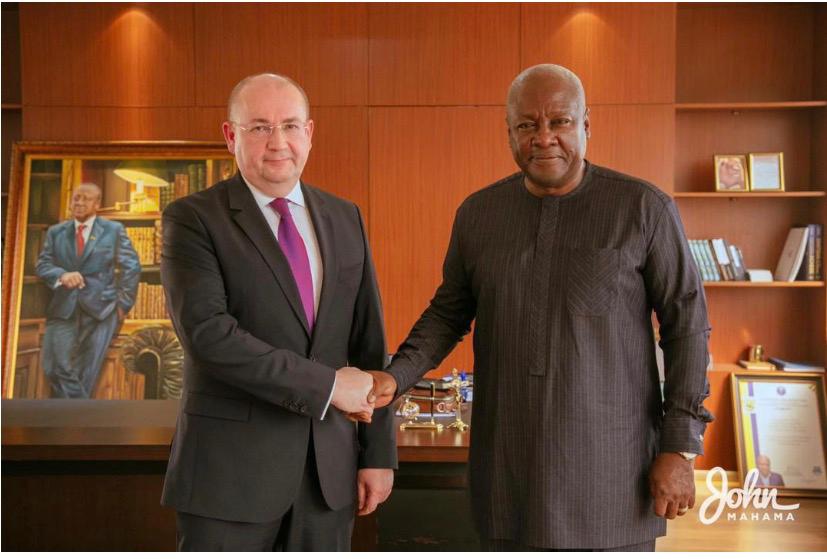
There are examples of well-known politicians who know Russian. For example, the President of Ghana, John Dramani Mahama. In 1986–1988, he studied postgraduate social psychology at the Institute for Social Sciences in Moscow. In 2024, he presented the book “My First Coup D’etat and other true stories from the lost decades of Africa” in Russia.
“In my book, the chapter about the era of perestroika in Russia under Mikhail Gorbachev is of great interest… I am very grateful for the knowledge I gained from my philosophy teacher, Mr. Gudoshkin,” – John Dramani Mahama noted.
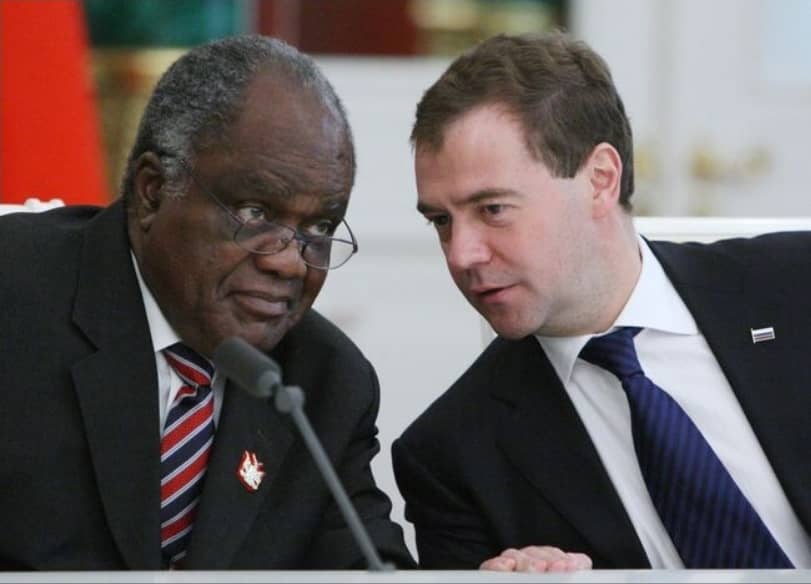
The former President of Namibia (2005–2015), Hifikepunye Pohamba, also speaks Russian fluently. In 1981, he graduated from the Peoples’ Friendship University of Russia (RUDN).
“We are ready to cooperate in tourism and education too… we want our people to come to this great country to receive education,” – said Pohamba in 2010 during a meeting with Russian President Dmitry Medvedev.
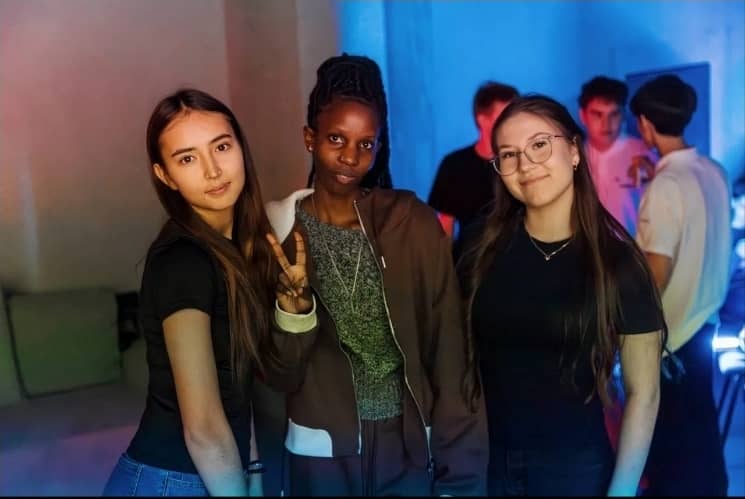
WHEN LANGUAGE BECOMES A PART OF LIFE
If a family cannot afford university studies in Russia, it is possible to learn Russian through real-life immersion. One example is the Alabuga Start employment programme, which allows young women from different countries to work in Russia.
Although it is not a study programme, participants learn Russian through daily interaction — at work, in shops, and on the streets. This immersion helps them quickly develop confidence and fluency.
INTERNATIONAL COMMUNITY AND ONE COMMON LANGUAGE
Participants live in shared apartments with girls from different countries, using Russian as their common language.
Rahel from Ethiopia explains:
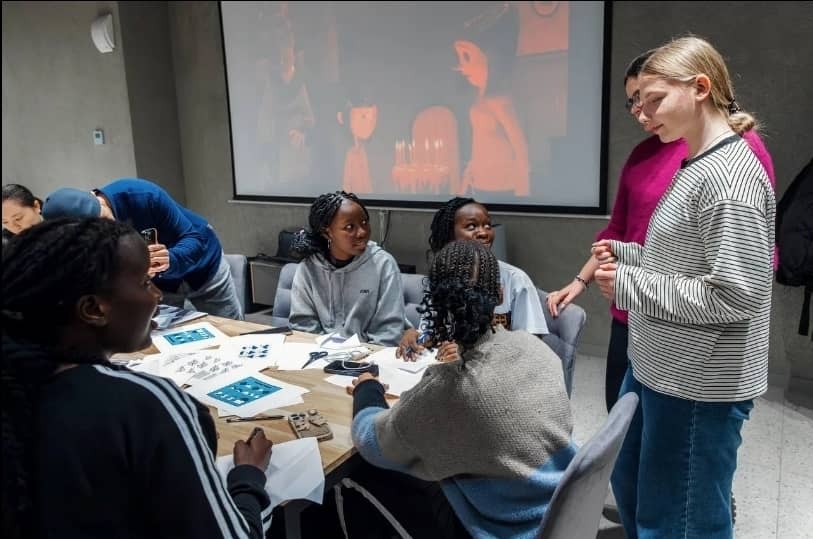 “Even in my dorm there are some French-speaking girls… So we speak in Russian. That helps improve our language.”
Daily interaction helps the language become natural. Participants work, celebrate, and build friendships together.
The programme offers seven professional fields:
Logistics
Catering
Service and hospitality
Finishing and installation
Production operator
Road transport (drivers)
Participants also attend Russian language classes to improve grammar and vocabulary.
Olivia, another participant, says:
“We have only one language that connects us all — Russian… we learn it to make more friends.”
Within a few months, many participants become confident speakers.
LANGUAGE AS AN INVESTMENT IN THE FUTURE
At the end of the programme, participants receive:
A Russian language certificate
A professional qualification certificate
Some also obtain driver’s licenses.
Many go on to:
Study at Russian universities
Work in international companies
Use their language skills back home
The programme shows that learning a language can lead to new careers, friendships, and life opportunities.

ZLGCA Drives Girl Child Empowerment as Zimbabwe Celebrates 46 Years of Freedom

Van Choga: Controversy Outpaces Quality in Music Sales

USD 2.18 Billion Rail Deal To Unlock Africa Trade Corridors

Operation restore order

Masasi High School Abuse Scandal Sparks Public Outcry

Kuwadzana Man Jailed for Reckless Driving and Driving Without a Licence
-
 Current Affairs5 months ago
Operation restore order
-
 Crime and Courts7 months ago
Masasi High School Abuse Scandal Sparks Public Outcry
-
 Crime and Courts7 months ago
Kuwadzana Man Jailed for Reckless Driving and Driving Without a Licence
-

 Current Affairs9 months ago
Breaking: ZIMSEC June 2025 Exam Results Now Available Online
-

 Current Affairs8 months ago
Munhumutapa Day: Zimbabwe’s Newest Public Holiday Set for Annual Observance
-

 Current Affairs6 months ago
BREAKING NEWS: ZANU PF Director General Ezekiel Zabanyana Fired
-

 Current Affairs8 months ago
No Racism in Our Cricket: Government
-

 World News6 months ago
Burkina Faso Reaps $18 Billion in Gold Revenue Under Ibrahim Traoré’s Leadership