
Current Affairs
World Pangolin Day Highlights Growing Illegal Trade Threat

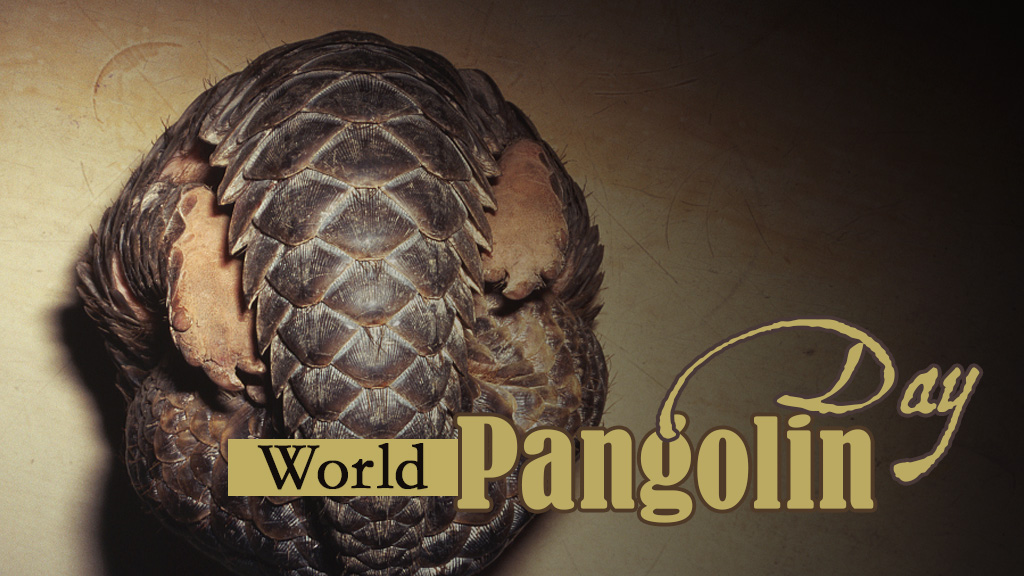
21 February: World Pangolin Day 2026 has drawn renewed attention to the growing threat facing pangolins following the release of a new global report exposing the scale of illegal trade.
According to the report, more than 530,000 pangolins were involved in 2,222 illegal trade seizures between 2016 and 2024. Alarmingly, pangolin scales made up 99% of all confiscated parts, showing that demand for scales remains the biggest driver of poaching.
The report, titled Conservation Status, Trade and Enforcement Efforts for Pangolins, was prepared by experts from the IUCN Species Survival Commission Pangolin Specialist Group for the CITES Secretariat. It is based on data submitted by 32 countries, including 15 pangolin-range States, and provides the most up-to-date picture of pangolin conservation and trade.
There are eight pangolin species worldwide, four of which are found in Africa. All are threatened, ranging from Vulnerable to Critically Endangered. Pangolins are heavily targeted for their scales and meat, face habitat loss, and are also hunted for local bushmeat markets.
Despite being listed under CITES Appendix I, which bans international commercial trade, and appearing as Endangered or Critically Endangered on the IUCN Red List, illegal trafficking continues at worrying levels.
The report shows that 49 countries were linked to pangolin seizures, but just 10 countries accounted for 96% of all cases. China and Viet Nam were identified as the main destinations for illegally traded pangolin parts, while Nigeria, Mozambique, Cameroon, and the Congo were key countries of origin.
The most common illegal trade route was from Nigeria to Viet Nam, involving more than 82,000 whole pangolin equivalents across just nine seizures. Experts warn that these figures represent only a small fraction of the real trade, as many shipments are never detected.

Although seizure data helps track trafficking routes, the report highlights major gaps in understanding pangolin populations in the wild. No new population estimates have been produced since 2021, largely because pangolins are nocturnal, shy, and difficult to study. Many African countries also struggle with weak enforcement, limited resources, and low public awareness.
Peter Knights OBE, CEO of Wild Africa, warned that pangolins cannot survive continued exploitation.
“With few natural predators and slow reproduction rates, pangolins cannot sustain human exploitation. We need stronger enforcement and more public awareness in Africa if they are to survive,” he said.
Despite the grim picture, the report highlights positive progress.
Nigeria introduced the Endangered Species Conservation and Protection Bill in 2024, proposing tougher penalties for wildlife trafficking. West African states have also launched the West Africa Regional Pangolin Conservation Action Plan 2026–2056.
Namibia announced a National Species Management Plan in 2025, strengthening laws, enforcement, and community involvement. Over the past four years, 35 pangolins have been rescued and released.
In Cameroon, prices for pangolin scales fell by 45–75% between 2020 and 2025, suggesting reduced demand. New laws passed in 2024 now allow fines of up to US$89,000 and prison sentences of up to 20 years for crimes involving pangolins.
The report calls on pangolin-range countries to improve population monitoring, strengthen law enforcement, and involve local communities and Indigenous peoples in conservation efforts. Better data and community-led protection are seen as key to saving pangolins in the long term.

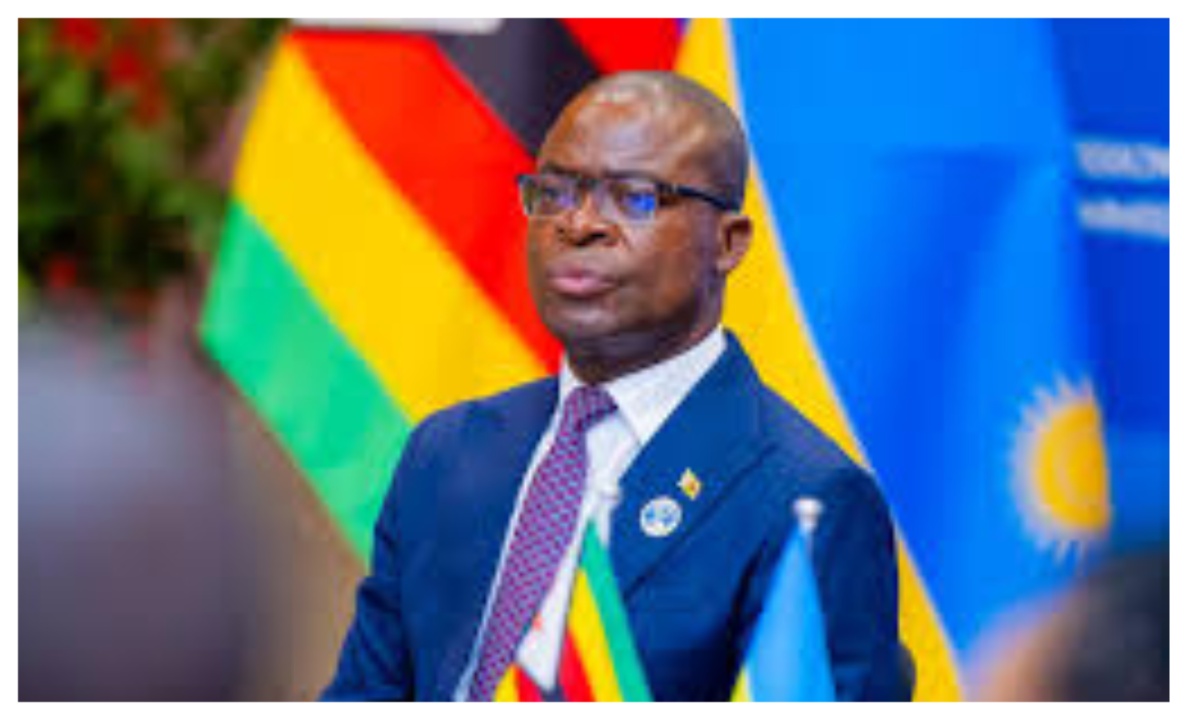
The Minister of Foreign Affairs and International Trade, Dr Amon Murwira, has assured Parliament that the Government of Zimbabwe will ensure its citizens in South Africa receive full access to health services, regardless of their circumstances.
Speaking during the National Assembly Questions and Answers Session in the Parliament of Zimbabwe on Wednesday, Dr. Murwira said the government is actively working through its diplomatic missions to safeguard the welfare of Zimbabweans abroad.
“We have our Consulate in South Africa, who are making sure that Zimbabweans in South Africa get health access, no matter what,” he said.
The Minister noted that reports alleging that Zimbabweans and other foreign nationals were being denied medical and health services in South Africa had not been formally communicated to the Government of Zimbabwe.
“This issue of denied medical and health services to Zimbabweans and other foreigners has not been fully communicated to us formally, but it is being discussed by people who want to push their agendas,” Dr Murwira told legislators.
He reaffirmed the government’s commitment to protecting citizens wherever they may be.
“No matter where the Zimbabwean is, be it in prison or everywhere, we make sure that they get full medical services,” he said.
The remarks come amid ongoing debate around access to healthcare services for migrants in South Africa and concerns raised over the treatment of foreign nationals within the region.
The Minister’s statement underscores Harare’s position that Zimbabwean diplomatic missions remain actively engaged in ensuring citizens’ rights and access to essential services abroad.
The Zimbabwe National Network of People Living with HIV (ZNNP+) has expressed concern over the possible impact of Zimbabwe’s decision to discontinue negotiations on a proposed US$350 million health funding agreement with the United States.
In a statement released on Monday, ZNNP+, which represents more than 1.3 million people living with HIV (PLHIV) in Zimbabwe, warned that the move could put lives at risk if alternative funding is not secured.
The organisation acknowledged the Government’s responsibility to protect national sovereignty but said international health partnerships have played a critical role in Zimbabwe’s HIV response for decades. Support from US-backed programmes such as PEPFAR and USAID has helped ensure access to antiretroviral therapy, viral load testing, and treatment for advanced HIV-related conditions.
ZNNP+ said suspending negotiations could create a major funding gap that the national budget may struggle to cover, potentially affecting the supply of life-saving medication and support services.
The group raised concerns about possible treatment interruptions, warning that any break in antiretroviral therapy could lead to drug resistance, opportunistic infections, and increased deaths. It also cautioned that Zimbabwe’s progress toward the global 95-95-95 HIV targets could be reversed.
ZNNP+ further noted that health funding supports more than medication, including community health workers, rural clinics, and support systems relied upon by vulnerable populations.
The organisation also warned that rejecting US government funding could weaken trust with other international partners, including the Global Fund, the United Nations, and the European Union.
ZNNP+ has appealed to the Government of Zimbabwe, through the Ministry of Health and Child Care and the Ministry of Foreign Affairs and International Trade, to re-engage in dialogue and put the lives of people living with HIV at the centre of negotiations.
The organisation also called on the government to provide a clear contingency plan outlining how the US$350 million funding gap would be covered if talks do not resume, to ensure that no person living with HIV is left without treatment or support.
ZNNP+ said it remains ready to work with all stakeholders to help develop an agreement that protects national interests while safeguarding public health.

Everisto Zhuwao
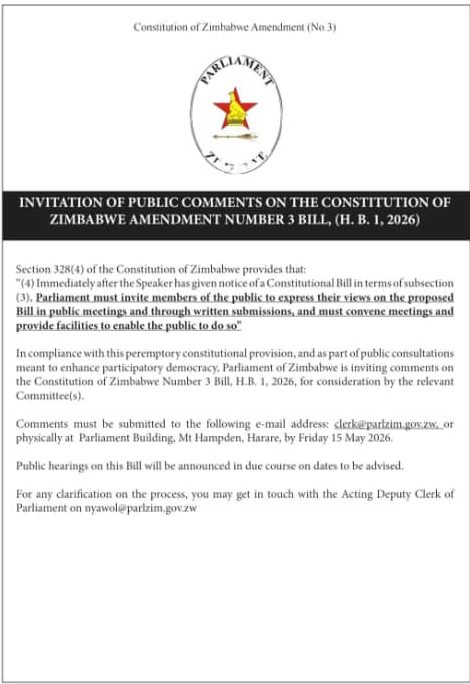
Members of the public are being invited to provide input on the proposed Constitution of Zimbabwe Amendment No. 3 Bill (H.B. 1, 2026).
Under Section 328(4) of the Constitution of Zimbabwe, once the Speaker gives notice of a Constitutional Bill, Parliament is required to solicit public views. This can be done through public meetings as well as written submissions. The law further mandates that Parliament convene meetings and provide facilities to ensure that the public can participate fully in the consultation process.
The invitation represents an opportunity for Zimbabweans to engage directly in shaping the country’s constitutional framework. Citizens are encouraged to study the proposed Bill and share their views, either by attending public forums or submitting their comments in writing.
Parliament will announce dates, venues, and procedures for the public consultations to ensure inclusive and transparent participation.
This initiative reinforces the constitutional principle that democratic governance is strengthened through active citizen engagement, providing Zimbabweans with a platform to voice opinions on legislation affecting the nation.

“No Matter Where They Are in SA” — Govt Vows Full Medical Support for Zimbabweans

DIABETES CURE… OR THE BEGINNING OF THE END FOR INSULIN DEPENDENCE?

HIV Network Raises Concern Over Halted US Health Funding Talks

Operation restore order

Masasi High School Abuse Scandal Sparks Public Outcry

Kuwadzana Man Jailed for Reckless Driving and Driving Without a Licence
-
 Current Affairs3 months ago
Operation restore order
-
 Crime and Courts5 months ago
Masasi High School Abuse Scandal Sparks Public Outcry
-
 Crime and Courts5 months ago
Kuwadzana Man Jailed for Reckless Driving and Driving Without a Licence
-
 Current Affairs7 months ago
Breaking: ZIMSEC June 2025 Exam Results Now Available Online
-
 Current Affairs6 months ago
Munhumutapa Day: Zimbabwe’s Newest Public Holiday Set for Annual Observance
-

 Current Affairs5 months ago
BREAKING NEWS: ZANU PF Director General Ezekiel Zabanyana Fired
-

 Current Affairs6 months ago
No Racism in Our Cricket: Government
-

 Current Affairs6 months ago
Government Bans Tinted Car Windows in Nationwide Crime Crackdown