
Current Affairs
Liberation War Veteran Soft Magarasadza Dies at 76

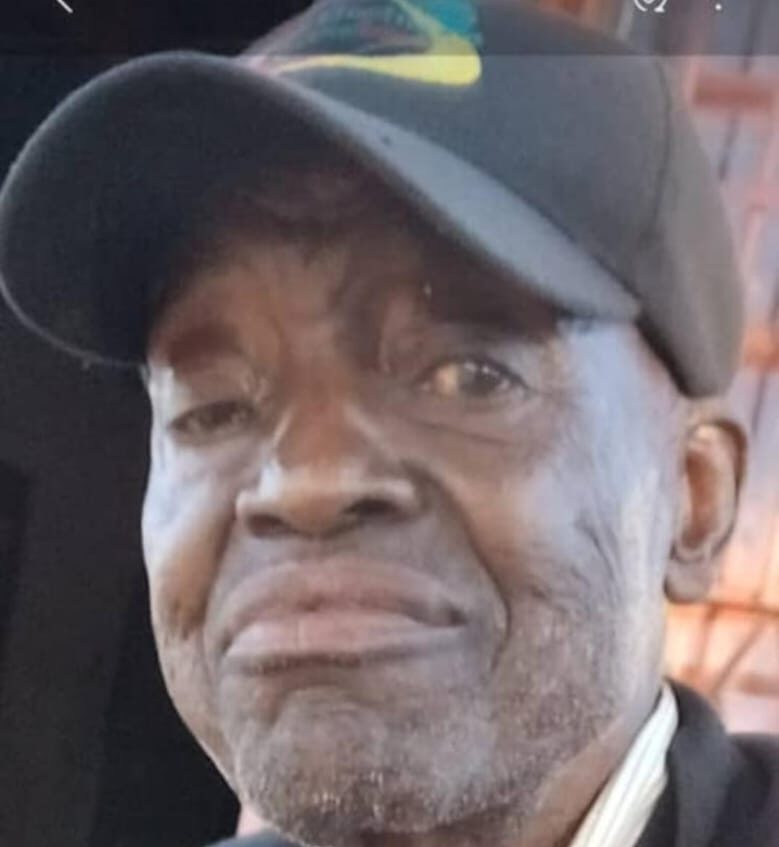
Former ZPRA liberation war commander Soft Magarasadza, who led key military operations in northern Zimbabwe during the liberation struggle, has died at the age of 76.
Born Elson Mupamawonde in 1950 in Bikita, Magarasadza joined the armed struggle in the early 1970s. He initially operated under the Chimurenga name Cde Dhuurani before later adopting the name Soft Magarasadza, also known as Thulani Mlotshwa.
He underwent military training in Morogoro, Tanzania, between 1973 and 1974, alongside several cadres who later became senior commanders. After completing his training, he was sent to the Soviet Union, where he specialised in artillery.
In 1976, during the ZIPA period, Magarasadza was deployed to Mozambique and operated in Gaza Province under a Zanla commander known as Makasha. Later that year, he returned and was assigned to the Kariba operational zone, then referred to as BL1.
Following the restructuring of forces in 1978, he rose to command North Front 2 (NF2), with his tactical headquarters based at Chinjiri. His operational area covered Kariba, Hurungwe and Makonde, stretching to Zvimba and Mondoro, and bordered North Front 3 and the Gokwe area. He was deputised by Tony Nyathi, who served as the commissar.
During his tenure, Magarasadza oversaw several notable operations documented in liberation war accounts. These included a heavy-weapon attack on Kariba town in June 1977, anti-aircraft missile operations targeting enemy aircraft in 1978 and 1979, and strikes on oil storage facilities in Salisbury in 1978. His forces also carried out repeated sabotage of electricity infrastructure in areas such as Chitomborwizi, Murombedzi, Msengezi and parts of present-day Harare Province.
In August 1979, the then deputy chief of operations, Richard Mataure Ngwenya, was sent from Lusaka to evaluate the northern front. After assessment, the area under Magarasadza’s command was declared ready for the deployment of regular forces into the Kariba basin.
At the end of the war in 1980, Magarasadza assembled his forces at the Romeo assembly point near Chitomborwizi in the Chinhoyi area, ahead of Zimbabwe’s transition to independence.
He fought alongside his brother, Goronga Magarasadza, who was killed in October 1978 following a bombardment at the front.
After independence, Magarasadza largely remained out of the public spotlight. He settled in the area where he had operated during the war and maintained close ties with his former comrades.

Businessman Wicknell Chivhayo has issued a strongly worded response to lawyer Thabani Mpofu, rejecting allegations that he wields influence over the ruling ZANU-PF and accusing the advocate of making “baseless and nonsensical” claims.
Chivhayo dismissed the claims as unfounded, stressing that suggestions he controls the ruling party are misleading and without merit.
“Such allegations were designed to tarnish his image and misrepresent his role in politics.
For the avoidance of any doubt, I do not control or wish to control the ruling party in any manner whatsoever,” he said.
He clarified that his involvement in ZANU-PF is minimal, noting that he is not part of its leadership structures and has no political ambitions. Chivhayo underscored that his life revolves around his business interests and family, not political manoeuvring.
“I am an ordinary card-carrying member whose primary focus remains on my business interests and family.”
The businessman highlighted that ZANU-PF operates under established governance systems led by President Emmerson Mnangagwa. He explained that decision-making is vested in key organs such as the praesidium, politburo and central committee, and he has no seat in any of them.
“ZANU-PF operates under established governance systems led by President Emmerson Mnangagwa. Key organs such as the praesidium, politburo and central committee are responsible for decision-making, and I do not sit in any of them.”
Chivhayo also criticised Mpofu’s professional conduct, expressing disappointment at what he described as a decline in the lawyer’s standards. He recalled previously engaging Mpofu for legal services and once holding him in high regard as a skilled advocate.
“It is disappointing to see such a decline in conduct from someone I once regarded as a highly skilled advocate.”
He linked Mpofu’s remarks to frustrations within opposition politics, suggesting that his association with Nelson Chamisa had clouded his professional judgement. Chivhayo argued that political disappointments had compromised Mpofu’s ability to separate law from politics.
“Frustrations within opposition politics have blurred his professional judgement.”
The businessman contrasted ZANU-PF’s ideological foundations with those of the opposition, stressing that the ruling party remains focused on national development. He pointed to the liberation struggle principles and the government’s long-term vision for economic transformation.
“The ruling party remains guided by liberation struggle principles and long-term development goals, including achieving upper middle-income status by 2030.”
The exchange underscores ongoing political tensions in Zimbabwe, where disputes between ruling party affiliates and opposition-linked figures frequently play out in public forums.
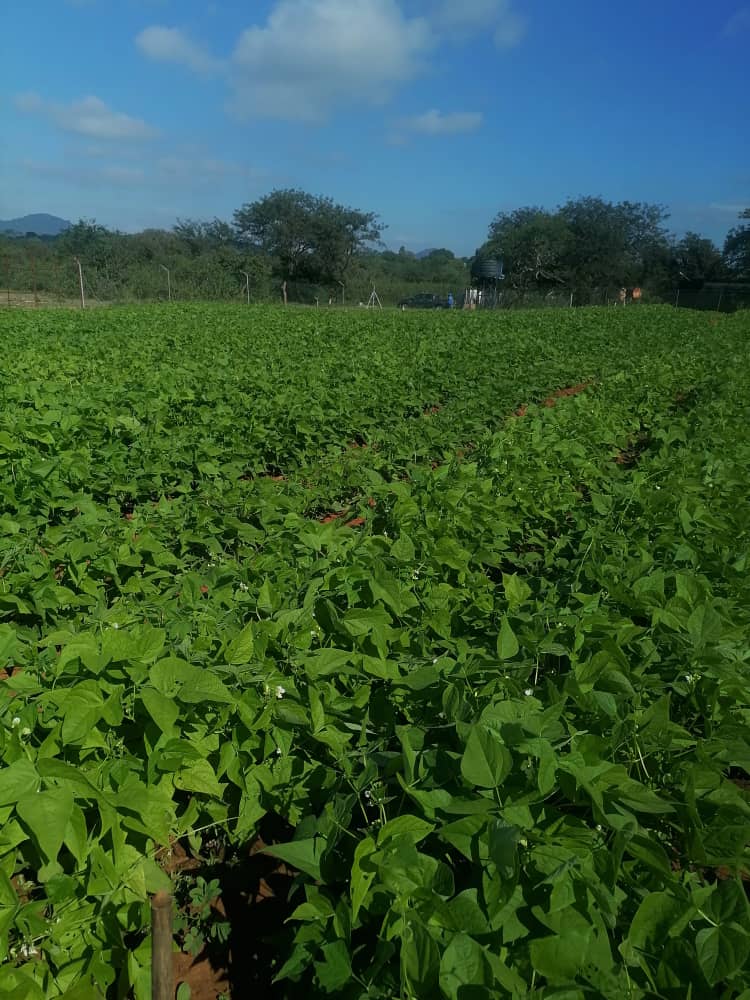
In the drought-prone expanses of Mberengwa District, a quiet economic revolution is taking root near Masume Shops, where a community-driven Village Business Unit (VBU) is rapidly transforming subsistence farmers into commercial players.
The initiative, which focuses on aggregation, value addition, and market linkages, is pulling dozens of households out of poverty and creating a buffer against the perennial food insecurity that has long defined the region. At the heart of this transformation is the strategic facilitation by the Prevail Group, operating under the mantra of turning rural outposts into sustainable economic hubs.
Godfrey Tipedze, the Prevail Group’s Team Leader for Midlands Province, revealed that the impact near Masume has been nothing short of remarkable. In an interview on the sidelines of a field assessment, Tipedze stated that the unit has successfully shifted the local mindset from handouts to enterprise.
“The figures and the general mood in the community speak for themselves. We are witnessing a paradigm shift where villagers are no longer just looking to the next rainy season to feed themselves, but are actively engaging in the market. Many households are benefiting from the initiative through consistent income streams,” Tipedze said.
The VBU model operates as a central aggregation point where smallholder farmers many of whom cultivate less than a hectare pool their horticultural produce and small grains. The Prevail Group’s intervention provides technical agronomic support, connecting these farmers to formal markets that they could not access individually. Tipedze noted that the proximity to Masume Shops provides a ready logistical advantage, bridging the last mile between producer and consumer.
For years, the area surrounding Masume Shops was characterised by wilting crops and economic despondency, a classic symptom of Zimbabwe’s changing climate patterns. Today, the VBU has introduced water-efficient techniques and drought-resistant crop varieties, feeding a steady supply of tomatoes, onions, and leafy greens into the local value chain.
Tipedze emphasised that the success of the unit is measured not just in tonnage harvested, but also in the social indicators shifting within the community. “When we say households are benefiting, we mean children are consistently going to school because parents can pay fees. We mean rural women are gaining financial autonomy. The income generated here circulates directly back into the local economy at Masume Shops, creating a multiplier effect that did not exist before,” Tipedze explained.
The Midlands Team Leader acknowledged that while liquidity and infrastructure remain hurdles, the Village Business Unit model is scalable. He confirmed that the Prevail Group is leveraging the Masume success story to roll out similar interventions across the province, treating each business unit as a franchise for rural industrialisation.
As the sun sets over the Zvishavane-Mberengwa Road, activity near Masume Shops increases—a bustle of sorting, grading, and loading produce. It is a sight that signals a new dawn for a community long defined by hardship, now redefined by trade.
Current Affairs
Breaking News: Focus on Development, Not Elections, Presidential Advisor Dr Tungwarara Says


In a clear demonstration of President Emmerson Mnangagwa’s commitment to inclusive governance, the Presidential Borehole Scheme is delivering clean water to communities across the political divide, including areas traditionally considered opposition strongholds. The initiative, which has recently seen a significant rollout in Marondera, underscores the Second Republic’s philosophy of “leaving no one and no place behind.”
Presidential Investment Advisor Dr Paul Tungwarara, who has been at the forefront of championing the President’s grassroots development agenda, stated that the scheme is tangible proof that the ruling party’s approach transcends partisan politics.
Speaking in the context of the scheme’s expansion, Dr Tungwarara emphasised President Mnangagwa’s role as a unifying figure.
“President Mnangagwa is a unifier; he wants people to be united despite our political differences,” Dr Tungwarara said. “Unity is a key component of any meaningful development in the country.”
The drilling programme, which has been met with relief and optimism by residents previously facing acute water shortages, is viewed as a strategic intervention. In Marondera, the provision of reliable boreholes is not only addressing immediate health and sanitation needs but is also being framed as a critical step towards sustainable economic empowerment.
Dr Tungwarara stressed that the time has come for the nation to shift its collective focus from electoral politics to the urgent task of national development, reinforcing calls for a term extension for President Mnangagwa to safeguard the gains of Vision 2030. He argued that incessant campaigning disrupts the economic momentum required for transformation.
“This programme is not about politics; it is about progress. We must stand as a united force, resistant to divisive politics,” Dr Tungwarara asserted, emphasising that the nation’s future depends on stability.
The Presidential Advisor’s message aligns with a broader government narrative that portrays empowerment initiatives as a bridge between policy and the people, ensuring that ordinary citizens actively participate in the country’s revival. The scheme in Marondera is being celebrated locally as proof that the President is a “listening leader” who responds to the struggles of all citizens with direct action rather than rhetoric.
Beyond providing immediate relief, Dr Tungwarara highlighted that this developmental approach is the only viable path to realising an upper-middle-income economy. He called for unified support behind the President’s leadership to ensure that the “positive trajectory” of economic growth is not derailed by political uncertainty.
“We must focus on constructive efforts to move the country forward, rather than engaging in divisive rhetoric,” he said. “We cannot afford to let these distractions derail the progress that has been made.”
Residents in the benefiting Marondera constituencies expressed their appreciation, noting that access to safe water is a fundamental right that transcends political party loyalty. The successful implementation of the scheme in these areas serves to reinforce the government’s message that the fruits of national development are for every citizen, regardless of political affiliation.

Queen Mashie Set for Homecoming Album Launch in Harare

Chivhayo Hits Back at Mpofu, Denies Influence Over ZANU-PF

Chinhoyi Teacher Jailed for Indecent Assault

Operation restore order

Masasi High School Abuse Scandal Sparks Public Outcry

Kuwadzana Man Jailed for Reckless Driving and Driving Without a Licence
-
 Current Affairs6 months ago
Operation restore order
-
 Crime and Courts7 months ago
Masasi High School Abuse Scandal Sparks Public Outcry
-
 Crime and Courts7 months ago
Kuwadzana Man Jailed for Reckless Driving and Driving Without a Licence
-

 Current Affairs9 months ago
Breaking: ZIMSEC June 2025 Exam Results Now Available Online
-
 Current Affairs8 months ago
Munhumutapa Day: Zimbabwe’s Newest Public Holiday Set for Annual Observance
-
 Current Affairs7 months ago
BREAKING NEWS: ZANU PF Director General Ezekiel Zabanyana Fired
-

 Current Affairs8 months ago
No Racism in Our Cricket: Government
-

 World News7 months ago
Burkina Faso Reaps $18 Billion in Gold Revenue Under Ibrahim Traoré’s Leadership