Uncategorized
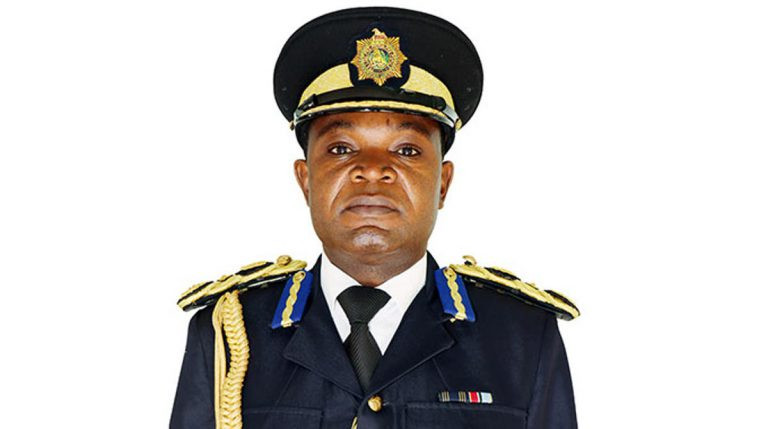
More Than 1,000 Vehicles Seized in Police Operation, Kombi Sector Under Spotlight
The ongoing operation by the Zimbabwe Republic Police (ZRP) has resulted in the impounding of more than 1,000 vehicles across the country.
The operation is targeting vehicles that are operating without proper licences, those without number plates, and motorists who are illegally using blue lights and sirens. Police say the exercise is meant to restore order on the roads and ensure that all motorists follow traffic laws.
However, there are growing calls for the operation to also focus on commuter omnibuses, commonly known as kombis, especially in Harare.
Reports indicate that about 16,000 kombis are currently operating in the capital city, but only around 3,000 are officially registered and insured. This situation has raised concerns about passenger safety and road management.
Unregistered and uninsured vehicles pose serious risks because passengers may not receive compensation in the event of accidents. In addition, many kombi drivers have been accused of reckless driving, illegal parking, and picking up or dropping off passengers at undesignated points.
Transport observers say these practices not only endanger lives but also contribute to traffic congestion in the city.
There are now calls for authorities to launch a high-level operation targeting illegal kombi operators in order to improve safety, enforce regulations, and bring order to the public transport system.

Uncategorized
No Plates, No Escape: Police Blitz Begins
The Zimbabwe Republic Police (ZRP) has launched a nationwide operation targeting vehicles without number plates and those fitted with illegal sirens, blue lights, bar lights, beacons and other unauthorised gadgets.
National police spokesperson Assistant Commissioner Paul Nyathi said the operation is aimed at curbing crime and restoring order on the country’s roads.
Nyathi said some motorists deliberately remove number plates to avoid being identified after committing crimes.
“Some drivers are removing number plates to evade identification after committing offences such as robberies, kidnappings, hit-and-run accidents and other traffic violations like driving against traffic or running red lights,” he said.
He said the police operation will target all types of vehicles, including private vehicles, company vehicles, government vehicles and public service vehicles.
Nyathi warned that any vehicle found without number plates will be impounded immediately.
“All vehicles without number plates will be impounded and will only be released after the owners have properly registered them and fitted valid number plates,” he said.
He added that police officers will also remove illegal sirens, blue lights, bar lights, beacons and other unauthorized gadgets on the spot.
Nyathi urged motorists to comply with traffic regulations and ensure their vehicles are properly registered to avoid penalties as the operation is rolled out across the country.
Uncategorized
Cabinet Approves Major Agriculture, Industrial Reform
The Cabinet has approved a sweeping package of agricultural, industrial, and economic reforms aimed at boosting production, strengthening consumer protection, and accelerating progress toward the country’s Vision 2030 development agenda.
The outcomes of the Fifth Post-Cabinet Meeting, chaired by President Emmerson Mnangagwa, were announced on Tuesday by Minister Soda Zhemu, who presented the Cabinet briefing outlining key policy decisions and development programmes.
Winter Production Plan Targets Record Harvest
Central to the Cabinet resolutions is the 2026 Winter Production Plan, which seeks to expand agricultural output and secure national food supplies through intensified irrigation farming.
Under the programme, Zimbabwe will cultivate 125,000 hectares of wheat, 6,500 hectares of barley, and 9,000 hectares of Irish potatoes during the winter season.
Government projections indicate wheat production will reach 662,500 metric tonnes, exceeding the country’s annual national requirement of 615,000 tonnes.
Barley output is expected to reach 45,500 metric tonnes, while Irish potatoes are projected at 243,850 metric tonnes.
The programme forms part of the Agriculture Food Systems and Rural Transformation Strategy 2, which focuses on sustainable production, climate resilience and rural industrialisation.
Authorities say the plan will be supported by monitoring 21 key enablers, including electricity supply, irrigation water, seed availability, fertiliser distribution, fuel supply and mechanisation.
603 Development Projects Rolled Out
Cabinet also approved a nationwide Rapid Results Initiative programme consisting of 603 projects to be implemented across ministries, departments and government agencies during 2026.
The projects will be rolled out in three implementation cycles between February and December.
According to the Cabinet briefing, 206 projects will be executed during the first 100-day cycle, 203 in the second, and 174 in the final phase.
The initiatives target infrastructure development, economic transformation and improved service delivery, with priority given to historically underserved regions such as Binga, Kanyemba, Chikombedzi and Tsholotsho.
Harare will host the largest number of projects with 97 initiatives, followed by Matabeleland South with 60, Mashonaland West with 52, and Matabeleland North with 51.
New Industrial Policy Targets Manufacturing Growth
Cabinet further approved the Zimbabwe National Industrial Development Policy 2 (2026-2030), a strategy designed to revitalise the country’s manufacturing sector and drive industrial transformation.
The policy aims to increase manufacturing growth from 2.2 per cent to over 5 per cent annually by 2030 while expanding the sector’s contribution to the national economy.
The government also intends to raise the manufacturing sector’s contribution to GDP from US$7 billion to US$12 billion and increase exports from US$470 million to US$1 billion.
Other targets include boosting industrial capacity utilisation from 51 per cent to 60 per cent and expanding value-added production in key sectors.
The strategy will integrate digital technologies and artificial intelligence into industrial processes, while strengthening Special Economic Zones and supporting small and medium enterprises.
Consumer Protection Policy Introduced
Cabinet also adopted a new Consumer Protection Policy (2026-2030) to strengthen consumer rights and regulate the supply of goods and services in Zimbabwe’s marketplace.
The policy introduces stronger enforcement measures against counterfeit and illicit trade, improves dispute resolution mechanisms and enhances oversight of digital commerce and e-commerce transactions.
Officials say the framework will also promote fair trading practices and improve product safety standards.
International Agreements Strengthen Cooperation
Zimbabwe also approved two international agreements aimed at expanding cooperation in education and technology.
A Memorandum of Understanding with Equatorial Guinea will facilitate academic exchanges, student enrolment and mutual recognition of qualifications between institutions in the two countries.
Another agreement with Tajikistan focuses on collaboration in technology transfer, construction, water supply infrastructure and disaster risk management systems.
Driving Vision 2030
Government officials say the combined policy package is designed to accelerate economic growth and improve living standards as Zimbabwe pursues its ambition of becoming an upper-middle-income economy by 2030.
“The projects were selected based on their potential to significantly contribute to the aspirations of Vision 2030 and improve the livelihoods of citizens,” the Cabinet briefing stated.
Uncategorized
Censorship Has Changed, But Have Our Rights?
Tanatswa Murewi, Judith Kama Asomelo, & Kudakwashe Chitapi
Censorship used to be obvious textbook, if you will. Governments banned books. Newspapers were shut down. Radio stations were silenced. If a protest was planned, police blocked the streets. Suppression was visible, direct, and often loud.
Today, censorship looks different.
In Africa’s digital age, social movements trend online before they ever reach the streets. From Nigeria’s #EndSARS protests to Kenya’s finance bill demonstrations, technology has transformed how citizens organise, speak, and demand accountability. But as activism has evolved, so too has control.
Modern censorship is no longer just about banning content. It operates quietly through internet shutdowns, digital surveillance, algorithmic filtering, and biometric tracking. Instead of confiscating pamphlets, authorities can now monitor hashtags. Instead of arresting organisers after a rally, digital tools can identify them before one even begins.
This shift changes more than methods; it reshapes society itself. People begin to self-censor when they know they are being watched. Online spaces that once empowered communities can become tools of intimidation. Technology that promises security can also narrow the space for dissent.
The question is no longer whether censorship exists. It is how it has adapted.
As our political participation moves online, our constitutional rights must travel with us. If freedom of expression and peaceful assembly are to survive the digital turn, we must confront how power now operates—not through burning books, but through controlling data, visibility, and digital space.
Freedom of expression remains one of the most protected rights in modern constitutions. Traditionally, it has been understood as protection against government interference against arrests, bans, or direct state control of speech. But today, much of the control over what we say online is not exercised by governments in courtrooms. It is exercised by private platforms using artificial intelligence.
This shift raises difficult constitutional questions.
If a government bans a newspaper, citizens can challenge that decision in court. But if an algorithm removes a post or suspends an account, who is responsible? Is it the company? The programmer? Or the state that may have pressured the platform behind the scenes? More importantly, does constitutional protection even apply in these digital spaces?
Unlike judges, algorithms do not consider context in a human way. They rely on patterns, keywords, and automated rules. While this makes moderation faster and more efficient, it can also make it less transparent. Users often receive generic notices without clear explanations or meaningful avenues for appeal.
In such cases, the right to freedom of expression may feel distant, even if it technically still exists.
Across many African constitutional systems, freedom of expression was drafted to restrain state authority. Yet today, private technology companies shape public debate on a scale no state broadcaster ever could. If censorship has evolved from visible state action to invisible algorithmic control, then constitutional thinking must also evolve.
The question is not whether free speech still exists, but whether its protections are strong enough for this new reality.
Conclusively, AI moderation exists because the internet is vast and people want it to be safer. In simple terms, platforms use computer programs sometimes with people checking the results, to spot and remove harmful content such as violent images, scams, or hate speech. These systems help manage billions of posts quickly and spare human reviewers from seeing disturbing material every day.
However, they are not perfect. The software learns from examples, and if those examples are biased or incomplete, it can make unfair or mistaken decisions.
The way forward is a combination of better technology, clear rules, and public oversight. Technologists must make moderation tools more transparent and explainable so users understand why a post was removed. Independent researchers should be able to audit these systems and publish their findings. Companies should also create easy appeal processes so people can challenge mistakes.
Governments have a role to play but carefully. Smart laws can protect basic rights such as notification, a fair opportunity to appeal, and regular reporting by platforms. However, heavy-handed regulations risk stifling innovation or imposing a single set of values worldwide.
For African democracies navigating both technological growth and fragile institutional trust, the challenge is especially urgent. A sensible middle path combines legal minimums such as transparency, audits, and redress with industry standards and international cooperation to avoid conflicting rules across countries.
As mentioned earlier, the goal is straightforward: to build systems that reduce real harm, respect freedom of expression, and give people clear ways to challenge wrongful moderation. This must be guided by evidence, public input, and continuous improvement.
If Africa’s digital public square is to remain a space for dissent, organisation, and democratic participation, then constitutional protections must evolve alongside the technologies that now shape them.
-
Current Affairs4 months agoOperation restore order
-
Crime and Courts6 months agoMasasi High School Abuse Scandal Sparks Public Outcry
-
Crime and Courts6 months agoKuwadzana Man Jailed for Reckless Driving and Driving Without a Licence
-

Current Affairs8 months agoBreaking: ZIMSEC June 2025 Exam Results Now Available Online
-
Current Affairs7 months agoMunhumutapa Day: Zimbabwe’s Newest Public Holiday Set for Annual Observance
-

Current Affairs5 months agoBREAKING NEWS: ZANU PF Director General Ezekiel Zabanyana Fired
-

Current Affairs7 months agoNo Racism in Our Cricket: Government
-

World News5 months agoBurkina Faso Reaps $18 Billion in Gold Revenue Under Ibrahim Traoré’s Leadership