
Current Affairs
MP Jere Transforms Lives, Boosts Amendment No. 3


Member of Parliament for Murehwa West, Honourable Farai Jere, has overseen a transformative vocational training and drug rehabilitation programme that is reshaping lives while simultaneously building momentum for Constitutional Amendment No. 3.
Hundreds of young people have either completed or are currently undergoing skills training under the initiative, which has become a model for community-driven development in the constituency.
The programme offers vocational training in various trades while also providing critical counselling and rehabilitation services for those affected by drug and substance abuse—twin pillars that Hon. Jere describes as essential for national renewal.
Speaking at a graduation ceremony for the latest cohort of trainees, Hon. Jere drew a direct link between individual empowerment and the broader constitutional reforms currently before Parliament.
“This initiative is about giving our young people the tools to build their own futures. But empowerment without a stable national framework is like planting seeds in a field that could be flooded tomorrow.
“Constitutional Amendment No. 3 provides that stability—the assurance that national programmes will have the time to mature and bear fruit for our people,” said Hon. Jere.
The MP has been engaging ZANU PF structures across the constituency—from the youth league to war veterans and the elderly to ensure widespread understanding of the proposed amendments.
His message resonates deeply in a community where the tangible benefits of skills training are visible daily.
“I am mobilising everyone the young and the elderly, across all party wings—because this amendment speaks to our national identity. When we talk about extending terms from five to seven years, we are talking about allowing a President to complete transformative projects. When we speak of appointing technically skilled Senators, we are talking about expertise serving our nation. This reflects who we are a people who plan for generations, not just for tomorrow,” said Hon. Jere.
The proposed Constitutional Amendment No. 3 Bill seeks to extend the terms of the President, Members of Parliament, and councillors from five to seven years; introduce a parliamentary system for electing the President; and permit the appointment of ten technically skilled Senators to enhance parliamentary capacity.
For Hon. Jere, the connection between constitutional reform and the daily lives of his constituents is clear and deliberate.
“When a young person completes a welding course here in Murehwa West, or when a former drug addict leaves our rehabilitation programme clean and employed, they need to know that this progress will not be abandoned. Constitutional Amendment No. 3 ensures continuity. It guarantees that the national development agenda does not restart every five years but builds consistently towards Vision 2030,” he said.
The MP’s approach in Murehwa West demonstrates how grassroots empowerment initiatives can serve as vehicles for political education.
The rehabilitation centre component of the programme addresses what he identifies as a major threat to youth development.
“We cannot speak of empowerment while our young people are being destroyed by drugs and substance abuse.
This programme tells them: you matter, your future matters, and this nation needs you. But we also need a constitutional framework that allows us to sustain these rehabilitation efforts not in fits and starts, but consistently over time. Amendment No. 3 gives us that time,” said Hon. Jere.
As public hearings on Amendment No. 3 prepare to begin nationwide, Hon. Jere’s integrated approach in Murehwa West offers a model of how constitutional discourse can be grounded in tangible community benefits.
“Constitutional Amendment No. 3 is not just a political document; it is a statement of national identity. It says we are a people who value continuity over chaos, development over disruption, and expertise over expediency.
“Our young people learning trades here today are living proof of why we need this stability,” he said.
He stressed that the amendment reflects the voice of the people.
“The idea to extend terms originated from the people themselves. As leaders, we have a duty to return to them and inform them that their request has been accepted and is now being crafted into law.
“That is what I am doing in Murehwa West—bringing the message back to those who sent it forward. The public hearings will allow every Zimbabwean to have their say, but we must ensure our communities are informed and ready to participate,” he said.
Hon. Jere also highlighted the broader benefits of the amendment beyond political terms.
“We are talking about political stability, sufficient time to complete national projects, continuity of development-oriented legislation, improved operations of institutions like the Zimbabwe Gender Commission—now integrated with the Human Rights Commission—and the introduction of technical expertise into Parliament.
“These are not abstract concepts; they are practical improvements that will touch every household in Murehwa West and across Zimbabwe,” he said.
He reaffirmed his commitment to ensuring that his constituency fully understands the stakes involved in the constitutional reform process.
“My responsibility is to ensure that every young person learning a skill here, and every elder who has seen generations of promises come and go, understands what Amendment No. 3 means for their lives.
“It means the President leading Zimbabwe until 2030 with a mandate that allows for proper planning. It means Parliament functioning with enhanced technical capacity. It means our institutions strengthened to serve the people better. This is the Zimbabwe we are building—strong, stable, and prosperous,” he said.
The vocational training and rehabilitation programme continues to expand, with new cohorts beginning training monthly and plans underway to establish additional skills centres across the constituency.
Hon. Jere said each graduate represents both an individual success story and a building block in the case for constitutional reform.
“Every young person who completes this programme becomes an ambassador for what is possible when leadership is given time to deliver. They are living evidence of why Amendment No. 3 matters.
“They will carry that message into their families, their communities, and their futures. That is how we build national identity—not through slogans, but through transformed lives supported by stable governance,” said Hon. Jere.


Telecel Zimbabwe has been placed on the market as the embattled mobile operator struggles under a debt load exceeding US$240 million, raising the risk of liquidation if no investor is secured.
Business rescue specialists from Grant Thornton have called on interested parties to submit bids for a stake in the company. The move forms part of efforts to help Telecel exit a court-managed rehabilitation process that began in October 2025.
Prospective investors were required to lodge their offers by April 28, 2026. However, full financial details are only accessible to those who sign confidentiality agreements, highlighting the sensitivity of the transaction.
Once a notable competitor in the sector, Telecel Zimbabwe is now facing mounting financial strain. Its subscriber numbers fell sharply to just over 319,000 by mid-2025, reflecting a steady erosion of its customer base.
Its market share has also dwindled to under 2%, leaving it far behind dominant players such as Econet Wireless Zimbabwe and NetOne, which continue to control most of the market.
Network limitations have further weakened Telecel’s competitiveness. The operator has a relatively small number of LTE base stations and has yet to roll out 5G services, putting it at a disadvantage in a market where coverage and speed are key.
Experts say any potential investor would need to inject substantial capital—not only to stabilise the business but also to upgrade and expand its infrastructure.
One asset that still holds some promise is Telecel’s mobile money service, Telecash. However, it faces stiff competition from EcoCash, which dominates the digital payments space.
The company’s situation has also sparked concerns about the broader telecoms landscape in Zimbabwe. Failure to find a buyer could effectively leave the market with only two major operators, reducing competition.
Analysts warn that less competition could impact pricing, service standards and innovation, as rivalry is a key driver of progress in the industry.
Telecel’s difficulties stem from long-standing structural and ownership challenges. Founded in 1998 as a joint venture, the company later became embroiled in disputes linked to Zimbabwe’s indigenisation policies.
In 2015, the government moved to acquire a 60% stake from VimpelCom for US$40 million, though financial constraints delayed completion. The deal was finalised in April 2016 but remained contested by Empowerment Corporation, which held a 40% stake and challenged the transaction.
Following the takeover, the absence of strong foreign investment and technical backing contributed to a gradual decline in service quality and subscriber numbers.
Now, six months into corporate rescue proceedings, the proposed sale represents a last effort to keep the operator afloat. Its future will depend on whether investors see an opportunity for recovery or judge the risks too significant.
The outcome will not only determine the fate of Telecel Zimbabwe but could also reshape competition within the country’s telecommunications sector.
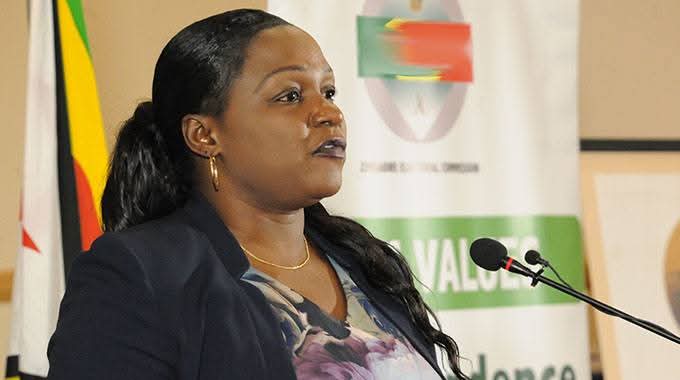
Attorney-General Virginia Mabiza has cautioned that members of Cabinet, including Vice Presidents, are not permitted to publicly contradict Government decisions, stating that those unable to align with official policy should consider stepping down.
Addressing the issue over the weekend, Mabiza pointed to the Constitution, noting that it enshrines the principle of collective responsibility, which requires all members of the Executive to uphold and defend Cabinet resolutions.
“The law is very clear in terms of how Ministers, Deputy Ministers and Cabinet should conduct themselves,” she said.
She referred to Sections 106 and 107 of the Constitution, explaining that Cabinet members answer both individually and collectively to the President.
According to Mabiza, each minister is tasked with managing their portfolio, executing Government policies, and implementing directives issued by the President in accordance with legal and procedural frameworks.
However, she emphasised that Cabinet functions as a unified body, meaning members must publicly support agreed positions, regardless of any private disagreements during deliberations.
“Once Cabinet adopts a policy, every Cabinet member must publicly support and defend it,” Mabiza said.
“If a minister can’t support a Cabinet decision, the obvious option is to resign.”
Mabiza also issued a warning against the disclosure of Cabinet discussions or attempts by members to distance themselves from official positions after decisions have been finalised.
“Discussions stay in Cabinet. A member is not allowed to leak or distance themselves later,” she said.
She further noted that the President holds ultimate authority over Cabinet members, with the power to discipline, reshuffle, demote, or dismiss individuals without dissolving the entire Cabinet.
“The President appoints and may remove ministers at his discretion,” Mabiza said, adding that ministers serve at the President’s pleasure under Section 104 of the Constitution.
Mabiza cited Nkosana Moyo as an example of a minister who chose to resign after determining he could no longer continue in Government.
She also revealed that Government is in the process of crafting legislation aimed at strengthening governance standards, including the introduction of a formal code of conduct for senior officials, in line with Section 106(3) of the Constitution.

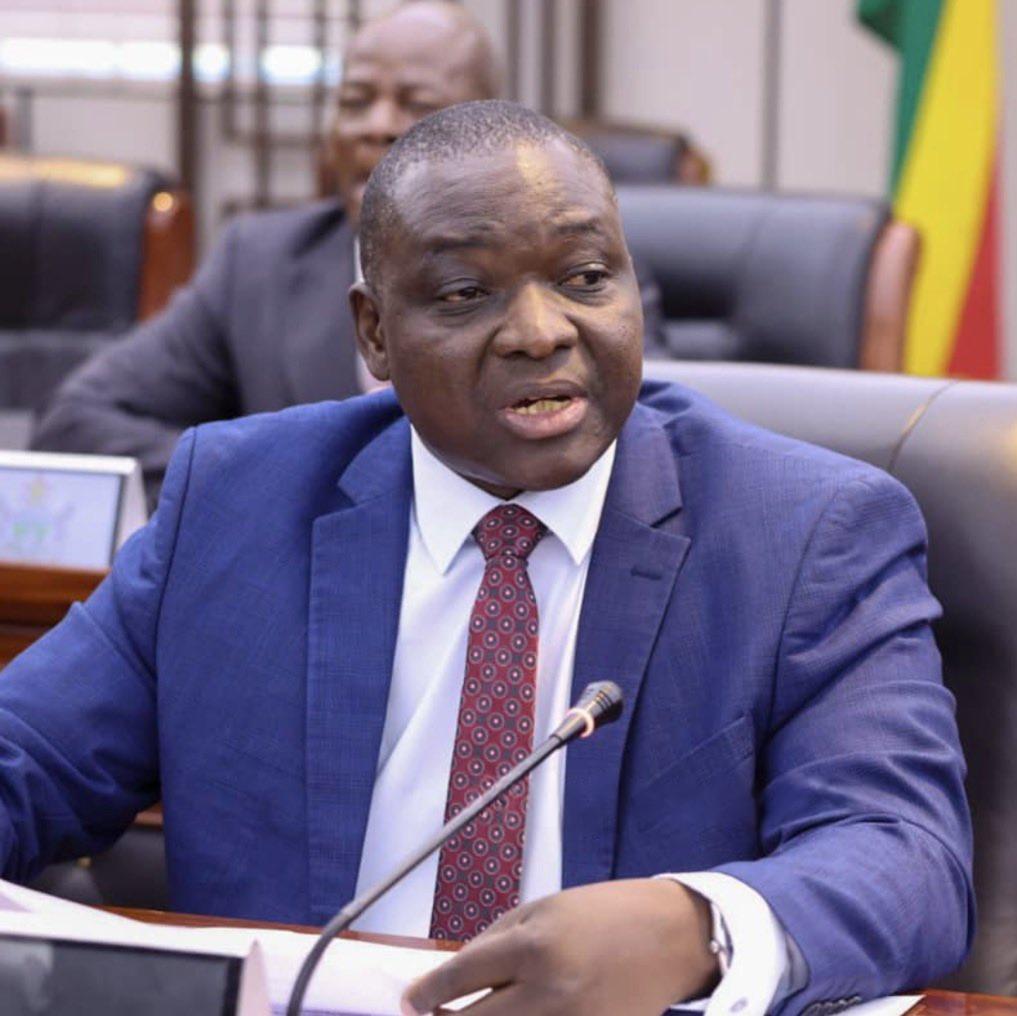
Harare, Zimbabwe – On the occasion of World Press Freedom Day, Hon. Dr. Z. Soda, Minister of Information, Publicity and Broadcasting Services, emphasized the fundamental value of a free, independent, and responsible press as a cornerstone of democratic society. In his statement, Minister Soda highlighted the government’s commitment to fostering an informed citizenry and uniting Zimbabwe through responsible journalism.
Minister Soda pointed to significant advancements in press freedom under the Second Republic, led by His Excellency Dr. E.D. Mnangagwa. These include the enactment of the progressive Freedom of Information Act, the operationalization of the independent Zimbabwe Media Commission, and the licensing of 40 new independent community and commercial radio stations. He stated that these developments have created a transparent environment for information, fostering trust in public institutions and recognizing an informed citizenry as essential for democracy.
Addressing the growing challenges posed by fake news, disinformation, and hyper-realistic manipulated content (deepfakes), Minister Soda issued a stern warning. He asserted that press freedom does not grant license “to lie, to manipulate, or to destroy.” The Minister stressed the ethical responsibility of every journalist, editor, and media house to verify information, correct errors, and reject sensationalism, ensuring that media serves as a vehicle for truth and not disinformation.
To counter the spread of misinformation, the government has initiated a national program to promote Media Literacy. This initiative aims to equip citizens with critical thinking skills to evaluate information, identify credible sources, and recognize manipulated content. Minister Soda underscored that media literacy is crucial, as press freedom alone is insufficient without an informed public. He reiterated that an empowered citizenry is the best defense against disinformation, and the program seeks to ensure all Zimbabweans become active, informed, and responsible consumers of media.
Furthermore, Minister Soda emphasized that press freedom should not be an excuse to import or propagate ideas alien to Zimbabwean values, traditions, and way of life. He highlighted the importance of honoring Zimbabwe’s rich cultural practices, including respect for elders, communal spirit, Ubuntu, languages, and heritage. He affirmed that the media has a sacred duty to be a custodian of Zimbabwean culture, telling national stories and celebrating heroes, while offering constructive critique rooted in love for the nation.
In closing, Minister Soda reiterated the Ministry of Information, Publicity and Broadcasting Services’ role as a partner, not an adversary, in building a better Zimbabwe. He encouraged all media workers, from veterans to rookies, to collaborate constructively and ensure that the nation remains unified. “Your work matters. Your freedom is precious. Protect it, and use it well,” he concluded, reinforcing the government’s dedication to a vibrant and responsible media landscape.

Zimbabwean Politician Job Sikhala Appears in Pretoria Court on Explosives Charges

Struggling Telecel Seeks Investor to Avoid Collapse

Court Orders Woman to Refund US$2,500 After DNA Test Twist

Operation restore order

Masasi High School Abuse Scandal Sparks Public Outcry

Kuwadzana Man Jailed for Reckless Driving and Driving Without a Licence
-
 Current Affairs6 months ago
Operation restore order
-
 Crime and Courts7 months ago
Masasi High School Abuse Scandal Sparks Public Outcry
-
 Crime and Courts7 months ago
Kuwadzana Man Jailed for Reckless Driving and Driving Without a Licence
-
 Current Affairs9 months ago
Breaking: ZIMSEC June 2025 Exam Results Now Available Online
-
 Current Affairs8 months ago
Munhumutapa Day: Zimbabwe’s Newest Public Holiday Set for Annual Observance
-
 Current Affairs7 months ago
BREAKING NEWS: ZANU PF Director General Ezekiel Zabanyana Fired
-
 Current Affairs9 months ago
No Racism in Our Cricket: Government
-
 World News7 months ago
Burkina Faso Reaps $18 Billion in Gold Revenue Under Ibrahim Traoré’s Leadership