
Current Affairs
President’s Golf Cup Drives Economic Growth, National Unity


Bulawayo, April 17, 2026 — The second edition of the President’s Golf Cup ended on a high note, with the government and stakeholders hailing the tournament as a strategic platform for economic growth, sports tourism and national unity in line with National Development Strategy 2 (NDS2).
Minister of Sport, Recreation, Arts and Culture, Retired Lieutenant General Anselem Nhamo Sanyatwe, commended organisers, led by Mr Pascall Sibanda, alongside golf associations and clubs for delivering a successful event.
“This tournament must continue to grow. We commend the organisers and the entire golfing fraternity for their commitment,” he said.
NetOne Group CEO Engineer Raphael Mushanawani said the tournament reflects Zimbabwe’s capacity to host world-class events while driving economic activity.

“The President’s Cup is more than sport; it is a platform for tourism, business and national pride. It aligns with NDS2 by stimulating sectors such as hospitality, transport and digital services,” he said.
Mushanawani added that NetOne’s role goes beyond sponsorship, positioning the company as a connectivity partner amplifying Zimbabwe’s global presence.
Africa Golf Federation President Mr Gift Omolo praised government and corporate support.
“This is a well-coordinated and successful event. Zimbabwe has strong potential in golf tourism,” he said.
Omolo noted that Harare alone has over 10 quality golf courses and urged the country to emulate Morocco’s model in promoting golf tourism.
Minister Sanyatwe also called for rural inclusion.
“We must promote rural golf to unlock talent and spread economic benefits,” he said.

Zimbabwe Air Charter Safaris is reinforcing the role of private aviation as a strategic driver of growth within the country’s tourism economy.
By delivering efficient and flexible air charter services, the company is enabling a new model of travel that prioritises accessibility and time efficiency.
As a locally owned operator, Zimbabwe Air Charter Safaris has built its offering around the needs of safari tourism, providing customised flight solutions that connect remote destinations with ease.
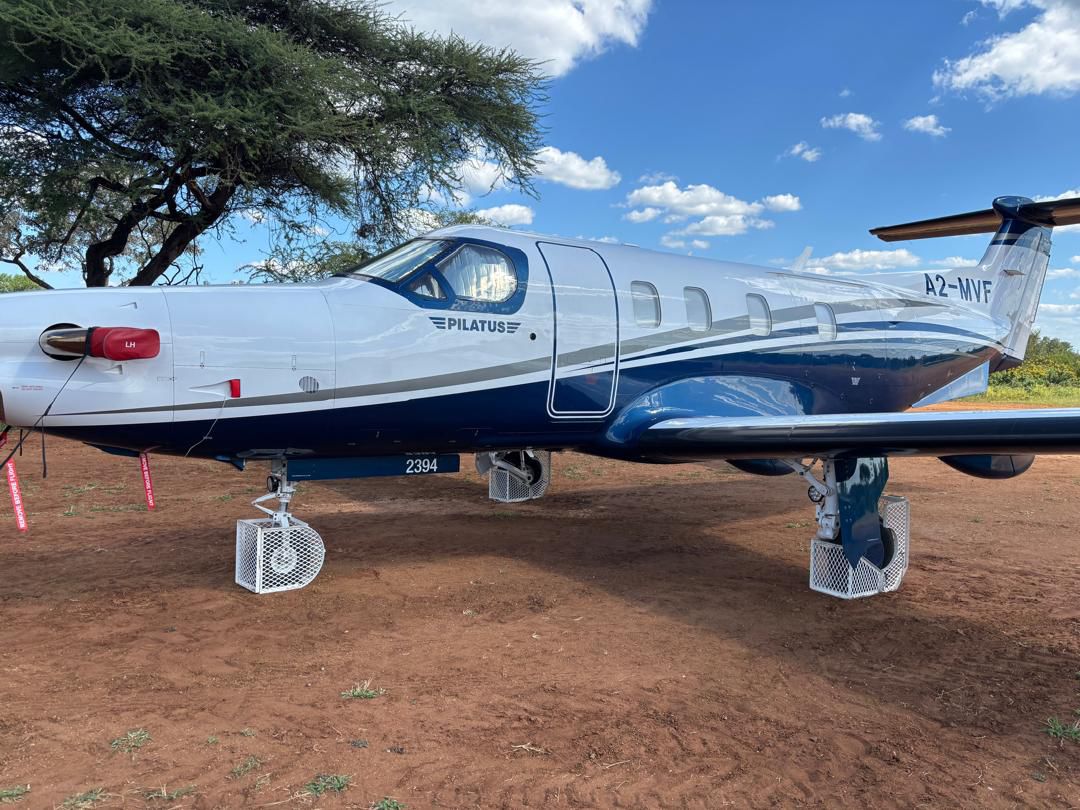
Its focus on lodge transfers and multi-leg itineraries allows travellers to maximise their time while experiencing a broader range of Zimbabwe’s attractions.
This approach is helping to overcome one of the sector’s biggest limitations geographic spread. While Zimbabwe’s tourism assets are world-class, their distance from one another has often reduced the feasibility of multi-destination travel.
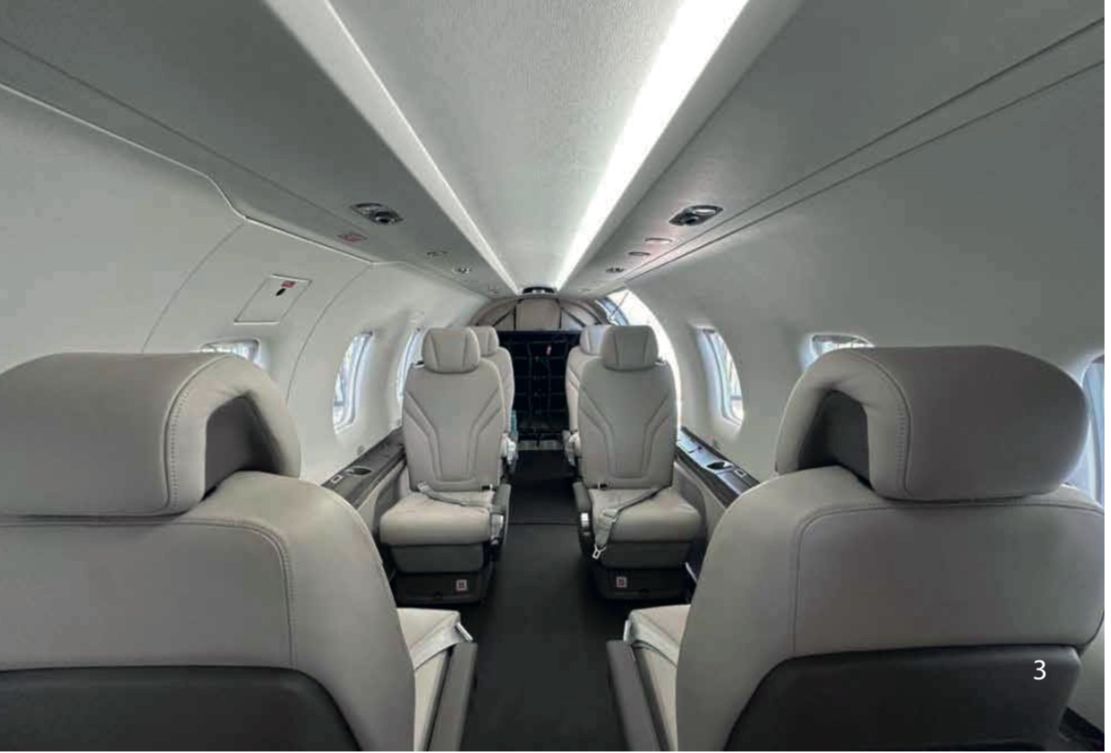
The introduction of the Pilatus PC-12 NGX enhances the company’s operational capabilities.

With improved range and performance, the aircraft enables faster connections and access to challenging airstrips, supporting more ambitious travel itineraries.
The economic implications are significant. By facilitating multi-destination travel, Zimbabwe Air Charter Safaris is contributing to increased visitor spend and broader distribution of tourism revenue.
Chief Pilot Anastasios Zaverdinos highlighted the company’s strategic outlook.
“We are ready to take off and support Zimbabwe’s tourism ambitions through safe, efficient, and reliable aviation services aligned with NDS2,” he said.
As the Zimbabwe Tourism Authority continues to push for innovation under CEO George Manyaya, aviation is becoming a central component of the tourism value chain.
Zimbabwe Air Charter Safaris’ model demonstrates how targeted investment in infrastructure and service delivery can unlock new opportunities for growth and competitiveness.


The Zimbabwe Broadcasting Corporation (ZBC) says it is embracing modern technology and decentralisation to remain competitive in the broadcasting industry.
Speaking at the Zimbabwe International Trade Fair (ZITF), ZBC Board Chairperson Helliate Rushwaya said the organisation’s participation aligns with this year’s theme.
“The theme is connected economies and competitive industries. So at ZBC, through the various platforms that we are showcasing, we are showing that we are being competitive with regard to modern platforms,” she said.
Rushwaya added that the use of digital technology is helping ZBC strengthen its position in the broadcasting sector.
“Modern technology and the use of digital platforms are also highlighting that we are connecting and we are connected in a competitive industry, which is the broadcasting industry,” she said.
She explained that the corporation’s modernised studios go beyond infrastructure upgrades and are part of a broader strategy to improve operations.
“These modernised studios are not just about new equipment or new infrastructure; they are beyond that,” she said.
Rushwaya said Montrose Studios is now playing a key role in decentralising operations from Pockets Hill in Harare.
“For us, Montrose is more about decentralisation from Pockets Hill. We are now also using Montrose Studios, not just for local productions,” she said.
She noted that the studios are becoming a hub for creative industries in the southern region and are also being used for major national events.
“We know Montrose Studios is the hub for creative industries in the southern regions, but also Montrose Studios is now coming in really useful in terms of national events,” she said.
Rushwaya highlighted recent productions handled from Bulawayo, including national broadcasts.
“Only a week ago, we were broadcasting the independence celebration from Mapisa using Montrose Studios for our productions. At the moment, we are at ZITF. Again, Montrose Studios are playing a really important role in terms of all our broadcasting,” she said.
She emphasised that the shift is not just about upgrading equipment but about expanding operations beyond Harare.
“So it’s not about modernisation only. This actually also is about decentralisation from Pockets Hill to Bulawayo,” she said.

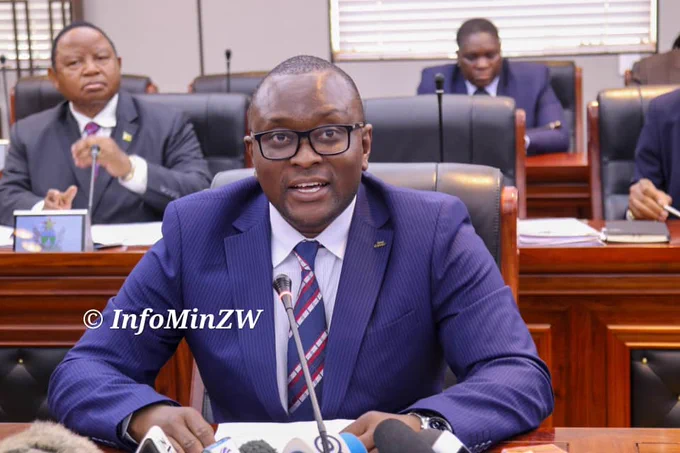
The government has intensified efforts to harness skills from both within the country and the diaspora as part of a broader strategy to drive economic growth and industrialisation.
Speaking on the Diaspora Skills Platform, the Minister of Skills, Audit and Development, Jenfan Muswere, said the initiative focuses on “upskilling, skilling and reskilling” citizens to meet national development needs.
“But turning to the precise question in terms of the Diaspora Skills Platform, which is of great importance in terms of us as a nation to be able to turn brain drain into brain gain,” Minister Muswere said.
Muswere explained that government is conducting comprehensive skills audits locally, internationally, and among retired professionals to identify expertise that can support the economy.
“This is one of the objectives that we’ve committed to ensure that as we work on ensuring that we have a skills audit internally, a skills audit externally and also a skills audit in terms of retired experts both within and outside Zimbabwe in order to support macroeconomic growth,” he said.
He noted that the country has faced significant challenges due to the migration of skilled professionals, particularly in technical, health, and engineering sectors.
“But at the same time, to highlight that a number of technical, health, and engineering skills flights were some of the biggest challenges that we faced as a country for the past decades,” he said.
Muswere highlighted the importance of value addition, using lithium exports as an example of missed opportunities due to limited local processing capacity.
“If you are going to export raw lithium at some point at a price of less than $200 per tonne, but the rest of the value addition process is taking place externally to a value of around $20,000 per tonne, this clearly shows us the skills gap in terms of processing,” he said.
He stressed that building a strong skills base is key to reducing imports and boosting local production.
“So basically, what you import, when you import toothpicks, means you are failing to produce toothpicks. When you import cooking oil, it means you are failing to produce,” he added.
Muswere said the government is working closely with various ministries to align skills development with industry demands.
“As we collaborate and coordinate skills within provinces, this is also part of a whole-of-government approach,” he said.
He added that human capital remains central to achieving national development goals, including Vision 2030.
“For the most dynamic resource that we have in any nation is the human resource, which has always been a priority in terms of both NDS1 and NDS2,” he said.
Muswere also pointed to opportunities in the health sector, where diaspora expertise can be leveraged through modern technologies.
“But now within the context of the fourth industrial revolution, we can also utilise telemedicine using ICT, utilisation of artificial intelligence, for us to be able to come up with a number of solutions in terms of health service delivery,” he said.
He concluded that Zimbabwe must transition towards a demand-driven education system that responds to economic needs.
“As we continue to develop this, it becomes part of a national manpower plan… in order to ensure that we have a demand-driven education system, not a supply-driven education system,” he said.

Zimbabwe Air Charter Safaris Strengthens Business Case for Aviation in Tourism

ZBC Highlights Modernisation and Decentralisation at ZITF

Diaspora Skills Key to Turning Brain Drain into Brain Gain

Operation restore order

Masasi High School Abuse Scandal Sparks Public Outcry

Kuwadzana Man Jailed for Reckless Driving and Driving Without a Licence
-
 Current Affairs5 months ago
Operation restore order
-
 Crime and Courts7 months ago
Masasi High School Abuse Scandal Sparks Public Outcry
-
 Crime and Courts7 months ago
Kuwadzana Man Jailed for Reckless Driving and Driving Without a Licence
-

 Current Affairs9 months ago
Breaking: ZIMSEC June 2025 Exam Results Now Available Online
-

 Current Affairs8 months ago
Munhumutapa Day: Zimbabwe’s Newest Public Holiday Set for Annual Observance
-

 Current Affairs7 months ago
BREAKING NEWS: ZANU PF Director General Ezekiel Zabanyana Fired
-

 Current Affairs8 months ago
No Racism in Our Cricket: Government
-

 World News6 months ago
Burkina Faso Reaps $18 Billion in Gold Revenue Under Ibrahim Traoré’s Leadership