
Current Affairs
Zimbabwe Air Charter Safaris Strengthens Business Case for Aviation in Tourism


Zimbabwe Air Charter Safaris is reinforcing the role of private aviation as a strategic driver of growth within the country’s tourism economy.
By delivering efficient and flexible air charter services, the company is enabling a new model of travel that prioritises accessibility and time efficiency.
As a locally owned operator, Zimbabwe Air Charter Safaris has built its offering around the needs of safari tourism, providing customised flight solutions that connect remote destinations with ease.
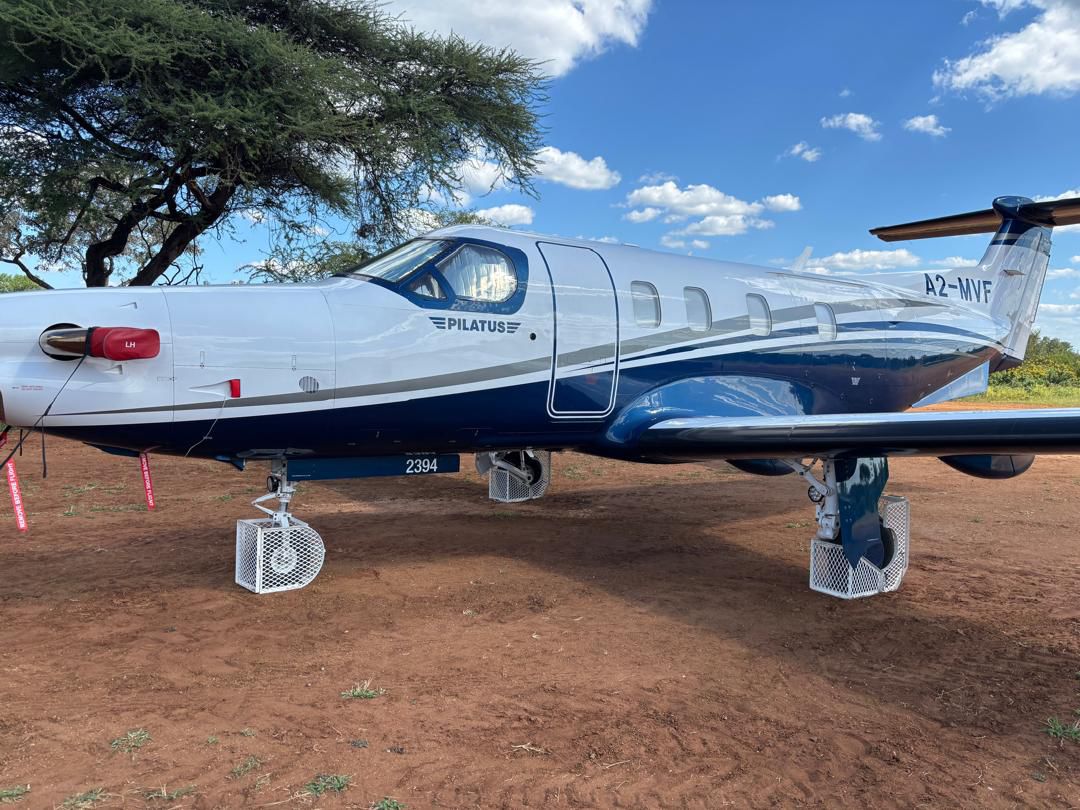
Its focus on lodge transfers and multi-leg itineraries allows travellers to maximise their time while experiencing a broader range of Zimbabwe’s attractions.
This approach is helping to overcome one of the sector’s biggest limitations geographic spread. While Zimbabwe’s tourism assets are world-class, their distance from one another has often reduced the feasibility of multi-destination travel.
The introduction of the Pilatus PC-12 NGX enhances the company’s operational capabilities.

With improved range and performance, the aircraft enables faster connections and access to challenging airstrips, supporting more ambitious travel itineraries.
The economic implications are significant. By facilitating multi-destination travel, Zimbabwe Air Charter Safaris is contributing to increased visitor spend and broader distribution of tourism revenue.
Chief Pilot Anastasios Zaverdinos highlighted the company’s strategic outlook.
“We are ready to take off and support Zimbabwe’s tourism ambitions through safe, efficient, and reliable aviation services aligned with NDS2,” he said.

As the Zimbabwe Tourism Authority continues to push for innovation under CEO George Manyaya, aviation is becoming a central component of the tourism value chain.
Zimbabwe Air Charter Safaris’ model demonstrates how targeted investment in infrastructure and service delivery can unlock new opportunities for growth and competitiveness.

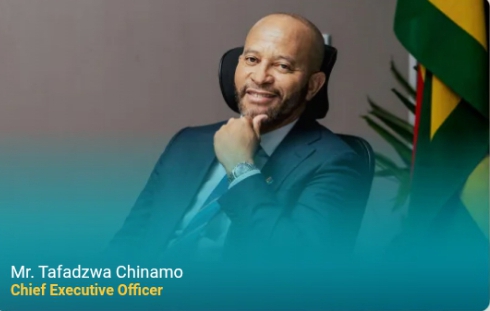
Zimbabwe’s domestic direct investments skyrocketed by 2.406 percent to USD 102.38 million in the first quarter of 2026, while total projected investment value jumped 62 percent compared to the previous quarter, signalling a decisive shift toward larger, more capital-intensive projects under the Zimbabwe Investment and Development Agency’s new facilitation drive.
“Domestic Direct Investments increased significantly, with contributions rising by 2 406 (from USD 4.08 million to USD 102.38 million) and there was a notable 62 percent increase in projected investment value compared to the previous quarter, driven by fewer but more capital-intensive projects,” said ZIDA Chief Executive Officer Mr Tafadzwa Chinamo, presenting the agency’s Quarter One Report.
“This reflects sustained investor confidence alongside increased use of leveraged financing.”
The capital structure of new investments saw capital equipment imports accounting for 46 percent of total investment, followed by foreign currency cash injections at 25 percent and foreign loans at 22 percent.
However, the agency recorded a sharp decline in overall investment licensing activity.
The number of new licences issued fell by 32.2 percent year-on-year, from 214 to 146, while total projected investment value decreased by 59.6 percent compared to the first quarter of 2025.
“As we reflect on the first quarter of 2026, I am pleased to report that ZIDA has made significant and measurable progress in strengthening the investment environment, despite a challenging global economic and geopolitical landscape.
“This progress has been driven by key policy developments, enhanced investor engagement and improvements in investment facilitation. The period also reflects a shift towards higher-value investments and more structured investment activity, while highlighting the need to strengthen conversion and execution going forward,” he said.
A major milestone during the period under review was Cabinet’s approval of the Public-Private Partnership Guideline, which provides a clear and standardised framework for the preparation, appraisal, and implementation of PPP projects.
“This is a significant development for Zimbabwe’s investment landscape, as it enhances transparency, improves coordination across Government, and strengthens investor confidence through clearer processes and risk allocation mechanisms,” Mr Chinamo said.
The guideline is expected to accelerate infrastructure delivery and create a more predictable environment for private sector participation.
The Agency continued advancing ease-of-doing-business reforms.
Significant fee reductions were enacted under the ZIDA General Investments (S.I. 17 of 2026) and Special Economic Zones (S.I. 18 of 2026) Regulations.
“This downward review of licensing fees is a deliberate intervention to reduce the cost of entry and enhance Zimbabwe’s competitiveness, reaffirming the country’s commitment to being a cost-competitive investment destination and signalling that Zimbabwe is open for business,” Mr Chinamo added.
In collaboration with the Ministry of Finance, Economic Development and Investment Promotion, ZIDA launched the Business and Knowledge Process Outsourcing Framework.
Leveraging a youthful, English-speaking workforce with a 93.7 percent literacy rate, the premises-based model aims to position Zimbabwe as a premier outsourcing hub connecting European and Asian time zones, supported by targeted fiscal incentives.
The mixed performance, Mr Chinamo noted, indicates the need to boost conversion rates.
The agency continues to focus on higher-value investments while addressing the decline in overall licence issuance through ongoing policy reforms and investor facilitation improvements.

Cde Vivian Vimbai Maponga, a dynamic voice from Zimbabwe and President of Youth in Politics and Governance, is set to be honoured on May 30, 2026, at the prestigious Icons of Africa Awards in Sandton.
The recognition celebrates her unwavering dedication to shaping Africa’s political landscape and championing youth empowerment.
Cde Maponga, a movement builder and visionary, expressed profound gratitude for the accolade.
“I am incredibly humbled and deeply grateful for this recognition from the Icons of Africa Awards.
“It is a tremendous honour that reaffirms my commitment to the continent and its future.”
Her work has consistently focused on transforming governance systems and ensuring young African voices are heard and respected.
Cde Maponga emphasised her particular passion for nurturing female leadership.
“This award fuels my resolve to redouble efforts in empowering the girl child and young women across Zimbabwe and the broader African region,” she said.
“We must create accessible pathways for them to enter politics, lead with integrity, and drive meaningful change in their communities. Their perspectives are vital for a stronger, more inclusive Africa.”
Cde Maponga believes that true progress hinges on the active participation of young women in decision-making processes.
“My vision is to see a generation of fearless, purpose-driven young women at the forefront of political and governance leadership.”
She said that, through her office and organisation, she will continue to advocate for policies that support their development, provide mentorship, and dismantle barriers that hinder their progress.
“This is not just about representation; it is about building a sustainable and equitable future for all.”

In a bold move set to redefine local governance, the Zvimba Rural District Council (RDC) has officially launched cutting-edge drone technology to dramatically enhance its operational efficiency and service delivery.
This pioneering initiative, positions Zvimba RDC at the forefront of digital transformation within rural administration, promising a new era of precision in data collection, urban planning, and regulatory enforcement.
The council has not only acquired two heavy-duty drones but has also proactively trained seven dedicated pilots, signaling a serious commitment to leveraging advanced technology.
This strategic investment aims to streamline critical operations, from meticulous data collection for project documentation to comprehensive surveying, mapping and robust regulatory enforcement across the district.
Zvimba RDC Chief Executive Mr Enias Chidhakwa articulated the profound impact these drones are expected to have on the council’s mandate.
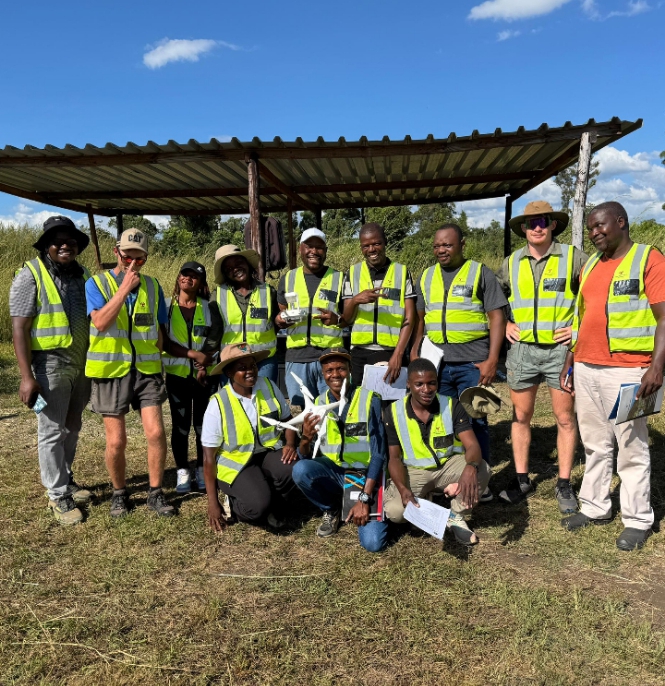
“The drones will assist us in our surveying, they will assist us in even development control, we’ll check which areas are infested with illegal developments and we will map, it will assist us in the mapping.”
Mr Chidhakwa further urged the necessity of embracing technological advancements
“We are seeing it that everything is now going AI, so we should not be left behind. As Zvimba, we are saying we’re moving with time and we have already advanced with the two drones.
We will see to it that our surveys are done, topographical surveys are done, be it taking of pictures, mapping of our district,” said Mr Chidhakwa.
The introduction of this technology is poised to significantly bolster the council’s capacity to manage development projects with unprecedented accuracy and enforce regulations effectively.
The accurate data gathered by these aerial assets will empower the council to make informed decisions, ensuring strict compliance with permits and local regulations.
Engineer Tapiwa Nhemwa, an engineer with Zvimba RDC, expressed immense optimism regarding the practical benefits, particularly in overcoming existing resource constraints.
“This will actually help us in terms of our surveys. Currently, we did not have enough staff, but with the drones, we will reduce the issue, the time which it will take to do topo-surveys, the issue, the time it will take to do layout plans.
We will also help in terms of environmental management because once we fly these drones, we will get a pictorial view of what’s happening,” he said.
This digital leap is not merely an upgrade but a transformative step expected to boost overall service delivery and reinforce Zvimba RDC’s ambitious agenda to maintain its reputation as the best rural district council in the country.
As Zvimba RDC embraces this technological revolution, the future of rural development in Zimbabwe looks set to take flight, promising greater efficiency, transparency and responsiveness to the needs of its citizens.

Direct domestic investment rockets 2. 406 percent

Maponga Vows to Empower Young Women

Zvimba RDC Deploys Drones for Service Delivery

Operation restore order

Masasi High School Abuse Scandal Sparks Public Outcry

Kuwadzana Man Jailed for Reckless Driving and Driving Without a Licence
-
 Current Affairs5 months ago
Operation restore order
-
 Crime and Courts7 months ago
Masasi High School Abuse Scandal Sparks Public Outcry
-
 Crime and Courts7 months ago
Kuwadzana Man Jailed for Reckless Driving and Driving Without a Licence
-

 Current Affairs9 months ago
Breaking: ZIMSEC June 2025 Exam Results Now Available Online
-

 Current Affairs8 months ago
Munhumutapa Day: Zimbabwe’s Newest Public Holiday Set for Annual Observance
-

 Current Affairs7 months ago
BREAKING NEWS: ZANU PF Director General Ezekiel Zabanyana Fired
-

 Current Affairs8 months ago
No Racism in Our Cricket: Government
-

 World News6 months ago
Burkina Faso Reaps $18 Billion in Gold Revenue Under Ibrahim Traoré’s Leadership