
World News
Kenya’s Veteran Opposition Leader Raila Odinga Dies at 80 While Receiving Treatment in India

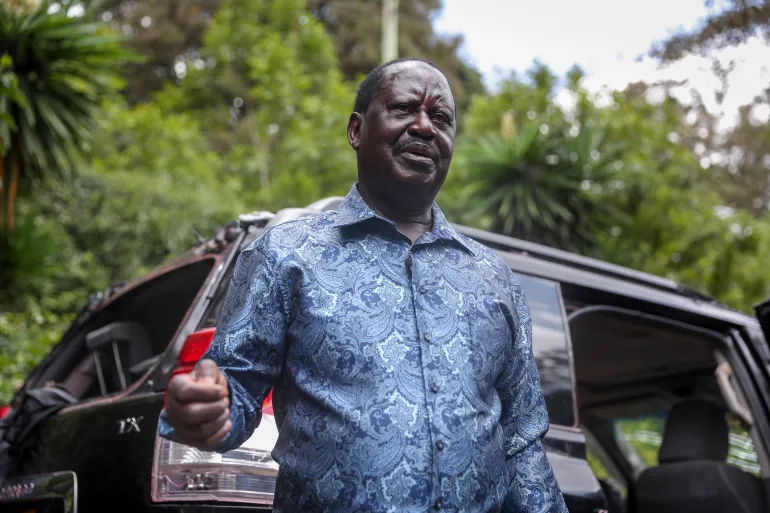
Kenyan opposition leader and former prime minister Raila Odinga, one of Africa’s most influential political figures, has died at the age of 80 while undergoing medical treatment in India, officials have confirmed.
Hospital authorities at Devamatha Hospital in Kerala reported that Odinga suffered a fatal heart attack on Wednesday morning. Local police said he collapsed while on a morning walk accompanied by his sister, daughter, personal physician, and security personnel from both Kenya and India.
“He was rushed to a nearby private hospital, but was pronounced dead upon arrival,” said Krishnan M, the additional superintendent of police in Ernakulam, Kerala.
Officials in Odinga’s office also confirmed the death to multiple international media outlets. Indian newspaper Mathrubhumi earlier reported that Odinga had been receiving medical care in the coastal city of Kochi.
Born in 1945, Odinga was the son of Jaramogi Oginga Odinga, Kenya’s first vice president after independence in 1963. Over a political career spanning more than four decades, he became a symbol of opposition politics and pro-democracy movements across Africa.
Odinga’s passing leaves a major void in Kenya’s political landscape, particularly within the opposition, as the country heads toward the 2027 general elections.
Throughout his life, Odinga made five unsuccessful presidential bids — in 1997, 2007, 2013, 2017, and 2022 — each campaign strengthening his image as a resilient, if controversial, figure in Kenyan politics. His followers affectionately called him “Baba” (father in Swahili), while others referred to him as “Agwambo”, meaning “the mysterious one” in his native Luo language.
A fierce critic of one-party rule under President Daniel arap Moi, Odinga spent years behind bars for his alleged involvement in a 1982 coup attempt. Despite imprisonment and exile, he emerged as one of the key voices pushing for Kenya’s return to multiparty democracy in 1991.
He entered parliament in 1992 and later served as prime minister from 2008 to 2013, following a disputed 2007 election that sparked Kenya’s deadliest political violence since independence — leaving more than 1,300 people dead and displacing hundreds of thousands.
Odinga also played a central role in ushering in Kenya’s new constitution in 2010, which introduced sweeping reforms to decentralize power and strengthen checks on the executive.
News of Odinga’s death prompted an outpouring of grief in Kenya and beyond. President William Ruto visited the Odinga family home in Karen, Nairobi, where hundreds of mourners gathered, some waving tree branches in traditional mourning rituals.
Former President Uhuru Kenyatta, who once opposed Odinga before backing his 2022 presidential run, hailed him as “a father to the nation, a steadfast champion of the people, and a true son of Kenya.”
“His legacy lies not only in the political battles he fought but also in the peace he helped build. It is woven into the very fabric of our nation,” Kenyatta said.
Tanzanian President Samia Suluhu Hassan described Odinga’s passing as “a tragedy not just for Kenya, but for Africa as a whole,” calling him “a visionary leader, a peacebuilder, and a unifier whose influence transcended borders.”
Indian Prime Minister Narendra Modi also paid tribute, calling Odinga “a towering statesman and cherished friend of India.”
Mahmoud Ali Youssouf, Chairperson of the African Union Commission, praised him as “a steadfast advocate for democracy, justice, and people-centred governance whose legacy will continue to inspire generations of African leaders.”
Odinga’s decades-long fight for democracy and justice left an indelible mark on Kenya and the African continent. Even in his final years, he remained active in shaping national dialogue, most recently through a power-sharing pact with President Ruto that saw members of his Azimio la Umoja coalition appointed to key government positions.
As Kenya mourns the man many called “Baba,” his lifelong pursuit of democratic reform, equality, and unity remains a defining chapter in the country’s modern political history.

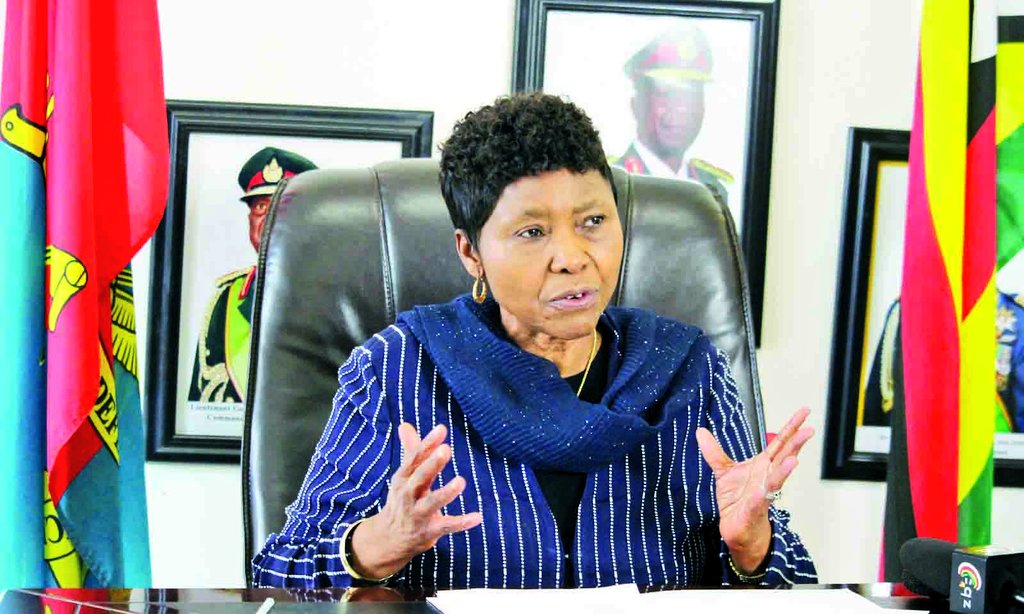
Zimbabwe has called on nuclear-armed states to stop expanding their nuclear arsenals and instead prioritise collective security, warning that the continued growth of nuclear stockpiles threatens humanity.
The call was made by the Minister of Defence, Cde Oppah Muchinguri-Kashiri, representing Zimbabwe during the General Debate of the 11th Review Conference of the Treaty on the Non-Proliferation of Nuclear Weapons at the United Nations Headquarters in New York on Monday.
“The modernisation and expansion of nuclear arsenals may enhance offensive capabilities, but do not remove the danger of global destruction.
Enhancing and modernising nuclear arsenals may strengthen offensive capabilities, but it does not eliminate the certainty of mutually assured destruction,” she said.
ALSO READ: UN Chief Condemns Xenophobic Attacks in South Africa
She also warned that any nuclear conflict would have humanitarian and environmental consequences beyond the countries directly involved.
“In the event of a nuclear war, catastrophic humanitarian and environmental consequences would affect every corner of the world,” she stated.
Cde Muchinguri-Kashiri reaffirmed Zimbabwe’s commitment to international peace, security, and nuclear non-proliferation.
She also highlighted Zimbabwe’s bid for a non-permanent seat on the United Nations Security Council for the 2027–2028 term.
“Zimbabwe is determined to serve on the United Nations Security Council in order to contribute more actively to the promotion of international peace and security,” she added.
Zimbabwe is seeking election to the Security Council in polls scheduled for June this year.
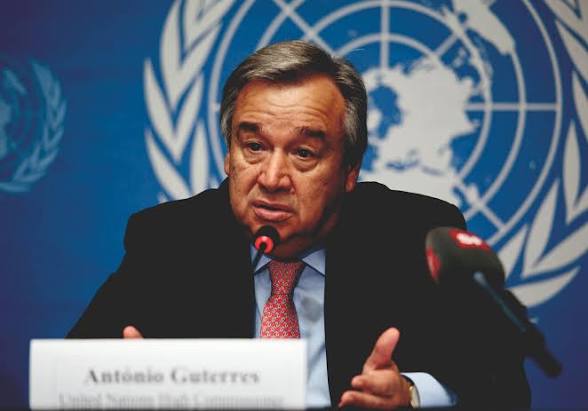
The United Nations Secretary-General, António Guterres, has raised concern over reported xenophobic attacks in KwaZulu-Natal, where Ghanaian and other African nationals were targeted over their immigration status.
In a statement issued on 28 April 2026, Guterres strongly condemned acts of violence and incitement.
“Violence, vigilantism and all forms of incitement to hatred have no place in an inclusive, democratic society governed by the rule of law and respect for human rights,” he said.
The remarks come amid growing tensions in parts of KwaZulu-Natal, where incidents of attacks on foreign nationals have been reported.
Guterres also extended his greetings to South Africans as they marked Freedom Day, while reflecting on the country’s history of unity and solidarity during the anti-apartheid struggle.
He noted that South Africa’s liberation was supported by both African nations and the international community, and stressed that the country’s development has been shaped by the contributions of diverse communities.
The statement follows condemnation from the Government of South Africa, including the Ministry of Police, which described the attacks as contrary to the principles of democracy and human rights.
Guterres emphasised that while socio-economic challenges remain, they must be addressed through lawful and non-discriminatory means.

The cost of condoms could increase if the ongoing conflict involving Iran continues to strain global supply chains, according to the head of the world’s largest condom producer.
Karex CEO Goh Miah Kiat told Reuters that the company may have to increase prices by between 20% and 30%, depending on how long the disruptions persist.
Since late February, supply chains have been affected by tensions around the Strait of Hormuz, a key route for materials used in manufacturing.
Goh noted that the situation remains unstable, with rising costs forcing the company to pass expenses on to customers.
Karex, based in Malaysia, produces a wide range of medical and personal care products, including well-known condom brands such as ONE, Trustex, Carex and Pasante. The firm manufactures billions of condoms each year and supplies over 130 countries.
In addition to higher production and packaging costs, the company is also facing shipping delays. Goh explained that many shipments are stuck in transit, leaving some markets undersupplied despite high demand.
While global attention has largely focused on rising fuel prices linked to the conflict, experts say the impact goes beyond oil.
Shortages of key industrial materials known as feedstocks are also affecting production. These include naphtha, used in packaging, as well as silicon oil and ammonia, which are essential in condom manufacturing.
According to industry analysts, disruptions in the supply of these materials many of which come from the Middle East are pushing up production costs. Asia, in particular, is vulnerable due to its reliance on the region for energy and raw materials.
The situation is further complicated by fuel rationing in some Southeast Asian countries, which is affecting transport and workers’ ability to reach factories. This could slow down manufacturing and delay exports of essential goods.
For now, Karex says it has enough stock to last a few months, but continued instability could lead to higher prices and tighter supply in the near future.

POTRAZ Q4 Report Highlights NetOne’s Strong Digital Growth and Rural Connectivity Expansion

Minister Masuka Defends BIPPA Farm Returns, Says Land Reform Remains Irreversible

Fake ID Fraud Suspect Appears in Court Over Loan Scam Allegations

Operation restore order

Masasi High School Abuse Scandal Sparks Public Outcry

Kuwadzana Man Jailed for Reckless Driving and Driving Without a Licence
-
 Current Affairs6 months ago
Operation restore order
-
 Crime and Courts7 months ago
Masasi High School Abuse Scandal Sparks Public Outcry
-
 Crime and Courts8 months ago
Kuwadzana Man Jailed for Reckless Driving and Driving Without a Licence
-
 Current Affairs9 months ago
Breaking: ZIMSEC June 2025 Exam Results Now Available Online
-
 Current Affairs8 months ago
Munhumutapa Day: Zimbabwe’s Newest Public Holiday Set for Annual Observance
-

 Current Affairs7 months ago
BREAKING NEWS: ZANU PF Director General Ezekiel Zabanyana Fired
-
 Current Affairs9 months ago
No Racism in Our Cricket: Government
-

 Business6 months ago
Tino Tungwarara Launches Prevail Mart, Becoming One of Zimbabwe’s Youngest Retail Entrepreneurs