Connect with us

Feature

Building Zimbabwe from the Ground Up: How Taedzwa Mutana is Making Vision 2030 a Reality in Epworth

Published

on

  • Mutana Drives Grassroots Development in Epworth
  • Epworth MP Delivers Food, Schools and Infrastructure
  • Community Backs Mutana, Dismisses Fake News Claims

On a dusty roadside in Epworth, the line begins to form long before the sun reaches its peak. Hundreds of residents, from elderly grandparents to young mothers with children clinging to their skirts, wait patiently.


Their destination is not a government office or an international aid station, but a community-led initiative spearheaded by their local Member of Parliament.


Each person leaves with a parcel of rice — a basic staple that represents security, dignity, and a promise that their community has not been forgotten.


This scene is part of a quiet but profound transformation unfolding in one of Harare’s most populous constituencies.


At the heart of this change is Honourable Taedzwa Mutana, the ZANU–PF Member of Parliament for Epworth South and a member of the party’s influential Central Committee.


While national and global dialogues often focus on grand policy, Mutana is demonstrating a different model of leadership: one where Vision 2030 — President Emmerson Mnangagwa’s ambitious goal to elevate Zimbabwe to an upper-middle-income economy — is being built not just with words, but with rice, bricks, textbooks and paved roads.


The MP with a Mission

Taedzwa Mutana represents the people of Epworth South in the National Assembly, a constituency where the challenges are as immense as the potential.
His role extends beyond Parliament; as a member of ZANU–PF’s Central Committee,Committee, the party’s highest decision-making body, he operates at the critical intersection of national policy and grassroots implementation.


For Mutana, political office is not merely a title, but a platform for service.


“Vision 2030 will not be realised in boardrooms in Harare alone,” Mutana said.

“It will be realised in the streets of Epworth, in our schools, and in the daily lives of our people. My responsibility is to make sure that national policy translates into real change on the ground.”


His development model focuses on four pillars: food security, education, infrastructure and economic empowerment.


Nourishing a Community

In a global environment where international food assistance is shrinking, local solutions have become critical. Mutana’s feeding programme has emerged as a lifeline for the most vulnerable.
According to community leaders, the initiative feeds about 300 vulnerable residents daily, including the elderly, child-headed households and people living with disabilities.


“For some of us, this food is the difference between sleeping hungry and having strength to face another day,” said Mai Rudo Machingauta, a grandmother of five.


“People can talk on social media, but we are here every week. We see the MP with our own eyes.”


Another resident, Tawanda Chikomborero, describes the programme as restoring dignity.


“He doesn’t ask for party cards or favours. If you are hungry, you are helped. That’s leadership.”


Education, Infrastructure and Opportunity

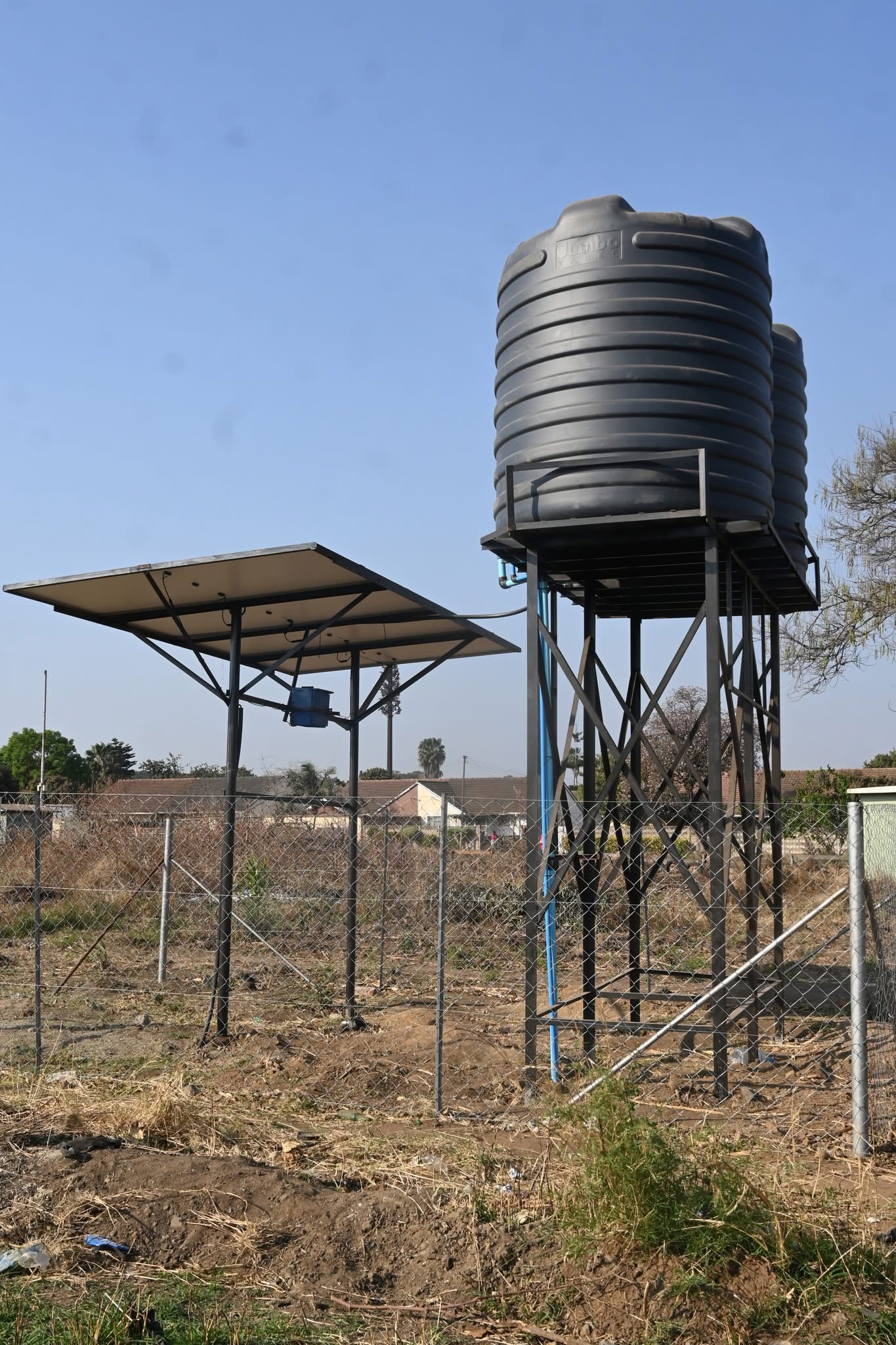
Beyond food aid, Mutana has channelled resources into school renovations, learning materials, borehole drilling and road rehabilitation, particularly in informal settlements often overlooked by development planners.

 

Local school development committees confirm the donation of textbooks and furniture, while youth groups point to skills training and empowerment projects that have enabled small income-generating ventures.


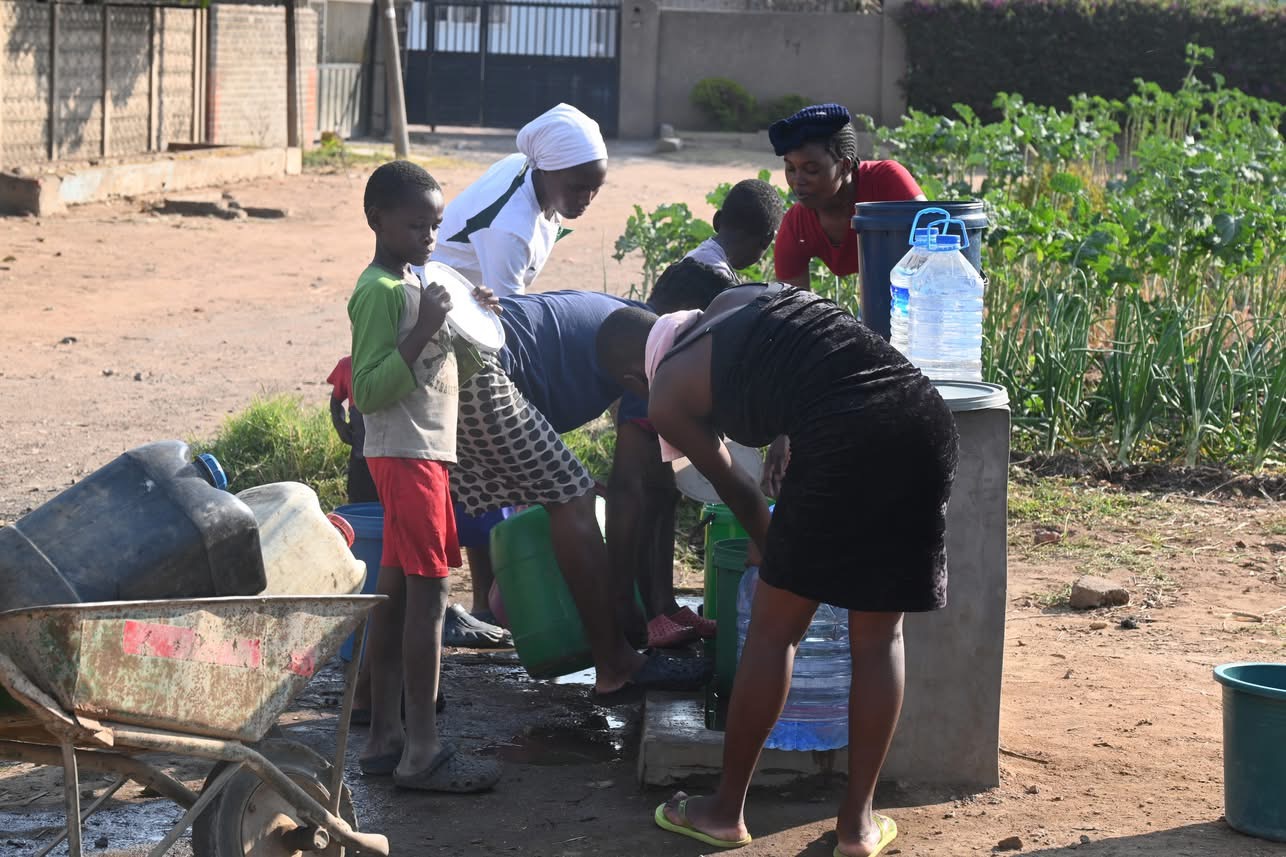
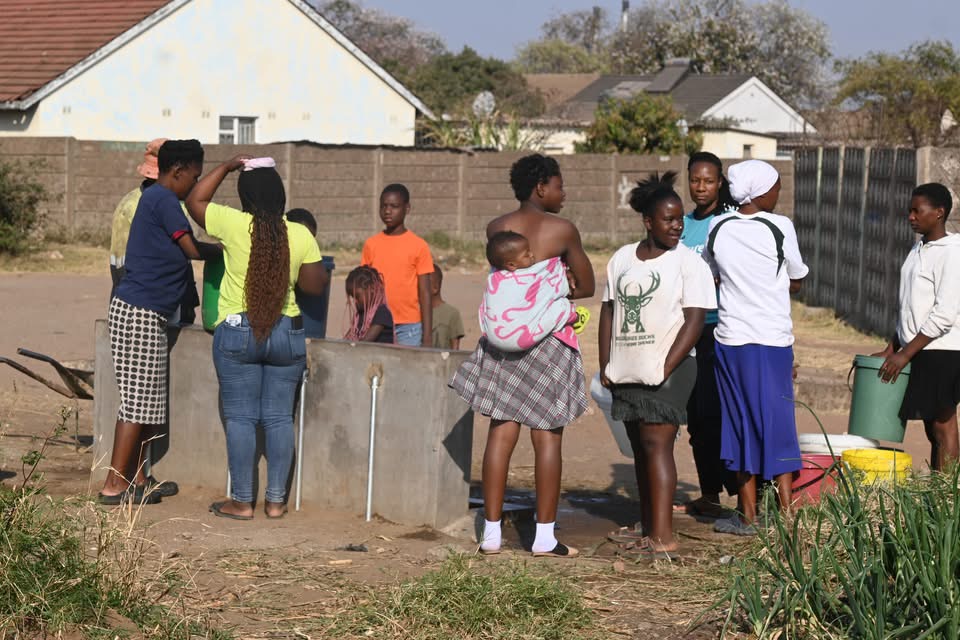
“Before, our children walked long distances to unsafe water sources,” Memory Zinyengere said.


“Now we have boreholes. These are not promises — they are things we can touch.”


Responding to Fake Narratives

Despite these visible efforts, Mutana has not been spared from misinformation campaigns circulating on social media and fringe platforms.


Community leaders are quick to dismiss the claims.


“People spreading fake news do not live here,” said Epworth resident and community organizer Joseph Manyika.


“If they did, they would know the work that is happening. Development speaks louder than lies.”


Mutana himself remains measured.


“When you are working, noise is inevitable,” he said.


“But I remain focused. My duty is to serve the people, not to respond to fabrications. The truth is visible in the lives being changed.”


A Grounded Vision for 2030

In Epworth South, Vision 2030 is not an abstract slogan. It is visible in full stomachs, improved classrooms and communities that feel seen and supported.


As Zimbabwe charts its path toward inclusive development, the Epworth experience offers a compelling lesson: national transformation is built from the ground up , one community, one household, one act of service at a time.


And for the residents lining up on dusty roads at dawn, leadership is not measured by headlines, but by who shows up, consistently, quietly, and with results.

Feature

Zimbabwe Looks to China: Cooperative Politics to Drive National Development

Published

on

Zimbabwe Looks to China: Cooperative Politics to Drive National Development
  • With 107 Parties, ZANUPF Can Mirror China’s CPC Model for Inclusive Governance

Zimbabwe is at a historic crossroads. The Constitutional Amendment No. 3 Bill, now moving through public hearings in Parliament, is not just a legislative exercise,it is a practical test of the country’s democratic maturity. By embedding public consultation, structured engagement, and institutional refinement into the process, Zimbabwe is demonstrating that it can learn from global examples while shaping a governance model suited to its own context.

Following a Proven Model: China’s Multi-Party Cooperation

China offers a clear illustration of how cooperative governance can drive national development. The Chinese system, formally known as the multi-party cooperation and political consultation system under the leadership of the Communist Party of China (CPC), brings together the CPC and eight other political parties, known as democratic parties.

These parties are not opposition forces; they collaborate to contribute expertise, provide oversight, and ensure that policies reflect the needs of society.

This system allows China to avoid the pitfalls of partisan gridlock, maintain long-term strategic planning, and implement complex initiatives, such as poverty alleviation, infrastructure development, and environmental protection,through collective decision-making.

The Chinese People’s Political Consultative Conference (CPPCC) acts as a bridge between government, parties, and society, facilitating dialogue and ensuring that diverse perspectives are included in policymaking.

Zimbabwe’s Unique Opportunity: Over 107 Political Parties

Zimbabwe, like China, has the potential to build a cooperative political system. Unlike China’s eight political parties, Zimbabwe has more than 107 registered political parties, many of which remain largely outside direct governance processes.

Amendment No. 3 offers a framework through which ZANU PF, as the ruling party, can work collaboratively with these parties to strengthen governance, improve institutional efficiency, and focus on national development.

The Bill’s movement into public consultation is crucial. By opening parliamentary hearings to citizens, youth organizations, civic bodies, and opposition parties, Zimbabwe is creating an inclusive platform for dialogue.

Traditional leaders, ZANU PF’s provincial and district structures, and national committees are all actively involved, ensuring that the reform process is grounded in local realities while maintaining strategic coherence. T

his mirrors China’s consultative approach, where inputs from multiple stakeholders inform policy decisions without creating political instability.

Institutional Strengthening Through Consultation

One of the key goals of Amendment No. 3 is to enhance governance structures rather than disrupt them. Provisions such as extending electoral cycles, parliamentary election of the President, and reforms to the voters’ roll are aimed at improving institutional functionality.

ZANUPF leaders argue that these measures will allow governments the time and political space to implement policies, build infrastructure, and deliver tangible results for citizens.

The Bill also addresses duplication in human rights institutions, gender rights protection, and the inclusion of appointed senators to bring specialized expertise into governance.

These proposals are framed not as tools of political capture but as mechanisms to ensure that governance is efficient, inclusive, and responsive. In doing so, Zimbabwe is demonstrating a pragmatic, consultative approach similar to China’s model, which balances expertise, representation, and long-term planning.

Democracy Beyond Elections

Critics of Amendment No. 3 often focus on the idea that presidential election by Parliament could weaken the direct relationship between citizens and the executive.

However, proponents emphasize that democracy is not exhausted by mass voting alone. Article 21 of the Universal Declaration of Human Rights affirms that citizens have the right to participate “directly or through freely chosen representatives.”

Since members of Parliament are freely elected representatives, a President chosen by Parliament still reflects the will of the people.

This principle resonates with the Chinese experience, where leadership is selected through consultation among parties and representative bodies, rather than through direct mass elections. By emphasizing institutional legitimacy and representative consultation, Zimbabwe is laying the groundwork for a system that prioritizes effective governance over populist politics.

Youth and Public Engagement: Essential for Success

Zimbabwe’s Amendment No. 3 process actively involves young people through ZANU PF youth structures, civic organizations, and community engagement initiatives.


In China, youth participation is promoted through the Communist Youth League and youth-focused CPPCC subgroups, which ensure that emerging generations contribute ideas and perspectives to policymaking.

Zimbabwe’s approach similarly empowers young citizens to engage in consultations, fostering political literacy and encouraging active participation in governance reform.

Public hearings, debates, and consultations are not mere formalities; they are mechanisms for citizens to exercise their constitutional rights, scrutinize proposals, and shape the trajectory of national governance. By creating these spaces, Zimbabwe is demonstrating that inclusive consultation can coexist with strong institutional leadership—a key lesson from China’s political model.

ZANU PF’s Coordinated Role

The ruling ZANUPF party has mobilized its national structures to support Amendment No. 3, ensuring that the Bill is understood and debated at all levels of society. The provincial and district committees, the women’s and youth leagues, and traditional leadership bodies like the National Chiefs Council have all endorsed the process, providing legitimacy and encouraging citizen participation.

This coordination mirrors China’s cooperative framework, where the ruling party leads policy formulation while collaborating closely with other political entities.

Zimbabwe’s multi-party landscape—comprising over 107 parties—offers immense potential for similar cooperation, allowing for specialized expertise, diverse perspectives, and broad-based consultation to inform national decision-making.

Stability, Efficiency, and Development

Amendment No. 3 is framed as a refinement rather than a rupture. Proponents argue that democratic legitimacy is not only about holding frequent elections but also about structuring institutions to deliver stability, coherence, and development.


Extending electoral cycles and enabling parliamentary presidential selection ensures governments are judged on performance rather than slogans, reducing political volatility and promoting long-term planning.

Similarly, reforms to parliamentary processes, the voters’ roll, and appointed senators are designed to bring expertise, efficiency, and representation into governance.

These measures demonstrate that Zimbabwe is following a path where democracy is functional, not just theoretical—a principle that China has successfully applied for decades through its consultative, multi-party governance model.

Constitutional Reform as a Democratic Exercise

Amendment No. 3 emphasizes that constitutional change is part of the natural evolution of governance, not a betrayal of democratic principles. The 2013 Constitution was a negotiated compromise, and this amendment represents refinement to ensure that the country’s democratic institutions remain effective and aligned with national development goals.

President Mnangagwa has repeatedly stressed that reform is fidelity to the people’s will and an evolution of governance structures to meet current realities.

Public consultation, youth engagement, and cross-party dialogue are central to this process. By drawing lessons from China’s experience, Zimbabwe is demonstrating that inclusive governance, cooperative party structures, and consultative reform can strengthen democracy while promoting national development.

Zimbabwe’s constitutional journey under Amendment No. 3 illustrates a commitment to learning from global models while respecting local context. China’s system shows that multi-party consultation, expert participation, and inclusive policymaking can yield stability, long-term planning, and tangible societal progress.

Zimbabwe, with its more than 107 political parties and active ZANUPF leadership structures, has the institutional capacity to replicate these principles.

The process shows that democracy is more than elections and slogans. It is consultation, inclusion, efficiency, and the ability to adapt governance structures to meet the nation’s developmental aspirations.

Zimbabwe’s journey toward Amendment No. 3 reflects a deliberate, measured, and pragmatic approach to governance, grounded in participation, expertise, and public scrutiny.

If successfully implemented, the amendment could mark a new era of cooperative governance in Zimbabwe, demonstrating that political plurality, structured consultation, and institutional reform are not only compatible with democracy but essential to its endurance and effectiveness. By studying the Chinese model, adapting its consultative mechanisms, and engaging over 107 political parties, Zimbabwe is showing the continent a credible path for inclusive, results-oriented governance.

Continue Reading

Feature

Lessons from China’s Poverty-Alleviation Miracle: A Blueprint for Zimbabwe

Published

on

Lessons from China’s Poverty-Alleviation Miracle: A Blueprint for Zimbabwe
China’s Way of Poverty Alleviation offers key lessons for Zimbabwe, highlighting how targeted, data-driven strategies can transform rural livelihoods at scale.

The eradication of extreme poverty remains one of the most pressing and enduring challenges of modern governance. Across the developing world, governments continue to grapple with how to uplift vulnerable populations sustainably and measurably.

In this context, China’s achievement of lifting nearly 99 million rural citizens out of extreme poverty between 2012 and 2020 stands out as one of the most remarkable development successes in human history.

This transformation is meticulously chronicled in China’s Way of Poverty Alleviation: Decoding the Governance System of the Communist Party of China, co-authored by Robert Lawrence Kuhn and Professor Wang Sangui.

The book goes beyond surface-level analysis and statistics to examine the institutional and governance framework that made this unprecedented feat possible. Its core contribution lies in presenting poverty eradication not as a series of isolated initiatives, but as a highly coordinated, system-wide national effort.

At the heart of China’s success is the concept of targeted poverty alleviation—a precise, household-by-household strategy that replaced earlier broad-based approaches.

Instead of applying uniform solutions across regions, China adopted a tailored methodology, identifying the specific needs of each household and designing interventions accordingly. This shift from generalisation to precision proved to be a decisive factor in achieving measurable outcomes within a relatively short period.

The system itself rests on several interlocking pillars. These include clear national objectives backed by strong political commitment; disciplined organisation and leadership structures; data-driven identification and monitoring; guaranteed financial resources; and the mobilisation of society at all levels.

Equally important were efforts to build internal motivation among beneficiaries, strict accountability mechanisms for officials, and a deliberate transition from poverty alleviation to long-term rural revitalisation.

Through detailed examples, Kuhn and Wang illustrate how these principles were implemented in practice.

Government officials and party cadres were deployed directly into rural communities, often living among the people they were tasked to assist.

Comprehensive data systems were established to map every poor household, capturing detailed information on income, housing conditions, education levels, and health status.

This allowed policymakers to design highly specific interventions, ranging from infrastructure development and agricultural support to relocation programs and vocational training.

The results were transformative. By February 2021, China had officially removed 832 counties and 128,000 villages from its poverty list.

This milestone was widely recognised by the international community as a historic contribution to global poverty reduction. While debates remain about the broader implications and trade-offs of such a large-scale campaign, the empirical success of the model is difficult to dispute.

Kuhn brings to the analysis an outsider’s perspective shaped by decades of close observation of Chinese leadership, while Wang offers insider expertise grounded in direct involvement with poverty-alleviation programs.

Together, they provide a comprehensive and accessible account of how governance, when effectively structured and executed, can deliver extraordinary results.

Importantly, the book frames poverty eradication as a function of systems and discipline, rather than rhetoric or short-term interventions.

For Zimbabwe, the lessons are both relevant and urgent. Despite its vast natural resources and human capital, the country continues to face persistent poverty, particularly in rural areas.

A significant portion of the population lives below the poverty line, with limited access to basic services and economic opportunities.

Over the years, the government has introduced various initiatives aimed at addressing these challenges, including Vision 2030, agricultural support programs, and rural development schemes.

However, these efforts have often been fragmented, lacking the coordination and precision necessary to achieve large-scale impact.

China’s experience offers a potential blueprint—not for direct replication, but for thoughtful adaptation.

One of the most important lessons is the need for precise targeting. Effective poverty alleviation requires a clear understanding of who the poor are, where they are located, and what specific challenges they face.

This calls for the development of robust data systems capable of tracking household-level information and monitoring progress over time.

Equally critical is the issue of implementation.

Policies, no matter how well designed, are only as effective as their execution. China’s model demonstrates the importance of strong coordination at the local level, supported by clear lines of responsibility and accountability.

For Zimbabwe, this could mean strengthening district and community-level structures, ensuring that development programs are not only designed centrally but also implemented effectively on the ground.

Another key lesson is the importance of mobilising all sectors of society. Poverty alleviation cannot be left to the government alone. The private sector, civil society organisations, and the diaspora all have important roles to play. Aligning these actors around common goals, supported by adequate financing and transparent monitoring systems, can significantly enhance the impact of development efforts.

Perhaps most importantly, China’s approach emphasises the transition from dependency to self-reliance. Rather than providing indefinite support, poverty-alleviation programs were designed to empower individuals and communities to generate their own sustainable livelihoods.

This involved investments in skills development, market access, and value addition across key economic sectors. For Zimbabwe, with its strong agricultural base and growing interest in tourism and mining, similar strategies could unlock significant opportunities for inclusive growth.

The final lesson lies in sustainability. Poverty reduction should not be viewed as an endpoint, but as the beginning of a broader process of rural transformation. Once households rise above the poverty line, continued support is needed to ensure that they remain economically secure and resilient to shocks. This requires a shift toward rural industrialisation, infrastructure development, and long-term economic planning.

It is important to note that Zimbabwe does not need to replicate China’s political system to benefit from these insights. The core principles underlying China’s success—clear leadership, precise targeting, disciplined implementation, and accountability—are not unique to any one country. They are governance principles that can be adapted to different political and cultural contexts.

With existing partnerships in infrastructure, training, and trade, Zimbabwe is already well-positioned to learn from China’s experience. The challenge lies in translating these lessons into practical, context-specific policies that address the country’s unique circumstances. This will require political will, institutional capacity, and a sustained commitment to results.

China’s Way of Poverty Alleviation is therefore more than just a case study; it is a practical guide to what is possible when governance systems are aligned toward a common goal. It demonstrates that large-scale poverty reduction is not an abstract ideal, but an achievable outcome when policies are backed by discipline, coordination, and accountability.

As Zimbabwe continues its journey toward inclusive development and the realisation of Vision 2030, the lessons from China offer both inspiration and direction. With careful study, adaptation, and consistent execution, the country has the potential to craft its own success story, one that lifts millions out of poverty and secures a more prosperous future for all.

Continue Reading

Feature

A new language as key to a new world

Published

on

By

Language will open the path to self-improvement

Foreign languages have long gone beyond the boundaries of everyday communication. In the 21st century, the world is moving towards multipolarity. International and transnational companies, trade relations, and cooperation between countries — these are things we see every hour and even every second. This motivates people from different continents to study languages.

A language, whether it is English, Spanish, or Russian, is not only a way to communicate with people from other countries, but also an opportunity to build an international career, travel, and develop professionally. Knowing another language is a prestigious and very important skill.


THE RUSSIAN LANGUAGE OPENS UP OPPORTUNITIES

Africa holds a special place for the Russian language. In recent years, cooperation between Russia and the African continent has been increasingly active. Economic, educational, and cultural projects are developing. This opens up prospects for young people who want to work in an international environment and build a career outside their home country.

There are examples of well-known politicians who know Russian. For example, the President of Ghana, John Dramani Mahama. In 1986–1988, he studied postgraduate social psychology at the Institute for Social Sciences in Moscow. In 2024, he presented the book “My First Coup D’etat and other true stories from the lost decades of Africa” in Russia.

“In my book, the chapter about the era of perestroika in Russia under Mikhail Gorbachev is of great interest… I am very grateful for the knowledge I gained from my philosophy teacher, Mr. Gudoshkin,” – John Dramani Mahama noted.


The former President of Namibia (2005–2015), Hifikepunye Pohamba, also speaks Russian fluently. In 1981, he graduated from the Peoples’ Friendship University of Russia (RUDN).

“We are ready to cooperate in tourism and education too… we want our people to come to this great country to receive education,” – said Pohamba in 2010 during a meeting with Russian President Dmitry Medvedev.


WHEN LANGUAGE BECOMES A PART OF LIFE

If a family cannot afford university studies in Russia, it is possible to learn Russian through real-life immersion. One example is the Alabuga Start employment programme, which allows young women from different countries to work in Russia.

Although it is not a study programme, participants learn Russian through daily interaction — at work, in shops, and on the streets. This immersion helps them quickly develop confidence and fluency.


INTERNATIONAL COMMUNITY AND ONE COMMON LANGUAGE

Participants live in shared apartments with girls from different countries, using Russian as their common language.

Rahel from Ethiopia explains:

 “Even in my dorm there are some French-speaking girls… So we speak in Russian. That helps improve our language.”


Daily interaction helps the language become natural. Participants work, celebrate, and build friendships together.

The programme offers seven professional fields:

Logistics

Catering

Service and hospitality

Finishing and installation

Production operator

Road transport (drivers)

Participants also attend Russian language classes to improve grammar and vocabulary.

Olivia, another participant, says:

“We have only one language that connects us all — Russian… we learn it to make more friends.”


Within a few months, many participants become confident speakers.

LANGUAGE AS AN INVESTMENT IN THE FUTURE

At the end of the programme, participants receive:

A Russian language certificate

A professional qualification certificate

Some also obtain driver’s licenses.

Many go on to:

Study at Russian universities

Work in international companies

Use their language skills back home

The programme shows that learning a language can lead to new careers, friendships, and life opportunities.

Continue Reading

Trending