Current Affairs
Bulawayo Residents Demand Reassessment of Urban Mining’s Environmental Costs
By Enia Dube
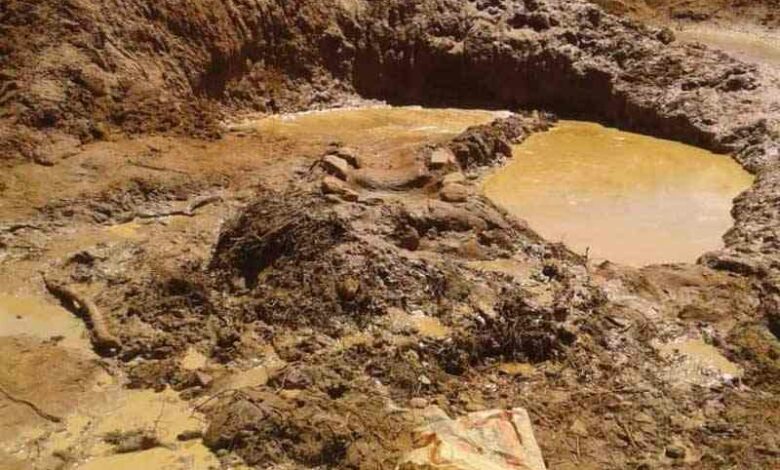
Community leaders in Bulawayo are sounding the alarm on the devastating environmental and health impacts of urban mining, sparking a heated debate on the true cost of economic development.
For years, urban mining has been touted as a lucrative opportunity for Bulawayo, with abandoned mines and waste dumps being scavenged for valuable minerals. However, residents and environmental experts warn that the practice is coming at a steep price.
“The benefits of urban mining are outweighed by its devastating environmental and social costs.Our water sources are contaminated, our soil is polluted, and our air is toxic. We can’t afford to sacrifice our health and well-being for short-term gains,”said Nokuthula Nkosi, a local resident and community leader.
Studies have revealed alarming levels of toxic substances and heavy metals in nearby water sources and soil. Residents have reported increased cases of respiratory problems, skin conditions, and other health issues.
Environmental experts echo these concerns, warning of catastrophic long-term consequences if left unchecked. “Urban mining is a ticking time bomb.We’re seeing irreversible damage to ecosystems, water sources, and human health.”said Dr. Moyo an environmental scientist.
Community leaders are advocating for stricter regulations and enforcement to ensure that mining operations prioritize environmental sustainability and resident safety. They demand greater transparency and accountability from mining companies.
Bulawayo’s city council has pledged to engage with community leaders and review the urban mining policy,stating that, “We will strike a balance between economic development and environmental protection.”
As the debate unfolds, residents remain vigilant, determined to safeguard their city’s future. With the city’s well-being at stake, community leaders and officials must work together to find a solution that prioritizes both economic growth and environmental sustainability.
The reassessment of urban mining in Bulawayo comes amid growing national concerns over Zimbabwe’s environmental policies and practices. As the country navigates its economic development, it must also confront the environmental and social costs of its actions.
Current Affairs
Local Government cracks down on ‘Fundraising’ workshops for Councils
Itai Mazire
The Ministry of Local Government and Public Works has issued a stern directive to local authorities, urging them to cease participation in non-essential workshops and conferences perceived as mere fundraising ventures by external entities.
The move, outlined in a memorandum signed by Permanent Secretary Dr. John Basera on 14 May 2026, shows a critical shift towards prioritizing efficient service delivery amidst ongoing financial challenges.
The memorandum highlights a growing concern within the ministry regarding the proliferation of such events.
“It has been noted with concern that some institutions and entities are organising workshops and conferences targeting local authorities primarily for their fundraising purposes,” said Dr Basera.
This directive comes as local authorities grapple with
depressed revenue collection.
The Ministry emphasizes the need to re-direct resources towards core functions.
“Considering the current challenges facing local authorities, particularly depressed revenue collection and the need to prioritize efficient service delivery, it is imperative that available resources be directed towards operational and service delivery-related activities,” he said.
Local authorities are now advised to significantly reduce their involvement in events that do not directly contribute to improving public services.
The memorandum explicitly warns against arrangements that offer little to no tangible benefit.
“Accordingly, local authorities should not support or tolerate arrangements by third-party entities requiring the purchase of tables, payment of conference fees, accommodation costs and related expenditures which offer limited or no tangible value to service delivery outcomes.”
This new position is effective immediately and will remain in force until further notice, signaling a resolute effort by the Ministry to streamline operations and ensure accountability in resource allocation within local governance.
Current Affairs
Malaba Urges Proper Governance in Farewell Address
Retired Chief Justice Luke Malaba called for governance that serves all citizens and praised inter-branch cooperation as he delivered the vote of thanks at his retirement ceremony.
Speaking at a special sitting of the Constitutional Court, Malaba said the rule of law requires leaders to govern properly and create conditions for others to thrive.
Malaba said he leaves a vision of a Zimbabwe that all citizens can be proud to belong to, built on revolution, reform and adding value to people’s lives. He said he was proud to have lived and worked in government until his retirement
“Let us have a vision of a Zimbabwe where we can all be proud to belong. The vision of a revolution, the vision of reform, the vision of adding value to the lives of the people,” Malaba said.
He noted there is no rulebook defining what a Chief Justice should do, saying it falls to the person in office to create and innovate. Malaba said creation is only possible when those in power allow it and respect the judiciary’s role.
“There are no rules, there is no definition of what a Chief Justice should do. It is that person who is in an office of a Chief Justice who must create,” he said.
Malaba credited the executive and legislative arms for allowing the judiciary to operate independently. He said the progress was not his achievement alone but the result of many in government.
“The three arms of government have worked marvelously allowing the judiciary to pursue independently what is best for the country. It is a journey by many people in government,” he said.
Current Affairs
Bulawayo Resident Dies from Acute Gastro-enteritis Amidst Contaminated Water Concerns
Bulawayo, Zimbabwe – A tragic incident in Bulawayo has highlighted critical public health concerns, with a resident succumbing to acute gastro-enteritis, commonly known as stomach flu. The death is reportedly linked to the consumption of contaminated borehole water in Pumula South, following disruptions to the municipal reticulated water supply.
The unfortunate fatality was documented in the latest health surveillance report issued by the Bulawayo City Council (BCC). Investigations detailed in the report indicate that the deceased did not seek timely medical intervention, leading to severe diarrhea and dehydration that ultimately proved fatal. Post-mortem examinations confirmed that the patient died from hypovolemic shock, a direct consequence of acute gastro-enteritis.
Further compounding the household’s distress, another individual within the same residence subsequently fell ill. Fortunately, this person recovered after receiving treatment at Mpilo Central Hospital, underscoring the severity of the water contamination.
Laboratory tests conducted on water samples from the affected borehole in Pumula South revealed significant contamination, specifically identifying the presence of non-faecal coliforms. This finding points to a serious breach in water safety standards, posing a substantial risk to public health.
Council health officials noted challenges in their investigation, as family members reportedly declined stool sampling and contact tracing efforts. This non-cooperation can impede comprehensive epidemiological assessments and the implementation of effective public health interventions.
The broader context of Bulawayo’s water infrastructure raises further alarms. Recent council water quality checks indicated that a staggering 62% of water points tested across the city failed one or more safety criteria, including instances of faecal contamination. This widespread issue has impacted numerous public facilities, including schools and clinics, in areas such as Nkulumane, Emganwini, and Luveve.
Adding to the crisis, the council’s most recent environmental health report also brought attention to persistent sewer overflows in Emganwini and numerous complaints regarding foul-smelling water in various residential zones. The report explicitly warned that the city’s aging sewer systems and the increasing pressure on existing water networks are significantly elevating public health risks.
In March alone, Bulawayo recorded 247 cases of diarrhea, with one fatality, as detailed in the report. Residents in the western suburbs, particularly affected by the worsening water situation, voiced their concerns, stating that they often have no alternative but to rely on potentially unsafe borehole water sources.
In response to these alarming developments, council health officials have issued an urgent advisory. Residents are strongly urged to boil or disinfect any water obtained from unverified sources. Furthermore, they emphasize the critical importance of seeking immediate medical attention for symptoms such as diarrhea, vomiting, and dehydration to prevent further tragic outcomes.
-
Current Affairs6 months agoOperation restore order
-
Crime and Courts8 months agoMasasi High School Abuse Scandal Sparks Public Outcry
-
Crime and Courts8 months agoKuwadzana Man Jailed for Reckless Driving and Driving Without a Licence
-
Current Affairs10 months agoBreaking: ZIMSEC June 2025 Exam Results Now Available Online
-
Current Affairs9 months agoMunhumutapa Day: Zimbabwe’s Newest Public Holiday Set for Annual Observance
-
Current Affairs7 months agoBREAKING NEWS: ZANU PF Director General Ezekiel Zabanyana Fired
-
Business6 months agoTino Tungwarara Launches Prevail Mart, Becoming One of Zimbabwe’s Youngest Retail Entrepreneurs
-
Current Affairs9 months agoNo Racism in Our Cricket: Government