
Policy
China Did It: Can Zimbabwe Transform Its Rural Economy?
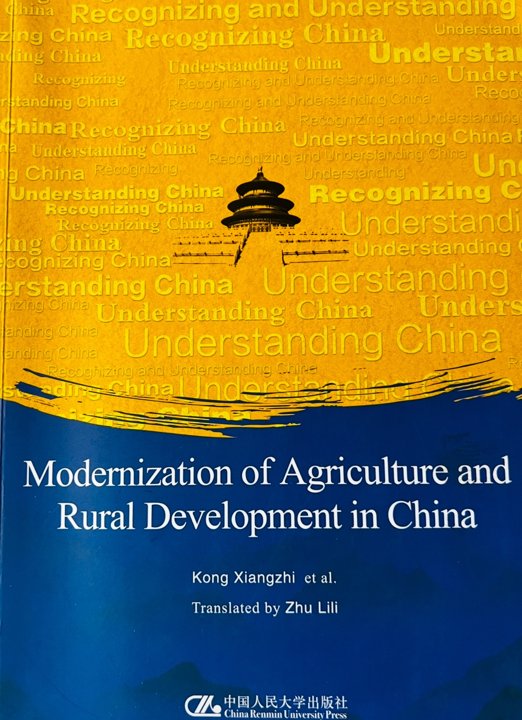
Book Review: Modernization of Agriculture and Rural Development in China by Kong Xiangzhi et al.
Agriculture continues to anchor livelihoods across the Global South, yet it is also the sector most exposed to climate volatility, market instability, and structural inequality. Few countries have confronted these challenges as comprehensively as the People’s Republic of China. The book Modernization of Agriculture and Rural Development in China, authored by Professor Kong Xiangzhi and his colleagues and translated by Zhu Lili, offers one of the most systematic analyses of how China engineered a far-reaching rural transformation.
More than a historical account, the book presents a coherent framework for rural modernization one that integrates agricultural productivity with social protection, governance reform, cultural revitalization, and ecological sustainability. For countries such as Zimbabwe, which possess immense agricultural potential yet continue to face rural poverty and productivity constraints, China’s experience offers critical strategic insights.
Part I: Reviewing Kong Xiangzhi’s Framework
Beyond Yields: Reimagining Rural Development
A central argument of Kong Xiangzhi’s work is that agricultural modernization cannot be reduced to increases in yields or mechanization alone. China’s success, he argues, lies in treating rural development as a whole-system transformation, driven by long-term political commitment and institutional coordination.
This transformation is organized around a five-pillar framework, which serves both as an analytical lens and a policy guide.
The Five Pillars of Rural Modernization
First, the book highlights the importance of new-type agricultural management entities. These include cooperatives, family farms, and agribusiness enterprises that replace isolated smallholder production with organized systems capable of achieving scale, adopting technology, and accessing markets. Kong describes these entities as the “skeleton and bridges” of modern agriculture, enabling farmers to integrate into value chains rather than remain at the margins.
Second, Kong emphasizes rural social security systems as foundational to sustainable development. Pensions, healthcare, and anti-poverty programs act as protective barriers that stabilize rural livelihoods. By reducing vulnerability to economic and climate shocks, these systems allow farmers to invest, innovate, and take calculated risks—an insight strongly supported by World Bank and FAO research on productive social protection.
Third, the book elevates rural culture and education as the “fuel” of modernization. China’s rural revitalization strategy recognizes that infrastructure and technology are ineffective without human capital. By preserving cultural heritage while modernizing education and skills training, China cultivated a rural workforce capable of managing modern farms, cooperatives, and enterprises.
Fourth, Kong identifies effective rural governance as the lifeblood of transformation. Strengthened grassroots institutions, clear lines of authority, and participatory governance mechanisms ensured that national policies were implemented at village level. This focus on governance underscores a critical lesson: policy success depends not only on design, but on local capacity to execute.
Finally, the concept of “beautiful villages” represents the integrated outcome of the framework. Rural modernization in China extends beyond income growth to include environmental restoration, waste management, spatial planning, and livable infrastructure. The goal is to make rural areas attractive places to live and work, reversing rural decline and migration.
Policy Consistency and Strategic Vision
Kong situates this framework within China’s broader policy environment, notably the annual No. 1 Central Document, which has consistently prioritized agriculture, rural areas, and farmers for more than a decade. This sustained political focus ensured continuity, funding, and institutional alignment.
Three policy themes stand out: food security as a national red line, the integration of urban and rural development to reduce inequality, and a transition toward environmentally sustainable and climate-smart agriculture. Together, these pillars demonstrate that China’s rural transformation was neither accidental nor short-term, but the product of deliberate, long-horizon planning.
Conclusion of the Review
Modernization of Agriculture and Rural Development in China succeeds in translating a vast national transformation into a clear analytical structure. Its central contribution is the demonstration that agricultural modernization must occur alongside social, cultural, institutional, and ecological renewal. For Zimbabwe and other developing economies, the book offers a disciplined starting point for rethinking rural development strategy.
Part II: Translating Lessons into Action for Zimbabwe
Zimbabwe’s agricultural sector remains central to employment and food security, yet it continues to struggle with low productivity, climate vulnerability, fragmented landholdings, and weak market integration. The Chinese experience is instructive not because it can be replicated wholesale, but because it offers principles that can be adapted to Zimbabwe’s unique ecological, economic, and institutional context.
A key priority for Zimbabwe is the formation of modern agricultural business structures. Rather than leaving small-scale farmers isolated, policy should encourage the development of farmer-owned cooperatives, contract farming arrangements, and public-private partnerships organized around strategic value chains such as horticulture, livestock, and grains. These structures would facilitate access to machinery, finance, processing facilities, and export markets.
Equally important is the transformation of rural social protection from short-term humanitarian assistance into a resilience-building system. Cash transfers, food aid, and climate support programs should be integrated with asset creation, soil and water conservation, and irrigation development. This approach would mirror China’s use of social policy as a developmental tool rather than a safety net of last resort.
Zimbabwe must also invest in rural skills and cultural capital. Agricultural education and training institutions need to align curricula with modern agri-business, climate-smart technologies, and cooperative management. At the same time, indigenous knowledge—particularly around drought-resistant crops, seed selection, and water harvesting—should be systematically documented and incorporated into national extension services.
Institutional reform at local level is another critical pillar. Strengthening district-level integrated planning, involving local authorities, traditional leaders, and farmer organizations, would improve land-use planning, water management, and coordination of public and private investment. Effective governance, as China’s experience shows, is indispensable for translating policy into results.
Finally, Zimbabwe’s rural future depends on building a climate-smart and livable countryside. Infrastructure investment in roads, renewable energy, irrigation, and digital connectivity must go hand-in-hand with ecological restoration. Solar-powered irrigation, agroforestry, and catchment-based conservation programs can simultaneously boost productivity and climate resilience.
The Central Lesson: Food Sovereignty and Policy Stability
Perhaps the most urgent lesson from China is its unwavering focus on food security as a national priority. Zimbabwe must clearly define its strategic food basket—likely maize, traditional grains, and legumes—and commit to consistent policies that support self-sufficiency through pricing, extension, and strategic reserves.
Equally critical is policy consistency. Agricultural transformation cannot occur under shifting rules and short political cycles. A long-term Rural Revitalization Charter, supported across the political spectrum and backed by transparent financing, would provide the stability required for farmers and investors to plan for the future.
Conclusion
Kong Xiangzhi’s work demonstrates that rural transformation is not a technical fix, but a systemic and generational project. China’s success lies in its ability to align policy, institutions, and society around a shared rural vision.
For Zimbabwe, the challenge is not to copy China, but to learn from its structured and holistic approach. By adapting the five-pillar framework to local realities and committing to long-term policy coherence, Zimbabwe can lay the foundations for a more productive, resilient, and equitable rural economy. The journey begins with seeing rural development not as a sectoral issue, but as a national project.
Policy
Digital Transformation and Artificial Intelligence’s New Responsibility: Safeguarding Information Integrity
By Elias Mambo (Zimpapers Editorial Executive and Digital Transformation Expert)
Digital transformation has reshaped the media industry by changing not only how news is produced and distributed, but also how audiences experience information. In today’s newsroom, editorial teams increasingly rely on digital tools such as content management systems, analytics dashboards, automated workflows, and algorithm-driven distribution platforms.
Artificial intelligence (AI) sits at the centre of this shift, assisting with tasks ranging from transcription, translation, and summarisation to content recommendation, fraud detection, and newsroom support. While these capabilities can improve speed, productivity, and reach, they also introduce a critical challenge: safeguarding information integrity.
Information integrity is the commitment to ensuring that what is published is accurate, authentic, properly contextualised, responsibly attributed, and ethically produced—particularly when AI is involved in generating, editing, or promoting content.
AI changes the integrity risk profile because it operates at scale and can generate text or insights that appear coherent even when the underlying facts are incorrect. This can lead to hallucinations, incomplete or misleading summaries, context collapse, and source ambiguity, where audiences struggle to distinguish verified information from secondary claims. At the same time, AI systems may reflect biases present in the data on which they were trained or in the objectives used to optimise performance, such as engagement or popularity.
In a digital environment where misinformation can spread quickly and corrections may not always receive equal visibility, integrity becomes not simply a journalistic value but an operational necessity. Digital speed without integrity can turn mistakes into widespread narratives before they are detected, making truth protection a core part of the media workflow rather than an afterthought.
For that reason, integrity must be designed into the transformation process from the beginning. Media organisations should treat integrity as a system requirement that governs how AI is used across the entire pipeline, including creation, verification, approval, and distribution. A human-in-the-loop approach is essential: AI may draft, assist, or organise information, but verification must remain an editorial responsibility with clear accountability.
This also requires stronger information provenance practices, including documenting where information came from, how it was processed, and which sources support key claims. Provenance and attribution controls should be implemented so that AI outputs can be traced back to credible evidence, with editorial oversight determining what is publishable. In high-stakes contexts such as elections, public safety, or health, integrity measures must be stricter and review processes more rigorous, because the cost of failure is higher.
Beyond workflow design, safeguarding integrity depends heavily on data quality and model accountability. AI tools are only as reliable as the inputs and rules they operate on, so newsrooms must invest in data stewardship, including curated reference materials for editorial use, reliable datasets for analysis, and continuous performance monitoring to prevent system degradation as language and events evolve.
Internal auditability also matters: organisations should be able to assess why AI produced a particular output and whether the information relied on trustworthy inputs. Additionally, red-teaming and stress testing should be conducted to expose weaknesses, especially in scenarios involving adversarial misinformation such as manipulated documents, coordinated disinformation, or misleading multimodal content. Transparency, in this sense, is less about public disclosure of every technical detail and more about ensuring internal governance, traceability, and ethical accountability.
Importantly, integrity does not end at publication, because the platform distribution layer can amplify both accuracy and error. Algorithmic ranking systems often promote content based on engagement signals, and when AI drives those signals, integrity becomes inseparable from distribution strategy. Media organisations should adopt ranking approaches that incorporate quality signals such as verification status, corrections history, source credibility, and adherence to editorial standards, rather than relying solely on what is most engaging.
They should also prioritise context-first presentation by using clear labels, source metadata, and messaging that distinguishes what is confirmed from what is still being verified. Corrections should be made visible and, where possible, given distribution weight comparable to the original item, so audiences are not left with outdated or incorrect narratives.
Ultimately, the responsibility for integrity in the age of AI shifts toward leadership. Safeguarding information integrity requires ethical frameworks for AI use, staff training that includes an understanding of AI limitations such as hallucination risks and bias, and clearly defined accountability roles specifying who verifies and who approves content.
It also calls for investment in integrity tools such as fact-checking support systems, source comparison tools, provenance tracking, and monitoring mechanisms that detect emerging errors or patterns of misinformation. More than all of these, it requires a culture of editorial scepticism, where AI outputs are treated as assistance rather than authority, and where journalistic principles of truth, fairness, and accuracy remain non-negotiable.
In conclusion, digital transformation and AI are transforming media with unprecedented speed and capability, but they also make integrity harder to protect if it is not managed deliberately. The new responsibility is therefore clear: media organisations must govern AI-enabled processes through verification, provenance, accountability, and ethical distribution.
In the evolved media landscape, information integrity is not merely a professional standard; it is the foundation of public trust, audience retention, and the broader credibility of information in society.
Policy
Minister Mavetera Issues Stark Digital Warning
Zimbabwe must place data privacy at the centre of its digital transformation if it is to build trust, grow innovation and unlock the full potential of its digital economy, the Minister of ICT, Postal and Courier Services Tatenda Mavetera said.
Addressing delegates at the Third National Data Privacy Symposium held in Bulawayo on Wednesday, the Minister warned that failure to prioritise privacy could undermine public confidence in digital systems.
“Without privacy by design, there is no true consent. Without consent, there is no trust. And without trust, we cannot build the digital economy we so urgently need,” Minister Mavetera said.
The symposium, hosted by the Postal and Telecommunications Regulatory Authority of Zimbabwe (POTRAZ), drew participants from across government, regional regulators and the private sector, reflecting growing interest in data protection both locally and across the region.

Trust Key to Digital Growth
The Minister said Zimbabwe’s push towards a digital economy,driven by mobile money, e-government services and emerging technologies such as artificial intelligence,depends heavily on public trust.
“Can a digitised economy thrive without trust? The answer is no,” Mavetera said, describing trust as a critical driver of investment and adoption of digital services.
He added that privacy should no longer be treated as an afterthought but must be built into systems from the start.
“Privacy is not the enemy of innovation; it is its enabler,” she said.
Zim Building Data Protection Capacity
Zimbabwe has already taken steps to strengthen its data protection framework through the Cyber and Data Protection Act, with POTRAZ designated as the country’s Data Protection Authority.
Minister Mavetera said progress is also being made in building local expertise, revealing that over 1,000 Data Protection Officers have now been trained and certified.
“This shows that Zimbabwe is steadily building the human capital needed to sustain a trusted digital economy,” she said.
Regional Role and Cooperation
Zimbabwe is increasingly positioning itself as a regional player in data governance, with SADC partners identifying the country to help lead capacity-building efforts.
“Data knows no borders, and neither should our solutions,” the Minister said, calling for closer cooperation among African countries on data protection laws and standards.
AI and Data Risks
The Minister also linked privacy to Zimbabwe’s emerging Artificial Intelligence strategy, warning that weak data governance could expose citizens to risks such as profiling, bias and misuse of personal information.
He said innovation must be balanced with strong safeguards.
“Innovation must be ethical, accountable and respectful of human dignity, with privacy as its foundation,” she said.
The government, as one of the largest collectors of citizen data, must lead by example, the Minister added.
“Privacy should be embedded across all ministries and departments, not treated as a box-ticking exercise,” she said.
He urged regulators, businesses and institutions to adopt a privacy-first approach to ensure Zimbabwe builds a secure and inclusive digital economy.
Policy
Harare Opinion: A Political Think Tank Positioned to Influence Public Opinion
Political Think tanks like SAPES have come and gone. Although, SAPES led by Ibbo Mandaza started well but later became partisan, taking the side position of the opposition and obviously becoming irrelevant.
Subsequently, there has not been independent academic political think tanks so far since the fall of SAPES, which was of course, never impartial.
Today, Zimbabwe has come to the crossroad where an independent academic political think tank should take centre stage especially towards the 2030 National Development Strategy 2.
Such a political think tank should be in line with the National Development Strategy 2. Unlike In Conversation with Trevor, Heart and Soul TV (HStv), Mandaza’s SAPES, the political think tank should podcast debates on national development agenda. The government of today and its national development agenda deserves a political think tank that will engage the citizenry from an academic approach.
Led by Dr Limukani Mathe (once a South African based scholar), co-founded by Roncemore Mhlanga, (LLB) and Paul Chairuka (MSC Finance), Harare Opinion (HO) has emerged to fill the gap.
Harare Opinion currently functioning as online editorial opinion, www.harareopinion.co.zw, with verified social media outlets on Facebook, X and WhatsApp, seeks to challenge political perspective from an academic point of view.
Taking its baby steps, Harare Opinion endeavours to become a popular political think- podcasting timely policy debates that seek to depolarise and engage miscellaneous audiences within Zimbabwe’s political demography.
Popular podcasts like Joe Rogan Experience, Crime Junkie and The Daily in America have not been seen in the Zimbabwean’s social media sphere.
Popular Podcasts like the Steven Barlett and the Rest in Politics have not been in Zimbabwe’s social media sphere. Common social life podcasts in Zimbabwe include that of DJ Ollar which remain superficial, touching on daily social life and with no benefit to Zimbabwe’s progressive government national agenda.
Thus, the National Development Strategy (NDS2) 2026-2030, needs supportive mechanisms through political think tanks like Harare Opinion which will group experts regardless of their political affiliation to debate national development. Harare Opinion endeavours to approach national development agenda from an academic expert’s view in order to
- offer unconventional and innovative persuasive dialogue
- Depolarise and popularise government developmental programmes
- Pull together home and diaspora in support of national agenda (2026-2030), NDS2
- Revive a united sense of belonging and patriotic citizenship
So far, Harare Opinion has published 34 opinion articles on its website mainly focusing on the Constitutional Amendment Bill No.3.
The Editor-In-Chief of the portal, Dr Limukani Mathe says the political think tank is yet to start podcasting on social media and running conference talks by inviting politicians to a free public debate in line with the National Development Strategy 2.
Dr Limukani Mathe is well established scholar with over 50 academic publications as books, book chapters and journal articles in high impacts journals. Published to his name are so far 6 books in Palgrave Macmillan and Routledge and another expected in Oxford Press.
Mathe says Harare Opinion is also in collaboration with the Zimbabwe Presidential Scholarship Alumni Association (ZPSAA) for Economic Development.
The Zimbabwe Presidential Scholarship Alumni Association (ZPSAA) attracts more than 10 000 professionals (including Doctors and Professors) at home and abroad. Led by the chairperson, Roncemore Mhlanga and Vice- Chairperson, Dr Limukani Mathe, ZPSAA will serve as supportive mechanism to Harare Opinion- making use of the intellectual capital from the pool of contributors.
Moreso, Harare Opinion’s intellectual capital will be drawn from industry experts in politics, economics, media, academics, and other. The success of the political think tank will be determined by its ability to attract vigorous engagement across the political divide, depolarising political segments, detoxing the political environment, and preparing Zimbabwe for 2030.
-
Current Affairs6 months agoOperation restore order
-
Crime and Courts7 months agoMasasi High School Abuse Scandal Sparks Public Outcry
-
Crime and Courts8 months agoKuwadzana Man Jailed for Reckless Driving and Driving Without a Licence
-
Current Affairs9 months agoBreaking: ZIMSEC June 2025 Exam Results Now Available Online
-
Current Affairs8 months agoMunhumutapa Day: Zimbabwe’s Newest Public Holiday Set for Annual Observance
-
Current Affairs7 months agoBREAKING NEWS: ZANU PF Director General Ezekiel Zabanyana Fired
-
Current Affairs9 months agoNo Racism in Our Cricket: Government
-
Business6 months agoTino Tungwarara Launches Prevail Mart, Becoming One of Zimbabwe’s Youngest Retail Entrepreneurs