World News
Cindy Jacobs’ 1998 Prophecy Over Zimbabwe: A Word Now Unfolding Under the Second Republic
Takudzwa Karowangoro
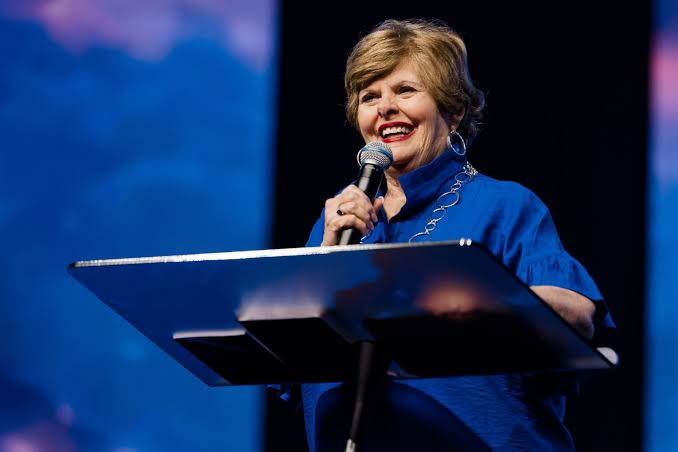
When American prophet Cindy Jacobs delivered a word over Zimbabwe on 31 October 1998 declaring revival, restoration and global relevance many took note but did not imagine how accurately her message would mirror Zimbabwe’s future.
Today, more than two decades later, the prophecy is being revisited with renewed seriousness as the nation experiences a transformation that aligns closely with Jacobs’ declarations.
Her prophetic picture of a mighty river flowing through Zimbabwe symbolising economic revival, spiritual renewal and the rise of new leaders has increasingly become visible, especially under the Second Republic led by President Emmerson Mnangagwa.
The national drive towards modernization, peacebuilding and global re-engagement is breathing life into her words: “Do not be afraid of the change… I have a plan for you.”
Healing Old Wounds and Building Unity
Jacobs prophesied that ancient thrones of division would fall, and Zimbabwe would become a centre of healing and reconciliation for Africa.
Today, efforts to promote national unity, dialogue across political and racial lines, and peacebuilding initiatives show a country walking firmly towards this destiny.
The Second Republic’s emphasis on re-engagement both locally and internationally echoes the prophecy that Zimbabwe has a “ministry of reconciliation that will unite African people.”
The nation’s stabilising role in SADC and its involvement in regional diplomacy support her declaration that Zimbabwe would become “like Switzerland to bring healing to nations.”
A Tourism Boom: Zimbabwe Becomes a Top Global Destination
One of the clearest signs that the prophecy is unfolding came through developments in tourism. Jacobs declared that Zimbabwe would shine like a jewel and today, that shine is unmistakable.
Under President Mnangagwa’s government, Zimbabwe has been named one of the top countries in the world to visit, with global travel authorities praising the nation’s wildlife, culture, heritage, and emerging hospitality infrastructure.
Victoria Falls, Hwange, Great Zimbabwe, Nyanga and the Eastern Highlands are experiencing renewed international attention and rising tourist arrivals.
This aligns strongly with Jacobs’ vision of Zimbabwe’s beauty blessing nations: “I will use Zimbabwe like a jewel… she will help feed the world with beautiful produce.”
The “jewel” is now drawing global eyes and global investment.
Prophecy Meets Investment: The US$1 Billion Dangote Deal
Among the most significant signals of Zimbabwe’s rising economic trajectory is the historic US$1 billion investment agreement with Africa’s richest man, Aliko Dangote.
The deal centred on energy, minerals, agriculture and industrial infrastructure is set to dramatically boost the economy, create thousands of jobs, and open new export channels.
This breakthrough mirrors Cindy Jacobs’ prediction:
“New factories will be built.”
“Zimbabwe will produce beautiful beef and food for nations.”
“I will bless the land with productivity and restore what was broken.”
Dangote’s entry into Zimbabwe is widely seen as a sign of global confidence in the direction of the Second Republic and a tangible fulfilment of the 1998 prophecy.
The Rise of Intercessors and National Prayer Movements
Jacobs also spoke of an army of women with a Deborah anointing who would form a nationwide prayer network, followed by men who would join them in intercession.
Today, Zimbabwe has seen an explosion of prayer groups, national fasting programs, women-led revival networks and intercession movements across all provinces.
Her vision of “Annas” elderly men and women dedicating their lives to prayer is reflected in the growth of prayer mountains, ministry retreat centres, and 24/7 prayer assemblies across the country.
A Prophecy Coming to Life Under the Second Republic
From tourism to diplomacy, agriculture to investment, prayer movements to reconciliation efforts, Zimbabwe is witnessing a season that many believe was foretold in 1998.
Under President Mnangagwa’s leadership, the nation is re-engaging the world, rebuilding its industries, and restoring its global standing step by step.
Many now look at Cindy Jacobs’ words and declare:
The river is finally flowing.
The prophecy is unfolding.
Zimbabwe is rising again just as was spoken in 1998.
World News
Zimbabwe Fights for Collective Security, Slams Nuclear Escalation
Zimbabwe has called on nuclear-armed states to stop expanding their nuclear arsenals and instead prioritise collective security, warning that the continued growth of nuclear stockpiles threatens humanity.
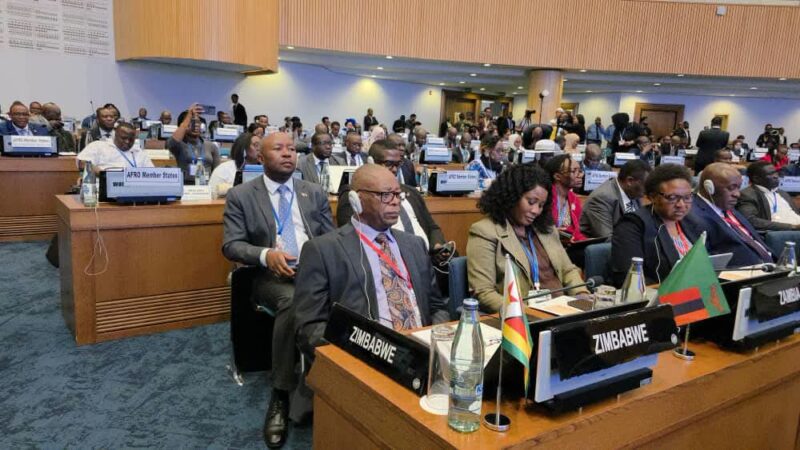
The call was made by the Minister of Defence, Cde Oppah Muchinguri-Kashiri, representing Zimbabwe during the General Debate of the 11th Review Conference of the Treaty on the Non-Proliferation of Nuclear Weapons at the United Nations Headquarters in New York on Monday.
“The modernisation and expansion of nuclear arsenals may enhance offensive capabilities, but do not remove the danger of global destruction.
Enhancing and modernising nuclear arsenals may strengthen offensive capabilities, but it does not eliminate the certainty of mutually assured destruction,” she said.
ALSO READ: UN Chief Condemns Xenophobic Attacks in South Africa
She also warned that any nuclear conflict would have humanitarian and environmental consequences beyond the countries directly involved.
“In the event of a nuclear war, catastrophic humanitarian and environmental consequences would affect every corner of the world,” she stated.
Cde Muchinguri-Kashiri reaffirmed Zimbabwe’s commitment to international peace, security, and nuclear non-proliferation.
She also highlighted Zimbabwe’s bid for a non-permanent seat on the United Nations Security Council for the 2027–2028 term.
“Zimbabwe is determined to serve on the United Nations Security Council in order to contribute more actively to the promotion of international peace and security,” she added.
Zimbabwe is seeking election to the Security Council in polls scheduled for June this year.
World News
UN Chief Condemns Xenophobic Attacks in South Africa
The United Nations Secretary-General, António Guterres, has raised concern over reported xenophobic attacks in KwaZulu-Natal, where Ghanaian and other African nationals were targeted over their immigration status.
In a statement issued on 28 April 2026, Guterres strongly condemned acts of violence and incitement.
“Violence, vigilantism and all forms of incitement to hatred have no place in an inclusive, democratic society governed by the rule of law and respect for human rights,” he said.
The remarks come amid growing tensions in parts of KwaZulu-Natal, where incidents of attacks on foreign nationals have been reported.
Guterres also extended his greetings to South Africans as they marked Freedom Day, while reflecting on the country’s history of unity and solidarity during the anti-apartheid struggle.
He noted that South Africa’s liberation was supported by both African nations and the international community, and stressed that the country’s development has been shaped by the contributions of diverse communities.
The statement follows condemnation from the Government of South Africa, including the Ministry of Police, which described the attacks as contrary to the principles of democracy and human rights.
Guterres emphasised that while socio-economic challenges remain, they must be addressed through lawful and non-discriminatory means.
Current Affairs
Safe Sex May Get Costly As War Hits Production Materials
The cost of condoms could increase if the ongoing conflict involving Iran continues to strain global supply chains, according to the head of the world’s largest condom producer.
Karex CEO Goh Miah Kiat told Reuters that the company may have to increase prices by between 20% and 30%, depending on how long the disruptions persist.
Since late February, supply chains have been affected by tensions around the Strait of Hormuz, a key route for materials used in manufacturing.
Goh noted that the situation remains unstable, with rising costs forcing the company to pass expenses on to customers.
Karex, based in Malaysia, produces a wide range of medical and personal care products, including well-known condom brands such as ONE, Trustex, Carex and Pasante. The firm manufactures billions of condoms each year and supplies over 130 countries.
In addition to higher production and packaging costs, the company is also facing shipping delays. Goh explained that many shipments are stuck in transit, leaving some markets undersupplied despite high demand.
While global attention has largely focused on rising fuel prices linked to the conflict, experts say the impact goes beyond oil.
Shortages of key industrial materials known as feedstocks are also affecting production. These include naphtha, used in packaging, as well as silicon oil and ammonia, which are essential in condom manufacturing.
According to industry analysts, disruptions in the supply of these materials many of which come from the Middle East are pushing up production costs. Asia, in particular, is vulnerable due to its reliance on the region for energy and raw materials.
The situation is further complicated by fuel rationing in some Southeast Asian countries, which is affecting transport and workers’ ability to reach factories. This could slow down manufacturing and delay exports of essential goods.
For now, Karex says it has enough stock to last a few months, but continued instability could lead to higher prices and tighter supply in the near future.
-
Current Affairs6 months agoOperation restore order
-
Crime and Courts7 months agoMasasi High School Abuse Scandal Sparks Public Outcry
-
Crime and Courts8 months agoKuwadzana Man Jailed for Reckless Driving and Driving Without a Licence
-
Current Affairs9 months agoBreaking: ZIMSEC June 2025 Exam Results Now Available Online
-
Current Affairs8 months agoMunhumutapa Day: Zimbabwe’s Newest Public Holiday Set for Annual Observance
-
Current Affairs7 months agoBREAKING NEWS: ZANU PF Director General Ezekiel Zabanyana Fired
-
Current Affairs9 months agoNo Racism in Our Cricket: Government
-
Business6 months agoTino Tungwarara Launches Prevail Mart, Becoming One of Zimbabwe’s Youngest Retail Entrepreneurs