Business
CRZ Welcomes Cabinet’s Move to Streamline Retail and Wholesale Licensing
The Confederation of Zimbabwe Retailers (CZR) has applauded Cabinet’s approval of sweeping reforms to licences, permits, levies and fees in the retail and wholesale sector, describing the move as a major step towards improving the ease and cost of doing business in Zimbabwe.
The reforms, approved under the Government’s 29 July 2025 business reform framework covering twelve key economic sectors, aim to remove structural bottlenecks that have long weighed down formal businesses.
Cabinet approved the consolidation of fragmented licensing requirements into a single licence, the streamlining of duplicative and overlapping permits, and the removal or reduction of unnecessary levies and fees across major sub-sectors such as supermarkets, butcheries, clothing and furniture shops.
Among the key adjustments, the Liquor Licence application fee has been slashed to USD20 across all sectors — down from USD1,080 for wholesale liquor traders — while the Medicines Control Authority of Zimbabwe (MCAZ) permit fee of USD200 for veterinary products and the Local Authority bakery licence fee of USD703 have both been scrapped.
Cabinet also agreed to cap licence fees for all local authorities to promote uniformity nationwide.
Cross-cutting reviews were also made on several key regulatory fees. The Procurement Regulatory Authority of Zimbabwe (PRAZ) licence fee for groceries and provisions has been reduced from USD120 to USD20, while the National Social Security Authority (NSSA) elevator registration fee has been cut from USD200 to USD20.
Other reductions include a 50% cut to the Health Report licence fee, and the lowering of bank charges and transfer fees to promote financial inclusion.
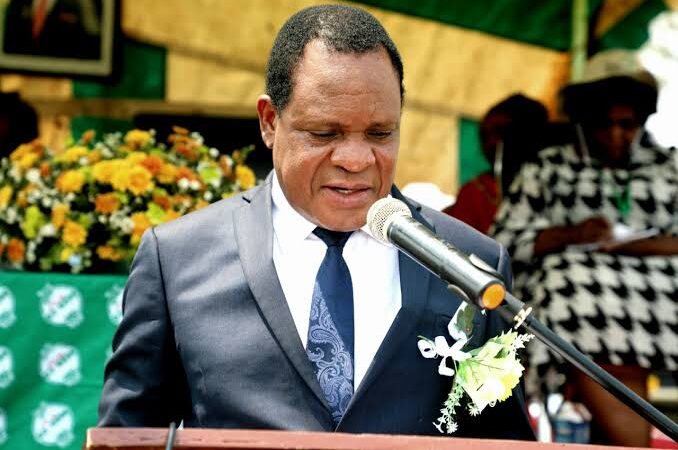
CZR President Dr Denford Mutashu commended Government for its “progressive and business-friendly decision,” saying it reflected strong political will to strengthen the formal economy.
“For years, the multiplicity of fragmented licences and overlapping permits imposed by different regulatory bodies has increased operational costs and constrained growth. This reform marks a decisive step toward a more competitive, business-friendly environment,” Dr Mutashu said.
He urged all local authorities and regulatory agencies to swiftly align their licensing frameworks with the Cabinet-approved reforms “to ensure immediate relief for operators on the ground.”
CZR also expressed gratitude to President Emmerson Mnangagwa and Cabinet for their commitment to creating a conducive environment for business growth, consistent with the national vision of “leaving no one and no place behind.”
The reviewed licences, permits and fees will undergo further refinements before being officially gazetted.
Business
Zimbabwe Steers WHO Financial Future
Itai Mazire
Zimbabwe’s top health diplomat, Dr. Aspect Maunganidze, closed back‑to‑back sessions of the World Health Organization’s powerful Programme Budget and Administration Committee (PBAC) with a resounding declaration of consensus, clearing the way for sweeping reforms to global health governance and UN financing.
After four days of intense scrutiny from 12 to 15 May, the 43rd and 44th PBAC meetings, chaired by Dr. Maunganidze in his capacity as Secretary for Health and Child Care, delivered a package of binding recommendations to the 79th World Health Assembly, which opens on 18 May.
In his closing remarks, a Dr. Maunganidze told delegates, “We managed to provide clear recommendations to the 79th World Health Assembly and the 159th Executive board meeting including on matters related to the Financing and Implementation of the Programme Budget, Human Resources, audit, compliance and evaluation matters.”
The committee, which acts as the Executive Board’s fiscal watchdog, also hammered out agreement on highly sensitive political files.
“That they reached consensus on key issues for the consideration of the Health Assembly, including, the draft amended decision on the reform of the global health architecture and the UN80 initiative,” said Dr Maunganidze.
In a final stroke, the PBAC chair announced that the committee had united behind a landmark governance overhaul.
“Further, we agreed to recommend that the EB159 adopt the draft decision on future modalities of the governance reform pilot.”
The twin sessions, held just days before the World Health Assembly’s 18 May kick‑off, saw Dr. Maunganidze preside over granular debates on WHO’s programme budget, human resources, audit trails, compliance and evaluation.
The outcome now goes to the 159th Executive Board for adoption, before landing on the floor of the Health Assembly for final ratification.
Diplomats in Geneva described the meetings as “unusually efficient”, with the Zimbabwean chair credited for holding the line on transparency while forging unanimity on the UN80 financing roadmap and the new governance pilot.
Dr. Maunganidze is expected to remain in Geneva to present the PBAC’s report directly to WHO’s Executive Board ahead of the Assembly’s opening plenary.
Business
Zimbabwe Launches Locally Assembled Laptops
Zimbabwe has taken a major step toward industrialisation and digital transformation with the launch of the locally assembled Avantis Parote 1030i laptop.
The initiative supports the country’s Heritage-Based Education 5.0 programme and Vision 2030 goals aimed at promoting innovation and local production.
The project is a partnership between and , an associate company of . The laptops are being assembled at the Microsoft-certified ZITCO facility located in Msasa, Harare.
Government officials said the move will help reduce dependence on imported computer hardware while creating employment opportunities in the country’s ICT sector.
The locally assembled laptops are expected to benefit students, government departments, and small-to-medium enterprises.
The Avantis product range includes several Intel-powered notebooks under the P-series brand, with prices generally ranging between US$350 and US$550 depending on specifications.
The company also revealed plans to export a large percentage of the locally assembled devices to regional markets, positioning Zimbabwe as a growing technology hub in Southern Africa.
Speaking at the launch, ICT Minister Mavetera said the initiative supports Zimbabwe’s drive toward digital sovereignty and will strengthen digital learning programmes in schools.
“Assembling laptops locally allows the country to develop products suited to local conditions and maintenance needs,” she said.
The launch comes after other local industrial projects, including the manufacturing of medical oxygen and electricity transformers, as Zimbabwe continues efforts to boost domestic production and technological innovation.
Business
International Envoys Reaffirm Support for Zimbabwe’s Development Agenda
Harare, Zimbabwe – Envoys from Italy, Japan, and Egypt have reiterated their commitment to supporting Zimbabwe’s national development agenda, which aims to achieve an upper-middle-income society by 2030.
These affirmations were made during separate courtesy calls paid by the respective Ambassadors to Vice President Dr. Kembo Mohadi at his offices in Harare.
Italian Ambassador to Zimbabwe, Mr. Giuseppe Giacalone, underscored his country’s dedication to strengthening bilateral trade relations with Zimbabwe. Following his meeting with Vice President Mohadi, Ambassador Giacalone stated that discussions focused on enhancing cooperation across various sectors, including investment, infrastructure development, trade, and cultural exchanges.
Ambassador Giacalone also provided an update on Zimbabwe’s participation in the ongoing Venice Biennale Arts Festival, where five local artists are showcasing their work. Furthermore, he highlighted discussions regarding Zimbabwe’s preparations to host the 58th CIMAM Annual Conference, scheduled for November at the National Gallery of Zimbabwe.
“The discussion with Vice President Mohadi was indeed engaging and productive,” Ambassador Giacalone remarked. “We reflected on the historical friendship and close ties between Italy and Zimbabwe, acknowledging the strong existing relations and the imperative to further fortify them. Our commercial ties are robust and dynamic, yet there is significant potential for growth. My primary objective will be to enhance the bilateral trade relationship between our two nations.”
He further noted that current Italian investments in dam construction, particularly the Tokwe-Mukosi project under the We Build Group, were also part of the comprehensive discussions.
Egyptian Ambassador to Zimbabwe, Dr. Maha Serag Eldin Kamel, also paid a courtesy call on Vice President Mohadi. Ambassador Kamel emphasized that the forthcoming African Union Mid-Year Summit would present a crucial opportunity for Zimbabwe to expand its investment portfolio, as the event is designed to convene African nations to deliberate on business and economic matters. The summit is slated for next month.
Dr. Kamel conveyed Egypt’s renewed commitment to supporting Zimbabwe in its developmental endeavors. Discussions between the Ambassador and the Vice President encompassed cooperation in the health, construction, political, and economic sectors. She highlighted that the bilateral relations between Zimbabwe and Egypt have deep historical roots, tracing back to Egypt’s support for Zimbabwe’s liberation struggle. The two countries continue to enjoy excellent relations, and the meeting served as a platform to explore additional avenues for cooperation.
Ambassador Kamel announced that Egypt would host the African Union Mid-Year Summit in June, in the coastal city of El Alamein on the Mediterranean Sea. This summit will coincide with the inaugural El Alamein Africa Forum, a business-focused event expected to attract participation from African countries and private sector stakeholders across the continent.
Japanese Ambassador to Zimbabwe, Mr. Nobutaka Maekawa, similarly paid a courtesy call on Vice President Mohadi. Ambassador Maekawa reaffirmed Japan’s ongoing cooperation with Zimbabwe in critical sectors such as agriculture, health, tourism, and mining.
He reported that both nations had agreed to further solidify their relations through the promotion of business cooperation in these key areas. “This was a very constructive discussion,” Mr. Maekawa stated, “Our dialogue centered on the extensive and consistent cooperation we have fostered over the years, as well as exploring further possibilities for collaboration in diverse sectors including agriculture, healthcare, tourism, and mining.”
“Crucially, we concurred on the intensified promotion of business-driven cooperation in major sectors,” he added. “Japan is keen to tangibly and cooperatively strengthen this partnership, optimally combining it with the conventional development assistance that the Japanese government has historically provided.”
-
Current Affairs6 months agoOperation restore order
-
Crime and Courts8 months agoMasasi High School Abuse Scandal Sparks Public Outcry
-
Crime and Courts8 months agoKuwadzana Man Jailed for Reckless Driving and Driving Without a Licence
-
Current Affairs10 months agoBreaking: ZIMSEC June 2025 Exam Results Now Available Online
-
Current Affairs9 months agoMunhumutapa Day: Zimbabwe’s Newest Public Holiday Set for Annual Observance
-
Current Affairs7 months agoBREAKING NEWS: ZANU PF Director General Ezekiel Zabanyana Fired
-
Business6 months agoTino Tungwarara Launches Prevail Mart, Becoming One of Zimbabwe’s Youngest Retail Entrepreneurs
-
Current Affairs9 months agoNo Racism in Our Cricket: Government